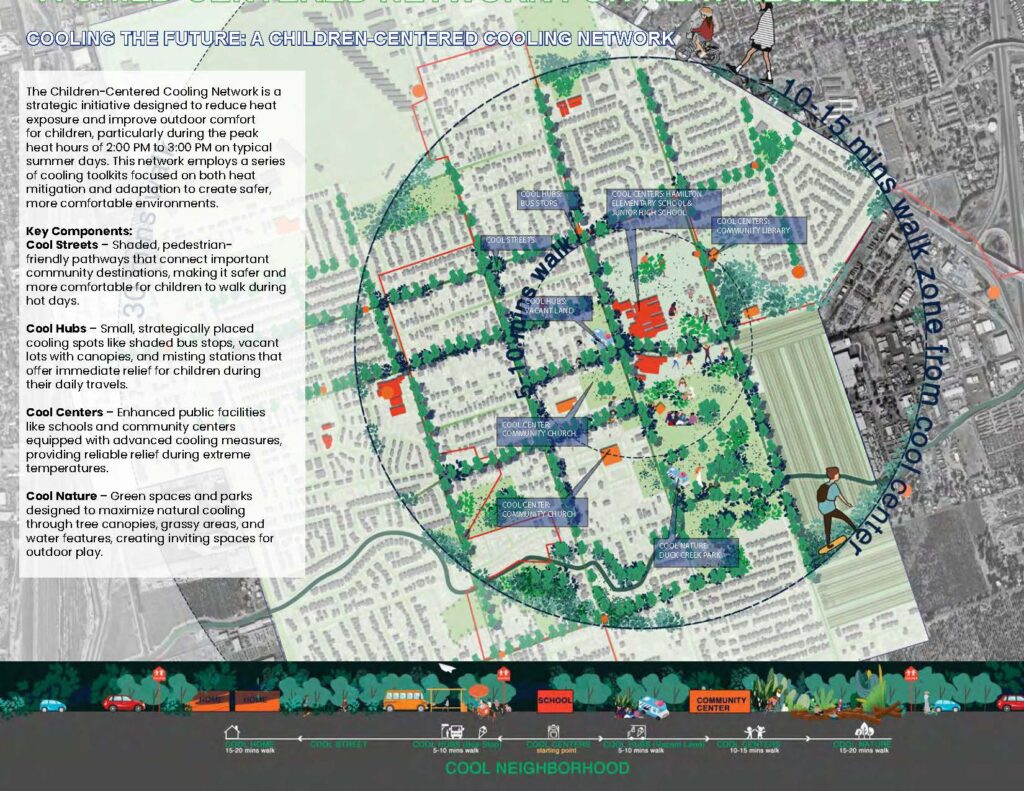

Project cover/prop and goals.
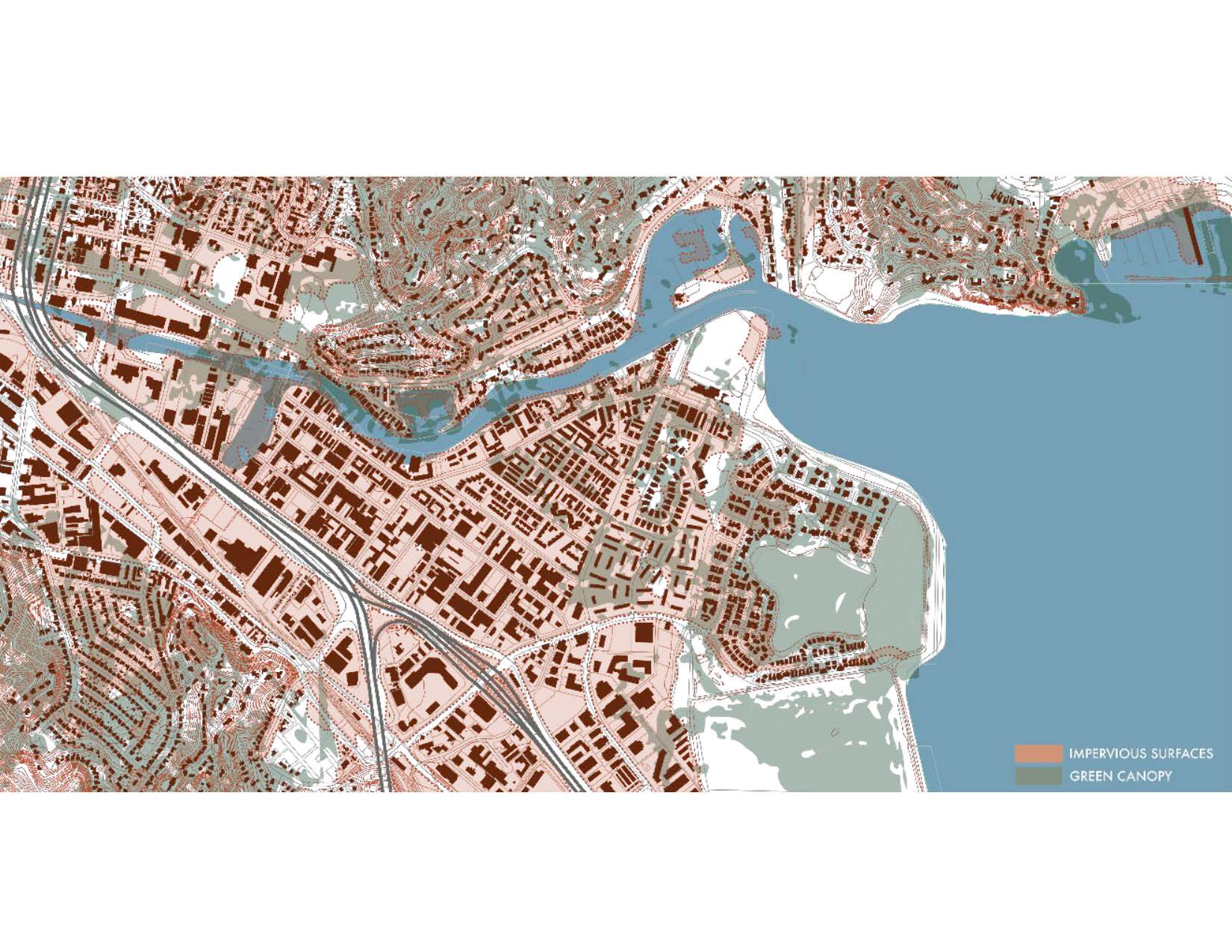
Site Analysis: Identify impervious surfaces and contrast them with green canopy.

Site Analysis: Identifying ground water level and lowest areas.
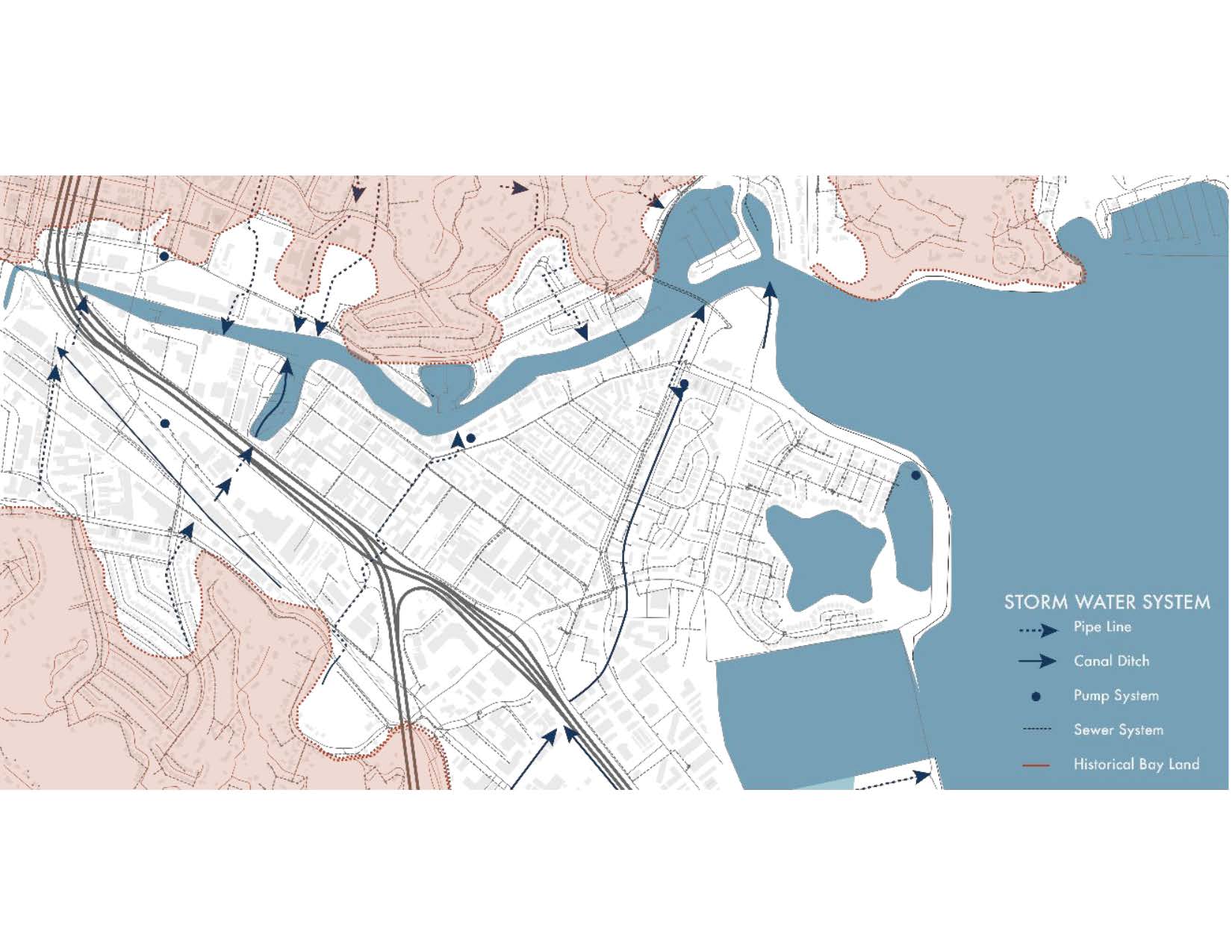
Site Analysis: Identifying storm water system.

Main Strategy: Cut and Fill intervention to enhance the idea of Waffle Rafael.

Master Plan.

Components of Master Plan.

Existing Land Use to inform the phases proposal.

First Phase Plan.

Second Phase Plan.

Third Phase Plan.

Sections. The dashed red line corresponds to current ground level. Ground water at less favorable scenario.
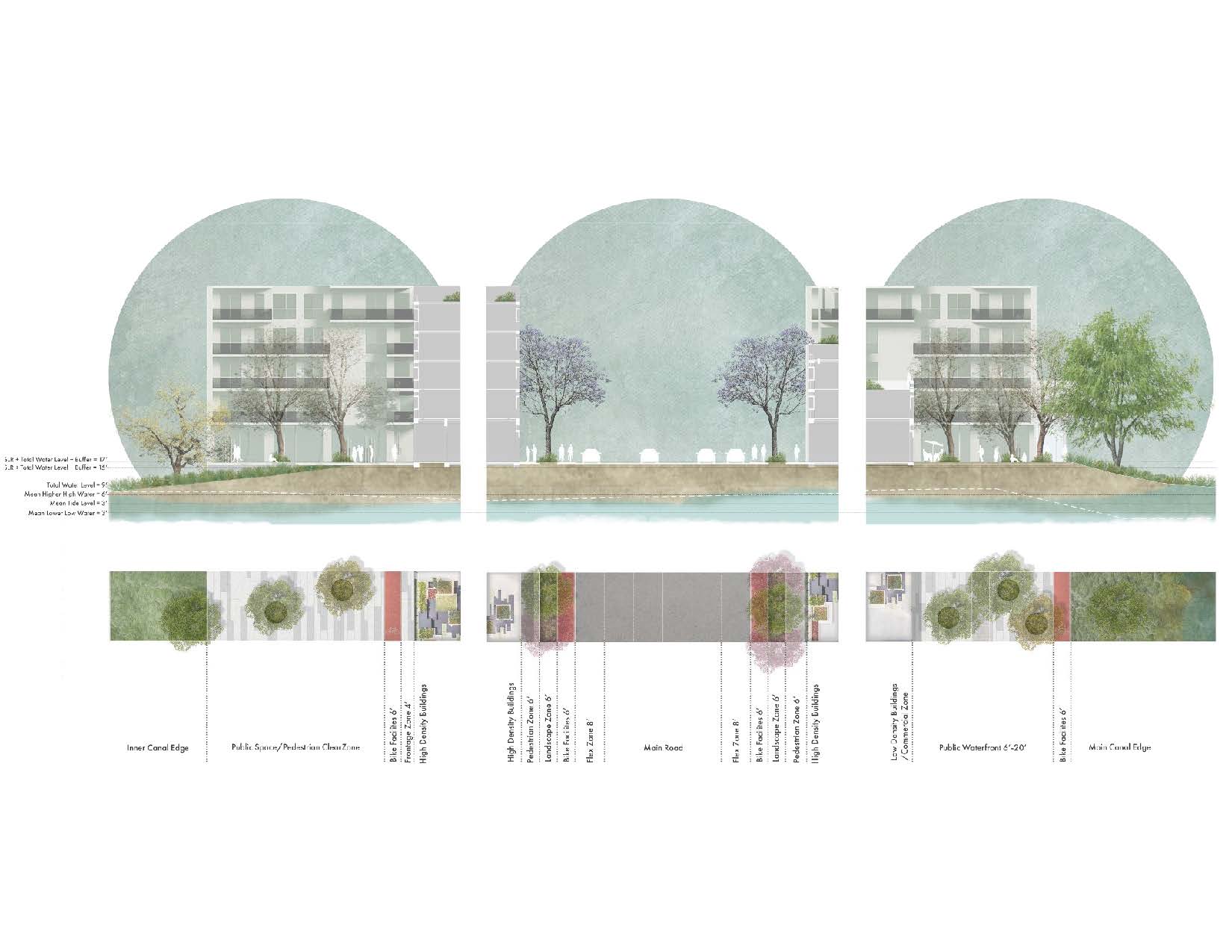
Zoomed sections with Waterfront, Street and Inner Public Space proposal.

Plant selection to enhance ecotones, biodiversity and bird migration using tree canopies as top overs.
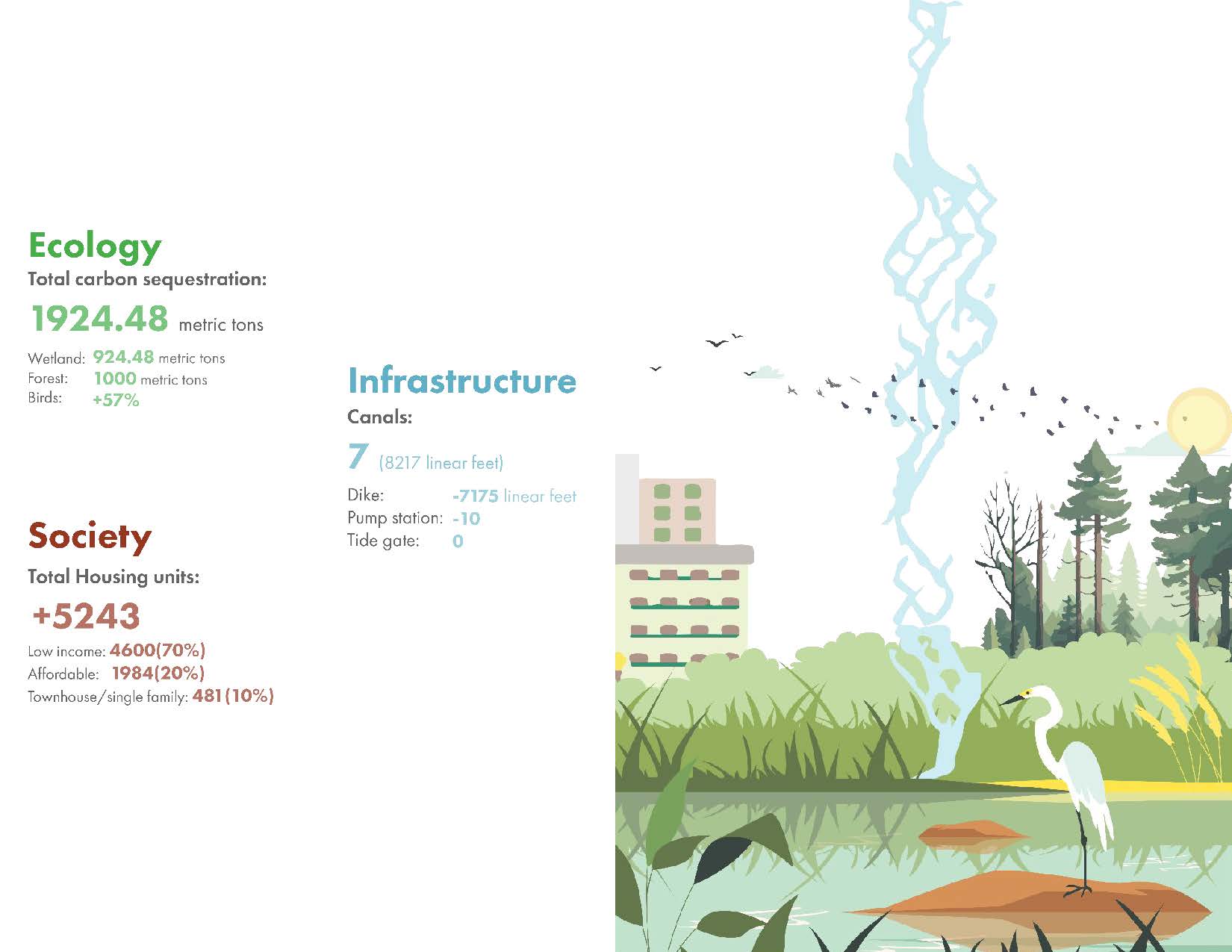
Infographic: carbon sequestration, housing, etc. numbers achieved by proposal.
Client
UC Berkeley
Project Team
Vermouth Li, Florencia Sepulvea Trucco, Anna Niubo Bermejo
Project Statement
Waffle Rafael: A Resilient “Waffle” Framework for Equitable Adaptation
Addressing the “scrambled egg” complexity of modern urban sprawl, Waffle Rafael proposes a transformative, phased “waffle” landform to adapt sea level rise (SLR), flooding, and groundwater emergence in this socially vulnerable district in San Rafael. By utilizing a strategic cut–and–fill strategy, the project replaces failing dikes with an integrated system of canals and bioswales that treat stormwater while providing the necessary fill to elevate infrastructure to 17 feet. This “waffle” ridge–and–pond system creates a climate–resilient foundation for 5,200+ new housing units – 90% of which are designated as affordable or low–income. The design restores critical ecotones, increases bird habitat by 57%, and sequesters nearly 2,000 metric tons of carbon. Waffle Rafael is a synthesis of hydraulic engineering, ecological restoration, and social justice, offering a scalable model for how Bay Area communities can thrive as water rises.
Project Description
Context and Challenge
The Canal District faces a dual crisis: a highly privately–owned waterfront, and an existential threat from Sea Level Rise (SLR) and Groundwater level rise. Existing defenses like dikes and pump stations are increasingly insufficient against rising tides and groundwater emergence. Waffle Rafael focuses on this socially vulnerable coastal district where industrial land use has historically cut off the community from the water and degraded the local ecology.
Design Strategy: The “Waffle” Landform
Inspired by Cedric Price’s urban metaphors, the project shifts from a “boiled egg” (walled) or “scrambled egg” (dispersed) city to a “waffle” city. The waffle geometry utilizes a cut–and–fill approach to create a new topography of high ridges and low ponds. By introducing seven new canals (8,217 linear feet), the design generates the material needed to elevate main roads and residential blocks to a safe height of 17 feet. This system replaces ten aging pump stations, transitioning from energy–intensive mechanical drainage to a process–based, naturalized hydraulic system.
Ecological Restoration and Carbon Sequestration
The project features the restoration of the “ecotone” – the transition zone between land and water. By diversifying the water edges, the plan creates a gradient of mudflats, low/middle/high marshes, and urban upland forests. This restored habitat supports bird migration, projected to increase avian diversity by 57%. Beyond habitat, the landscape serves as a carbon sink, sequestering 1,924.48 metric tons of carbon through new wetland and forest canopies (20,000+ new trees).
Social Equity and Phased Adaptation
A central pillar of the proposal is the mitigation of social vulnerability. The project transforms a monolithic industrial zone into a vibrant mixed–use district. Through three phases (2050 to 2100), the project introduces over 5,200 housing units, specifically targeting low–income (70%) and affordable (20%) demographics. Revenue generated from waterfront commercial zones funds the continued development of the canal district, ensuring the project is economically self–sustaining.
Conclusion
Waffle Rafael demonstrates that resilient infrastructure does not have to be invisible or exclusionary. By opening the waterfront as public space and embracing rising water levels, and educating the community on natural ecosystems, the project turns a “hazard” into a celebrated landscape feature.