
An Urban Family Compound
Merit Award /
2026, Residential Design
Los Angeles, Ca
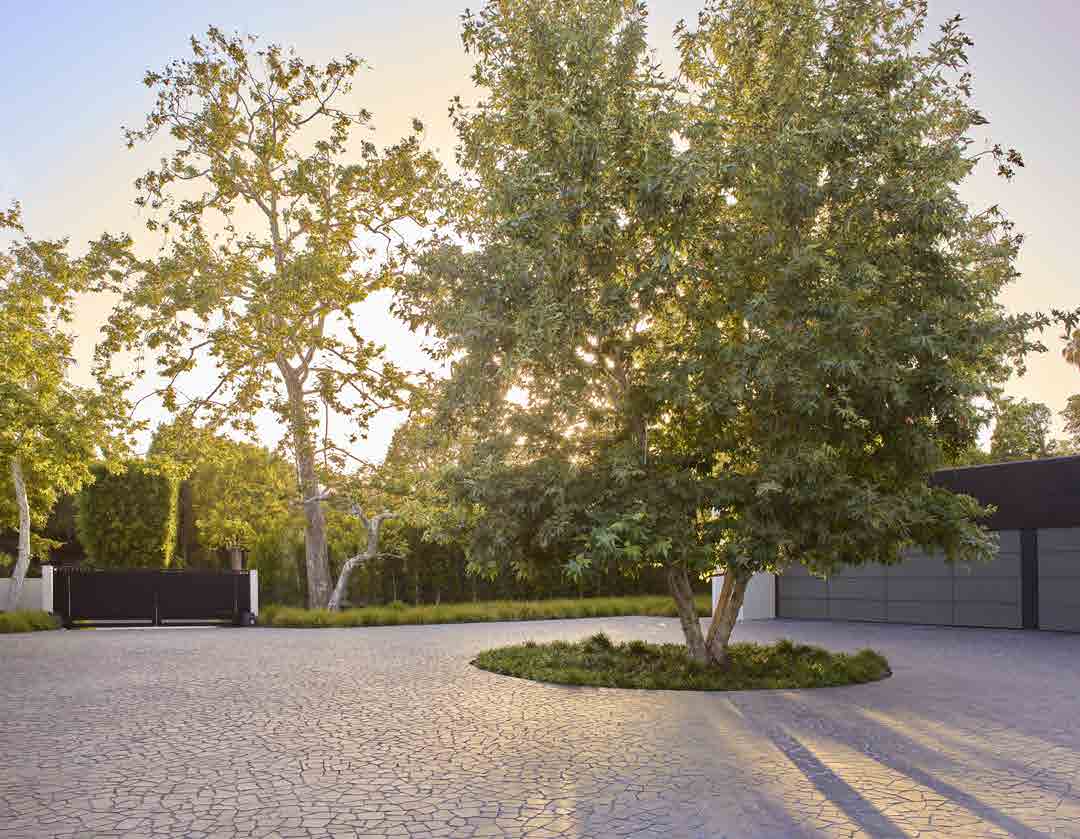
Entry paving is carefully designed around existing trees, reinforcing preservation as a foundational design strategy.
© Marion Brenner

The site plan illustrates layered outdoor rooms, preserved trees, circulation, and integrated water management across the compound.
© The Ingalls
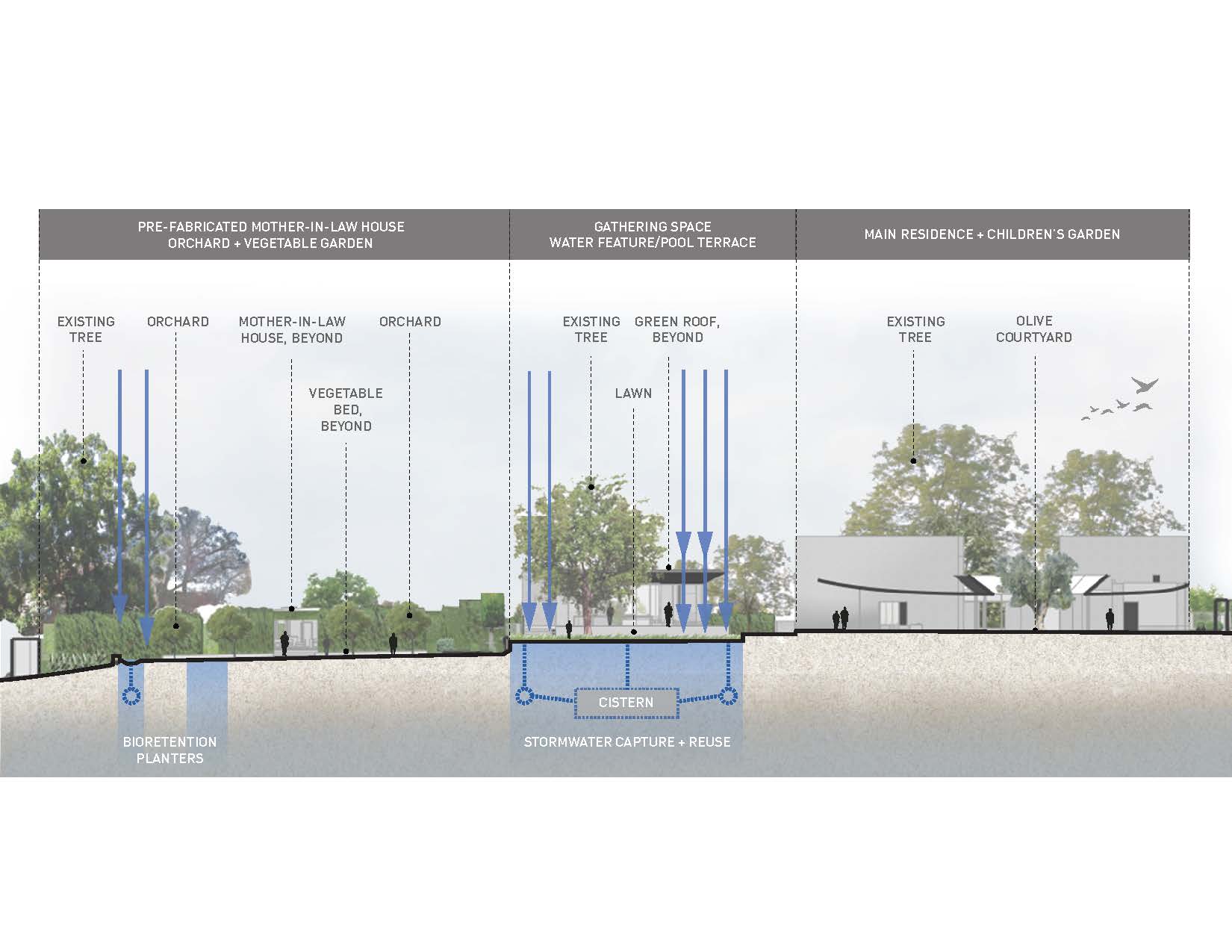
Section diagram shows terracing, elevation change, and stormwater capture through bioretention gardens.
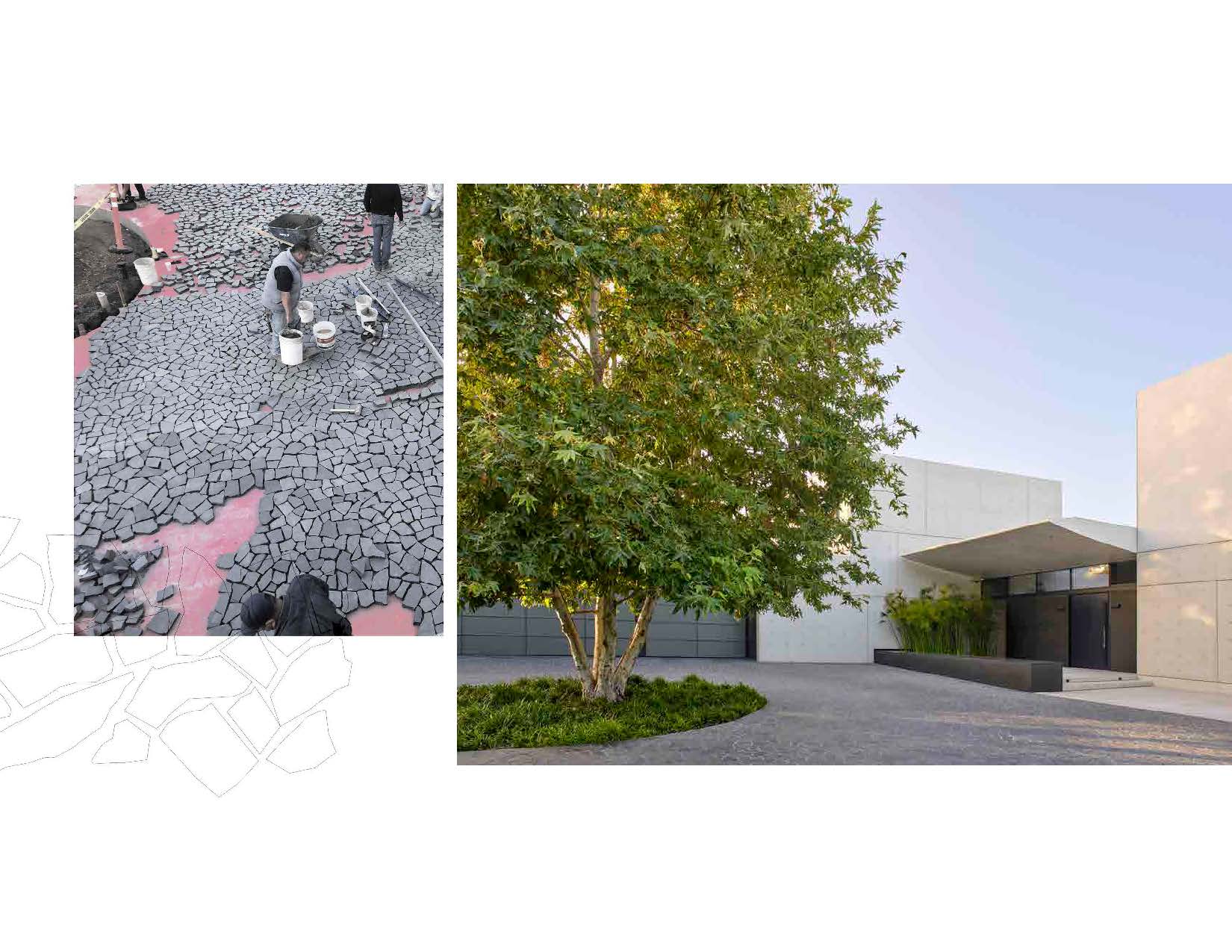
Mosaic basalt paving provides a tactile counterpoint to the home’s minimalist modern architecture.
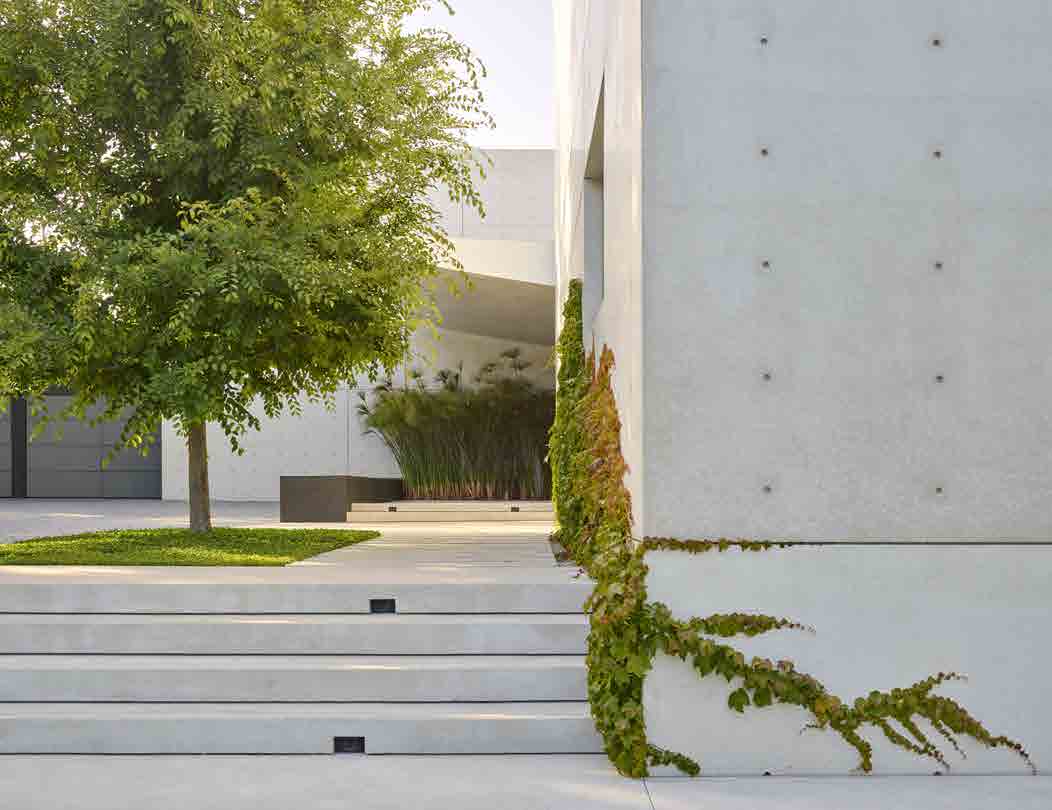
Terraced steps lead from the entry to garden and pool levels. Carefully detailed concrete work unifies the landscape.
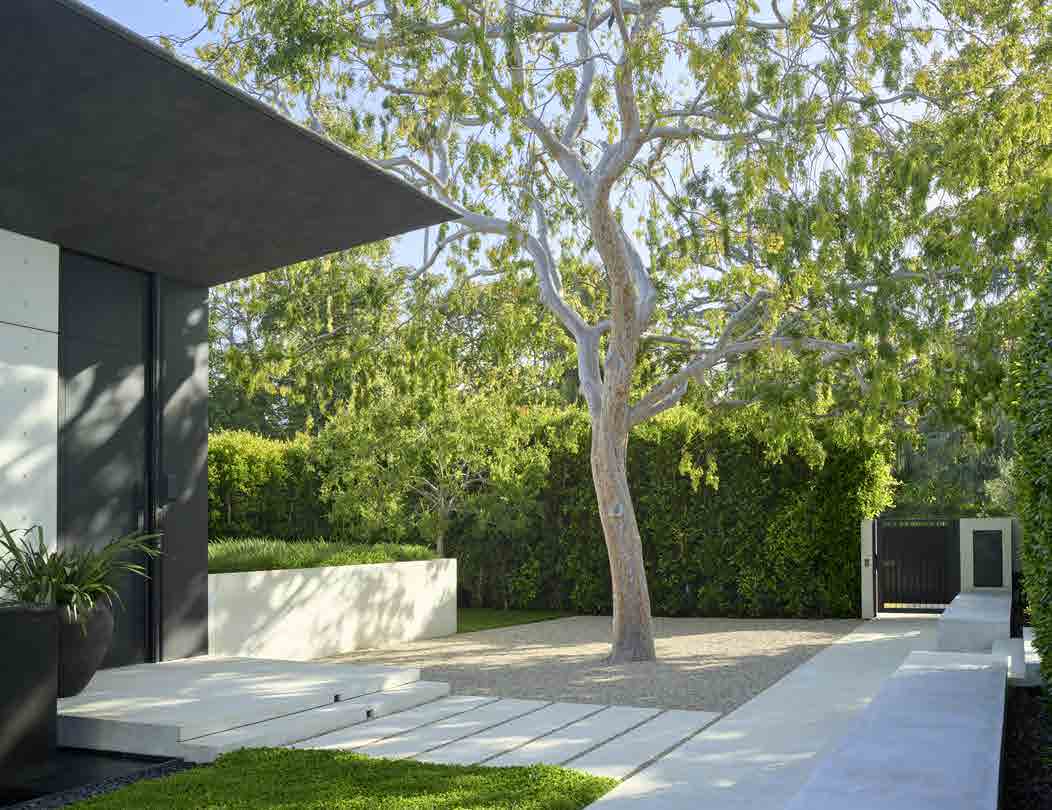
Existing Chinese Elm provides shade and structure at the pedestrian entry, with the landscape organized to preserve and build upon the existing canopy.

Pedestrian pathways link shared and intimate spaces while separating vehicular and pedestrian circulation.

Views to the main residence highlight seamless indoor-outdoor connections across living and garden spaces.
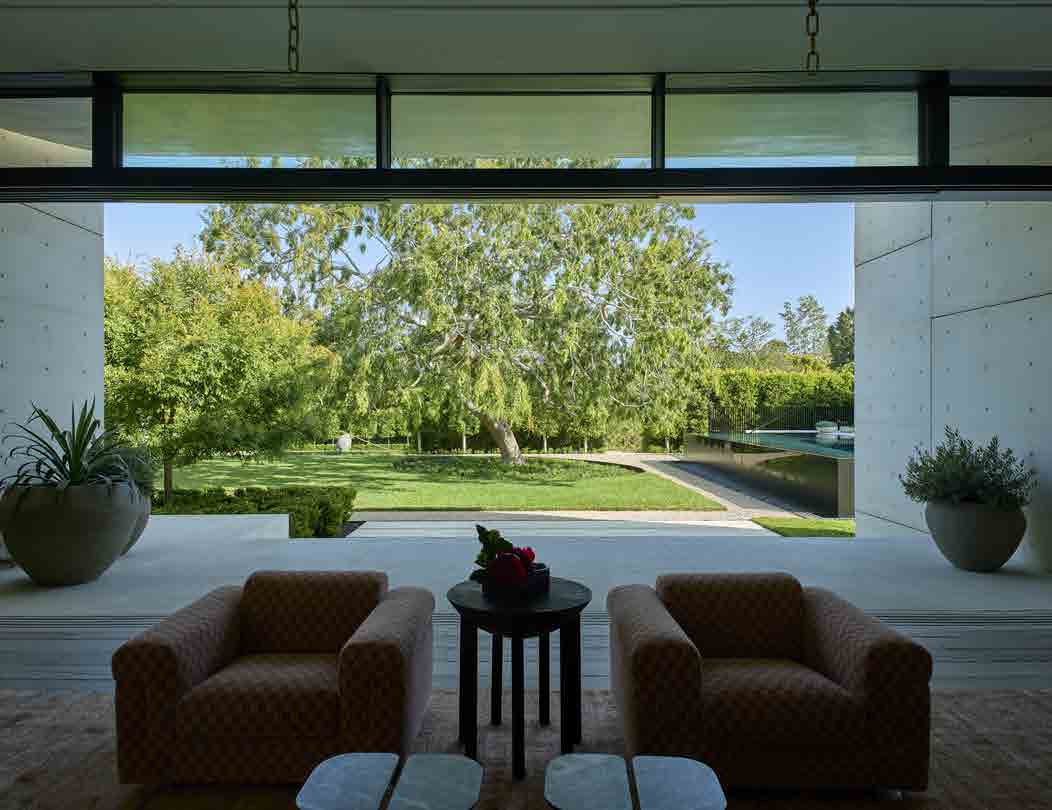
An elliptical planter frames an existing Chinese elm, reinforcing indoor-outdoor connection from the living room.
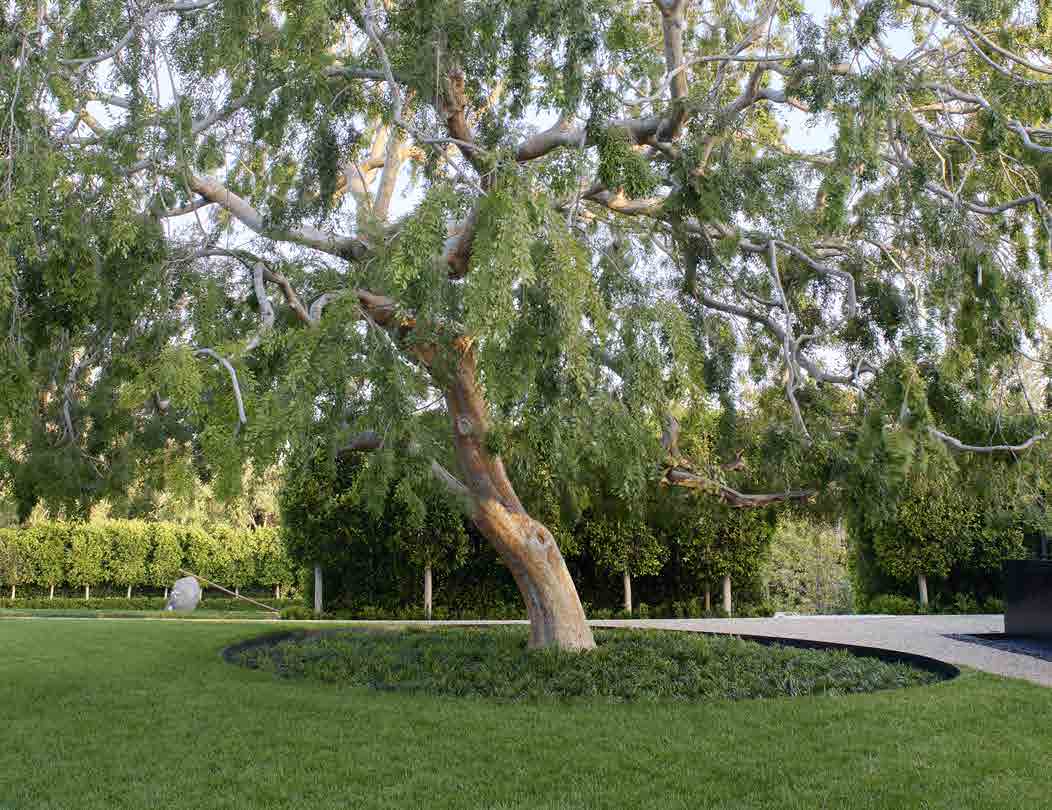
The protected Chinese elm anchors the garden, demonstrating the project’s commitment to existing tree preservation.
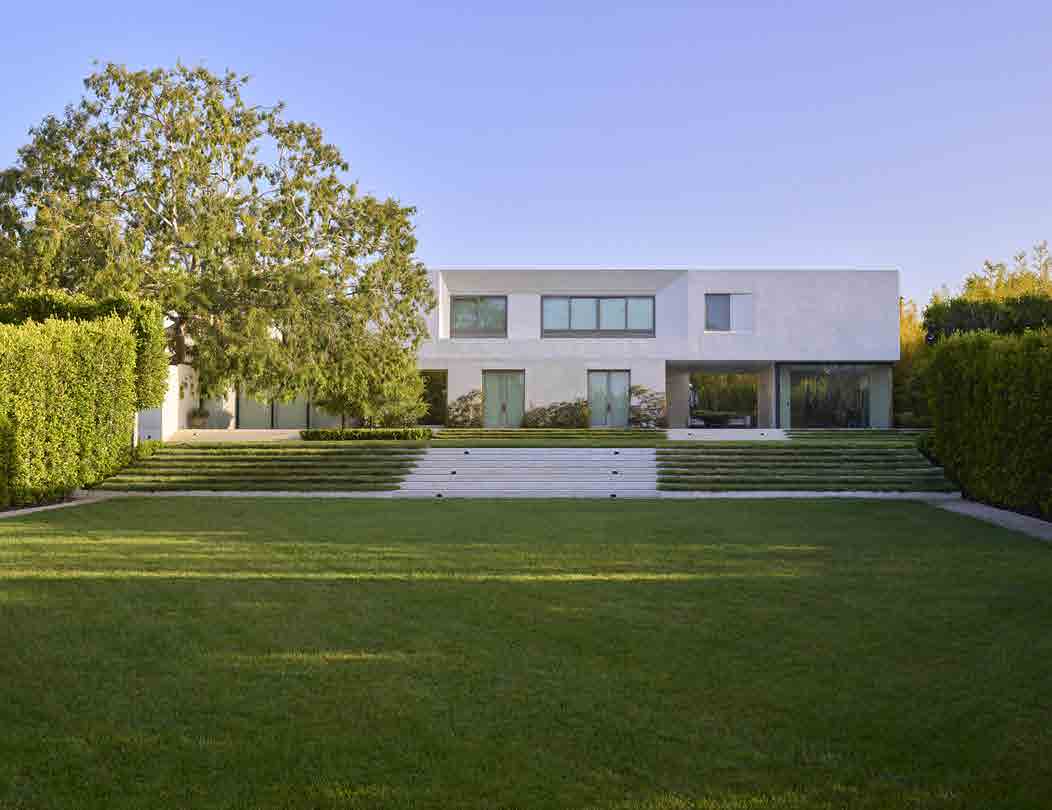
Planted terrace steps reduce impervious surfaces while connecting home and garden; lawns are irrigated with captured stormwater.

Paths weave through orchards, vegetable beds, and bioretention gardens, connecting shared outdoor spaces.

A vine–covered modular residence supports aging in place, accessed by permeable gravel paths and gardens.

Citrus trees and bioretention planters line pathways, choreographing movement between residences.

A meditative courtyard brings natural light to lower levels and centers the entry around a century-old olive tree.
Client
N/A
Project Team
Andrea Cochran, Lead Landscape Architect
Horng Sheng Tu
Sarah Keizer
Shannon Hee
Project Statement
This Los Angeles residence offers a contemporary model for multigenerational living, where landscape and architecture operate as a unified system. Shared outdoor rooms support family connection, while flexible, accessible spaces allow for independence across generations, guided by universal design principles. Ecological performance is embedded throughout the site through low-impact stormwater management, green roofs, drought-tolerant planting, and preservation of mature trees. Modular construction, permeable surfaces, and integrated water strategies create a resilient landscape that adapts to evolving family needs, demonstrating how sustainability, flexibility, and lived experience can coexist within an urban residential setting.
Project Description
This 2.2-acre Southern California residence reimagines multigenerational living by uniting formerly separate properties into a cohesive family compound. The landscape balances shared outdoor spaces with independent living environments, allowing multiple generations to live together while maintaining privacy, accessibility, and long-term adaptability.
The design responds directly to the site’s terraced topography, elevation changes, and mature tree canopy. Rather than imposing a single formal gesture, the landscape unfolds as a sequence of layered “green rooms” that guide movement, frame views, and encourage social interaction while preserving moments of retreat. Existing trees were carefully retained, with new spaces shaped around their canopies to enhance microclimate and strengthen a sense of place.
The design emphasizes seamless indoor-outdoor living and daily engagement with the landscape. Terraced lawns support play and gathering, while stone steps and grass-topped stairs connect interior spaces to gardens and pool terraces. Shared courtyards, productive orchards, and curated vegetable beds provide gathering spaces for all generations, while planted screens and secluded terraces offer privacy and quiet refuge.
Close collaboration with MASASTUDIO and the client ensured alignment between architectural intent, family programming, and the landscape vision. Minimal contemporary forms are paired with lush, textural planting to create contrast and rhythm, celebrating light, greenery, and sensory experience. Fragrant citrus trees, green walls, and integrated water strategies reinforce ecological awareness while enhancing daily comfort.
A modular mother-in-law residence extends the project’s social and environmental goals. Shaded by a star jasmine trellis, the single-level dwelling supports aging in place while remaining visually embedded within the landscape. Evergreen planting modulates temperature, supports pollinator habitat, and assists stormwater infiltration, demonstrating how prefabricated construction can achieve both environmental performance and experiential richness.
Material choices ground the project in regional specificity. Basalt paving, decomposed granite paths, and locally sourced wood introduce tactile contrast to the home’s calm, planar architecture. Climate-adaptive, drought-tolerant mass plantings reduce water demand while enriching habitat and sensory experience. Integrated stormwater capture and bioretention systems supplement irrigation needs, allowing infrastructure to operate quietly as an integral part of the landscape.
Together, architecture and landscape form a resilient framework for multigenerational living. By embedding ecological function within the site’s spatial and material language, the project demonstrates how sustainability, modular innovation, and human experience can coexist in an elegant and adaptable urban family compound.

