The Big Night: Honoring Taricha Torosa’s Seasonal Migration in Tilden Regional Park
Merit Award /
2025, Student Project
Berkeley, CA

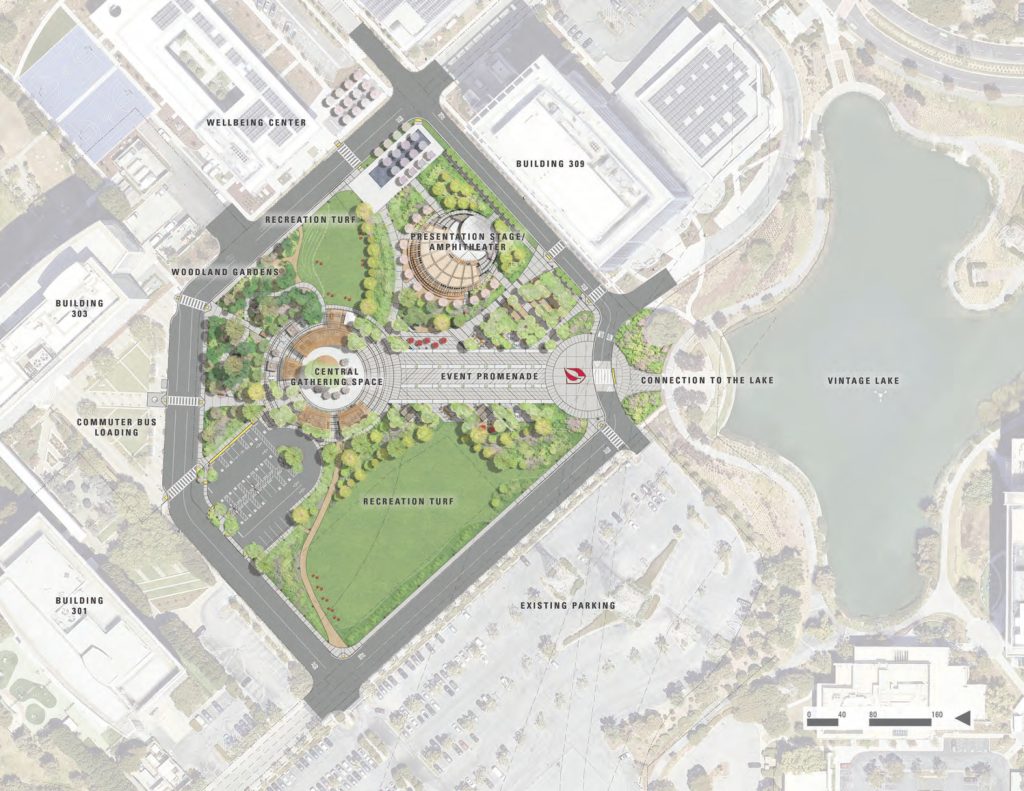
Project site plan with pond and boardwalk grading.
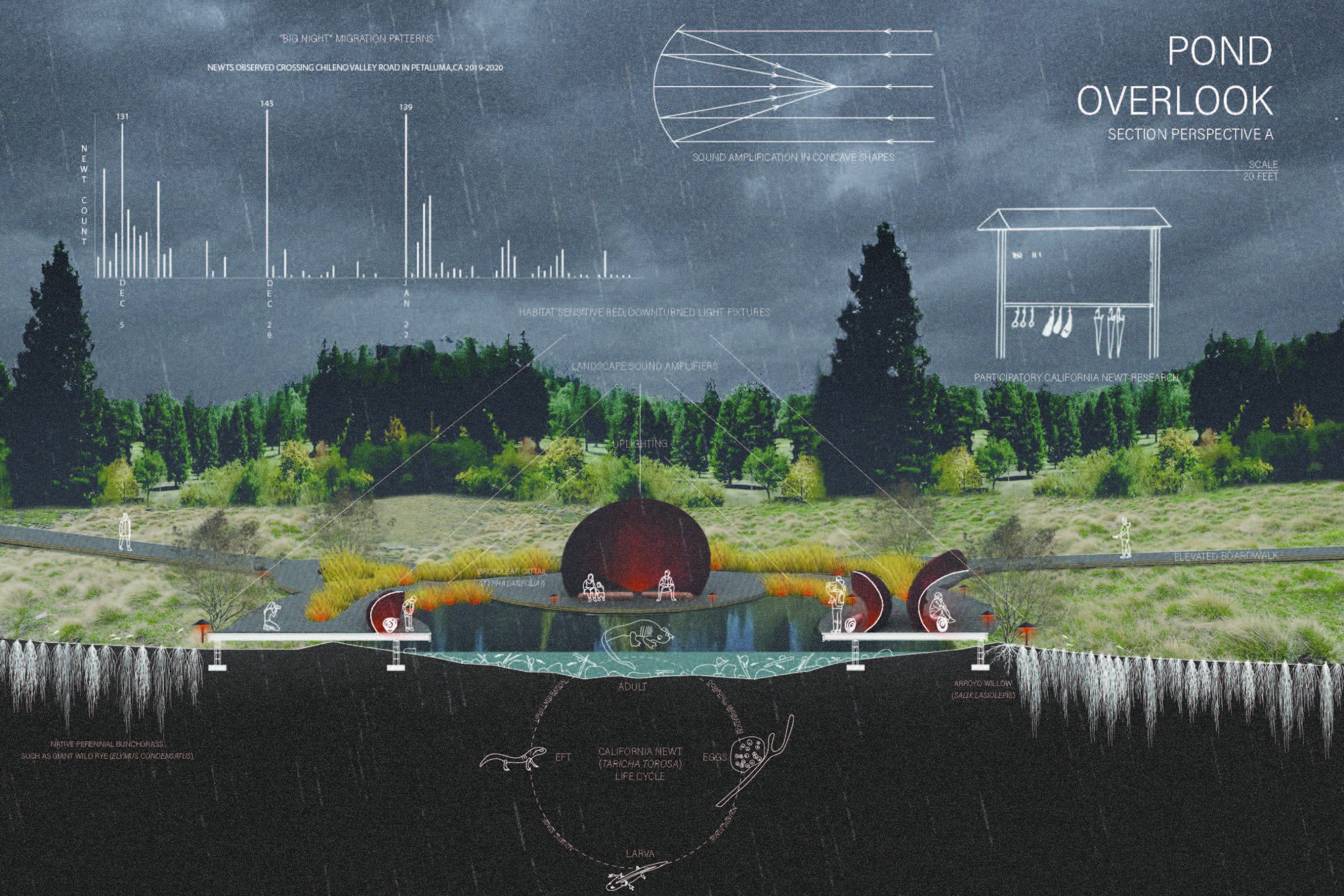
Section perspective of pond overlook platform, featuring newt life cycle and migration data.
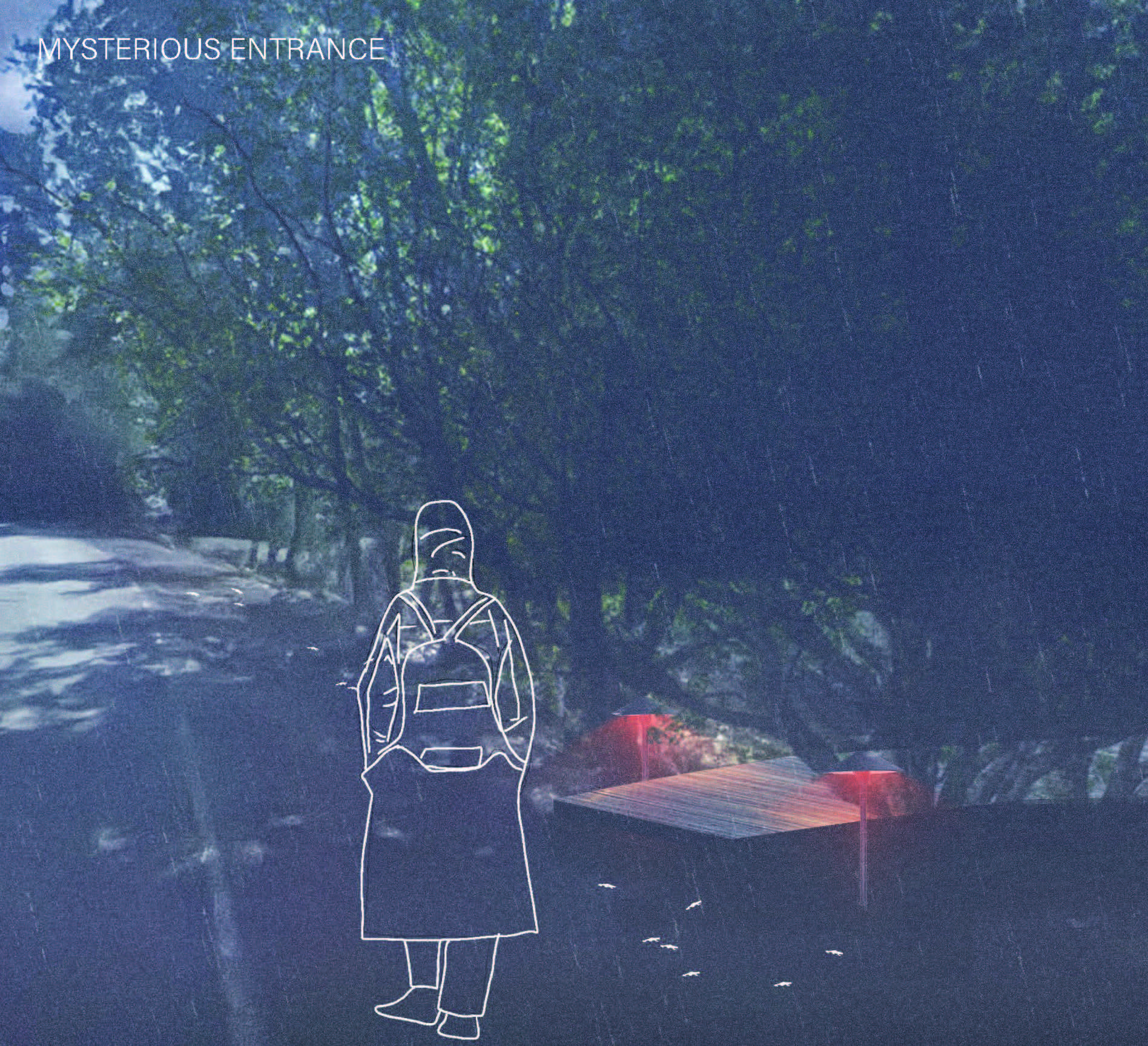
Perspective of entrance to boardwalk.
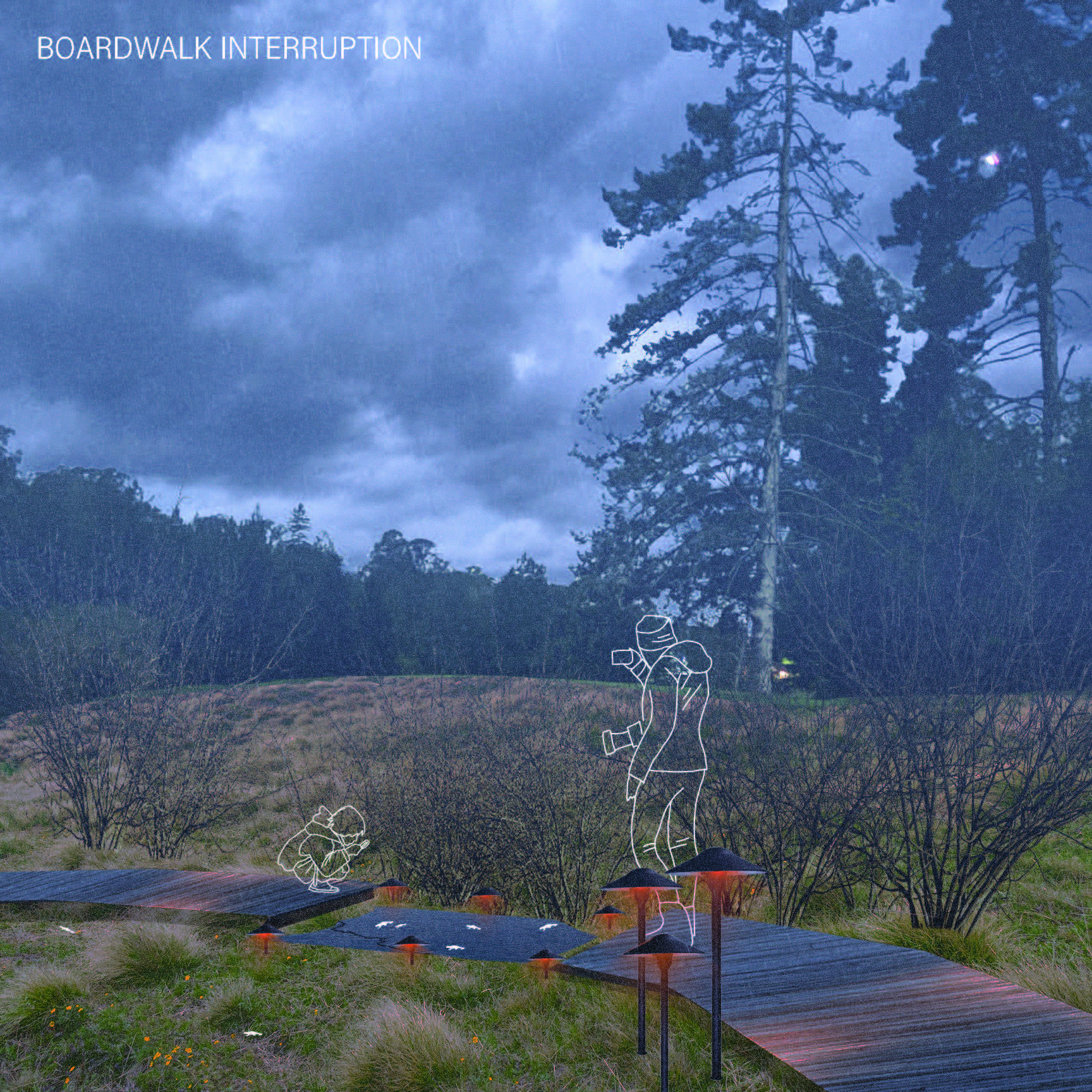
Perspective of boardwalk and newt crossing stone slabs.
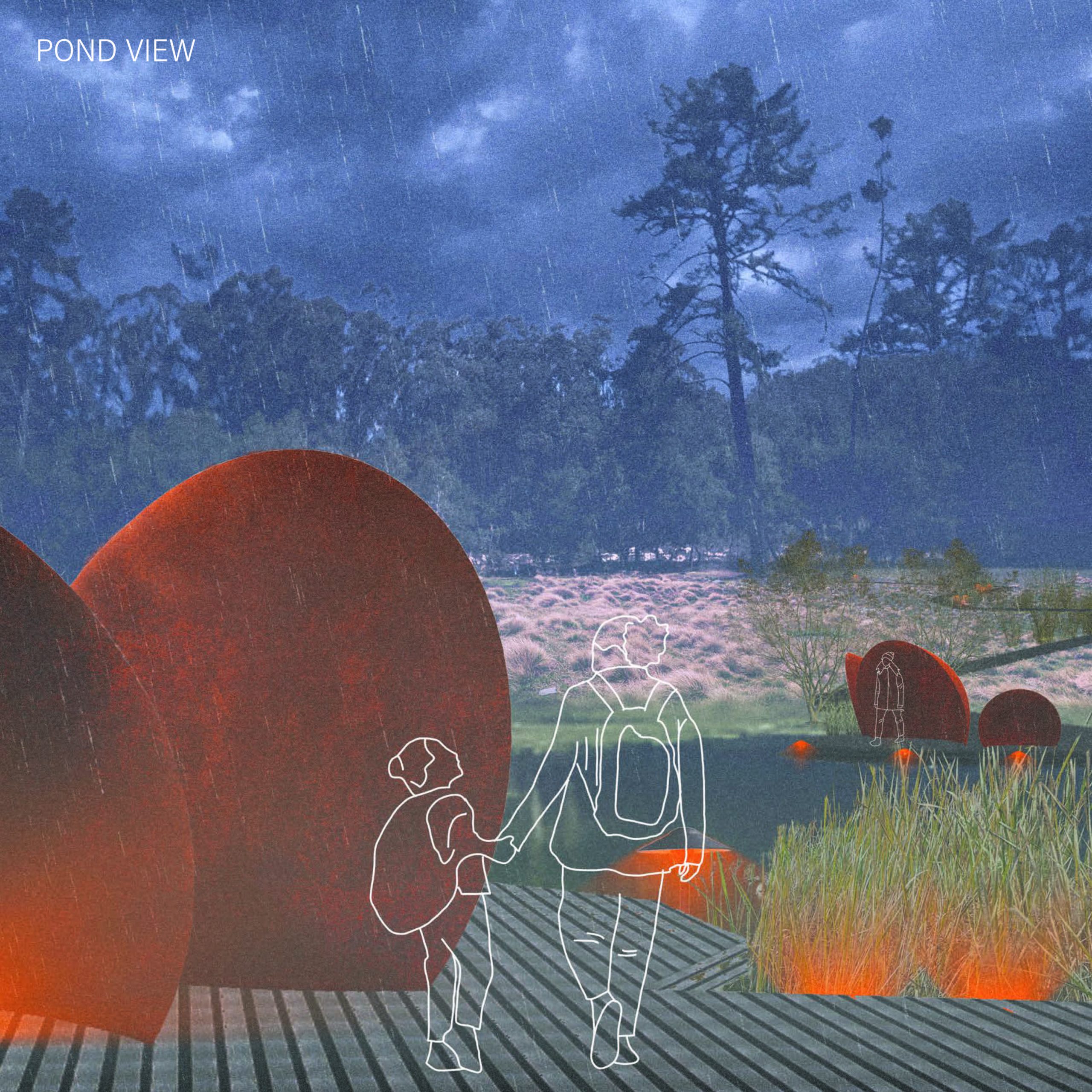
Perspective of pond overlook platform, next to sound and rain shelter.
Client
University of California, Berkeley
Project Team
Abigail Barton
Project Statement
The Big Night is a project that invites the public to experience a regional park in a really unique way– at night and in the rain– as part of a yearly ritual. The goal of this experience is to bring people along the migration journey of the California Newt, an important environmental indicator species in the headwaters of Wildcat Creek watershed. Their migration paths to historic mating pools are currently interrupted by a road and a golf course, which leave them vulnerable to getting squashed by unknowing visitors. By creating a magical and exciting experience from the seasonal patterns of these creatures, I want to bring people’s attention to the small but important actors in the landscape, while also expanding their protected habitat. The Big Night simultaneously reveals and protects the ecological processes that are constantly underway in Tilden Regional Park.
Project Description
“The big night” refers to the few nights a year when amphibians–specifically the California Newt– migrate in larger groups than usual. This usually happens on a rainy night, as newts need moisture, when they begin a descent from their dry, summer home in the uplands, down to their natal streams and ponds in order to mate. At the Tilden Regional Park’s golf course, these creatures are often seen crossing the road to get down to the stream. Due to this, the road is actually closed to cars from November to April in order to protect the newts from getting crushed on their journey. Still, due to high levels of bike and foot traffic, in addition to the activity of unaware golfers, many newts are seen dead. While not an endangered species, California Newts are a species of special concern in California.
I wanted to design a special place that educates people about the importance of these amphibians to our headwaters, but would also serve as a reflective and sensory experience in all seasons. Additionally, I thought this would be a good place to engage the public in participatory newt research and counting–something that people are already engaging with via iNaturalist– in order to help with amphibian restoration efforts in the park.The design is about seeing but not touching the California Newt, as their skin is actually toxic! Beginning at the road, visitors are greeted with mysteriously lit entrances to a series of boardwalks. The lighting is red-colored and down-turned, which is the least disruptive frequency to the circadian rhythms of nocturnal animals. As visitors make their way down the elevated boardwalk (so as to allow the newts to pass under), they are occasionally interrupted by stone slabs placed at grade, intercepting drainage pathways on the site. My hypothesis is that a newt is likely to move along these drainages, as they need to move in places with moisture. These stone slabs are well-lit, and serve as a place for visitors to stop in hopes of catching a newt crossing over it, while being able to move around it or wait for it to pass. This is the closest one will get to the newt throughout this experience. The elevated boardwalk eventually makes its way to a platform at the side of a breeding pond, which is constructed with optimal grading for amphibian habitat. Visitors weave through willows and cattails alongside this pond, where newts will mate, lay their eggs, and the young efts will start their lives before migrating back to the uplands. On the platform is a series of sound structures at different scales–one big enough for a large group and some with room only for a small child–where one will not only be sheltered from the rain but also be immersed in the sound of rain hitting the roof. When not raining, these shelters act as sound amplifiers where one can hear bugs or birds across the landscape.
Overall, my goal with this project is to make people excited about tiny creatures that are sometimes imperceptible to those not looking. I want to create a sense of respect and reverence for the California Newt by making an experience that people look forward to year after year. This project also argues for the importance of restoration efforts at the headwaters of watersheds, because everything that happens there will affect the health and biodiversity of the water downstream, often in more urban areas with more restoration challenges. I was invited to present this project to the East Bay Regional Parks Department Restoration Team, and they found this project exciting not just because newts are quite charming and a project like this does have some precedents in the park, but mostly because they hadn’t considered reimagining the golf course for restoration purposes at all. I view my role as a landscape architect as someone who can bravely envision new realities and inspire people to share in these visions. I feel really proud that I inspired this team of restoration ecologists and park staff to consider a more engaging and biodiverse alternative to the golf course.