
Gilead Park: From Gray to Gold
Biodiversity + Climate Change Award /
2025, Biodiversity and Climate Action
Foster City, CA

Plan View: Gilead Park was created to enrich the north campus with high-quality outdoor spaces that encourage nature access and promote well-being.

Before and After: A former 739-space parking lot reimagined into a biodiverse outdoor oasis.
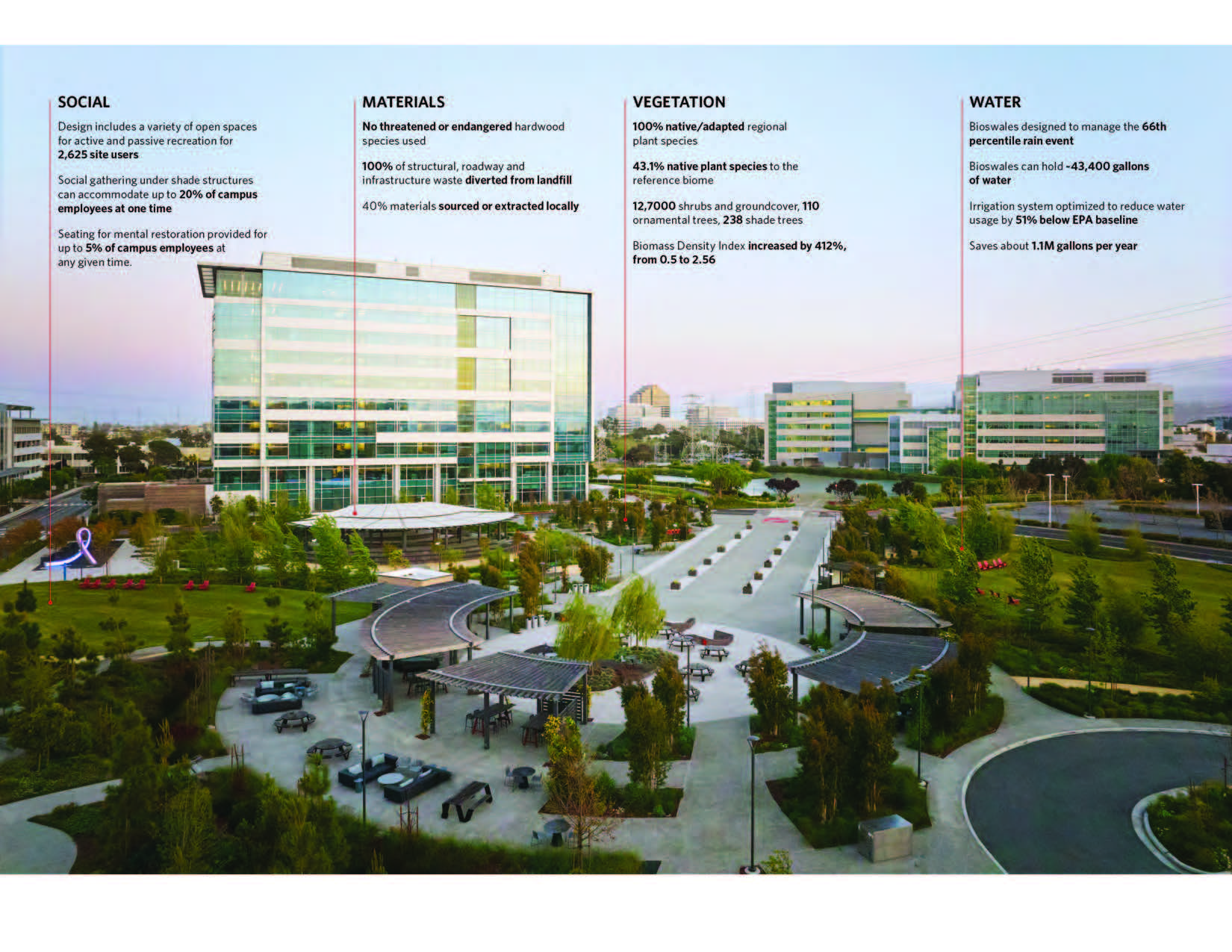
Social and Environmental Metrics: Sustainable SITES metrics Diagram.
©Caitlin Atkinson
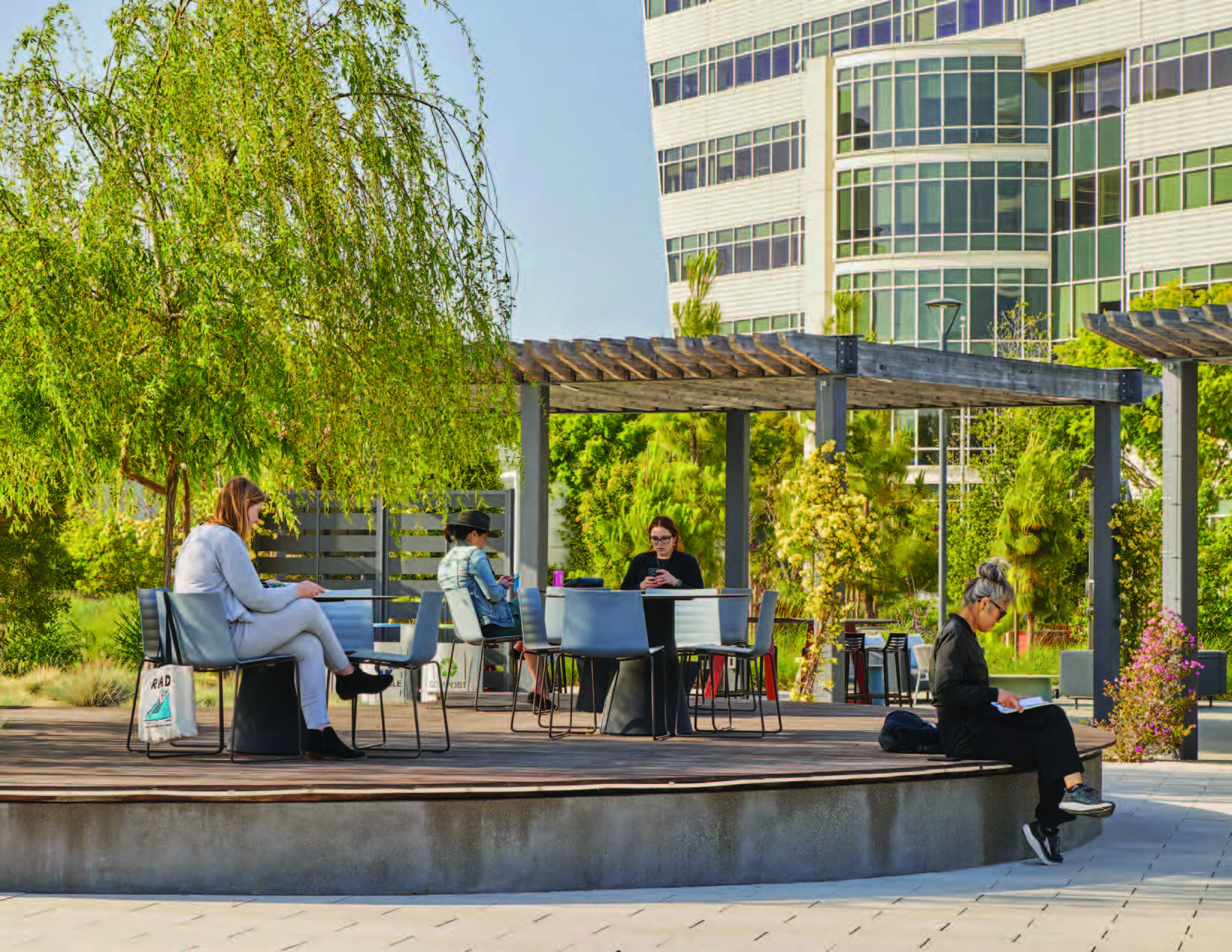
The circular bench in the central gathering area offers an informal space for gatherings and performances.
©Caitlin Atkinson
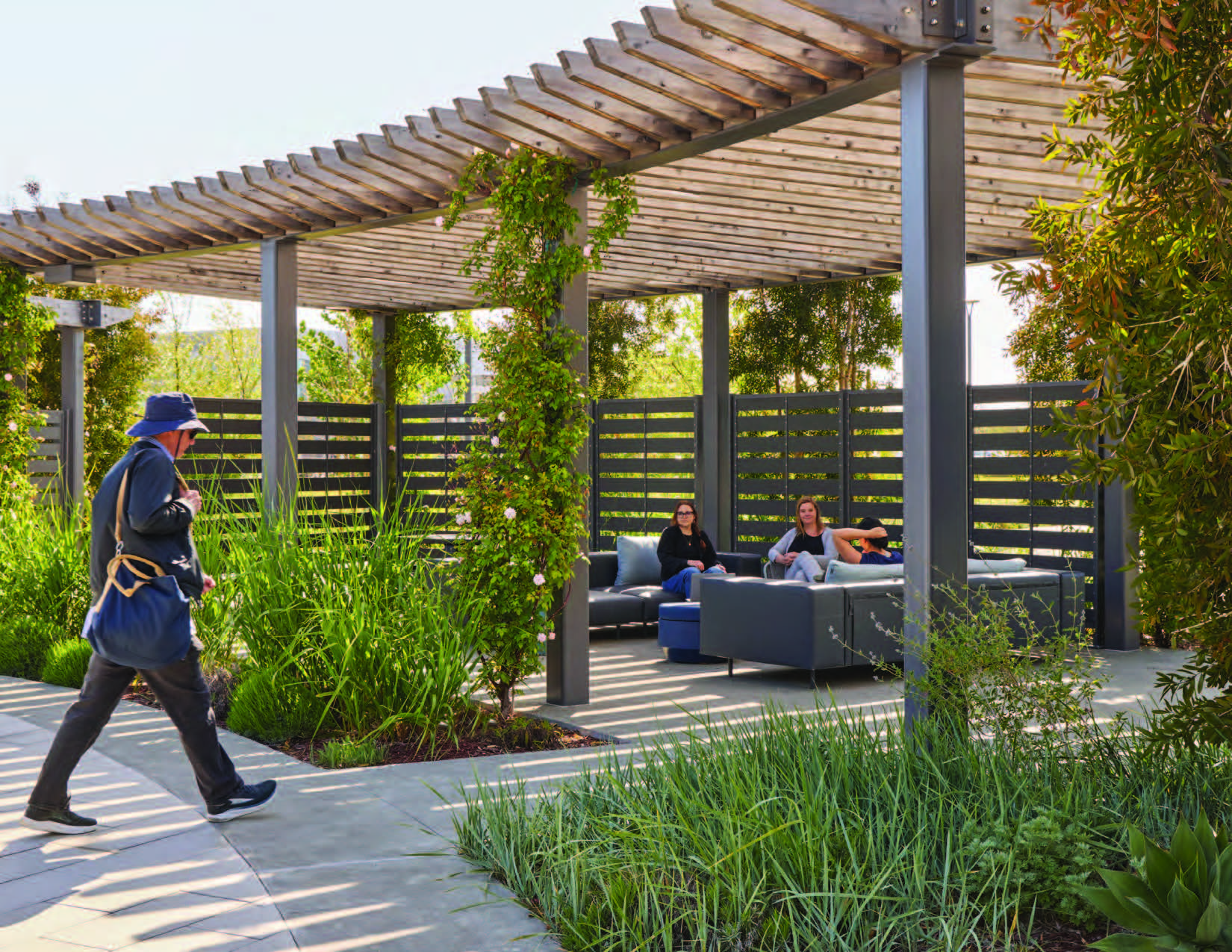
The Central Gathering Space offers seating and shade, making it ideal for groups and activities, from lunch breaks to socializing.
©Caitlin Atkinson
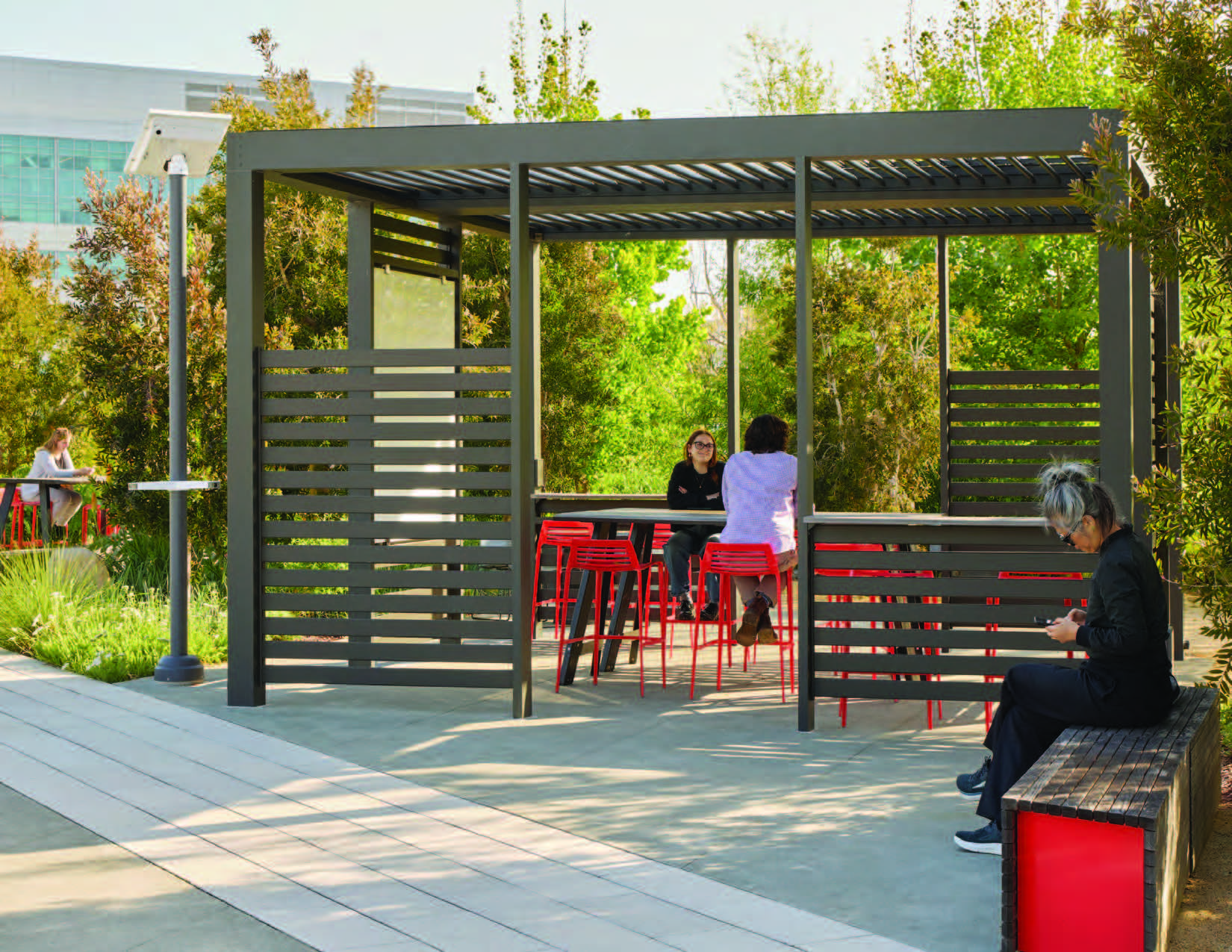
Outdoor workspaces along the event promenade offer collaborative opportunities in a natural setting, catering to groups of all sizes.
©Caitlin Atkinson
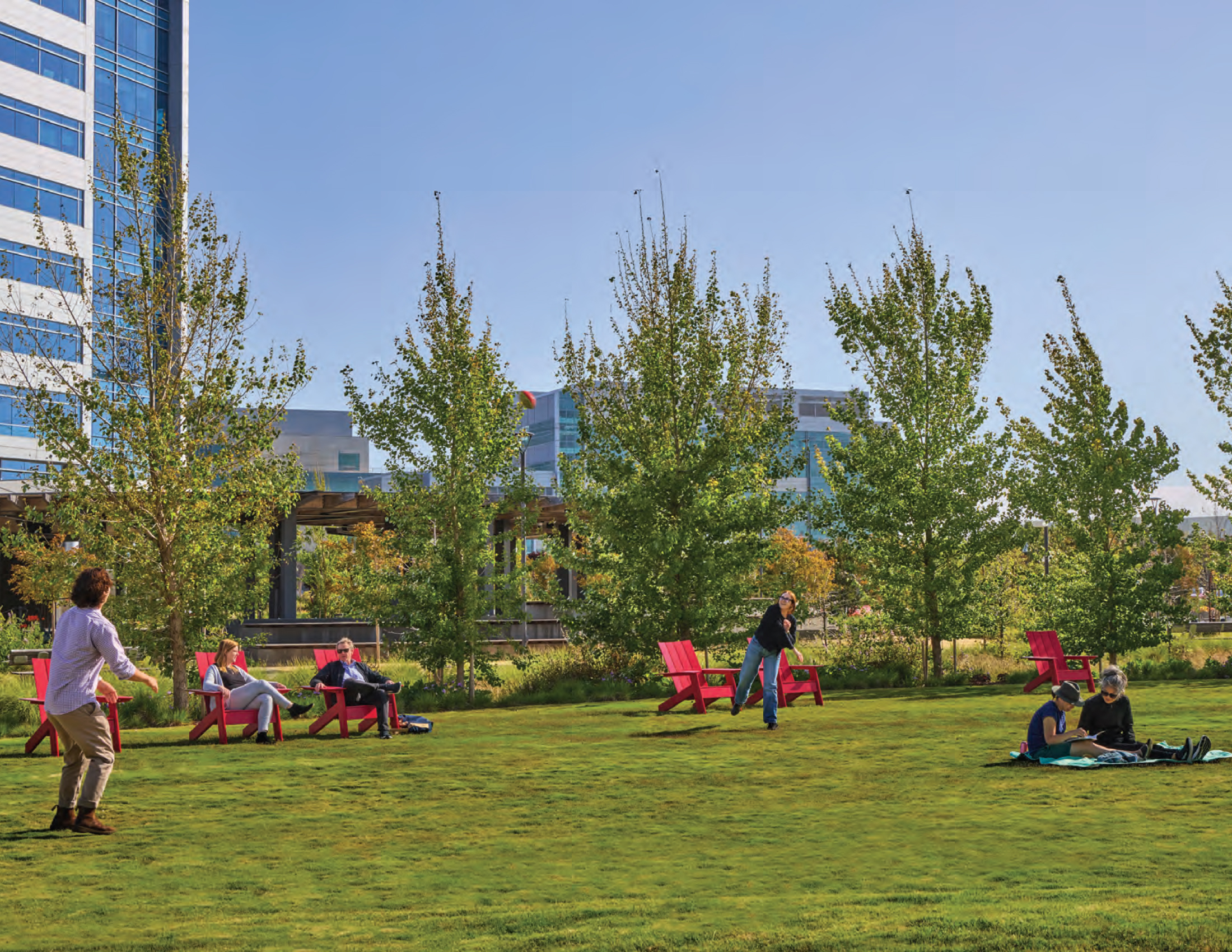
The recreational turf offers space for both active and passive activities, designed with water conservation in mind and featuring subsurface drainage.
©Caitlin Atkinson
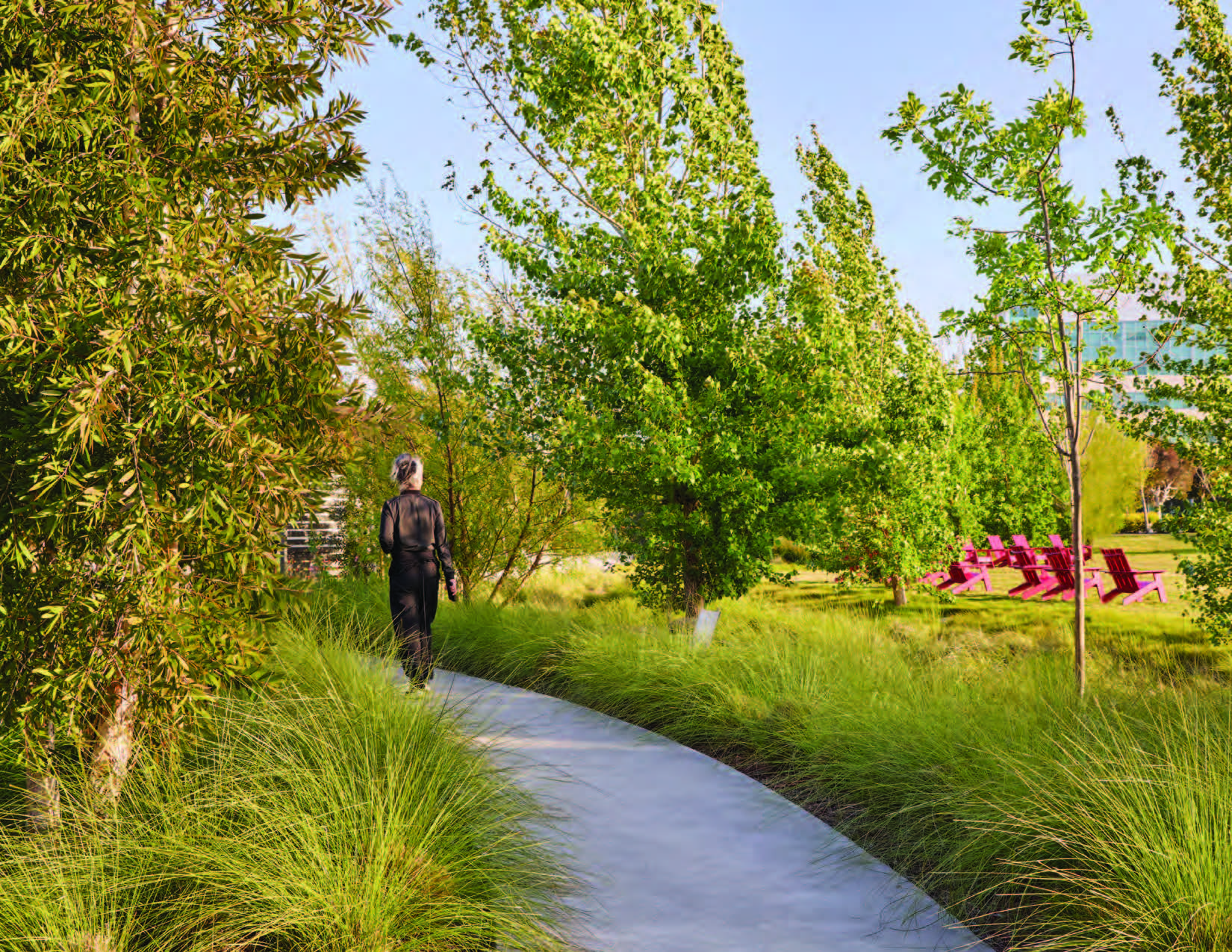
Walking Path along Riparian woodlands: The riparian woodlands feature native meadow species and a mix of canopy trees, offering vibrant fall color and seasonal variety.
©Caitlin Atkinson
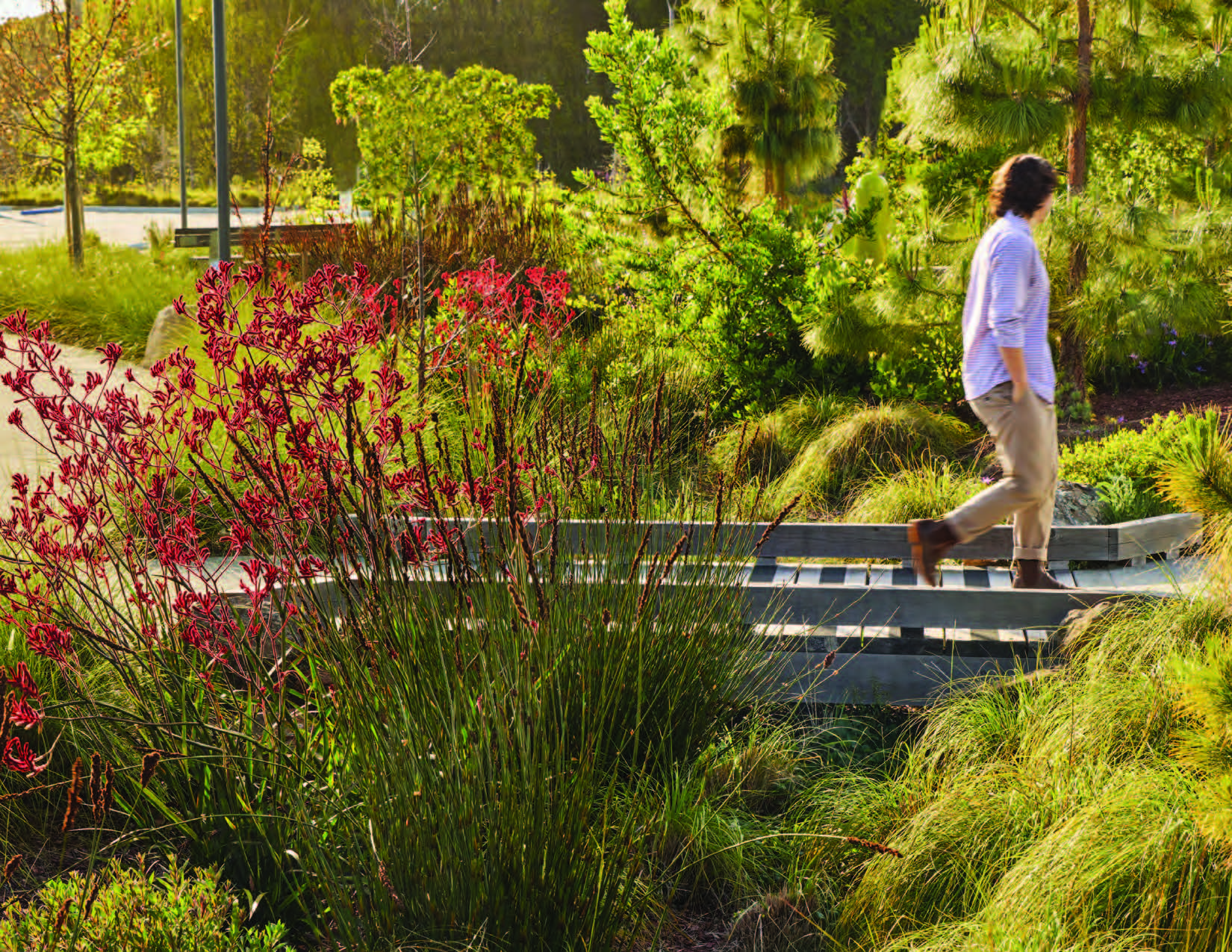
Bioretention Planting: A footbridge crosses over a bio-retention planting area into the Woodland Garden.
©Caitlin Atkinson
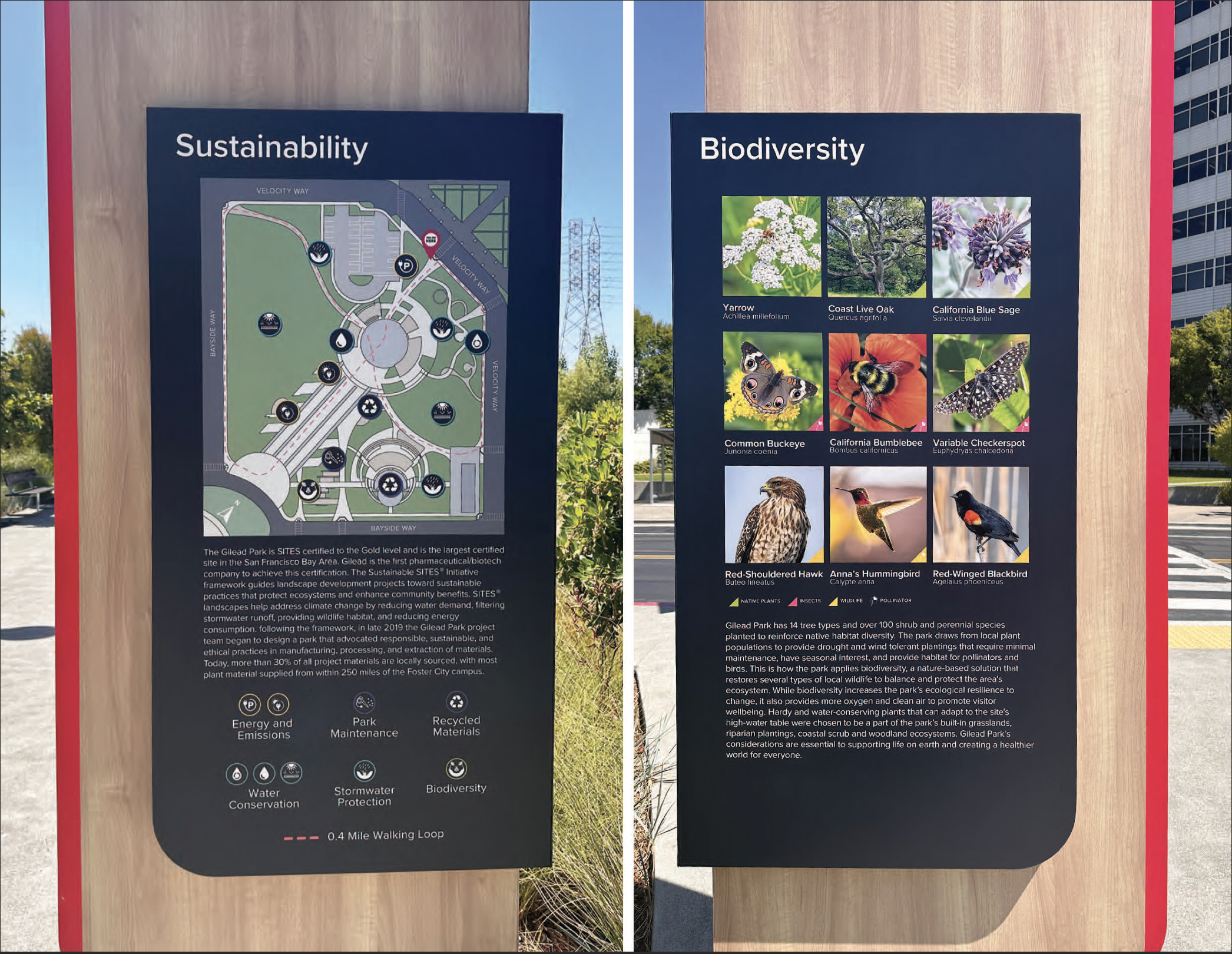
Educational Signage: A custom-designed signage program highlights key biodiversity and sustainability features, educating users about the ecological value of the landscape.
©Nicole Kho
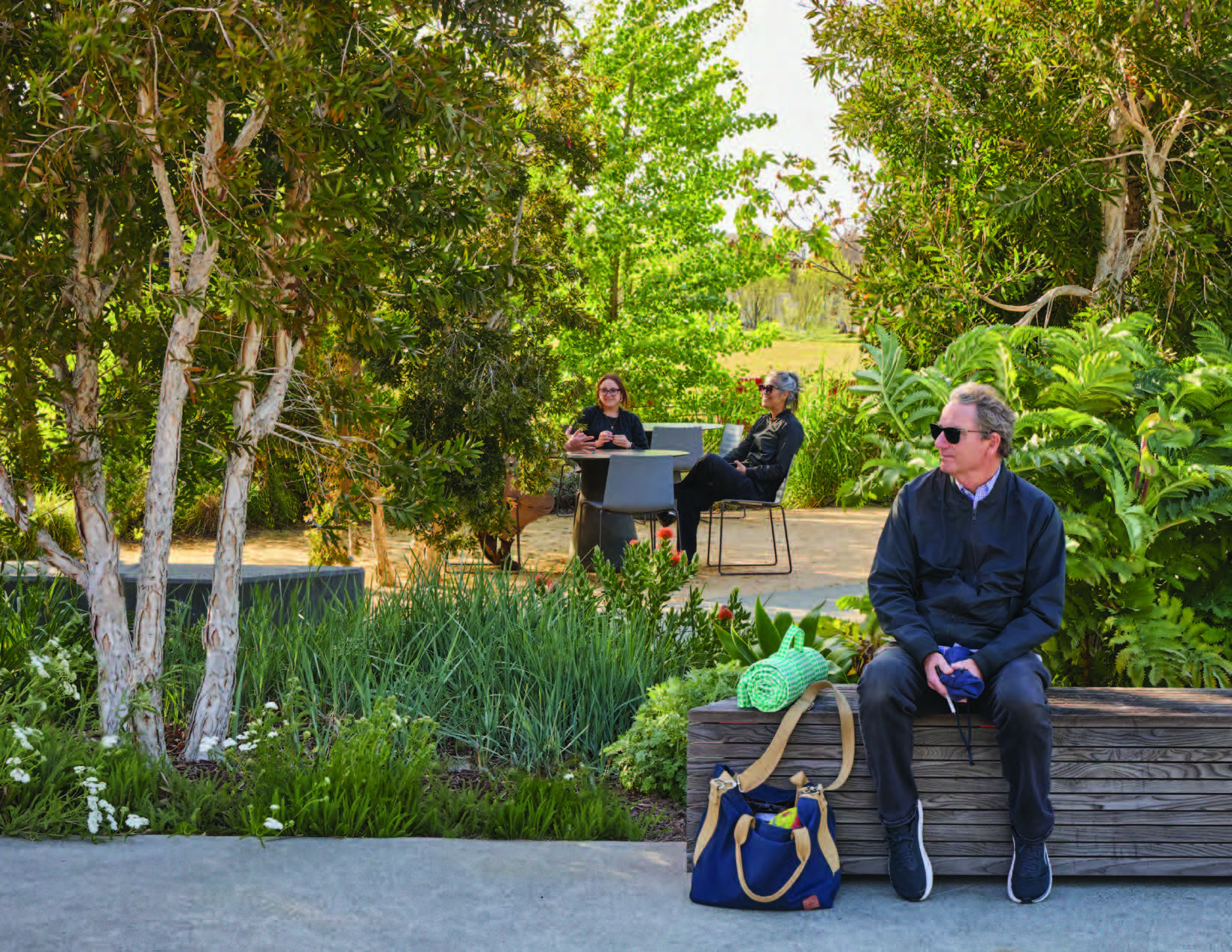
Coastal Scrub Planting along the promenade: Breakout workspaces along the promenade are framed by our Coastal Scrub plant community, showcasing colorful, fragrant native & Mediterranean plants.
©Caitlin Atkinson

Section showing the Presentation Stage/Amphitheater: Situated to the southeast of the park, the covered presentation stage with shaded tiered seating hosts key events and presentations year-round.
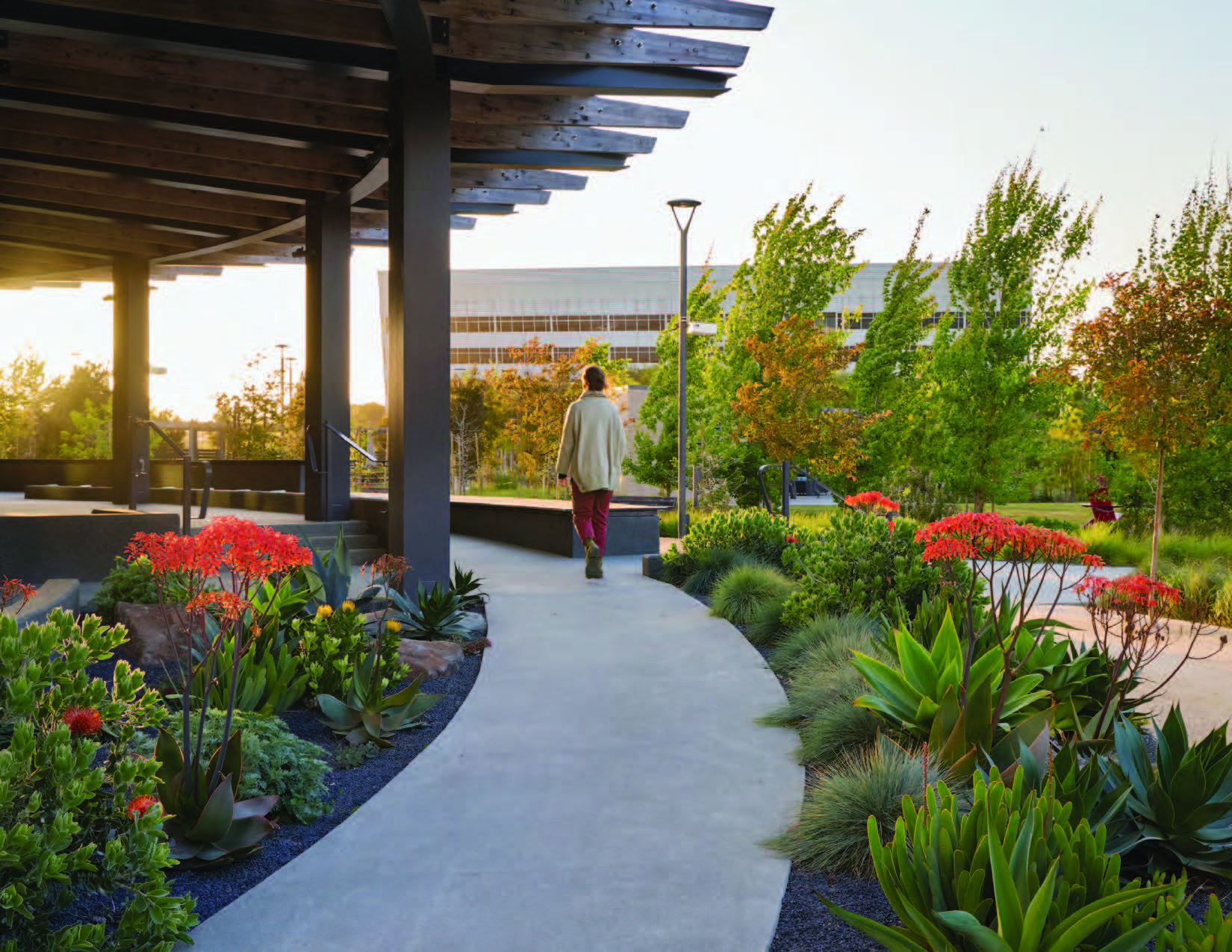
Succulent garden plantings line the sloped walk up to the raised seating terraces near the presentation stage.
©Caitlin Atkinson
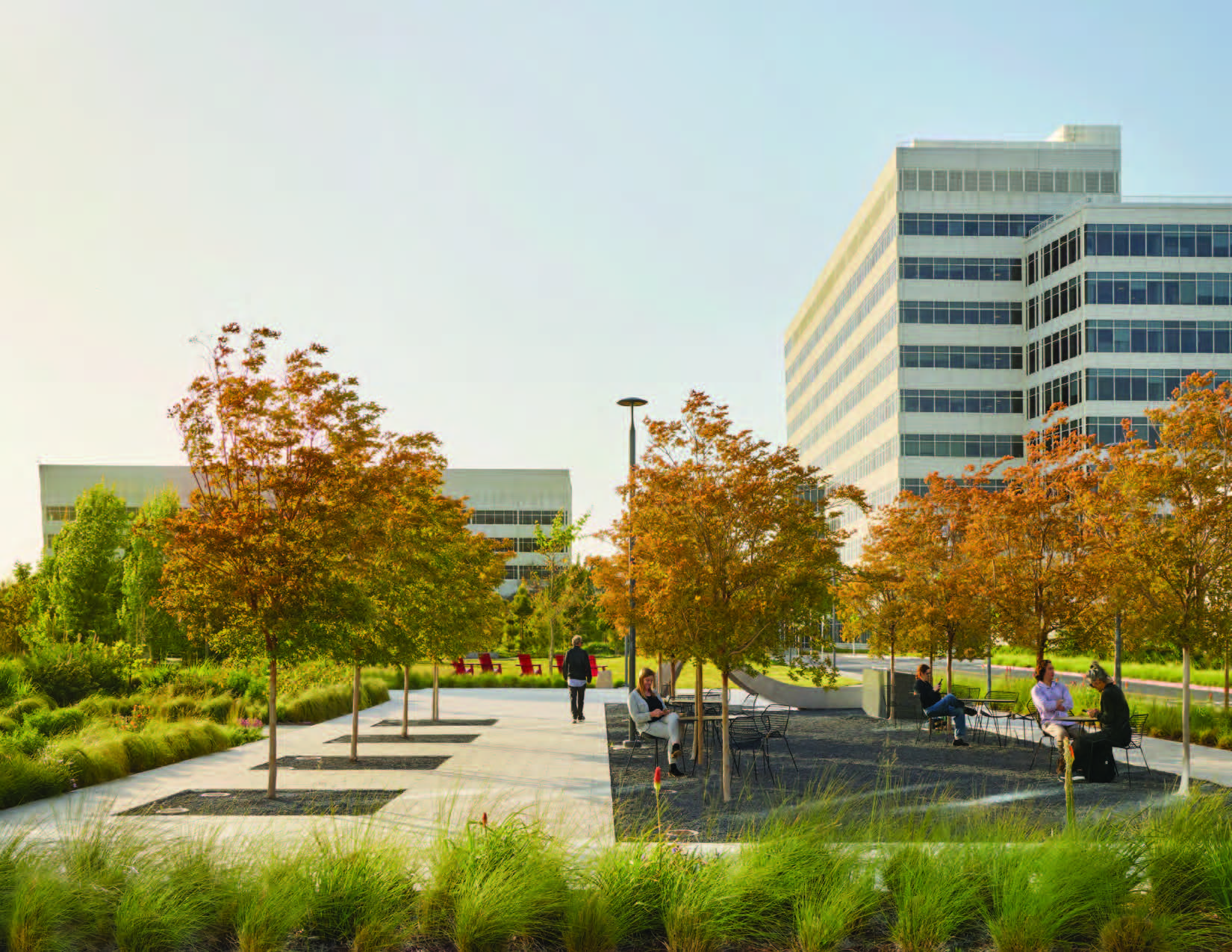
Gateway Grove: The gateway grove features a bosque of crape myrtles, which is mirrored at the adjacent Well Being Center, tying our design into the existing campus.
©Caitlin Atkinson

Aerial looking Northwest: An aerial view of the gateway grove, featuring the Gilead art piece, recreational turf, and covered tiered seating to the left.
Client
Gilead Sciences
Project Team
William E. Fee, Lead Landscape Architect
Yi Jin Kim, Project Manager
Vincent Lattanzio, Conceptual Designer
Sean Vang, Landscape Design Support
Marie Goulet, Wild Land Workshop, Planting Designer
Zack Rees, HDR, Landscape Architect
Scotty Brady, HDR, Senior Project Manager
Veronica Ng, HDR, Senior Design Coordinator
Brandon List, Michigan State University, SITES Coordinator
Project Statement
Gilead Park transformed a parking lot into a vibrant space focused on employee wellness. Five zones create a dynamic experience, hosting 22,000 users at 30 events yearly. The Central Gathering Space offers versatile seating under a trellis; the Event Promenade provides programmable event space; the intimate Woodland Gardens promote mental rejuvenation; the flexible Presentation Stage and Amphitheater host year-round programming and Lawns offer open space for active and passive recreation. To achieve Sustainable SITES Gold Certification: each zone draws inspiration from the unique Bay Area context by utilizing locally sourced materials, highlighting stormwater treatment and supporting biodiversity with a palette of 4 local plant communities.
Project Description
Context
Located in the center of Gilead Sciences’ Foster City Campus, Gilead Park has reimagined a 739-space parking lot into a biodiverse outdoor oasis. Spanning 5.35 acres, this vibrant new amenity has quickly become a beloved destination for employees and visitors. Gilead envisioned creating a space to enhance staff well-being, safety and a sense of community while championing sustainability. The Park has transformed daily routines by making this dream a reality.
Principles
Three principles were revisited during the design of the park:
Unity: Enhance the north campus by creating high-quality outdoor spaces that promote access to nature and foster a sense of well-being.
Safety: Ensure safe pedestrian pathways connecting campus buildings.
Community: Offer outdoor spaces for socializing, wellness, collaboration, gatherings and special events.
Vision
To achieve its goals, Gilead Park includes five main zones:
Central Gathering Space: Offering various seating options and shaded by a trellis structure, this space is versatile and can accommodate different group sizes and activities, from lunch breaks to socializing.
Event Promenade: Designed to provide space to host large corporate events, the promenade creates a primary pedestrian circulation axis connecting to the Central Gathering Space.
Recreation Turf: Two lawn areas cater to passive and active recreation. The space to the west can host sporting activities, while the smaller area to the east provides dispersed seating designed to take advantage of prevailing breezes and views of stormwater features.
Woodland Gardens: A collection of introspective areas integrated into the landscape promote mental renewal for small groups.
Presentation Stage/Amphitheater: Situated to the southeast of the park, the presentation stage with shaded tiered seating hosts key events and presentations year-round.
Sustainability
To achieve SITES Gold, the following innovative solutions were included:
Water: The bioswales manage the 66th percentile rain event and hold approximately 43,400 gallons of water. The irrigation system was optimized to reduce water usage by 51% below the EPA baseline, saving about 1.1M gallons per year.
Vegetation/Biodiversity: The park features 12,700 shrubs and groundcover, 110 ornamental trees, and 238 shade trees. 100% of the plant species installed are either adapted or native to the region, with 41.3% native to the reference biome. This effort increased the Biomass Density Index by 412% from 0.5 to 2.56.
Carbon: Over the next 60 years, the vegetation at the park will sequester 1,354,740 kgCO₂e of carbon. The park also operates on 100% renewable energy.
Materials: The design ensured that no threatened or endangered hardwood species were used. 4.5% of materials contained recycled content, and 40% were sourced or extracted regionally. During construction, 100% of waste was diverted from landfills.
Social: The park provides seating for gathering under shade structures and can accommodate up to 20% of campus employees at one time, while seating for mental restoration is provided for up to 5% of campus employees. In its first year, the park held 33 events and had 22k visitors.
Conclusion
Gilead Park has transformed an underutilized space into a sustainable oasis that enhances well-being, safety and community on the Foster City Campus. By integrating nature, recreation and social spaces, it fosters connection and inspiration, reflecting Gilead’s commitment to a more enriching and sustainable workplace.
2025 NCC Award Jury
“The transformation of a parking lot into a park focused on employee wellness is impressive with a SITES Gold certification score, particularly projects in more urban environments for climate adaptation and resilience strategies. The carbon sequestration metrics, water conservation metrics and sediment loading reductions are impressive. As a workplace project, the connection to nature, education (nice biodiversity signage) and wellness creates a great tie into their Health & Air Quality improvements and policies for reducing emissions. I appreciate that the landscape architects were able to have the client commit to Organic Maintenance Practices long term so that the park is maintained with organic methods and all green waste is composted on site reinforcing a closed-loop sustainability model.”
—ASLA-NCC Biodiversity & Climate Action Committee
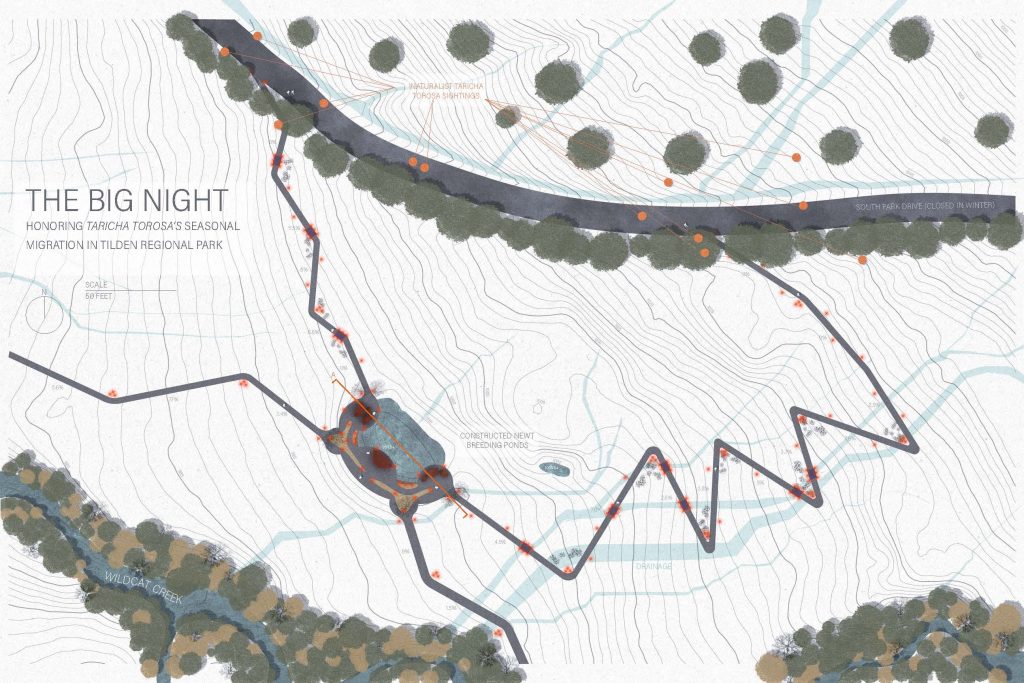 The Big Night: Honoring Taricha Torosa's Seasonal Migration in Tilden Regional Park