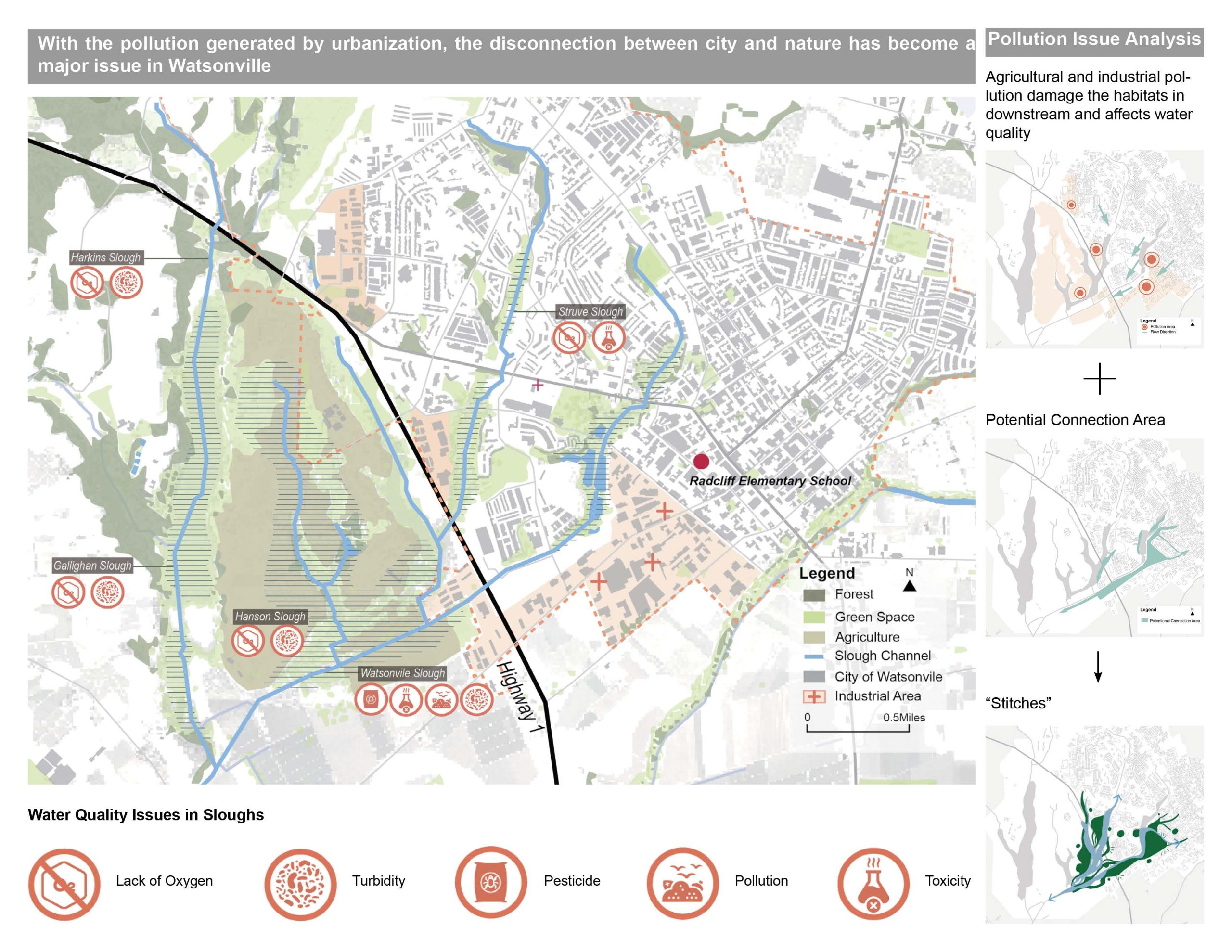
Pollutants from upstream and urban runoff degrade slough water quality, while Highway 1 fragments its natural flow. Our project restores slough health, mitigates pollution, and reconnects the city to its waterways, enhancing ecological resilience and urban livability.
©Chenyi Wang
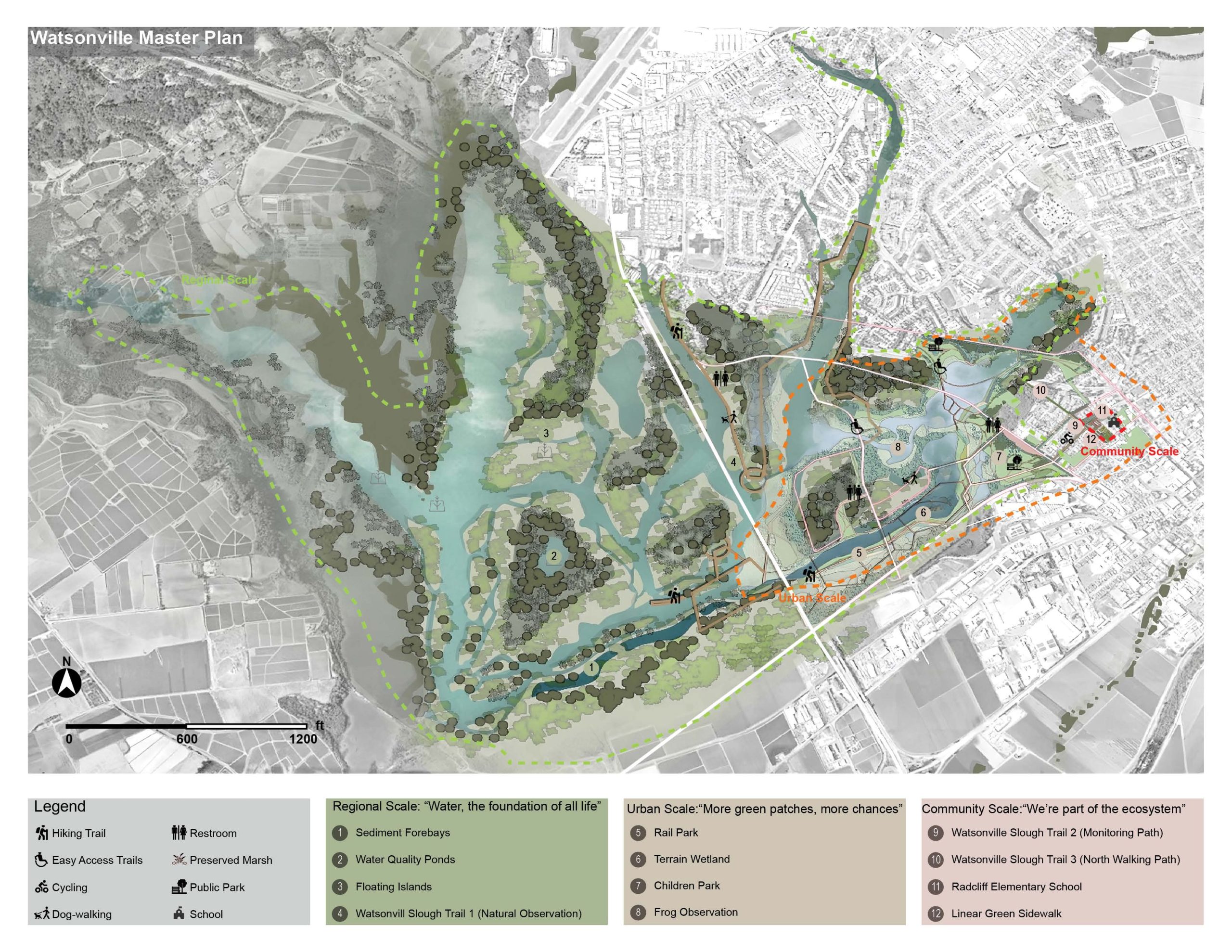
Our design operates at three scales: regional (improving water quality), urban (reintegrating green spaces), and community (creating engaging ecological experiences). This comprehensive strategy fosters a thriving, interconnected urban-natural landscape.
©Kexin Zhang
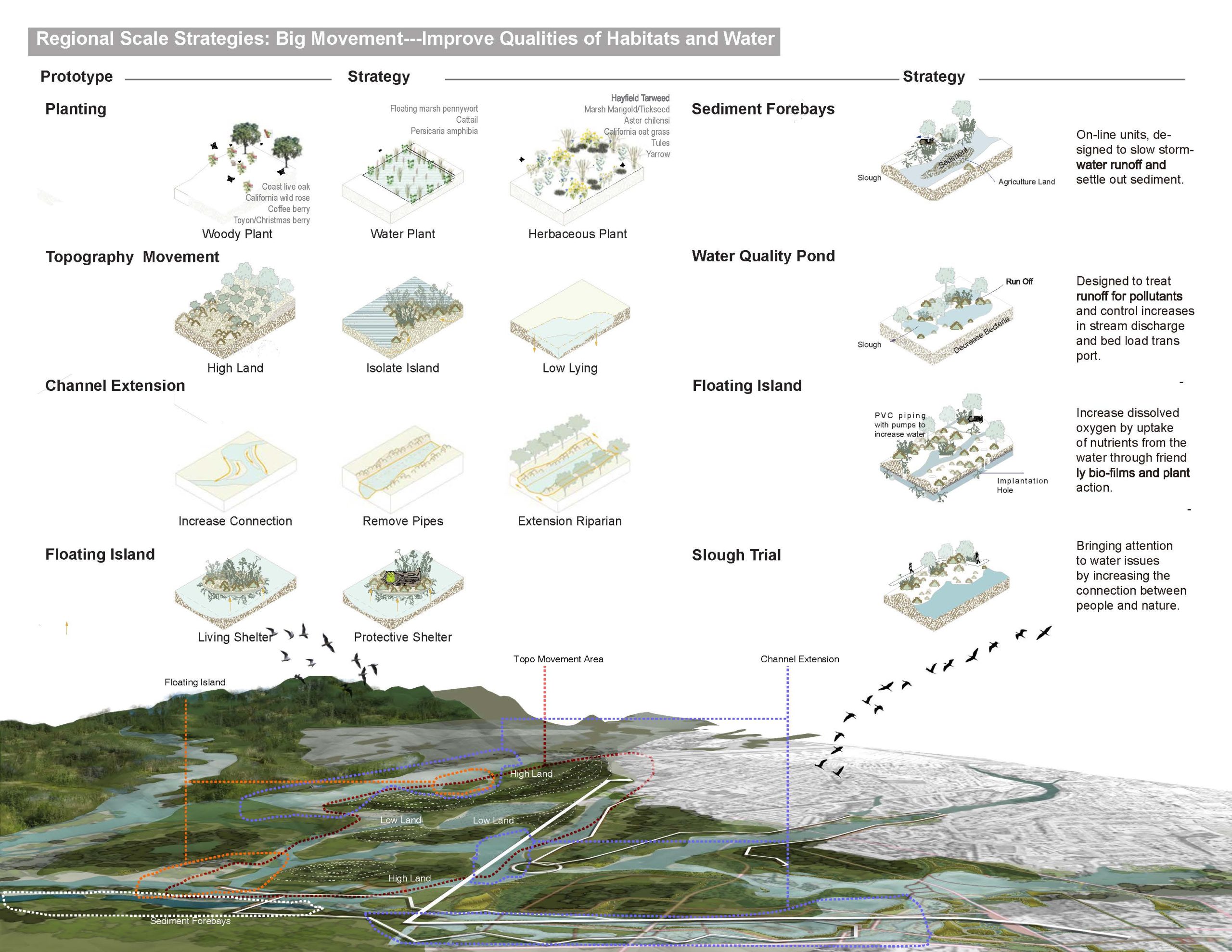
Wetland restoration and biofiltration systems improve water quality, stabilize habitats, and enhance flood resilience, reinforcing the slough’s ecological functions.
©Jiangyi Du
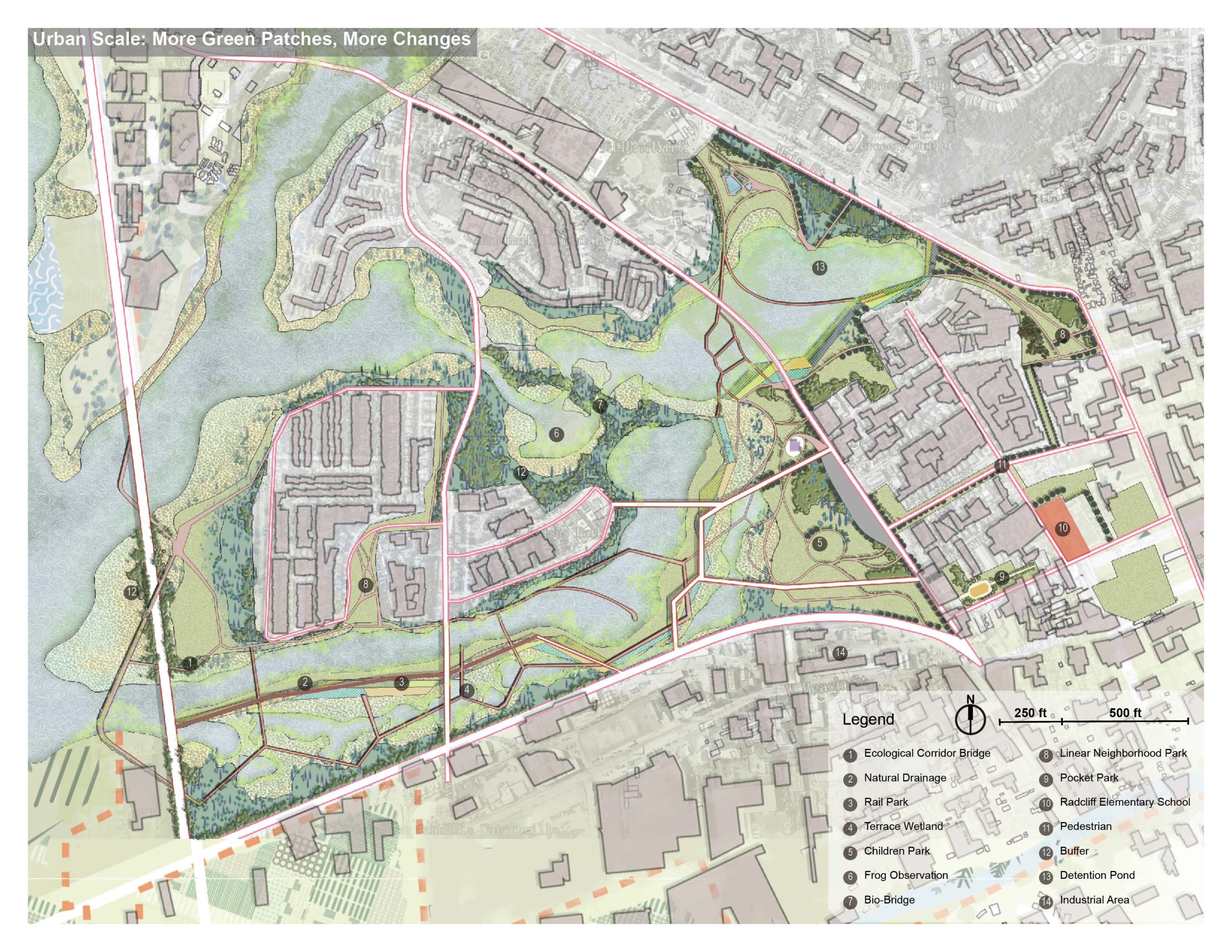
Transforming an underutilized industrial site into a public park provides an ecological and recreational hub, reconnecting the community to nature across Highway 1.
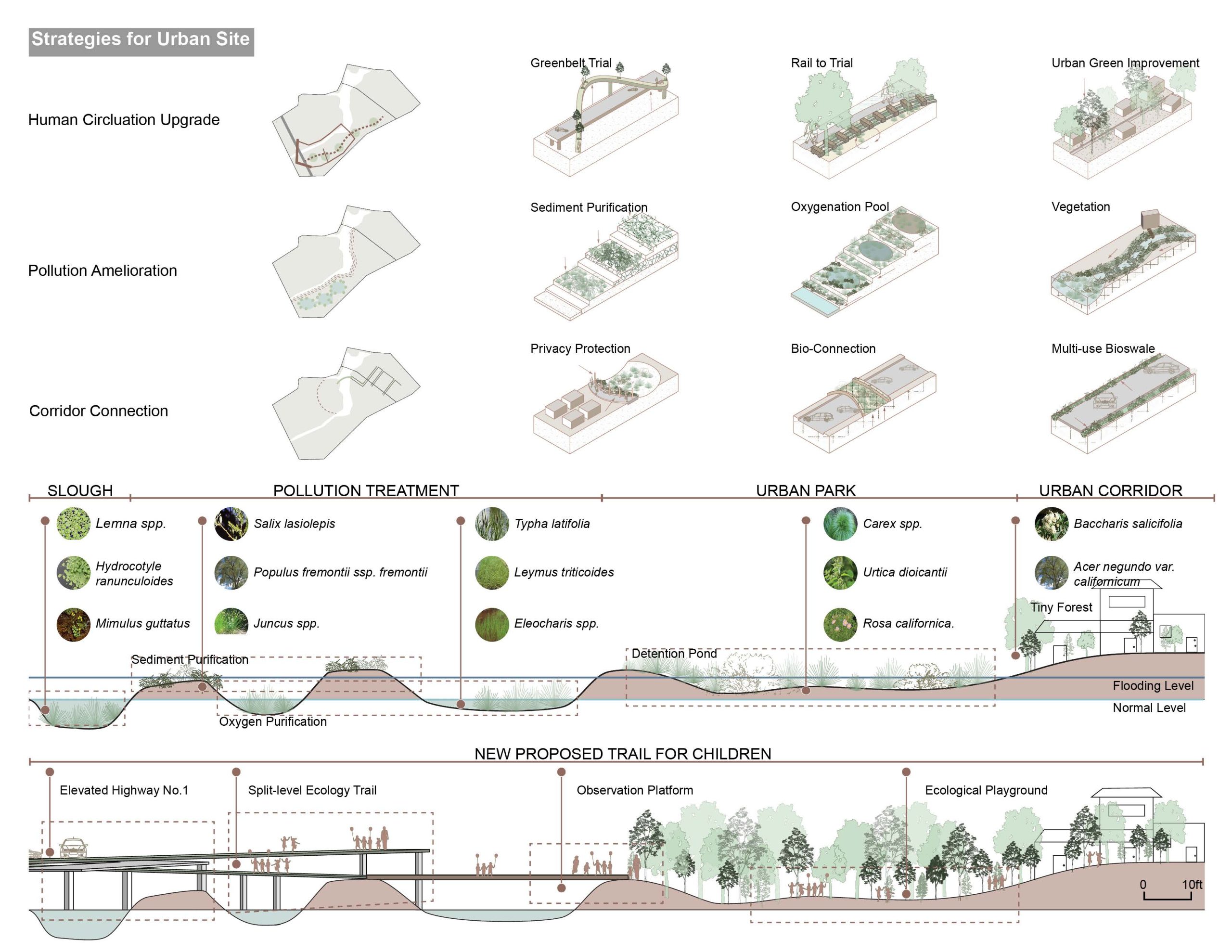
Green corridors and pathways restore ecological links, create walkable green routes, and address the city’s lack of large public spaces. They improve water quality by filtering runoff and include measures to help wildlife move between the slough and the city.
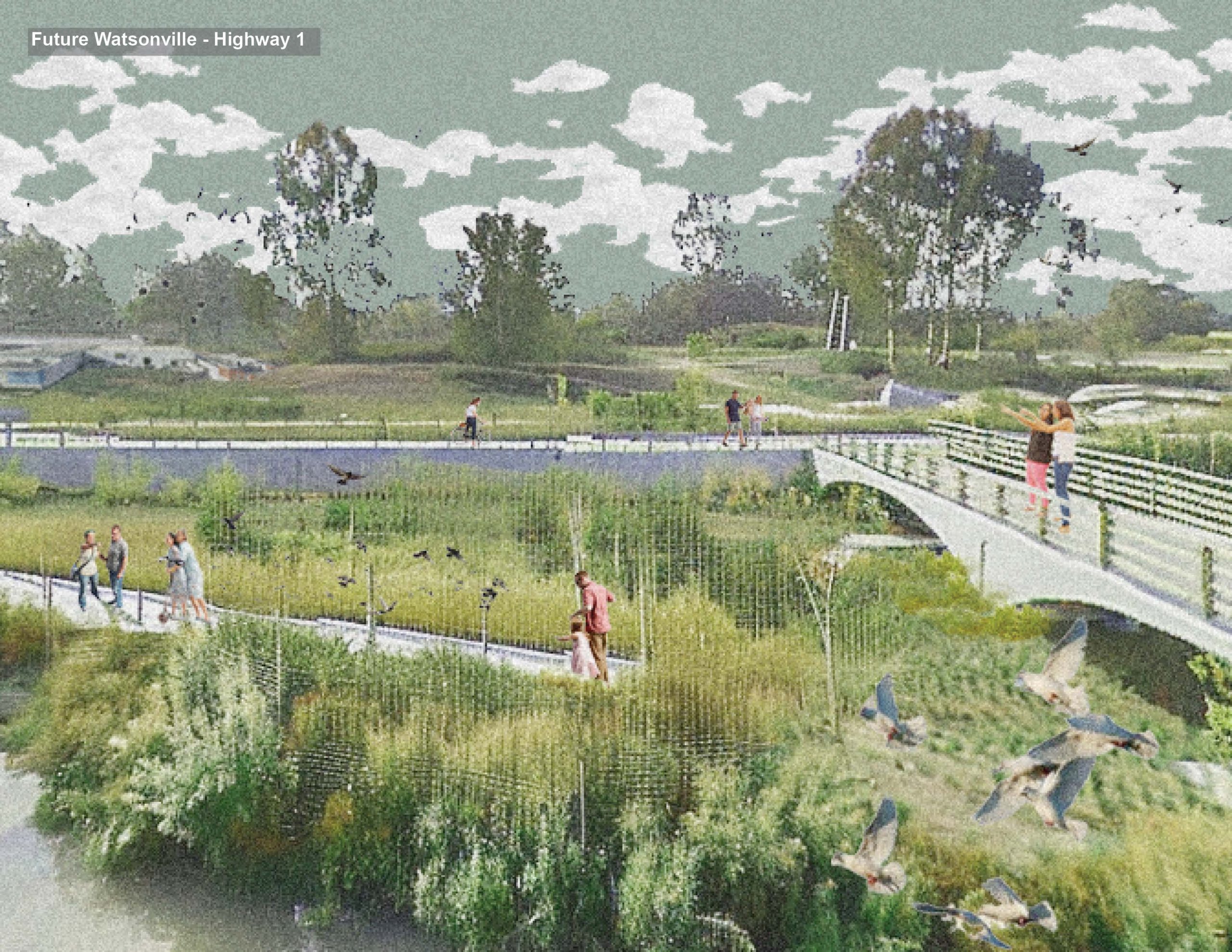
34 acres of new green space enhance urban cooling, biodiversity, and recreational opportunities, absorbing 4.2 inches of additional annual rainfall.
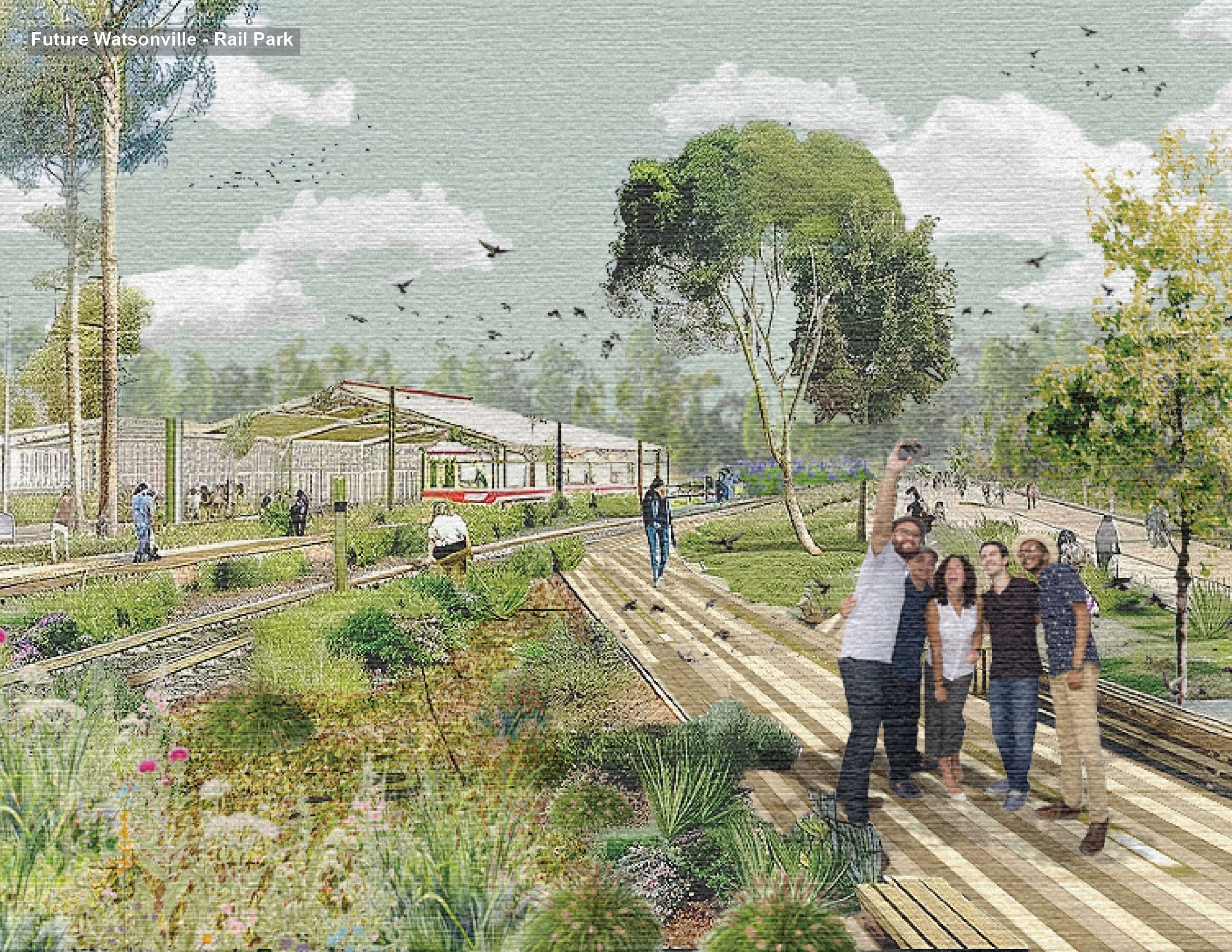
A former industrial railway is repurposed as a trail park, improving access to the slough while preserving historical infrastructure.
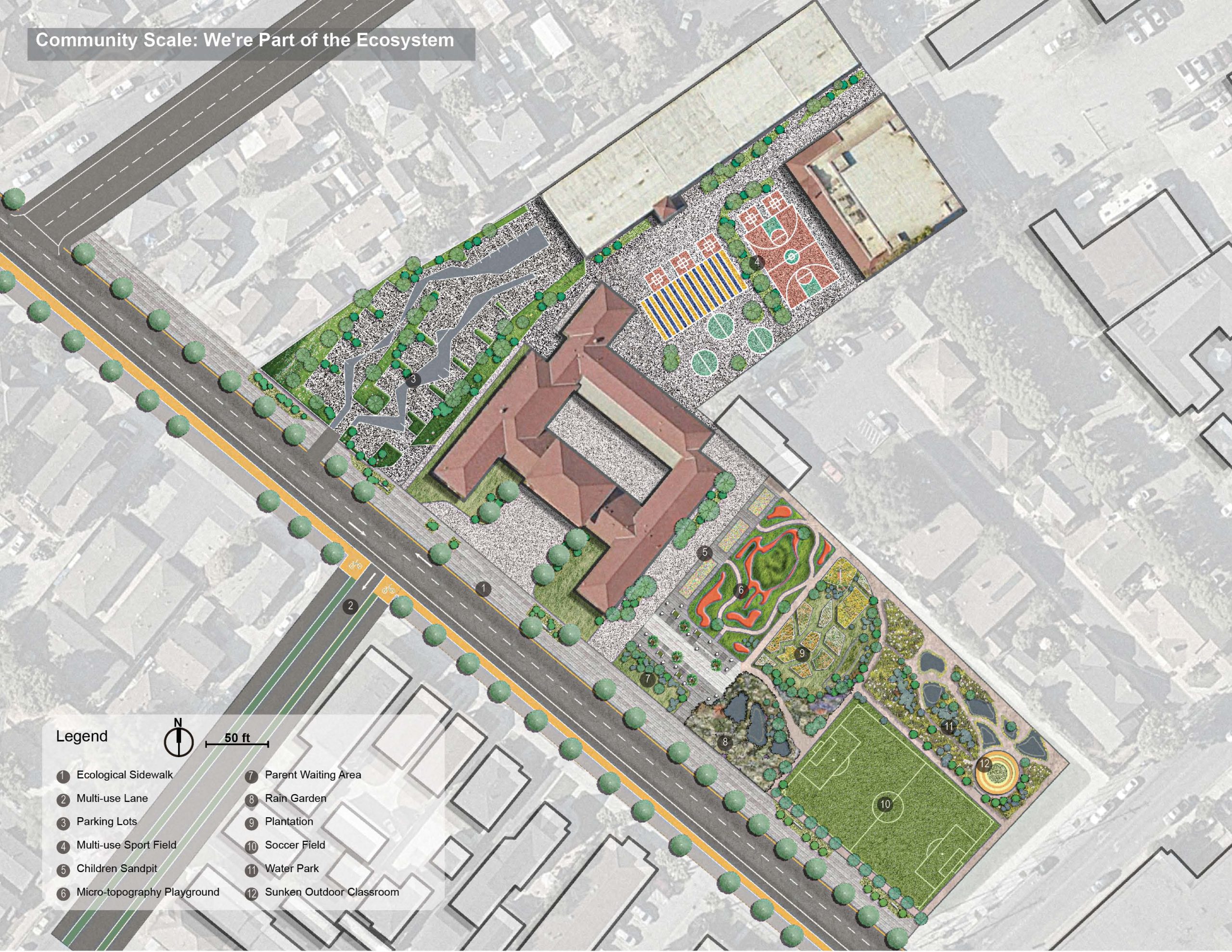
Radcliff Elementary School becomes a hub for ecological education, integrating sustainability into daily learning experiences.

Two new green corridors connect the school to the city and slough, providing safe, nature-immersive pathways.
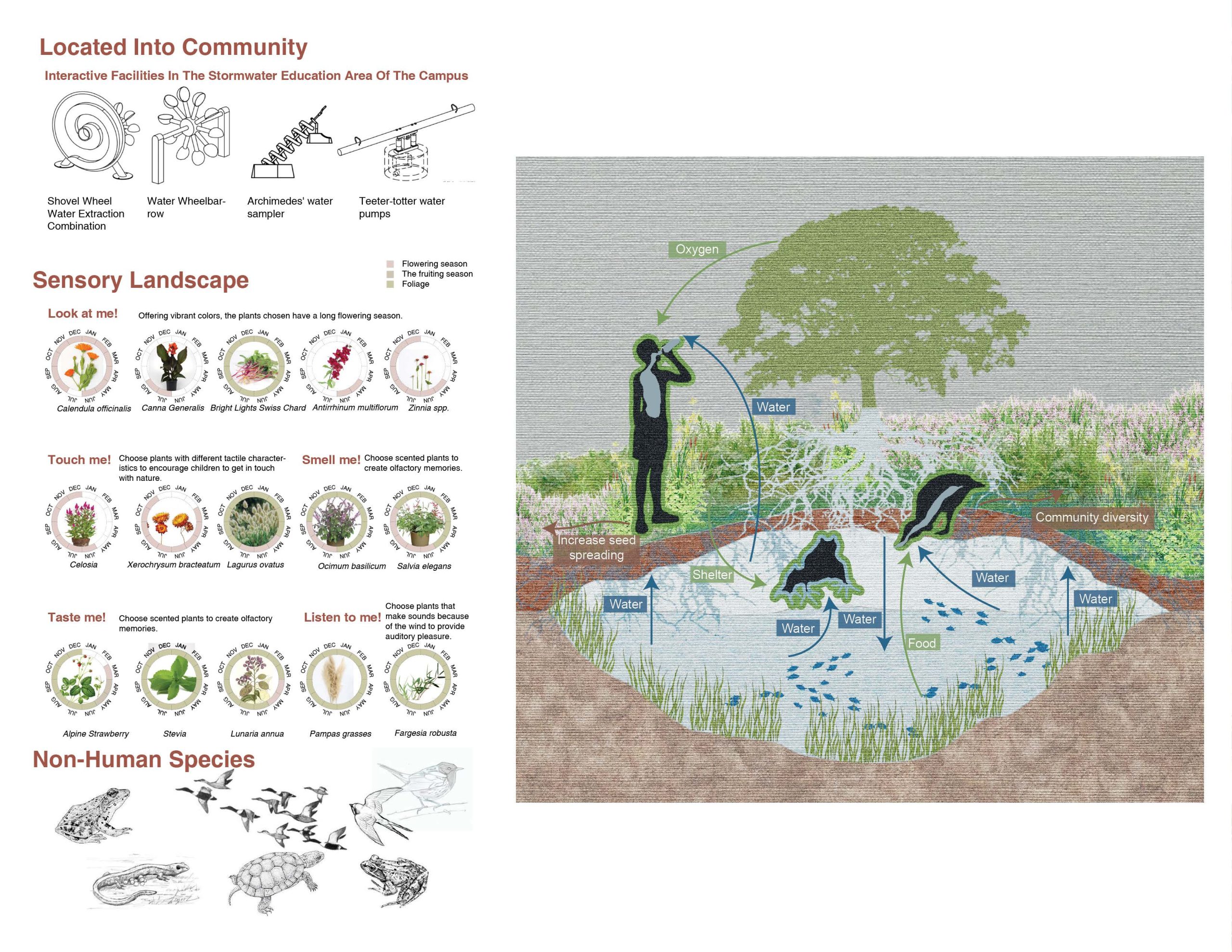
Community School ecological design features create hands-on learning opportunities, strengthening environmental awareness and stewardship.
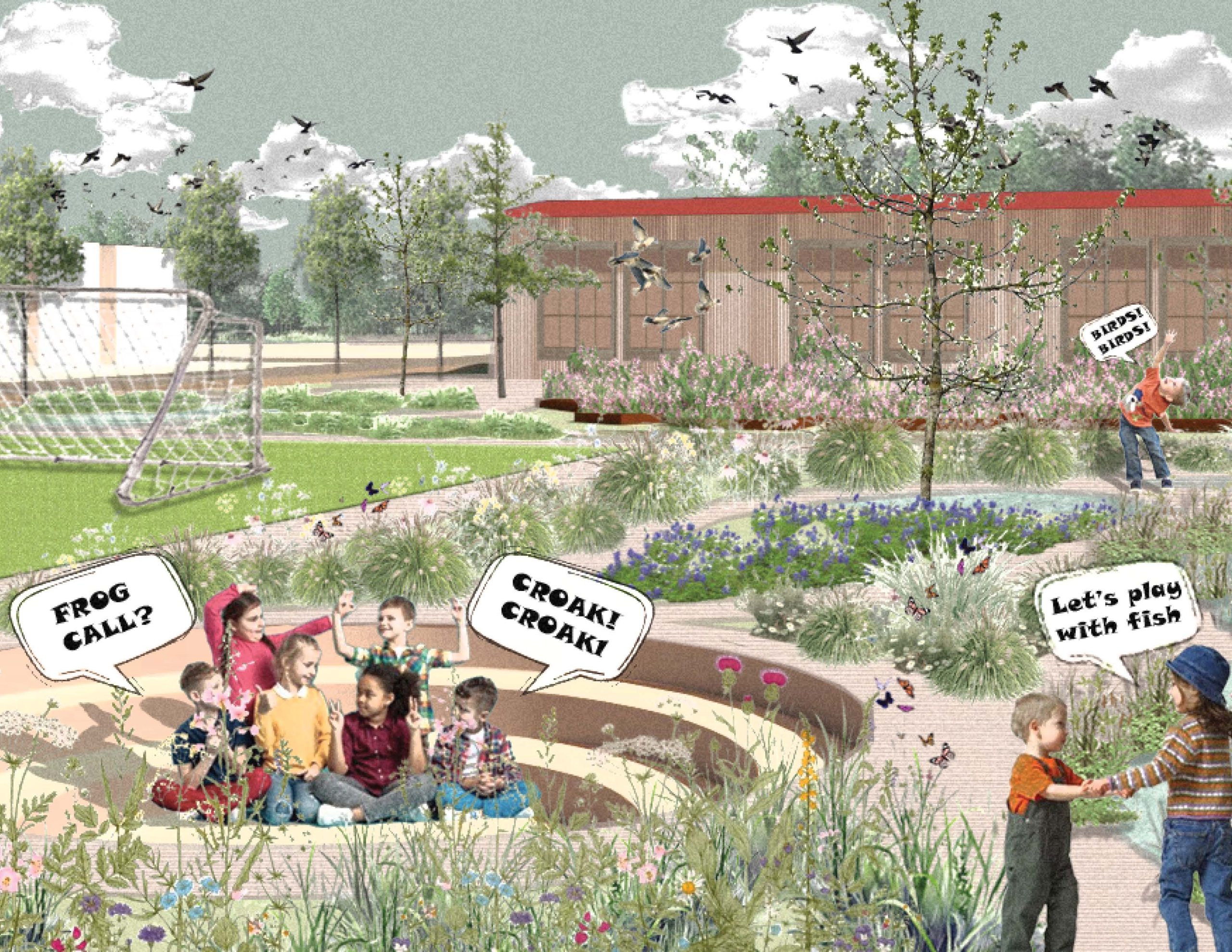
By restoring ecological functions and enhancing community connections, this project transforms Watsonville into a model of urban resilience and sustainability.
Client
University of California, Berkeley
Project Team
Chenyi Wang
Kexin Zhang
Jiangyi Du
Project Statement
Our project addresses two pressing social and environmental challenges in Watsonville: water quality issues in the Watsonville Slough and the ecological fragmentation caused by Highway 1. This highway separates the city from its natural surroundings, exacerbating social and environmental disconnection.
Our design operates at three scales to enhance water quality, integrate nature into the urban environment, and reconnect ecological systems, fostering a space where human and non-human life coexist harmoniously. The project expands the slough by 55 acres and increases parkland by 24 acres, reducing flood-prone areas by approximately 70 acres. Through wetland restoration, green corridors, and community engagement, this project not only enhances ecological resilience but also fosters a sense of place and stewardship among residents. By addressing urban environmental challenges with a nature-based approach, our project presents a replicable model for creating sustainable and resilient landscapes in urban settings.
Project Description
Regional Scale: Water as the Foundation of Life
Watsonville Slough is a vital ecological and hydrological corridor that has suffered from severe water pollution due to urban runoff. In this scale, we directly address these challenges by integrating biofiltration systems and strategic modifications to the slough’s topography to enhance water quality. Through wetland restoration and floodplain expansion, we not only improve hydrological functions but also create suitable habitats that support greater biodiversity. These interventions encourage more species to establish within the slough, strengthening ecological resilience while providing long-term benefits to both wildlife and local communities.
Urban Scale: Reconnecting City and Nature
Highway 1 acts as a barrier, severing the city from its natural systems. In this scale, we propose a network of green corridors and pathways to mitigate this fragmentation. By transforming underutilized urban spaces into ecological stepping stones, we create a more porous urban fabric where nature and city life seamlessly integrate.
A key intervention is the conversion of an industrial site into a public park that serves as a gateway to the slough. This park not only provides recreational opportunities but also functions as a stormwater management system, reducing runoff pollution. Along the slough’s edge, we implement a terraced landform design that further enhances water purification by filtering urban runoff before it reaches the slough. Additionally, native plantings along streets and public spaces enhance urban biodiversity, creating more opportunities for people to engage with nature in daily life.
Community Scale: Fostering Ecological Stewardship
At the heart of our project is an effort to foster environmental education and stewardship, particularly among Watsonville’s youth. We collaborate with Radcliff Elementary School to create nature-based learning environments that immerse students in ecological processes. Two newly designed green corridors connect the school to both the urban area and the slough, offering safe and engaging routes for exploration and education. On-campus interventions include rain gardens, interactive habitat zones, and outdoor classrooms designed to demonstrate ecological principles firsthand. These spaces encourage hands-on learning while strengthening the relationship between children, their community, and the natural world.