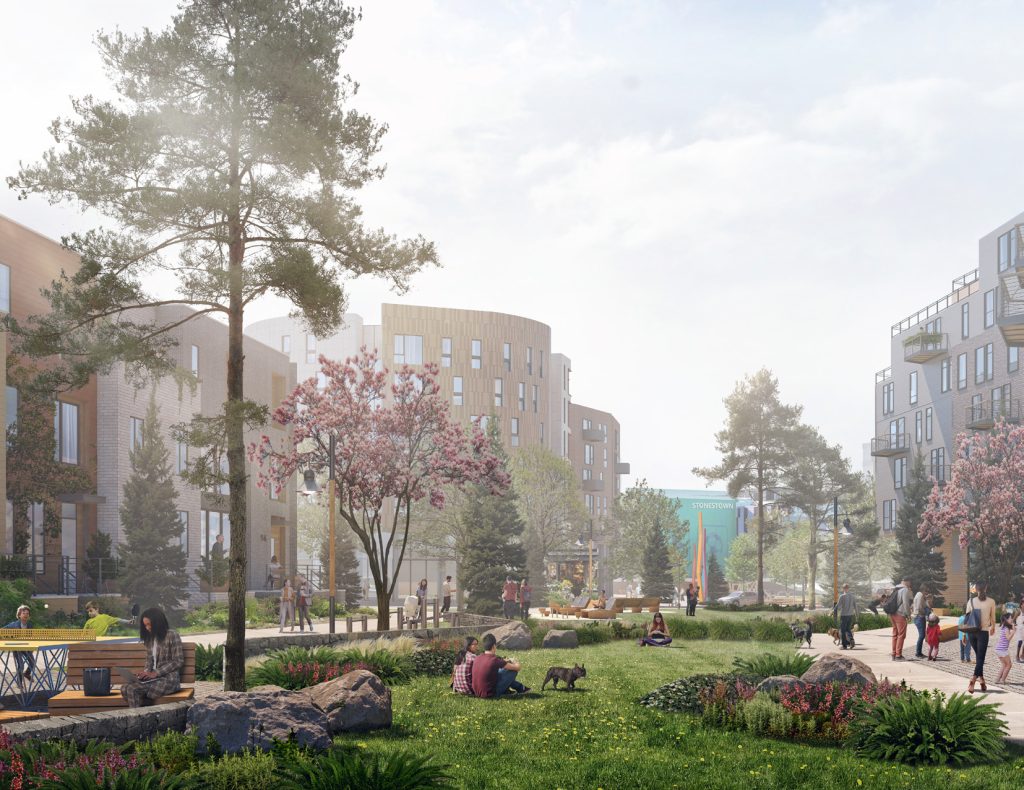
North Berkeley BART Transit Oriented Development
Merit Award /
2025, Analysis and Planning
Berkeley, CA
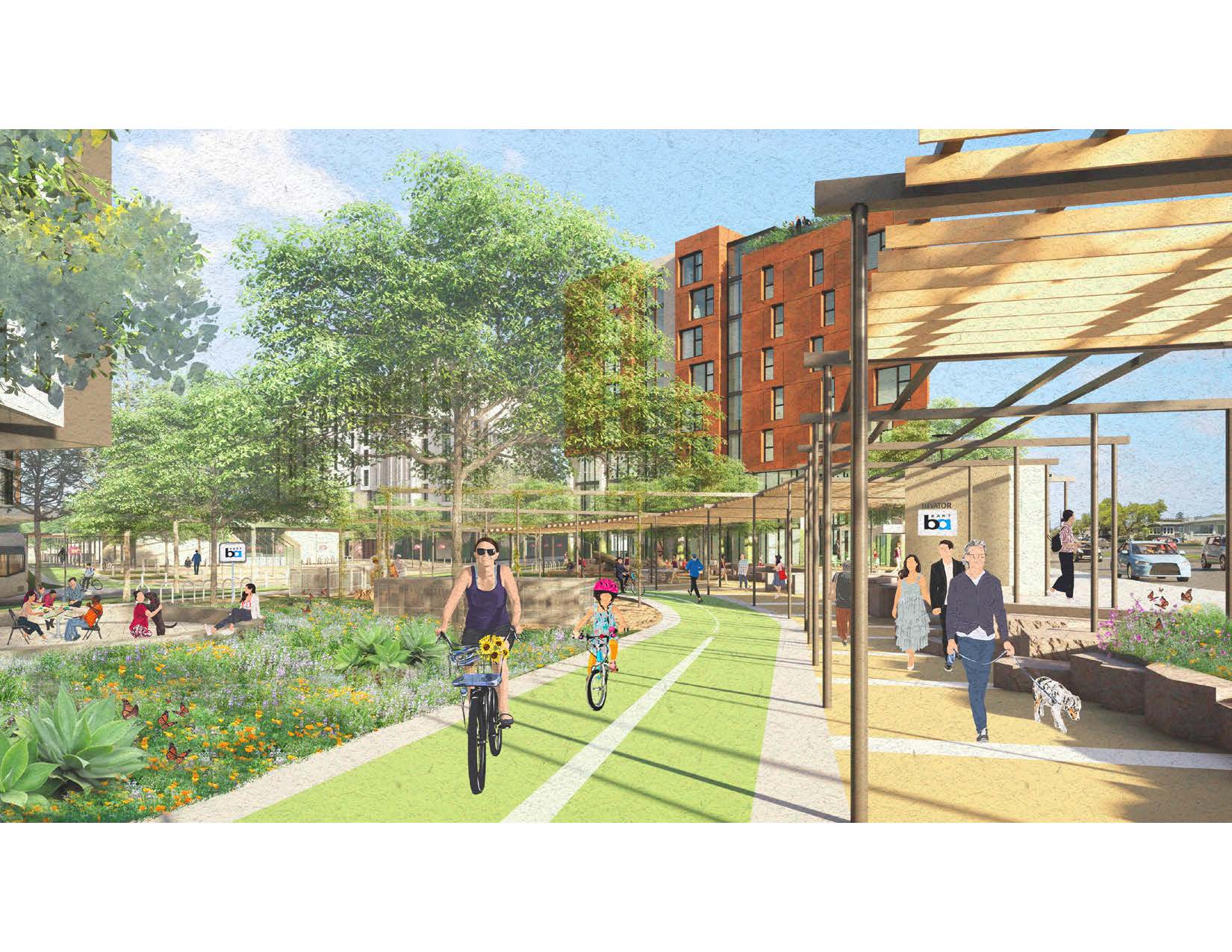
Proposed Ohlone Greenway Colonnade Rendering.
©EinwillerKuehl Landscape Architecture, David Baker Architects
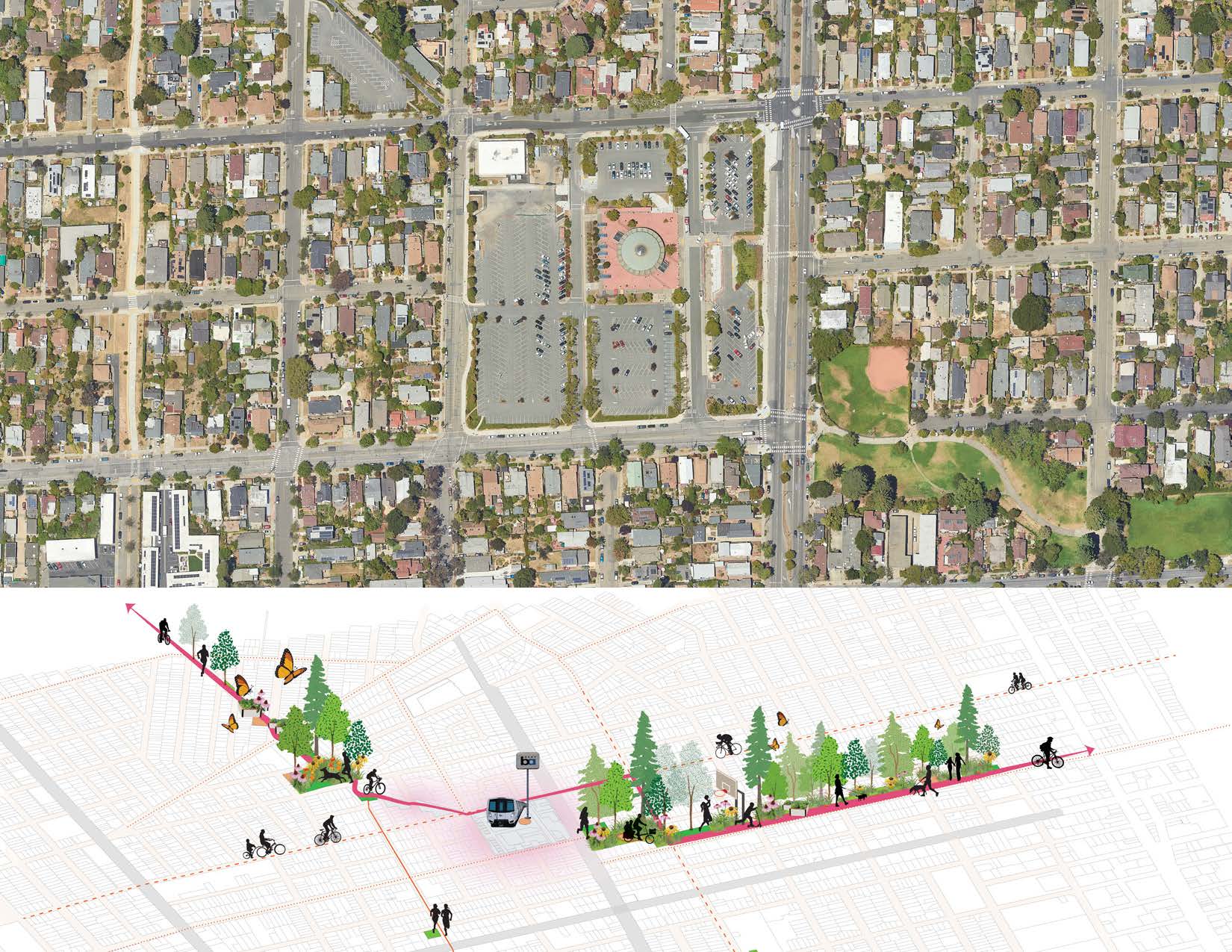
Before aerial of the site and representation of the Ohlone Greenway today.
©EinwillerKuehl Landscape Architecture
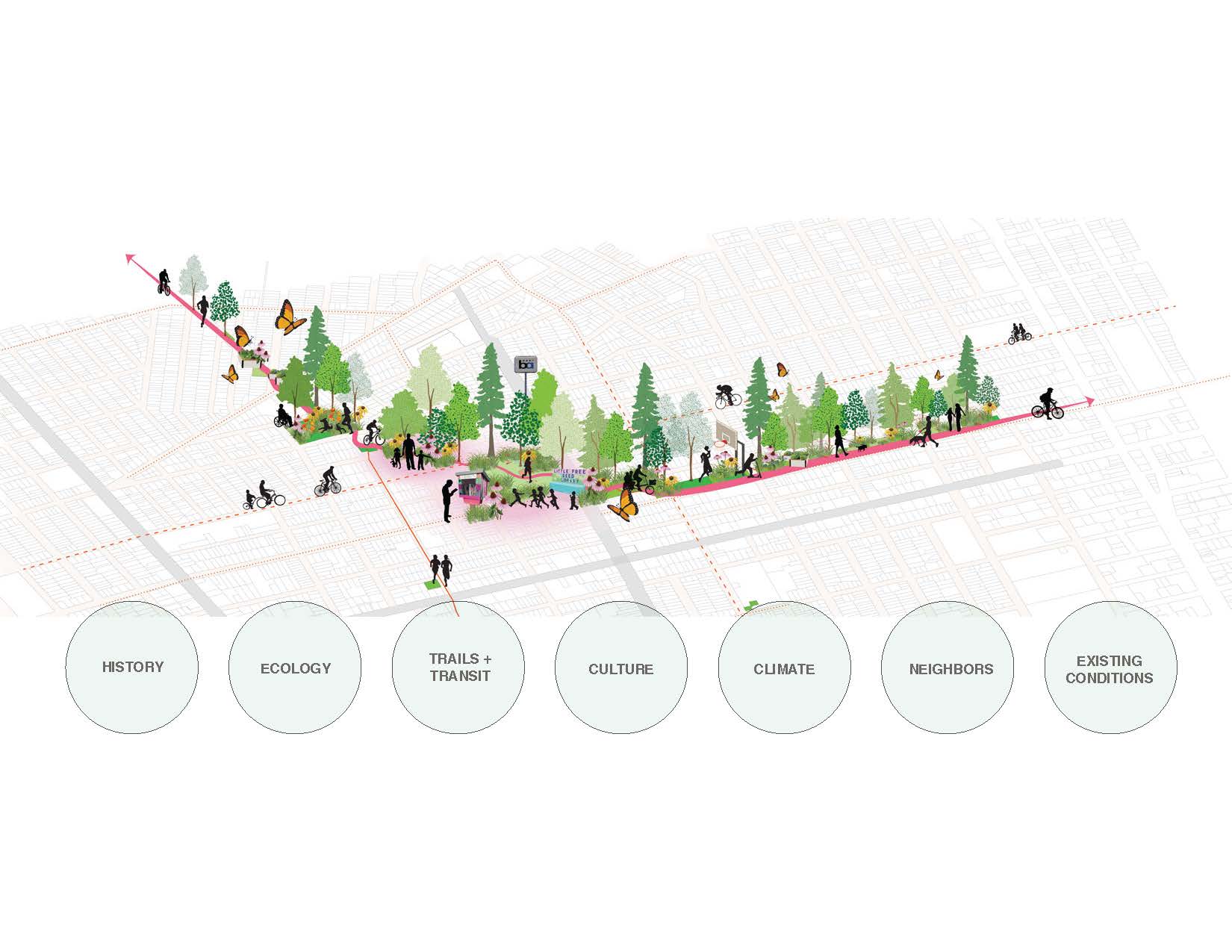
Diagram of proposed condition, connecting the Ohlone Greenway through the North Berkeley BART Station.
©EinwillerKuehl Landscape Architecture
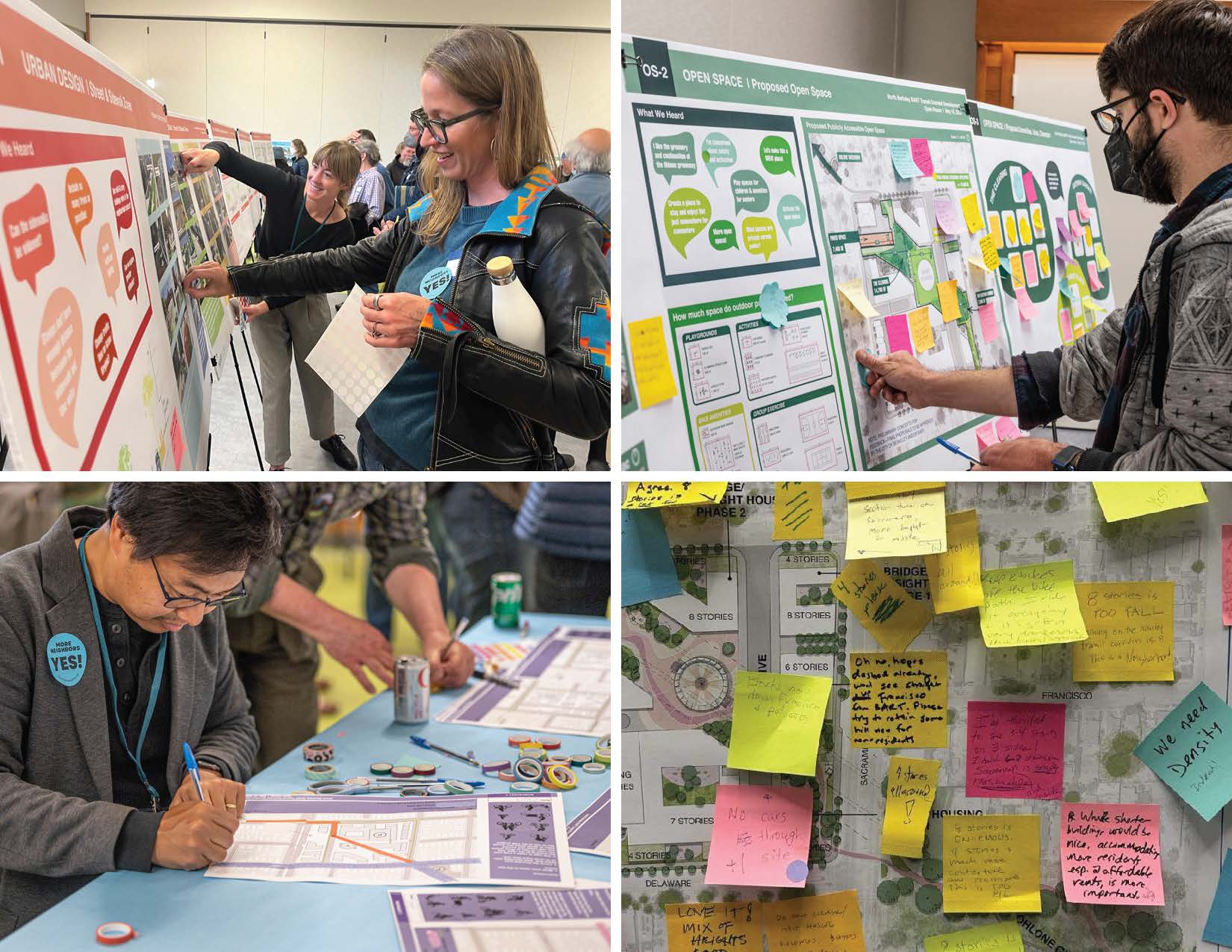
Community engagement process images.
©EinwillerKuehl Landscape Architecture
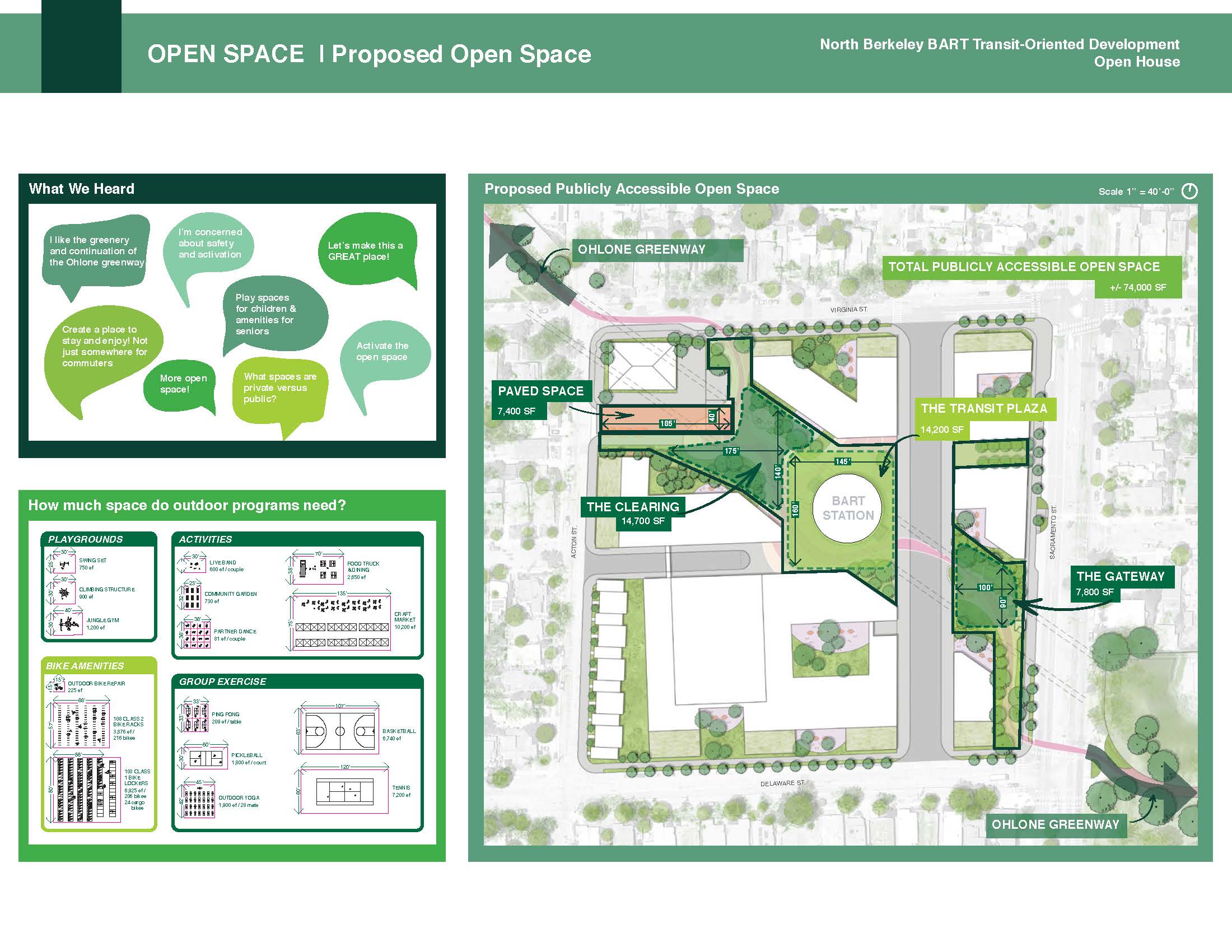
Community engagement board about the proposed open space.
©EinwillerKuehl Landscape Architecture
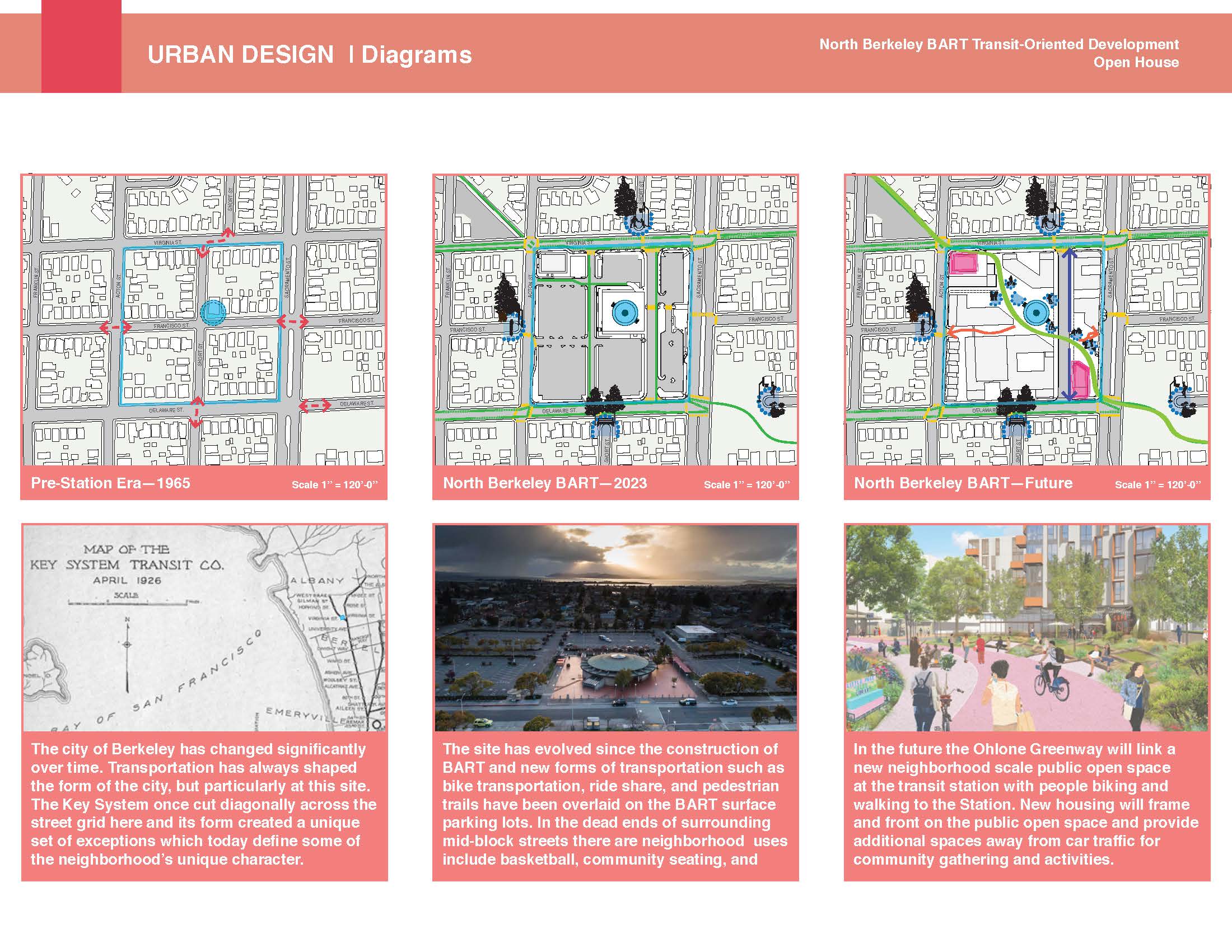
Community engagement board about the urban design of the site over time.
©EinwillerKuehl Landscape Architecture
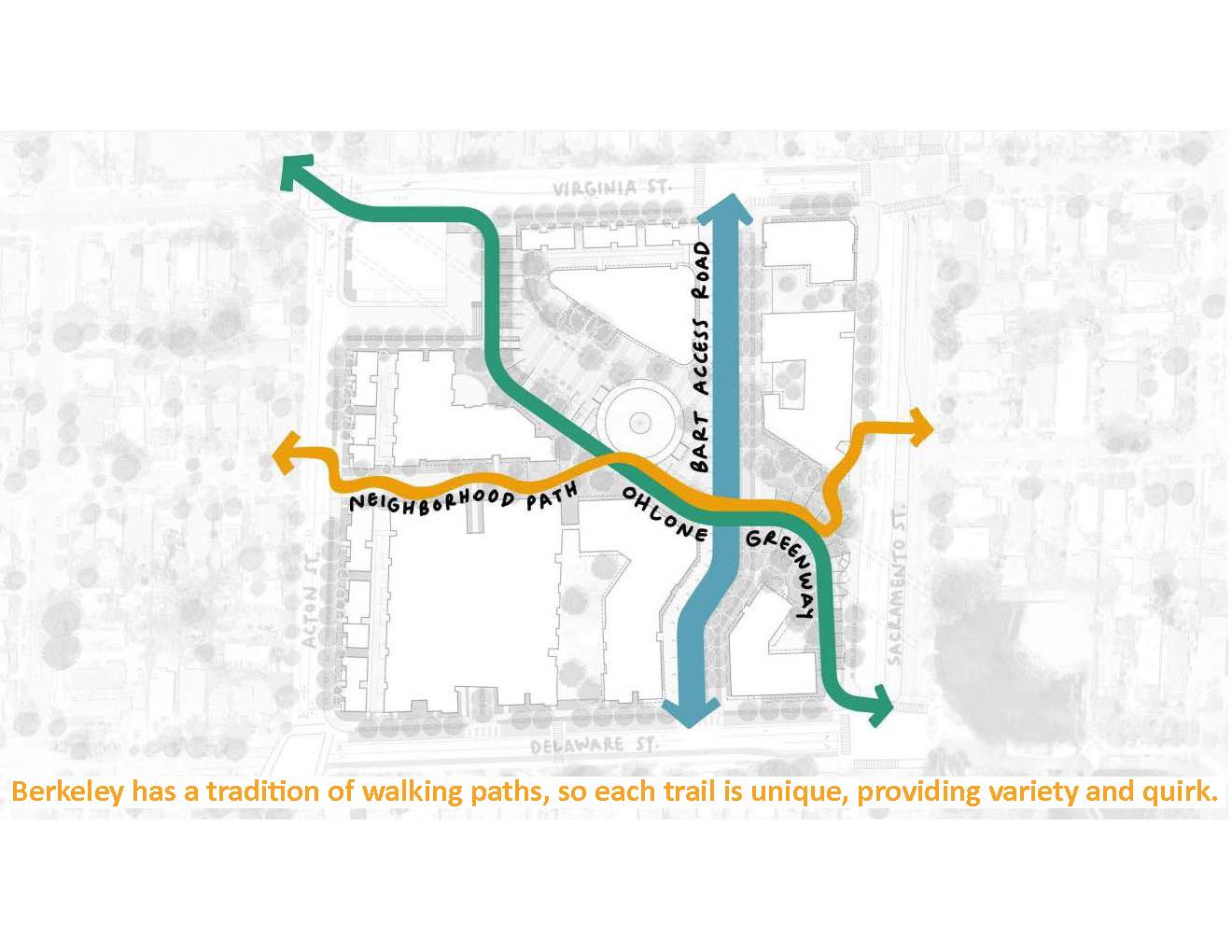
Multiple trails invite neighbors to move freely through the site, replacing car-centric paths with inviting public space.
©EinwillerKuehl Landscape Architecture, David Baker Architects
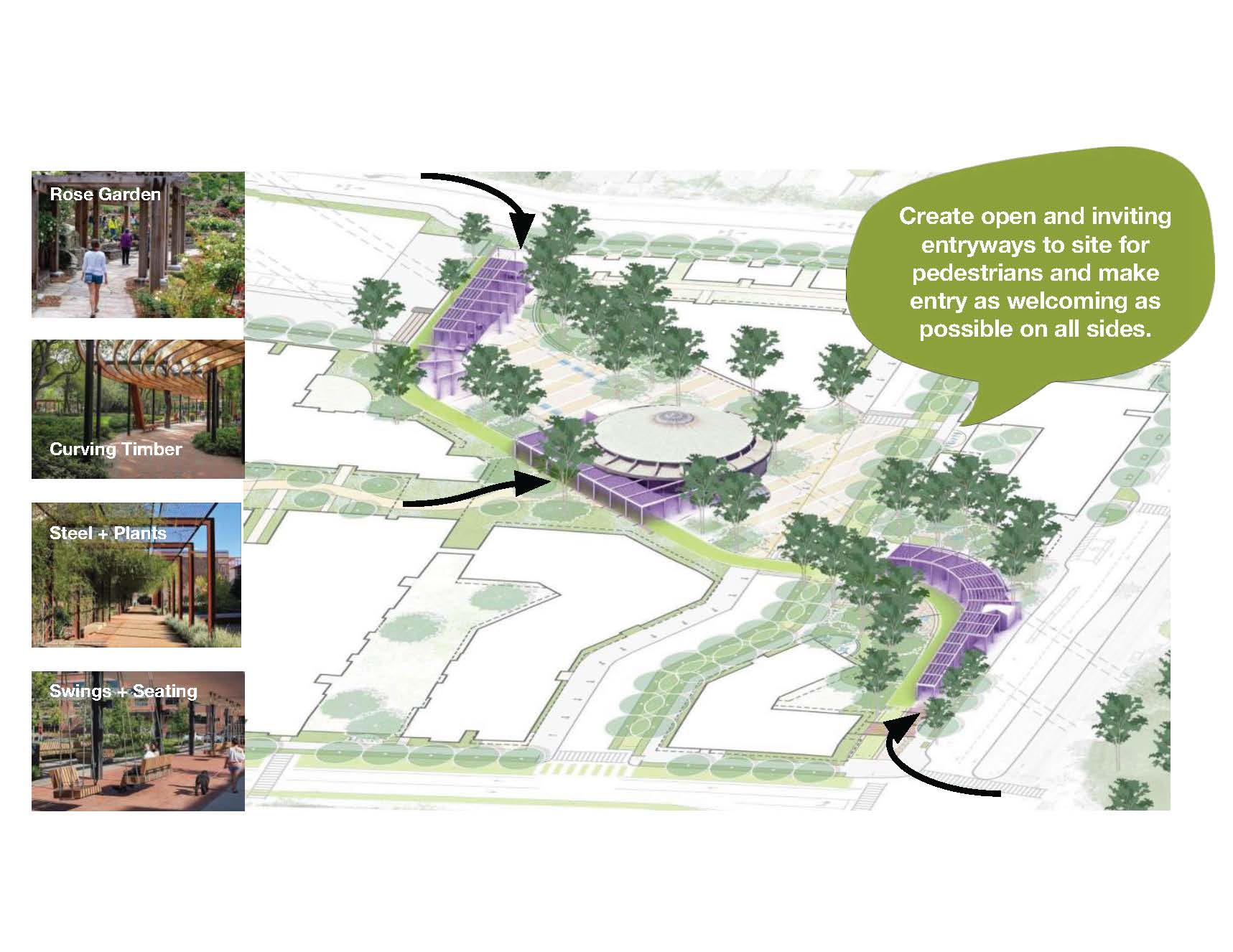
A winding linear trellis defines the edges of the open space and holds both space and identity for the Greenway. It serves as a civic-sized front porch that anchors public programs.
©EinwillerKuehl Landscape Architecture
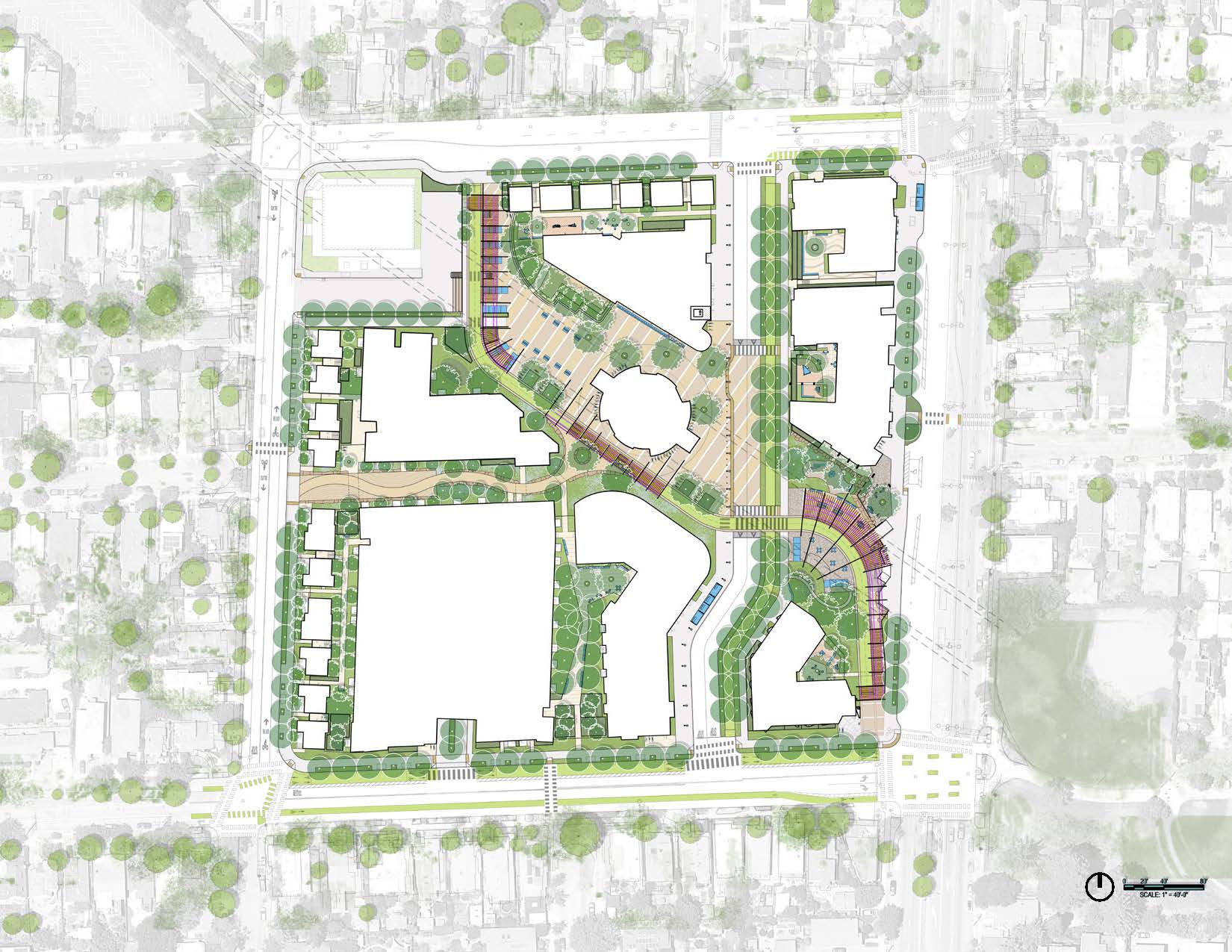
Site Plan.
©EinwillerKuehl Landscape Architecture
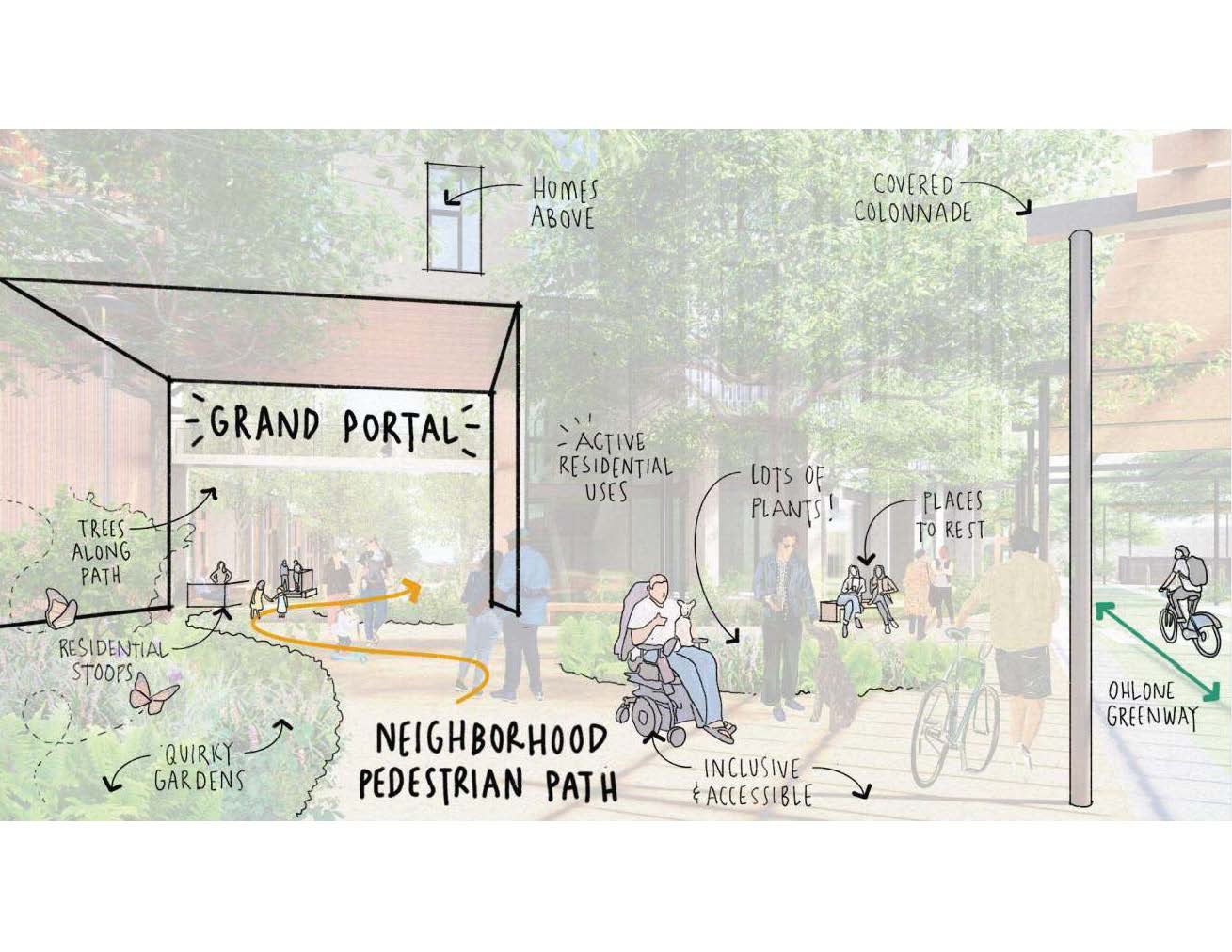
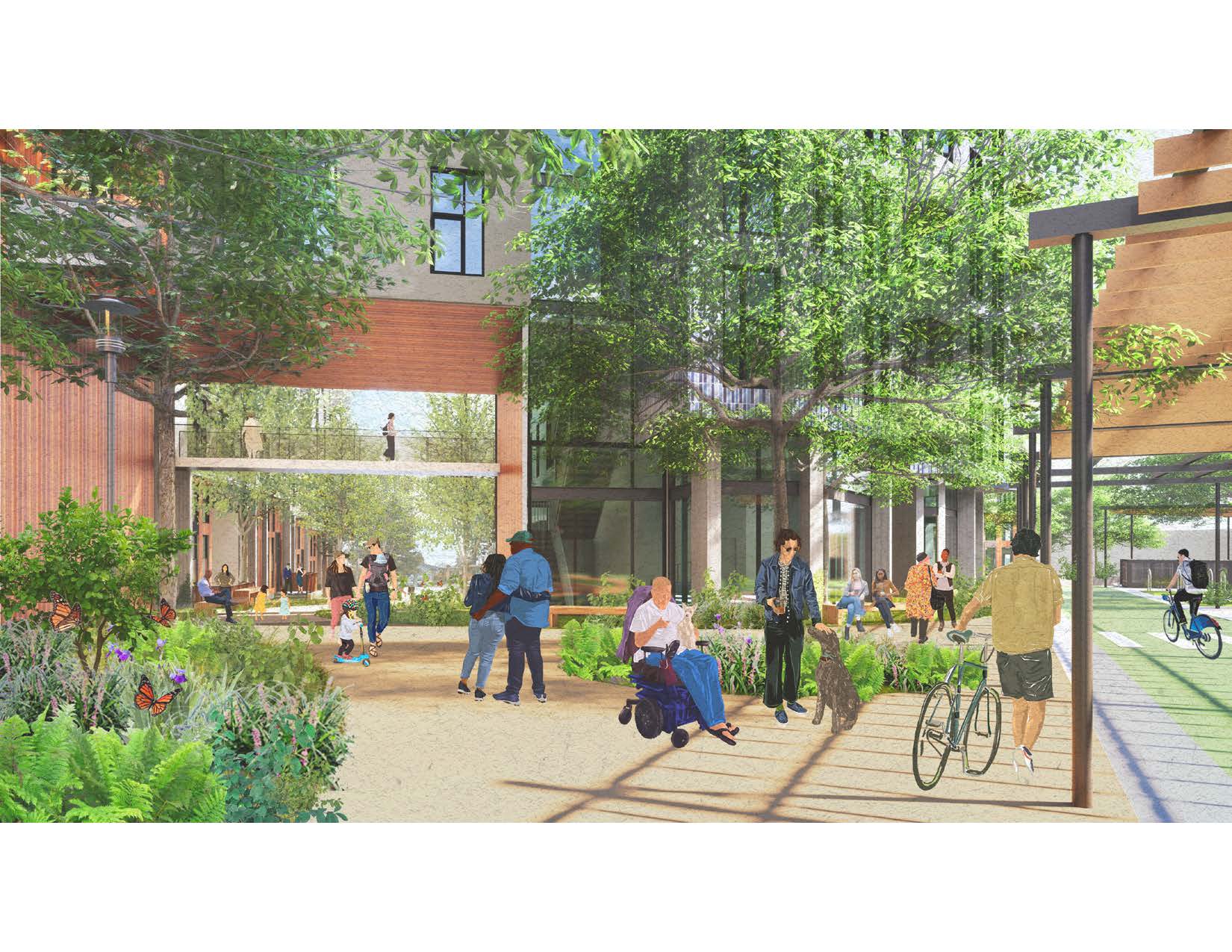
Neighborhood Path at Portal Rendering Overlay: The design embraces small-scale gardens, courtyards, and human-centered public spaces.
©EinwillerKuehl Landscape Architecture, David Baker Architects
Neighborhood Path at Portal Rendering.
©EinwillerKuehl Landscape Architecture, David Baker Architects
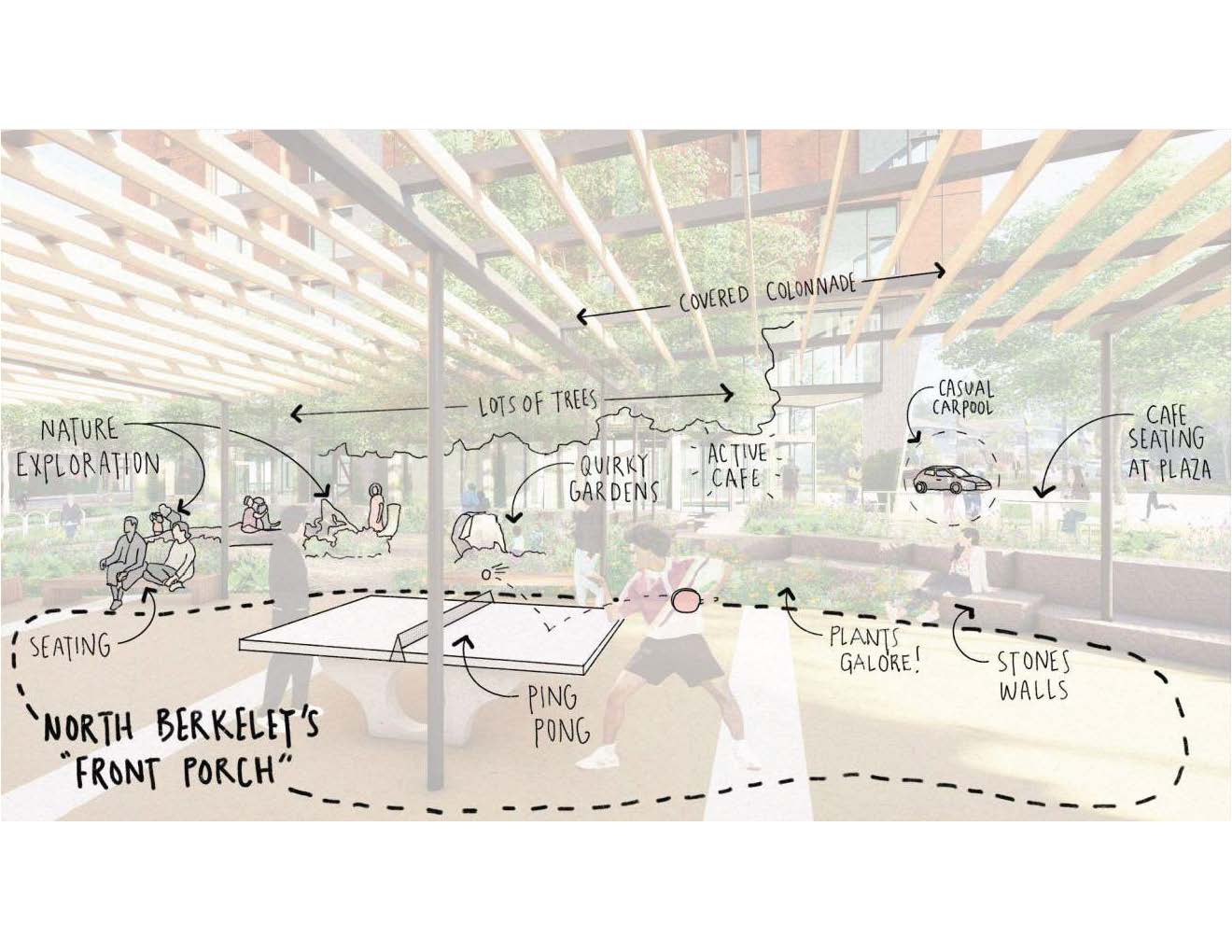
North Berkeley’s Front Porch Rendering Overlay: The trellis along the Ohlone Greenway provides shade, play, seating, and a welcoming gateway.
©EinwillerKuehl Landscape Architecture, David Baker Architects
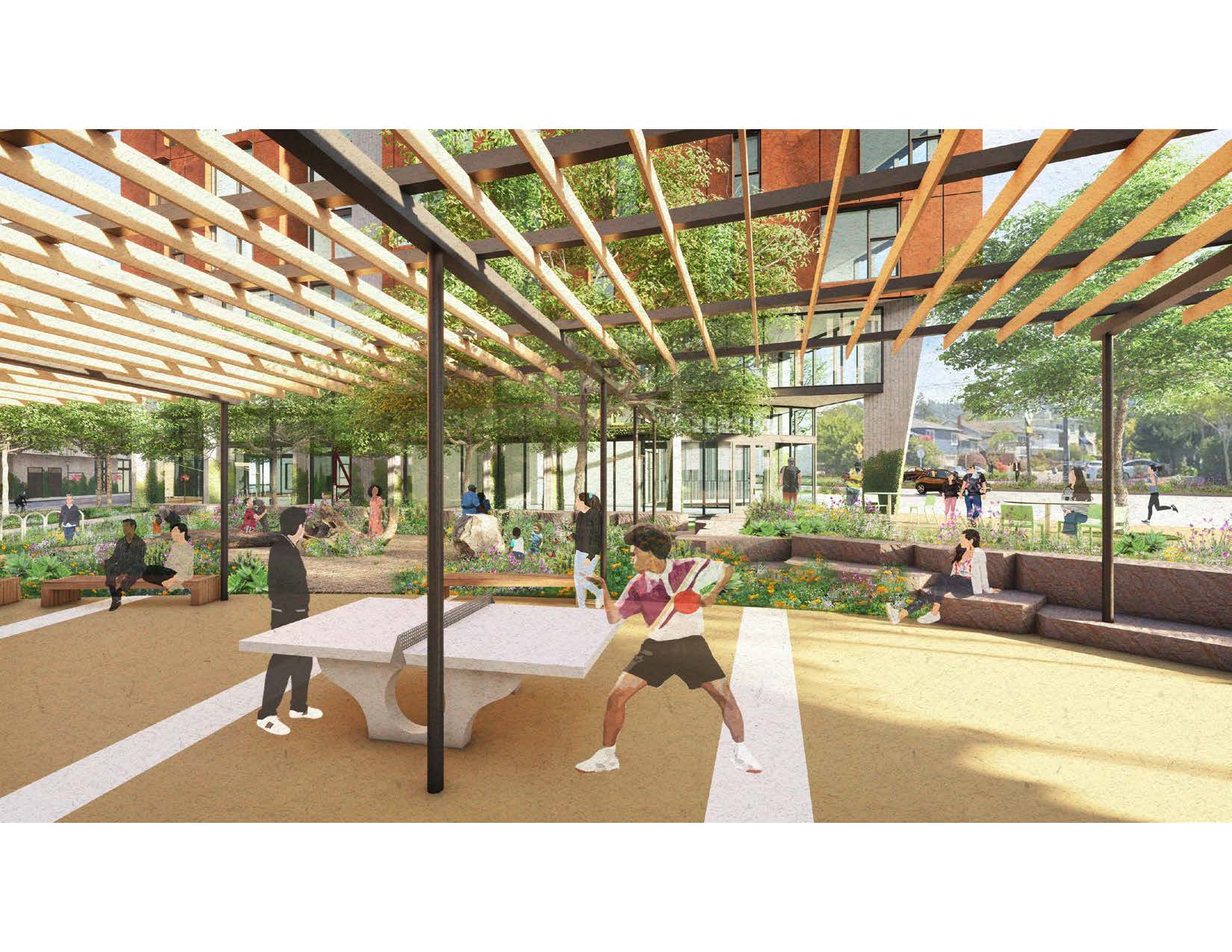
North Berkeley’s Front Porch Rendering.
©EinwillerKuehl Landscape Architecture, David Baker Architects
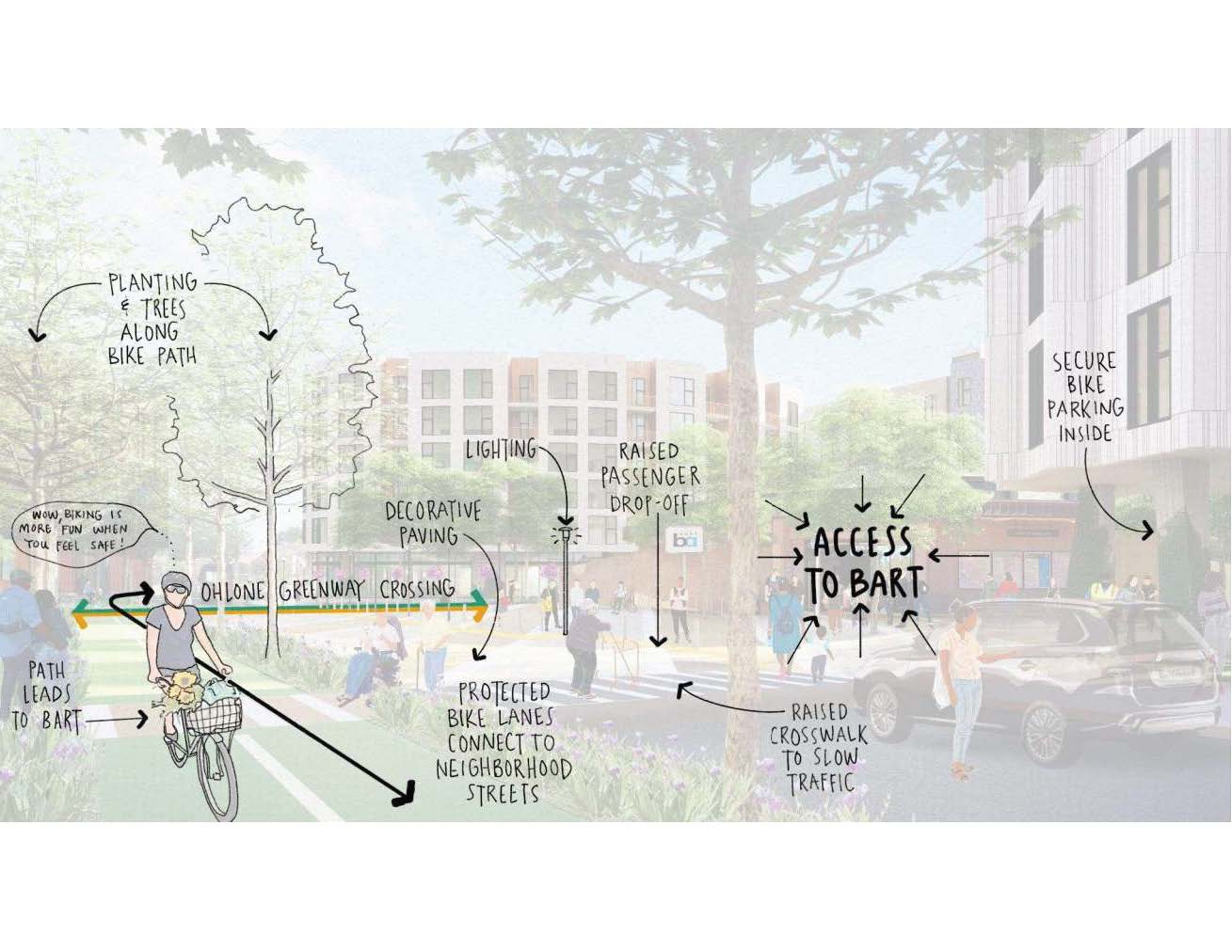
BART Access Road Rendering Overlay: North Berkeley BART is reimagined as a human-scaled, bike-friendly, and nature-integrated place.
©EinwillerKuehl Landscape Architecture, David Baker Architects
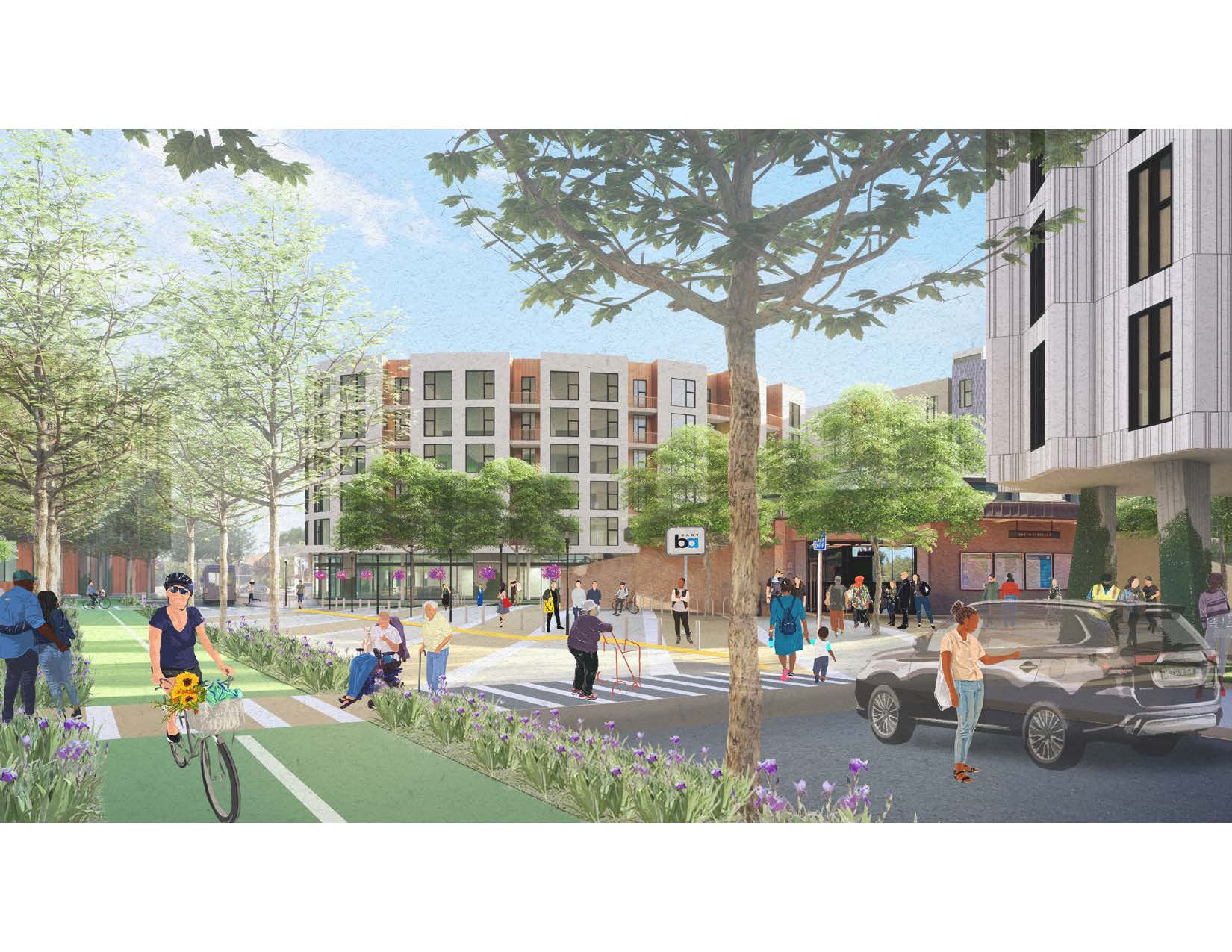
BART Access Road Rendering.
©EinwillerKuehl Landscape Architecture, David Baker Architects
Client
North Berkeley Housing Partners c/o BRIDGE Housing
Project Team
EinwillerKuehl Landscape Architecture
David Baker Architects
Yes Duffy Community Architects
Lotus Water
BART
City of Berkeley
Project Statement
The North Berkeley BART Transit Oriented Development replaces 7.5 acres of asphalt parking with 739 homes and 1.3 acres of public open space. The open space design connects the existing Ohlone Greenway while also inviting the public into the site via multiple accessible pathways, loosely relating to the street grid that was interrupted by the installation of the Key System. The design negotiates a 19-foot elevation change and works around the constraints of an existing BART station and train tunnel running through the middle of the site. A winding linear trellis defines the edges of the open space and holds both space and identity for the Greenway. It serves as a civic sized front porch that anchors public programs such as bike parking, performance, swings, ping-pong, and seating. The planting design uses native planting to connect to local ecology and provide a home for birds and other pollinators.
Project Description
Today the BART station’s vast hot, impervious parking lots are a significant exception to the well-gardened, pedestrian-friendly North Berkeley neighborhood. The proposed development will re-establish the station as a community gathering place that welcomes pedestrians and bikers, provides much needed housing, and defines a strong local setting for the BART Station. Inspired by existing Berkeley public space quirks, public stairs, neighbors’ beautiful front yards, and porches, the design for the open space combines this local residential character and civic scale. It is intended that this new place be both familiar and something new.
The proposed design creates multiple trails that invite in neighbors who previously zig zagged between cars through surface parking. It also connects new residents and BART patrons outward to the surrounding community. Many existing conditions such as the station itself, the elevator, the electrical substation, and the tunnel of the BART tracks which runs Northwest to Southeast are incorporated into the final design. Multiple trails invite the public to flow into the site on all sides and together they create desirable and varied experiences across the site. A winding trellis which holds both space and identity for the Ohlone Greenway defines the edge of the open space and provides a two-way bike path as well as pedestrian space for linear trail movement across the site. The trellis is a civic sized front porch and will be a new infrastructure for neighbors to use as a place for bike parking, performance, swings, ping pong, seating, and establishing a welcoming gateway to the site. Two other trails reestablish the small block streets that existed prior to the station development on Francisco and Short streets. The north south two-way cycle track trail along the internal street is transformed with the addition of linear trees that separate the bikes from other vehicles. A new east west trail connection from Acton to Sacramento embraces the slower winding pedestrian walking pace inspired by the Berkeley stairs and trails in the hills nearby. This walk is wrapped in large boulders and stone and establishes a new connection to the elevator, the station, and more intimate garden planting. All the trails serve the larger transit goals of this multi-modal connection point by making the experience of biking or walking desirable and easy.
Outdoor gathering areas for the public are established surrounding the station and along Sacramento near the casual carpool and the elevator. With restrictions on any planting above the tunnel, the design of the plaza area west of the station is framed in planting and given human scale and microclimatic comfort by the trellis and surrounding trees. A visually dynamic and materially interesting ground plane serves as a canvas for human activities in and around the plaza. Furniture and lights are arranged with precise rhythm within the pavement pattern to establish edges and comfortable places to sit. East of the station adjacent to the tunnel there isspace for informal performance, play, and immersive planting. These casual garden rooms are connected to a café along Sacramento with a small patio as well as to the existing elevator access to BART.
The setting for the new housing is varied on all sides and responds to the neighborhood context. Along Virginia and Acton, small gardens and stoops with a variety of planting reflect the houses across the street. Along Sacramento the buildings act as buffers to the fast-moving cars and the very wide street and planting is minimal. Along Delaware the buffered bike lane and deep planting balances the new buildings and the planted character of the neighborhood. Building courtyards extend longer views, planting, and connection to the surrounding sidewalk experience.
Planting design for the project is developed to increase healthy ecology. Stormwater treatment is integrated into the project design in a dispersed manner with attention to the size and character of its basins. Pollinator species and habitat plants are designed in accordance with ecological groupings. Planting practices such as green mulch and layered planting design minimize maintenance and soil compaction and minimize maintenance costs.
The North Berkeley BART Transit-Oriented Development (TOD) exemplifies planning excellence by addressing critical community needs for affordable housing, environmental sustainability, and equitable access to public transit.