Wisdom of Place: Elemental Landscapes
Honor Award /
2025, Research and Communication
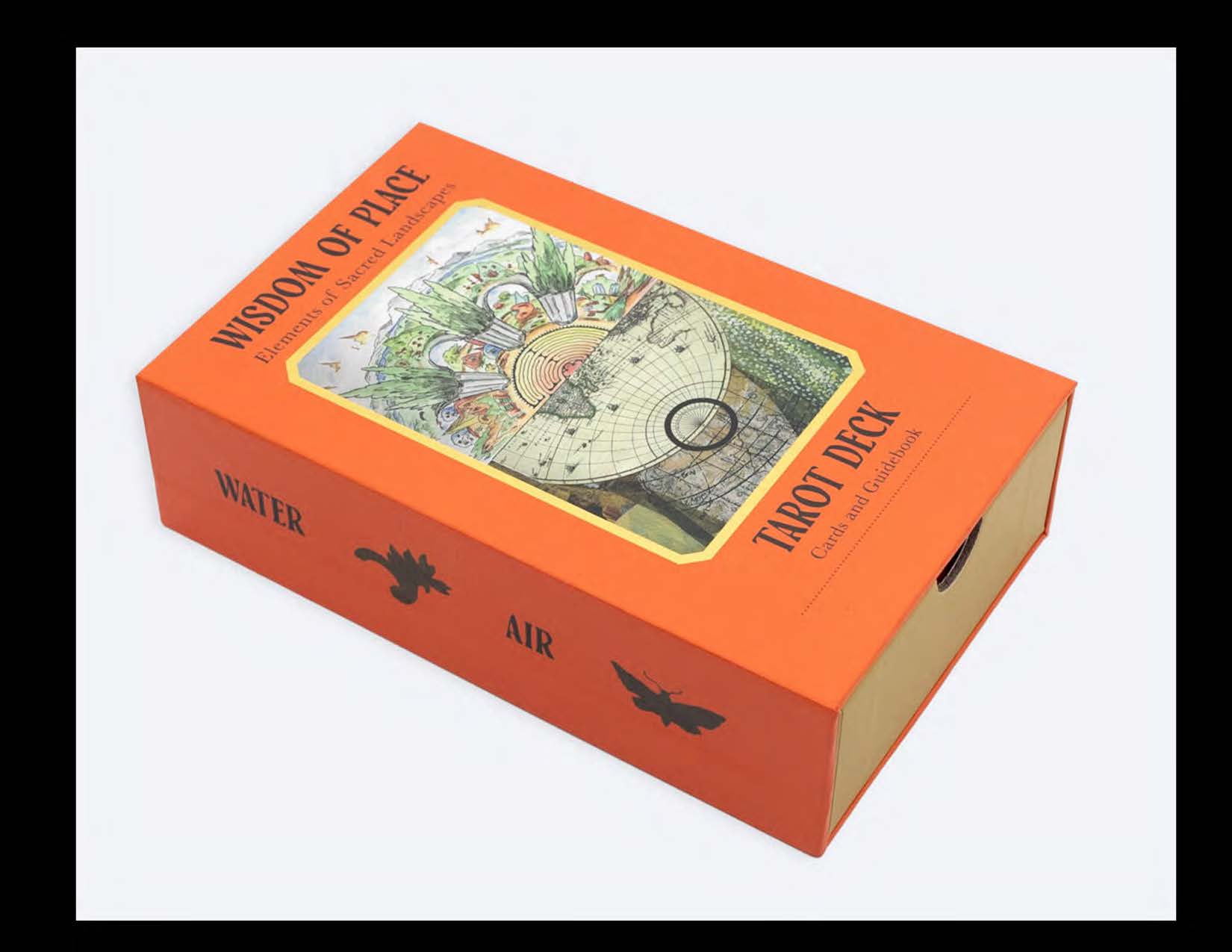
The attractive slipcase contains the card deck and guidebook. The icons and words on the side of the slipcase refer to the elemental landscapes described within–earth, air, water and wood.
©Elizabeth Boults
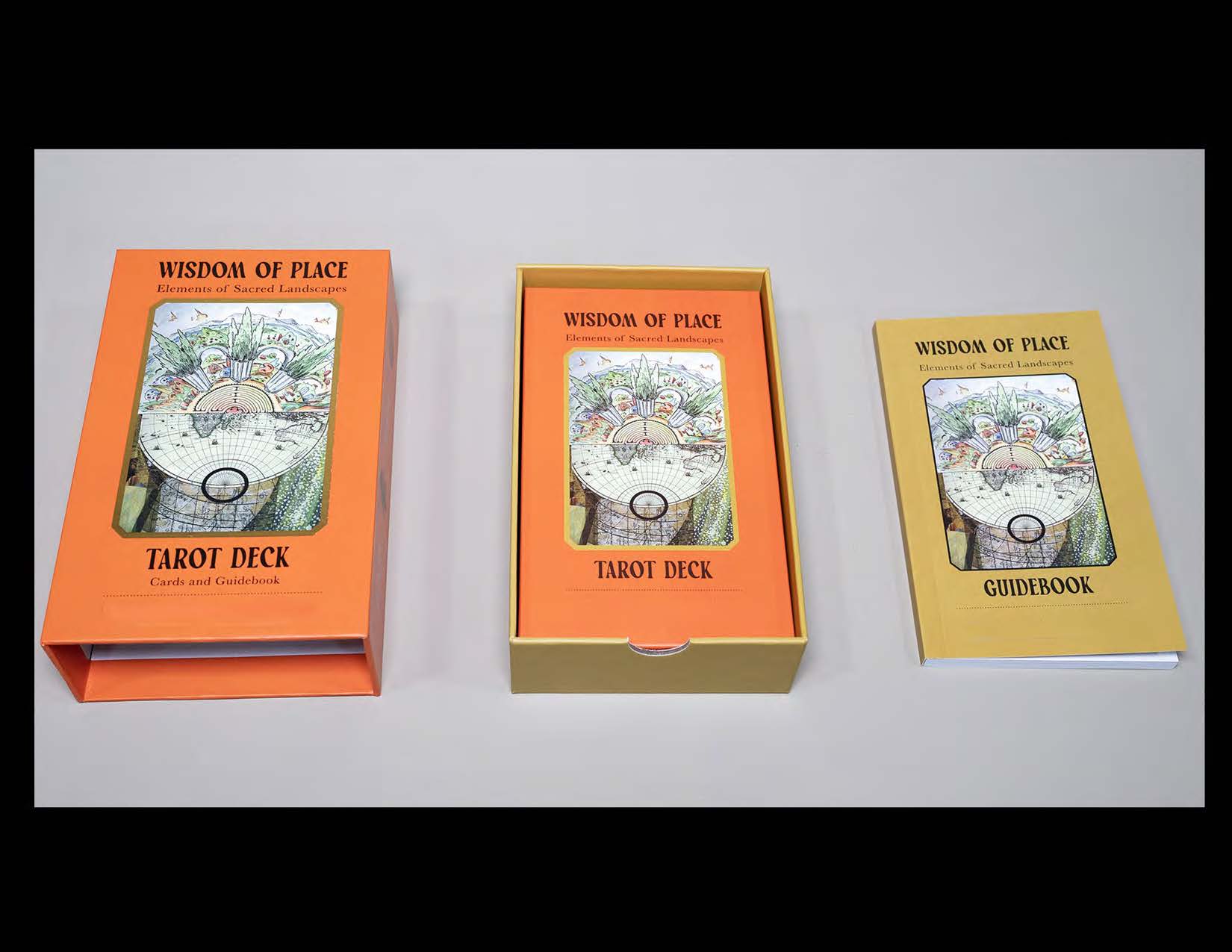
The set is unified graphically, with theme and variation of text and image. Visual and tactile interaction with the deck encourages cognitive association.
©ORO Editions
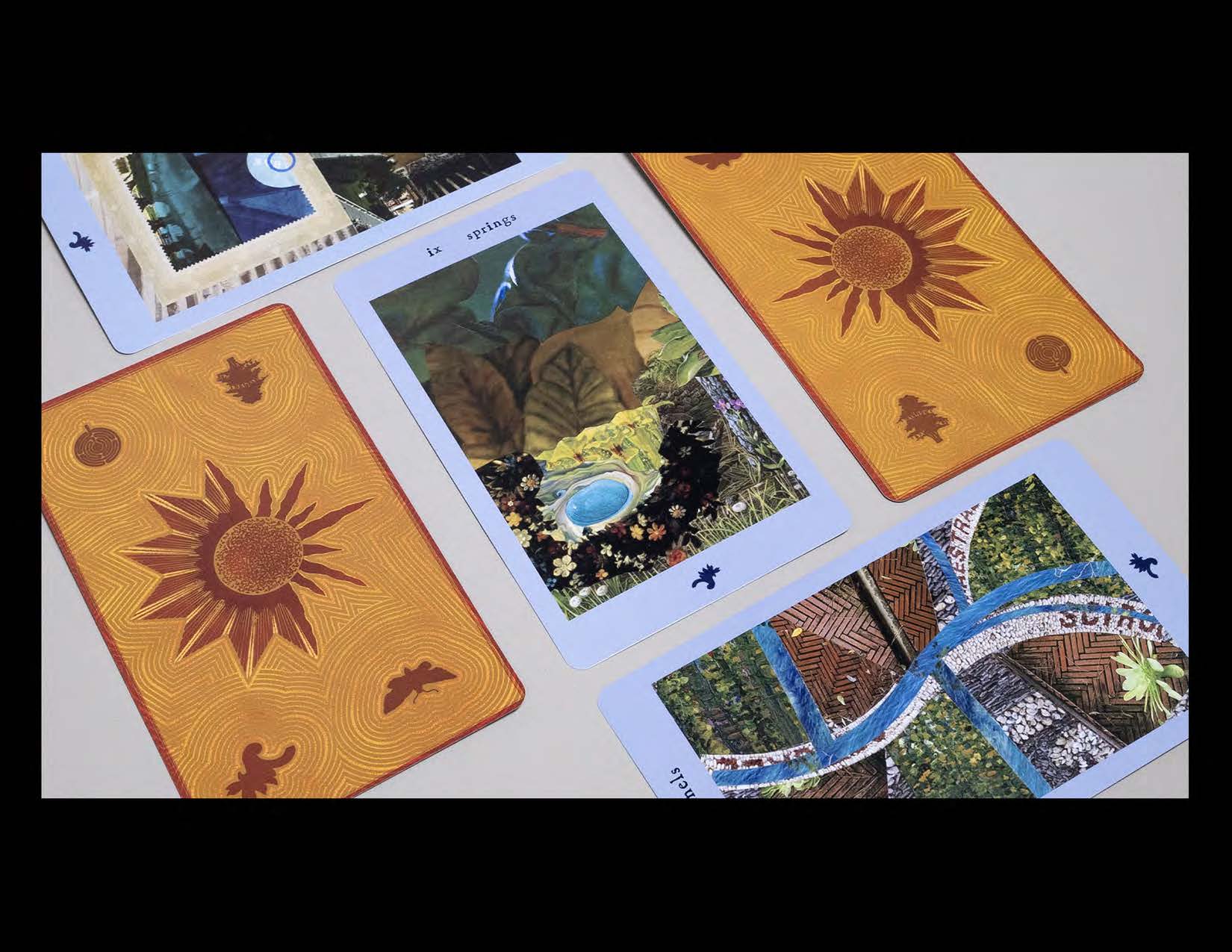
The design of the card backs references the energy between the four elements, with a central icon of the radiant sun.
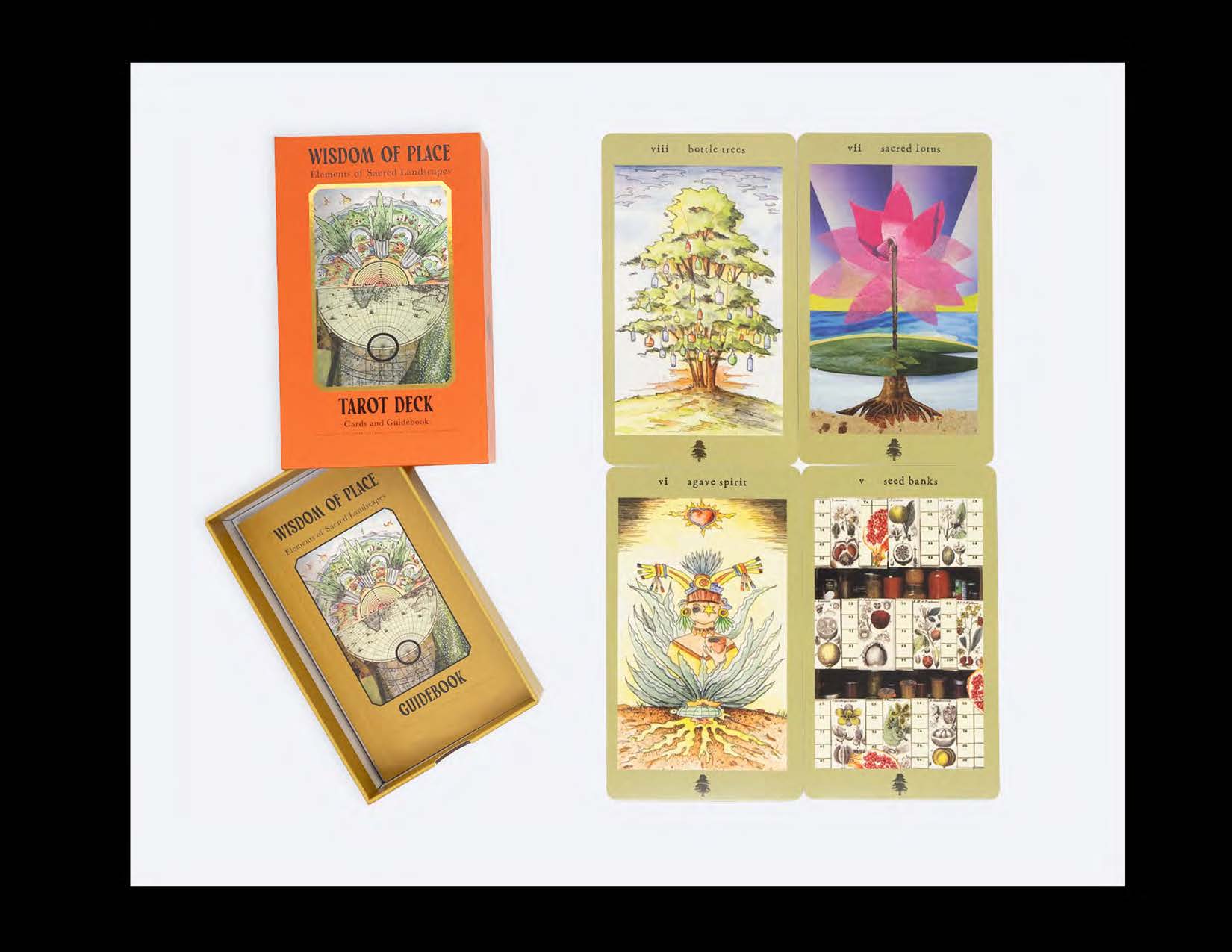
Each element, or suit, is represented with its own icon and color theme. Here are examples from the “wood” suit. Cards are titled and numbered for ease of reference with the guidebook.
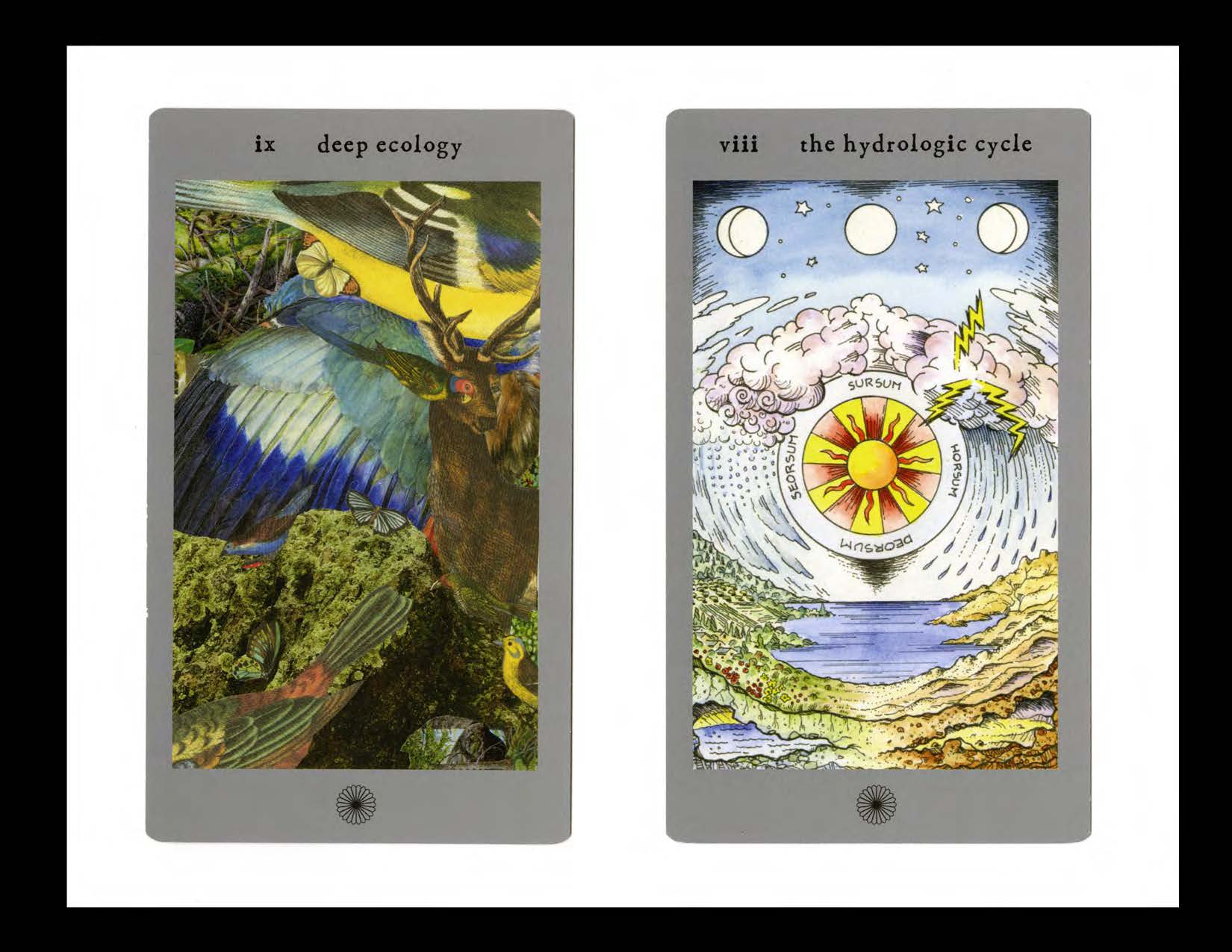
The artwork on the cards is a dialog between styles: hand-cut paper collage alternates with watercolor over pen and ink drawing. Images are not digitally manipulated, only scanned for printing.
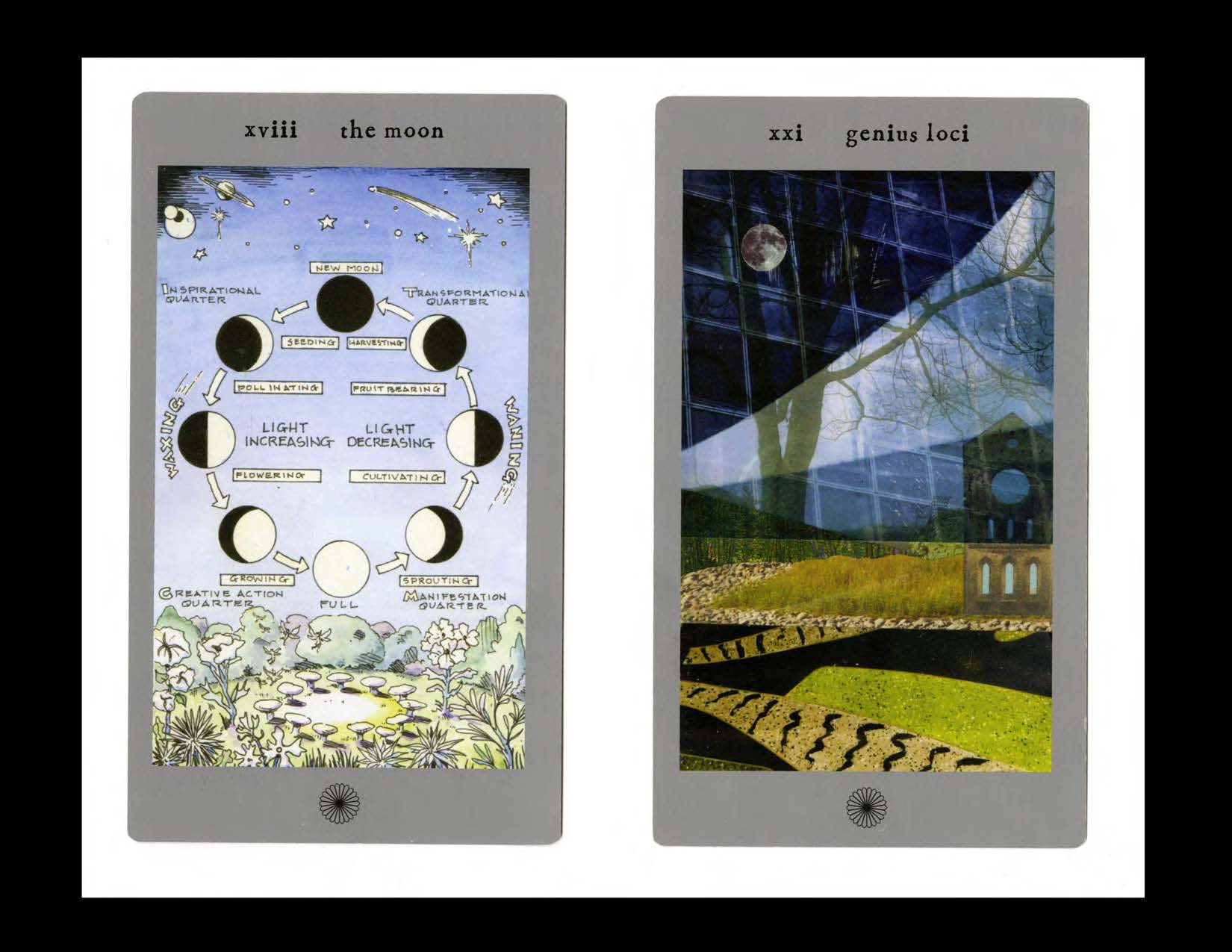
This pair of cards is from the “major arcana” section, which introduces broad concepts and elements of environmental awareness.
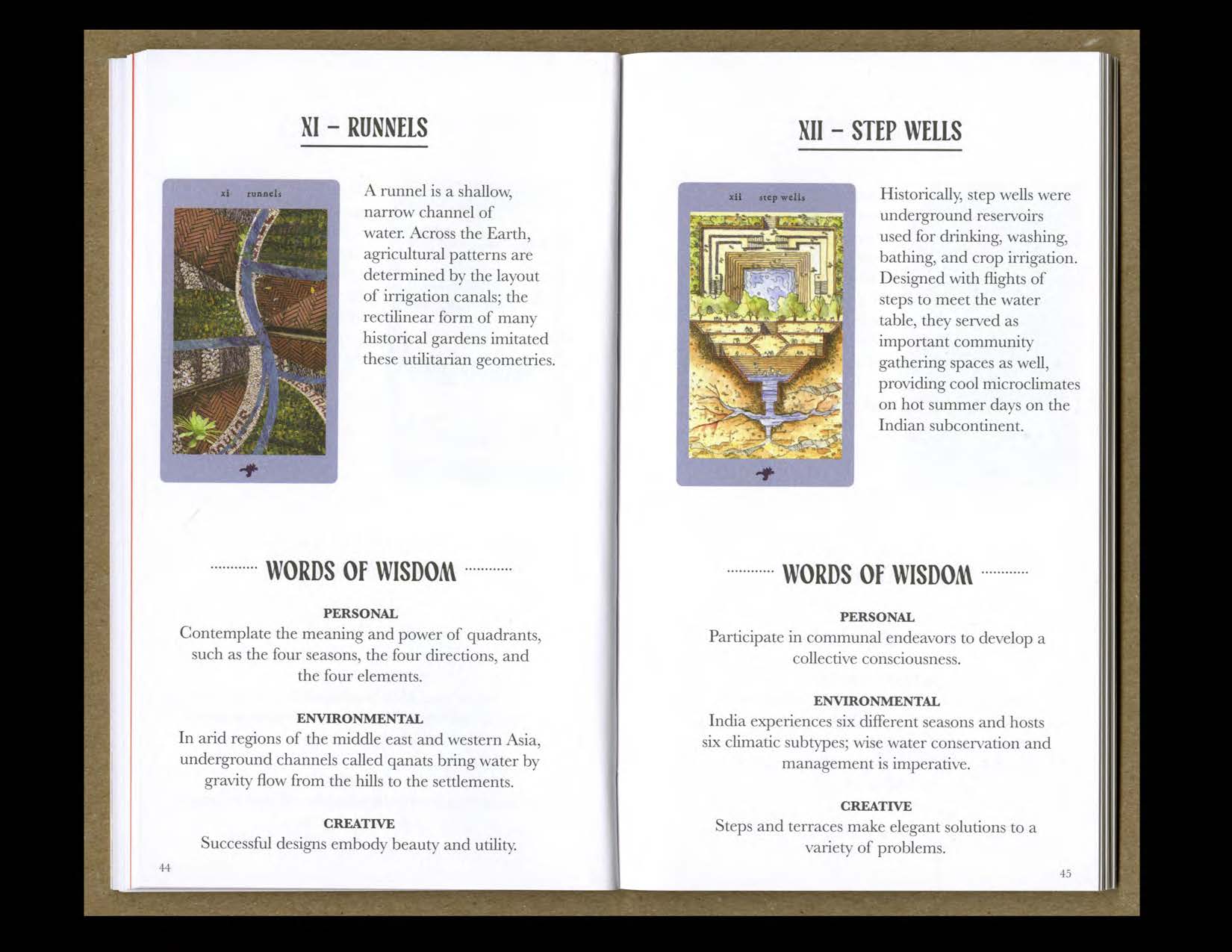
The guidebook reproduces thumbnail images of the cards and provides descriptions of the landscape features. “Words of Wisdom” present three different contexts for interpretation.
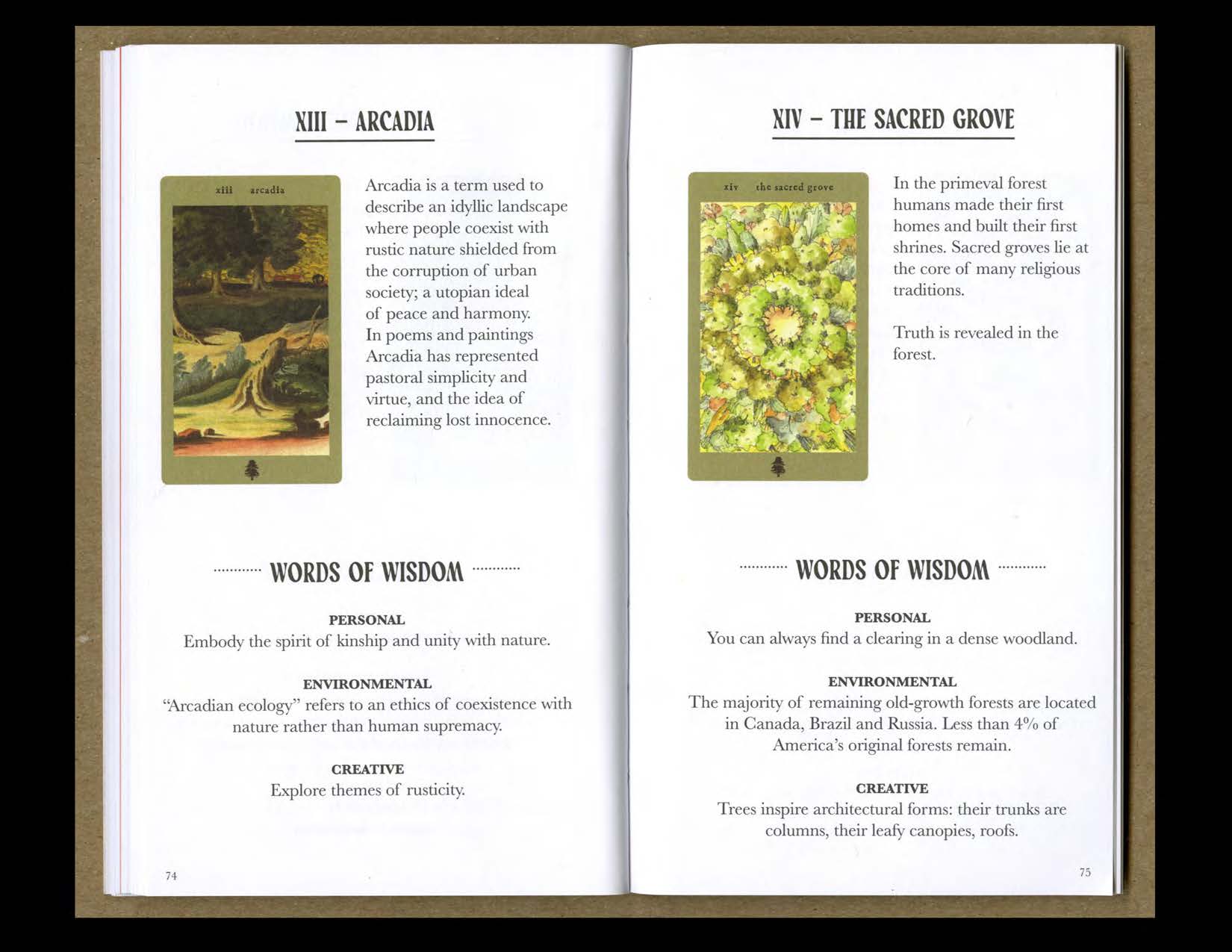
The numbering of the cards in sequence from one to fourteen represents a gradient from the tangible to the metaphysical.
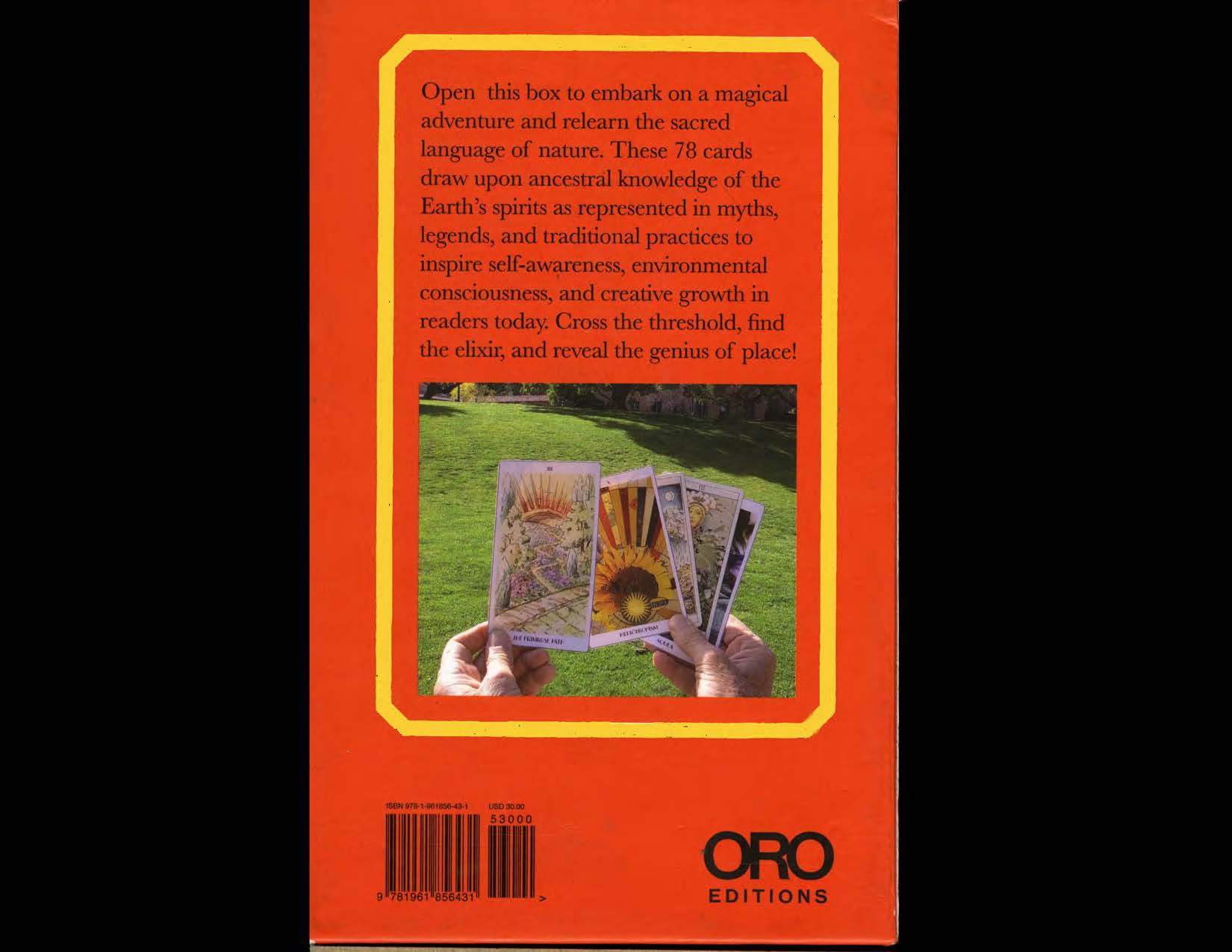
The back of the slipcase contains a photo of the cards being used in the field as well as an invitation to discover the wisdom and spirit of place.
Client
N/A
Project Team
Amanda Goldsmith, Goldsmith Studio, Book Designer
Dominic Vadra-Edwards, Goldsmith Studio, Book Designer
Project Statement
Wisdom of Place: Elemental Landscapes examines various expressions of the spirit of place through the narrative structure of the tarot. We adapt this allegorical framework by associating the meaning of traditional tarot figures with ideas, concepts, and manifestations of the genius loci to expand the context of environmental consciousness in an original and captivating way. At this moment of profound climate change and environmental disruption, we must reawaken our sense of the earth’s abiding intelligence and relearn the sacred language of nature. The cards represent broad concepts and fundamental principles of environmental consciousness and their common expressions in global folklore, as well as illustrate specific elements and features of “sacred” landscapes. Wisdom of Place: Elemental Landscapes not only enriches one’s environmental literacy but also restores one’s sense of wonder at the world.
Project Description
Wisdom of Place: Elemental Landscapes expands the knowledge base of landscape architecture by emphasizing the relevance of historical and traditional practices, and broadens the exposure of the profession to the general public by communicating the imperatives of environmental consciousness in an accessible and enchanting way. The work advances and illuminates the core foundation of landscape architecture—the concept of genius loci or spirit of place.
Every day of our lives we are in the presence of genius—what our ancestors called the genius loci. But do we recognize it? Can we still hear the mountain, see the wind, feel the forest—without an app? The seventy-eight cards in this deck are pathways to enchantment, artful representations of metaphors that help realign spiritualism with environmentalism. The accompanying guidebook explains each figure’s significance as a component of nature and of human imagination. One can interact with the content to gain new knowledge about natural systems, to find personal inspiration, to stimulate creative thinking, and to encourage climate-positive action.
Using the structure of tarot as an organizational framework, the guidebook and card deck are arranged according to the elements of earth, air, water, and wood—combining eastern and western cosmologies.
Earth is our foundation, the source that sustains our bodies and souls. Life is rooted in earth; it is a medium for growth. We cultivate earth to be nourished; we build with earth to be sheltered; we bury in earth to preserve and return home. In this section we examine the variety of ways in which humans have understood and respected the earth as our physical and spiritual home. Natural topographic features, like caves and mountains, are a part of many cultures’ creation myths. Human-made forms, like mounds and mazes, berms, and bridges, are part of place-making strategies, ways for people to center themselves and propitiate the forces of nature. Earth has protected us since the time of our first breath; we must be mindful to return the favor.
Air is the force and rhythm of life. From our first breath to our last, we cycle oxygen through our bodies, taking in the energy and spirit of air and releasing it. We think of air as an invisible substance, yet we “see” air when it’s cloudy, we “feel” air when it’s windy. 99% of the world’s population breathes air that exceeds acceptable levels for particulate matter. Air carries sound and scent. Change rides in on the wind. In this section we present information about the aerial realm, including the necessity of pollinators. Butterflies, bees, moths and hummingbirds provide abundant and vital ecosystem services by helping plants reproduce. Without pollinators, humans would have no food.
The physical and metaphorical properties of water are symbolic of life itself. We are born from water; it is our primordial home. Water equally sustains and destroys. It is forceful in its movement and in its stillness. It is salty and sweet. Water cleanses, dissolves, dilutes, and extinguishes as well as powers, feeds, fulfills and satisfies. In mythology and religion water functions as mirror, wellspring, dwelling, source, channel, elixir, divinity, and demon. According to the United Nations, a quarter of the world’s population, or two billion people, lack access to safe drinking water. In this section we explore the movement, capture and transport of water from both a scientific and design perspective.
The elemental energy of wood is a manifestation of the spirit of the natural world. Wood is associated with the capacity for creative growth and emergence, as represented by the spring season. We interpret wood broadly as representative of the entire plant kingdom and examine the symbolism of plants and their roles in various cultural practices that are based on an awareness of their ecological value. An ecosystem is a complex network reliant on keystone plant species. Without plants there would be no life on earth. Plants provide food, habitat, medicine, even the air we breathe.
Wisdom of Place: Elemental Landscapes reawakens one’s awareness of the power and presence of the natural world. Recognizing the nature-based beliefs that people across the world share can not only unite us as a planet, but inspire people to cherish and create their own sacred places.