Living Pond
Merit Award /
2025, Small Projects, Big Impact
Sonoma, CA

Outside of the water feature at grade, a specimen Olive tree rests in a bed of Lomandra grasses. More Lomandra, and Cape Rush wrap the concrete fountain shell in soft green foliage, separating it from the gravel drive.
©Sabine Scherer
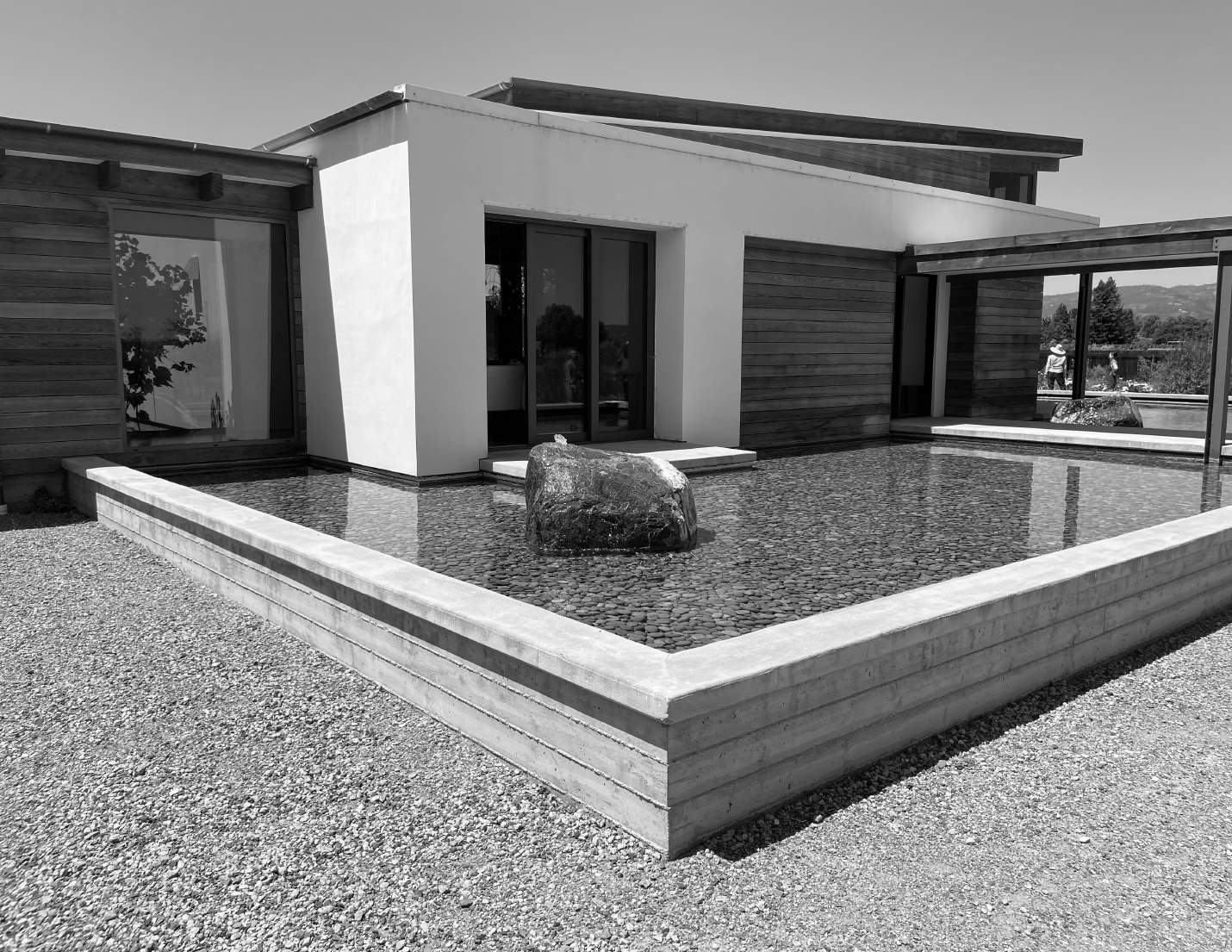
The existing fountain was cooling and functional but felt too sterile for the country setting, exacerbated by the lack of separation between the fountain wall and the base rock drive.
©Sabine Scherer
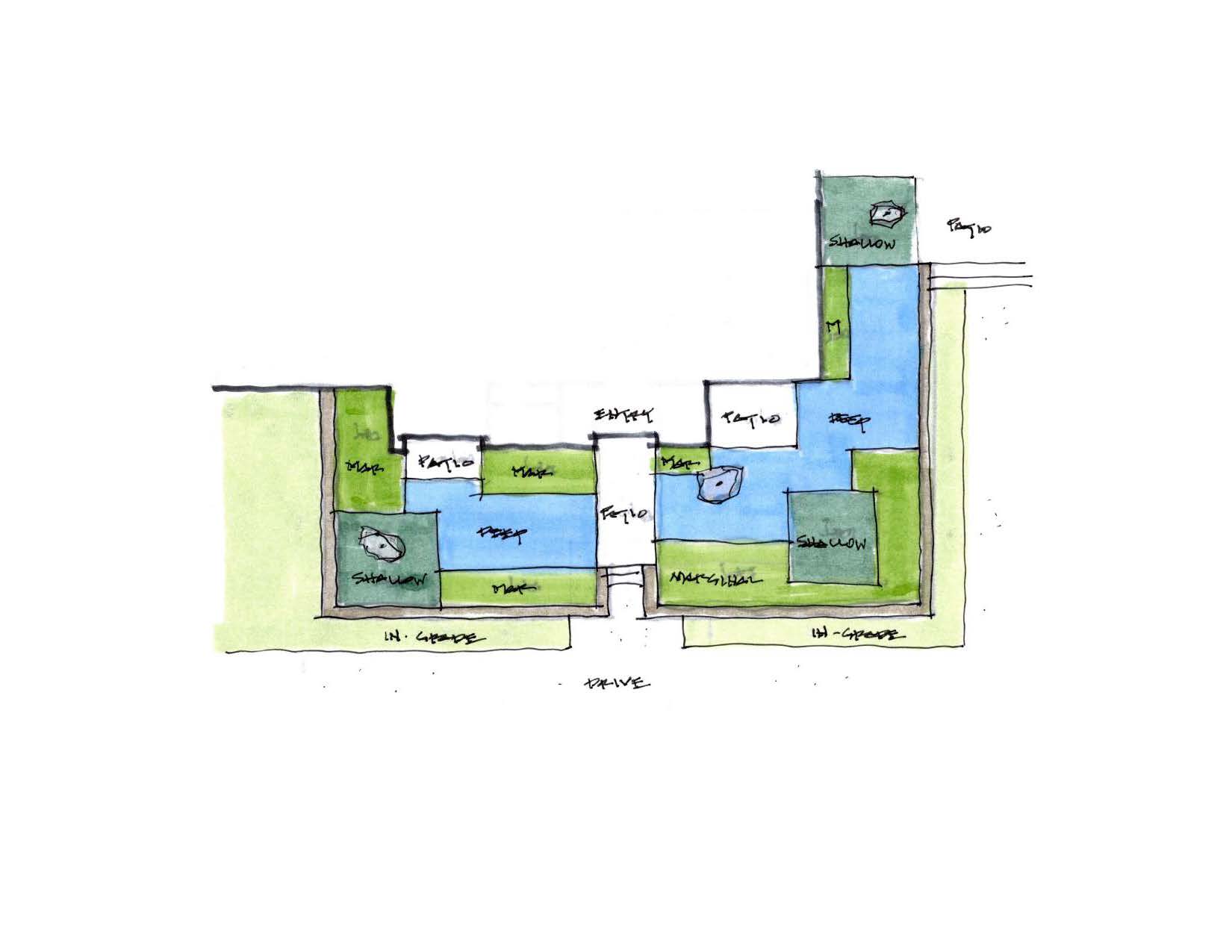
The initial concept retained the three existing boulders drilled for water recirculation, and added overlapping rectilinear flow-through planters at different water depths.
©Sabine Scherer
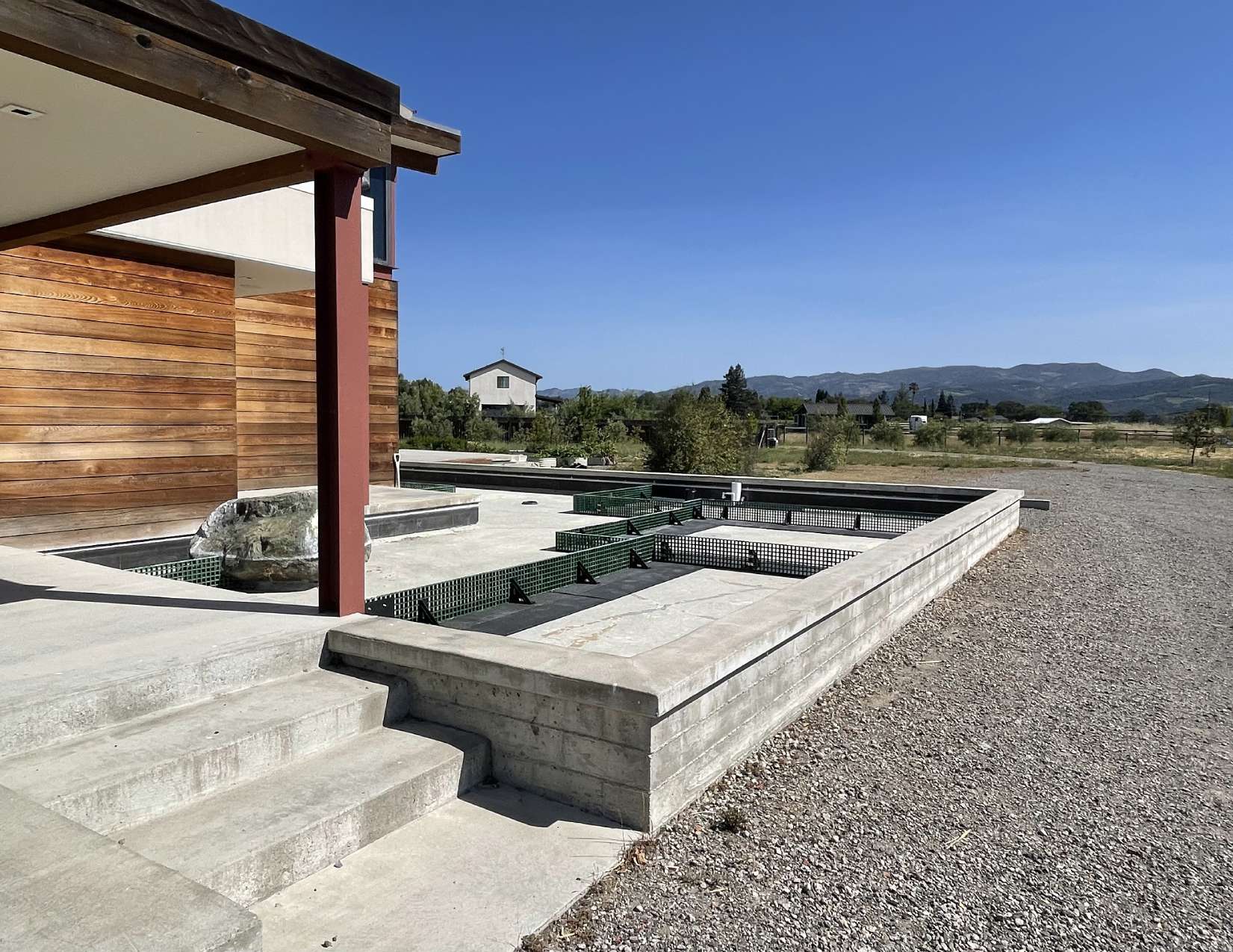
Fiberglass FRP panels at different water depths are anchored to the fountain shell.
©Sabine Scherer
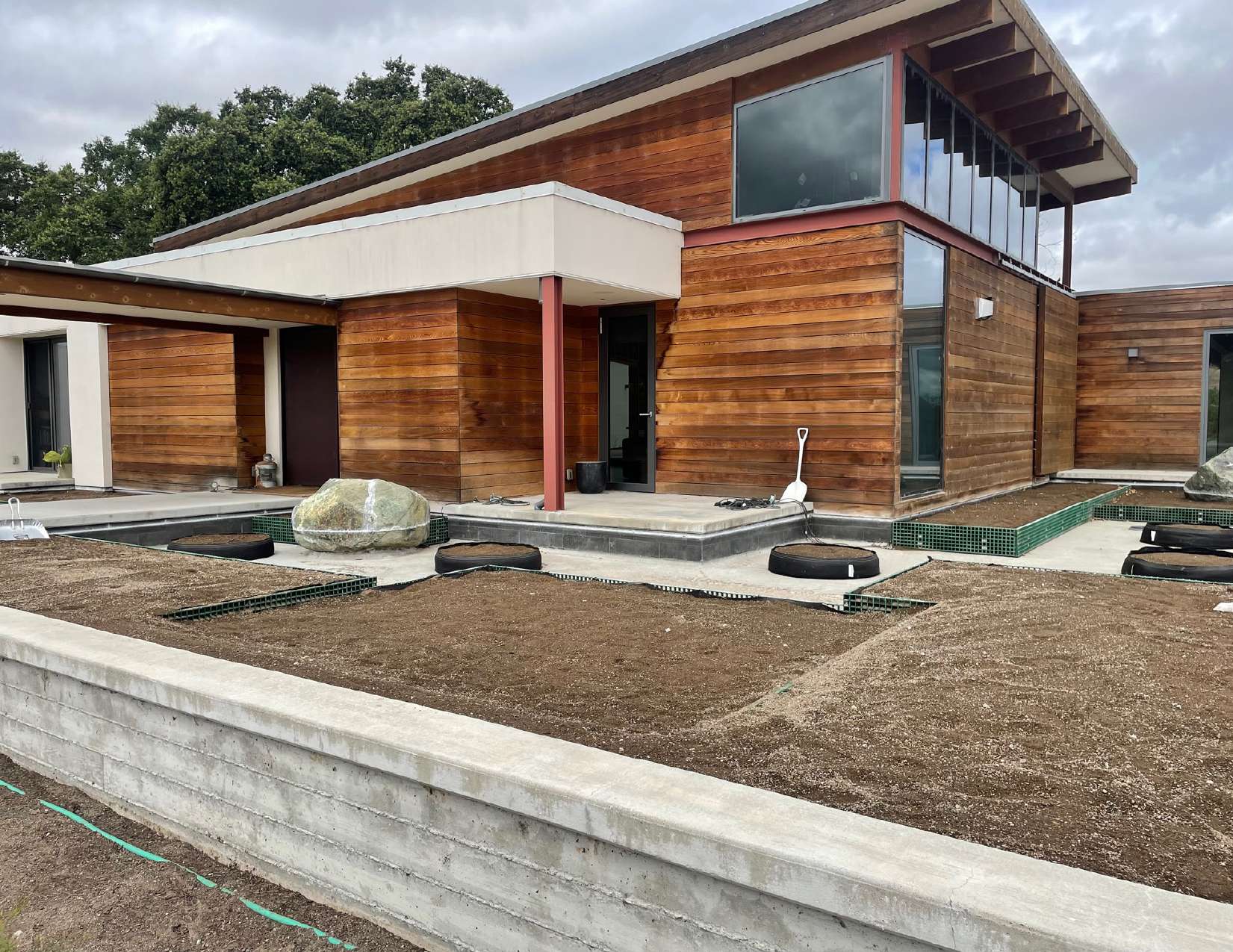
A special aquatic soil mix was specified for the planters.
©Sabine Scherer
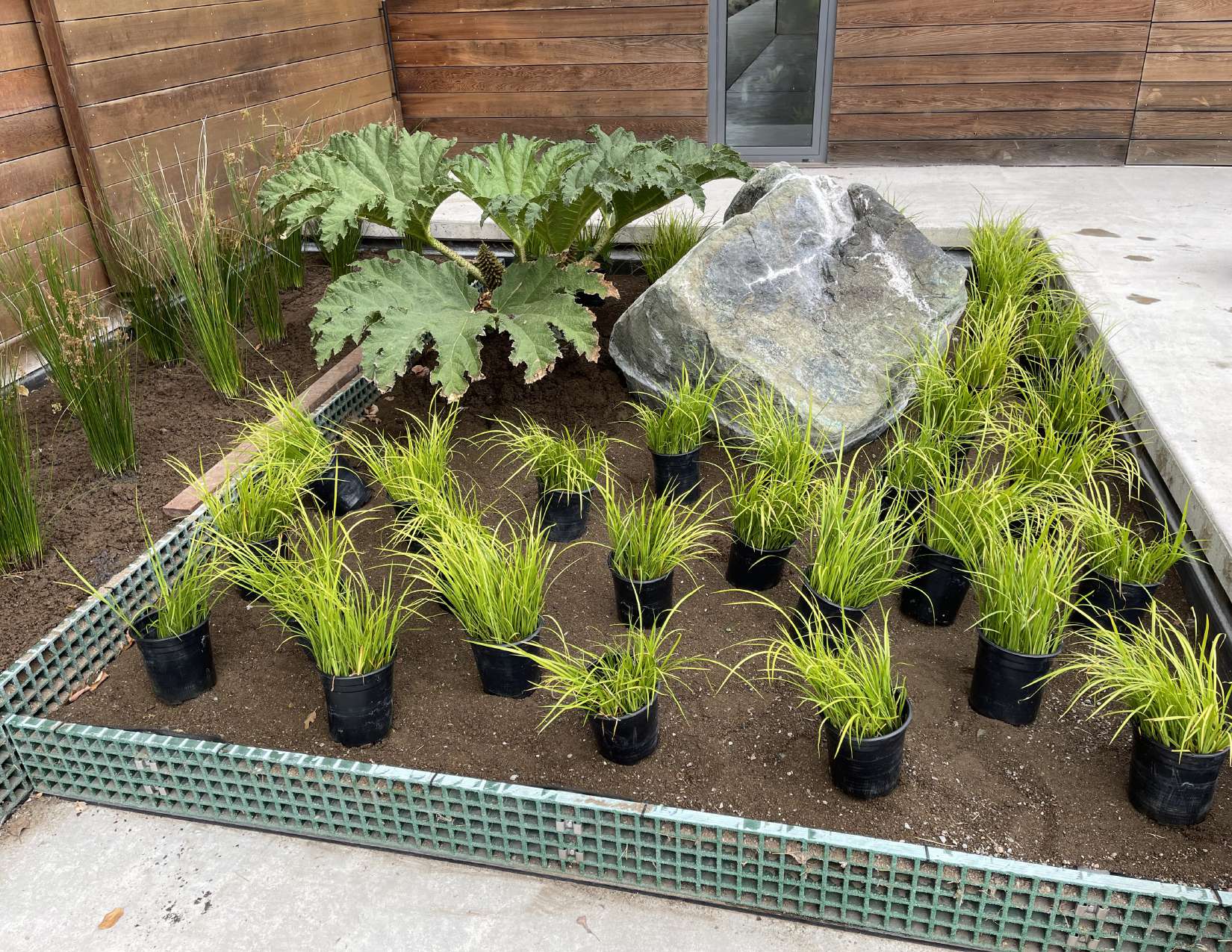
Plant material laid out and adjusted, ready for planting.
©Sabine Scherer
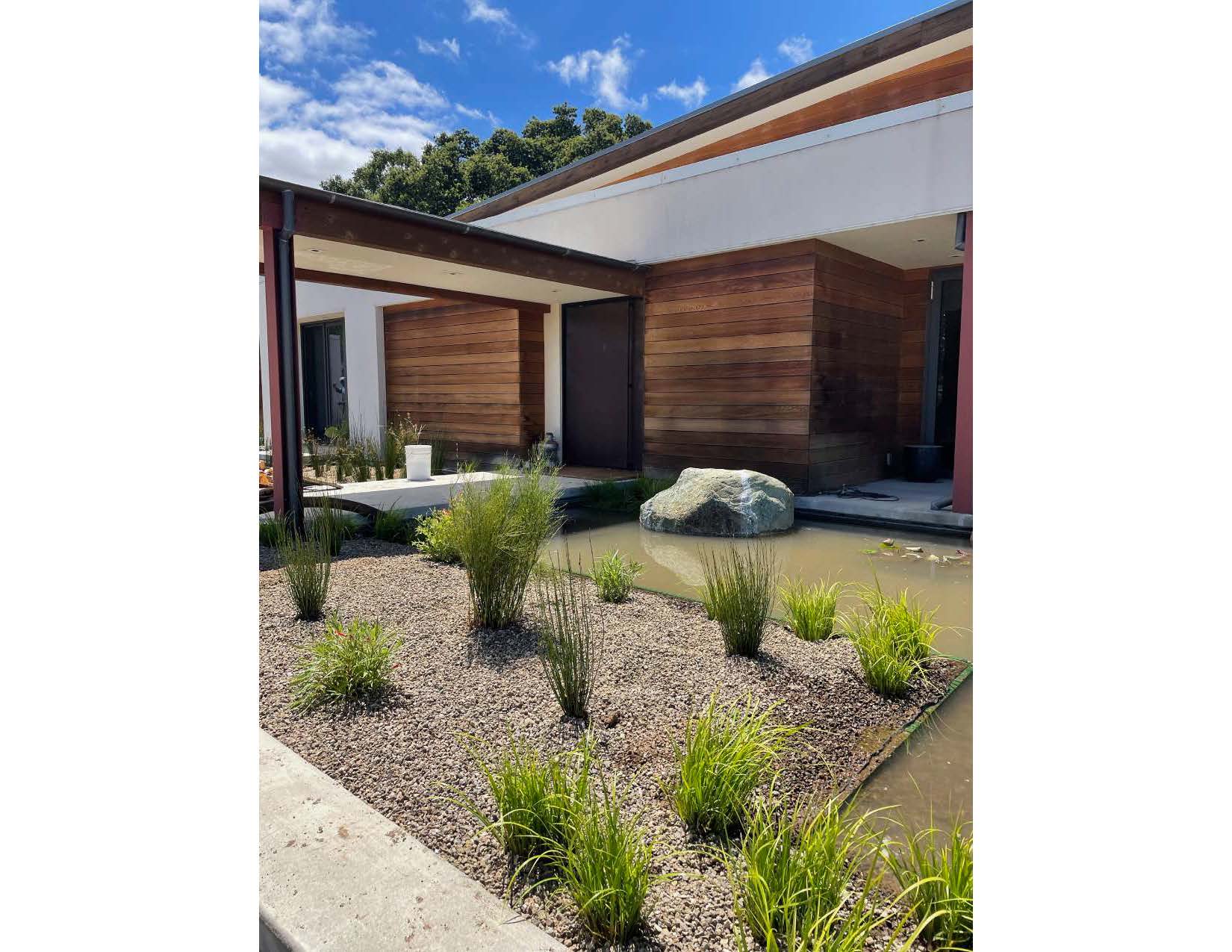
A layer of washed gravel keeps the planting soil in place.
©Sabine Scherer
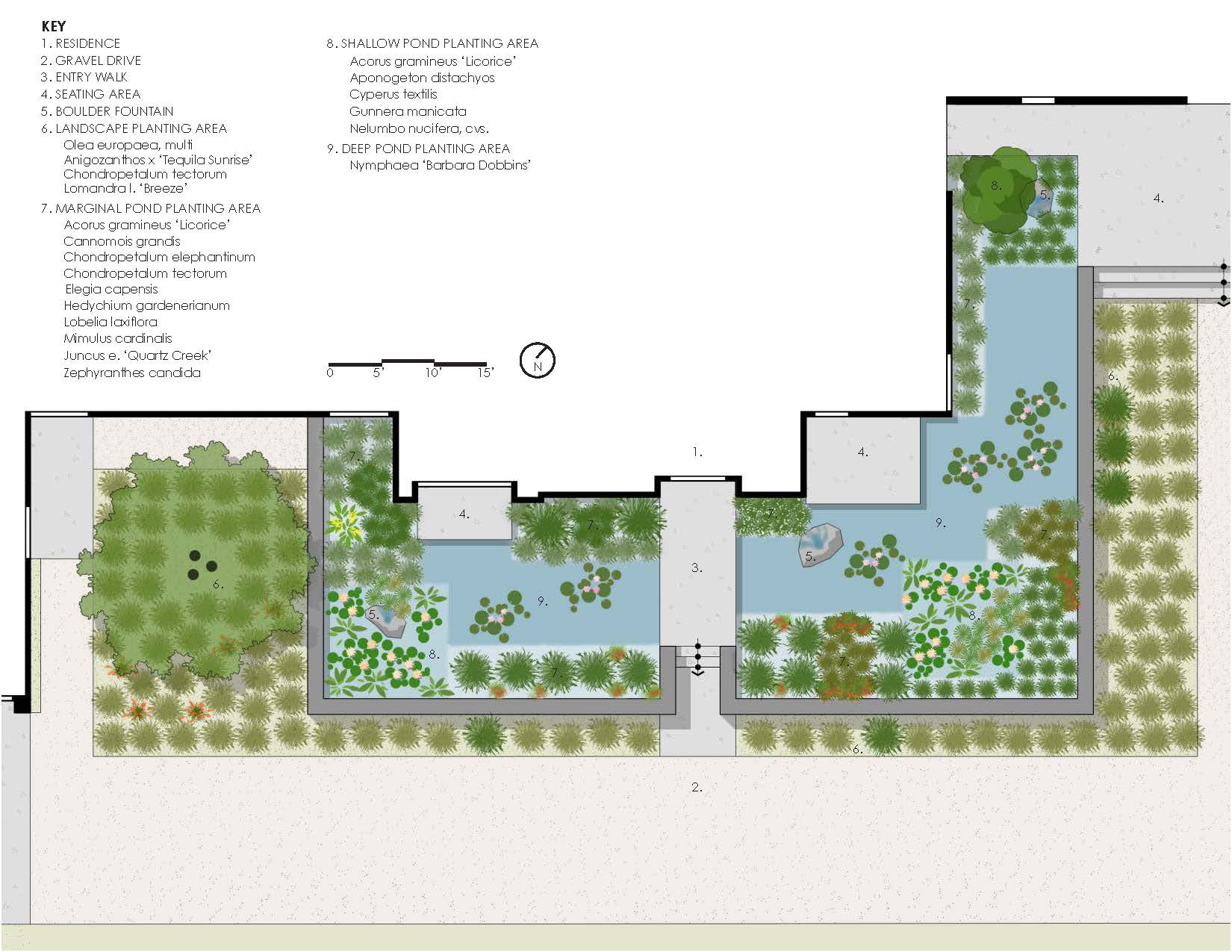
The planting design thoughtfully weaves aquatic and marginal plant material.
©Sabine Scherer
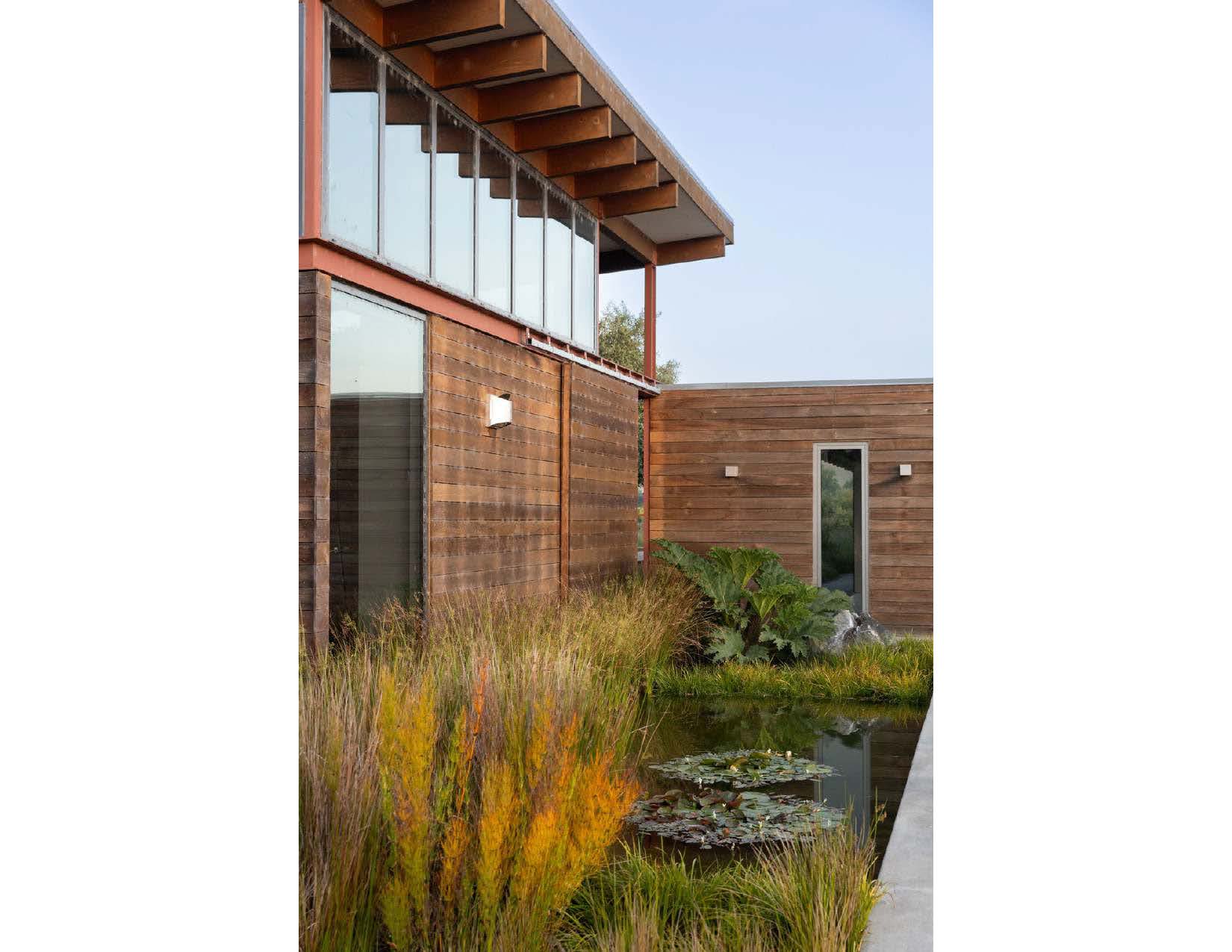
The north pool, with Horsetail Restio in the foreground, Water Lilies in the middle, and Giant Gunnera in the background.
©Sabine Scherer
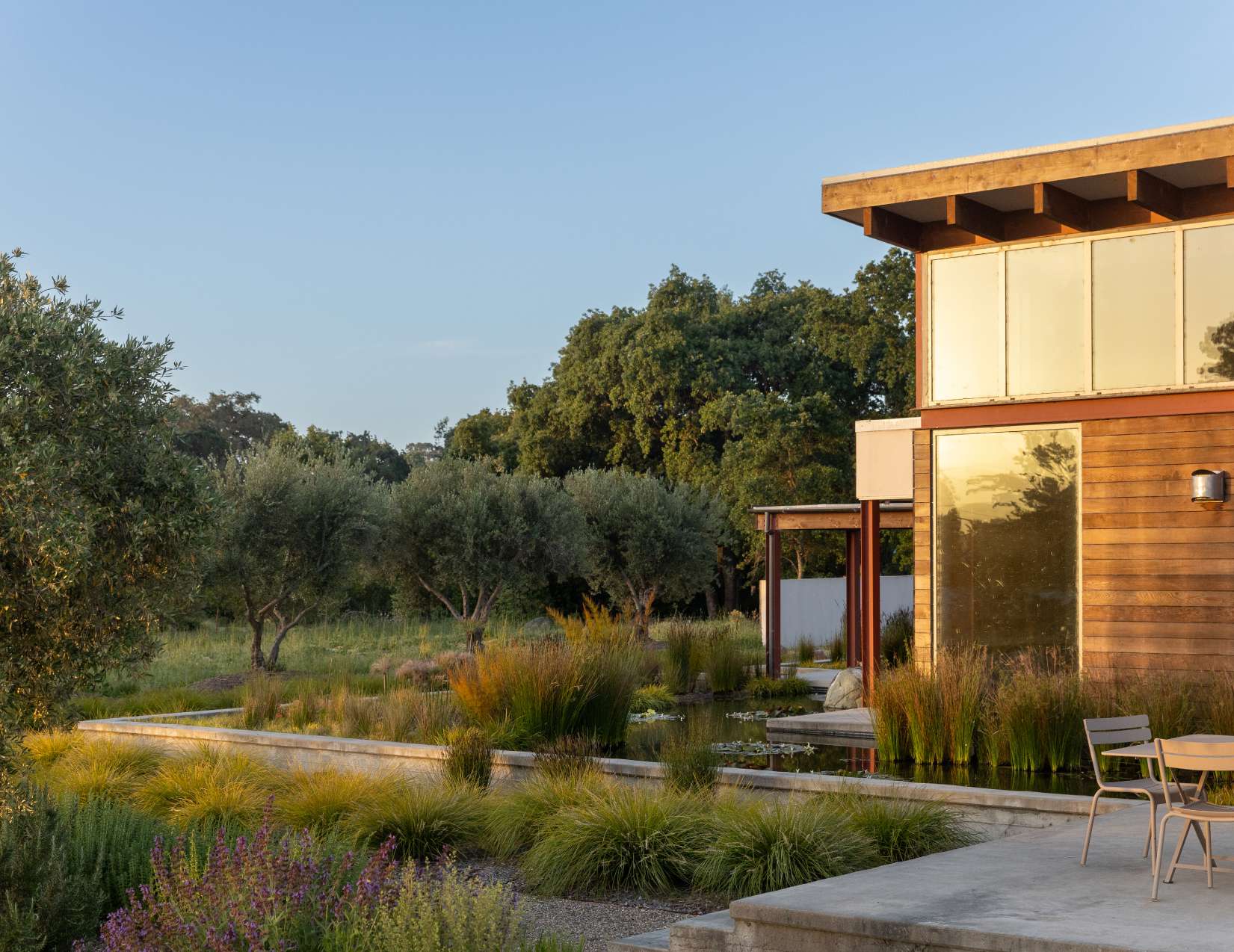
A small existing concrete terrace overlooks the north pool. The living pond makes the buildings feel more integrated into the surrounding oak and olive landscape.
©Sabine Scherer
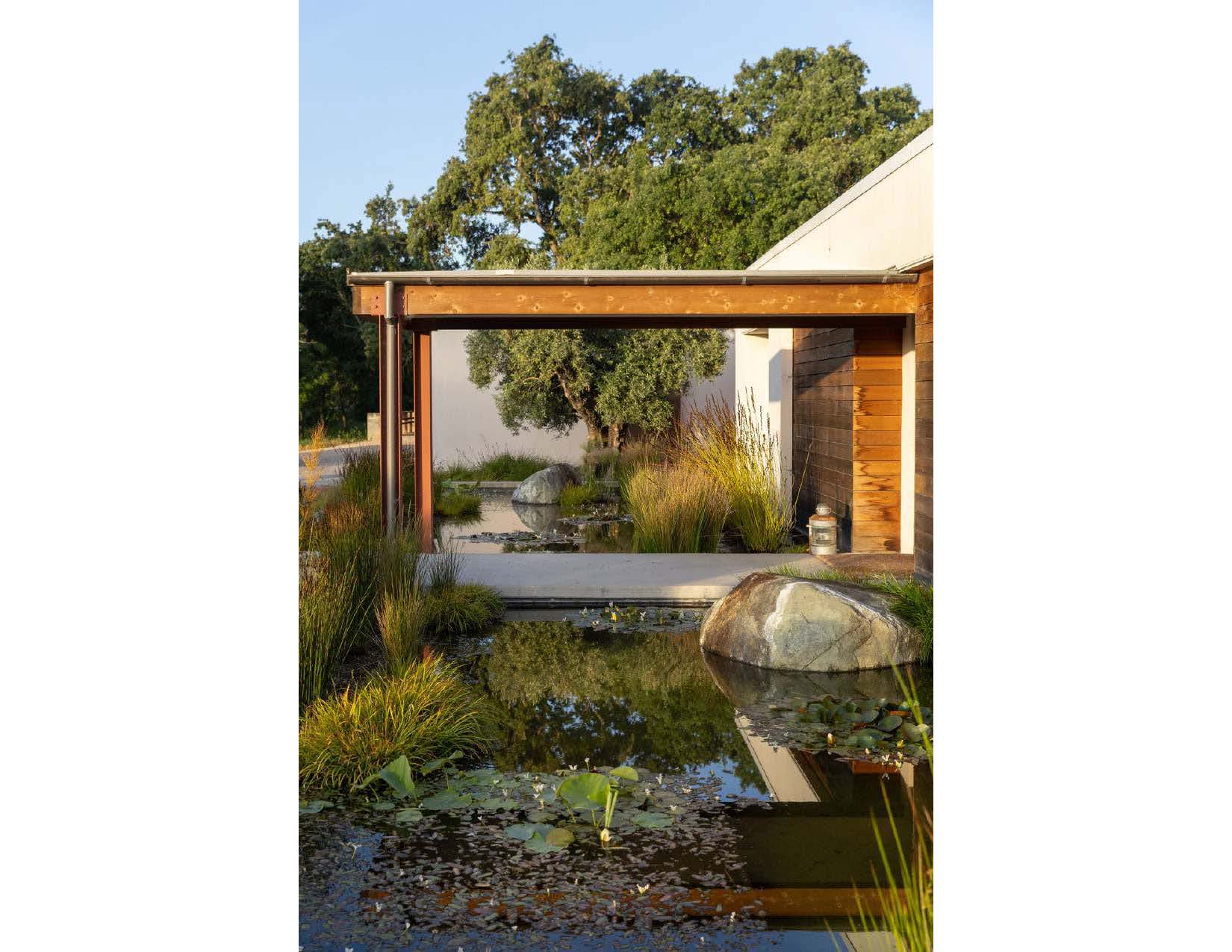
The entry walk to the front door is flanked by the two pools.
©Sabine Scherer
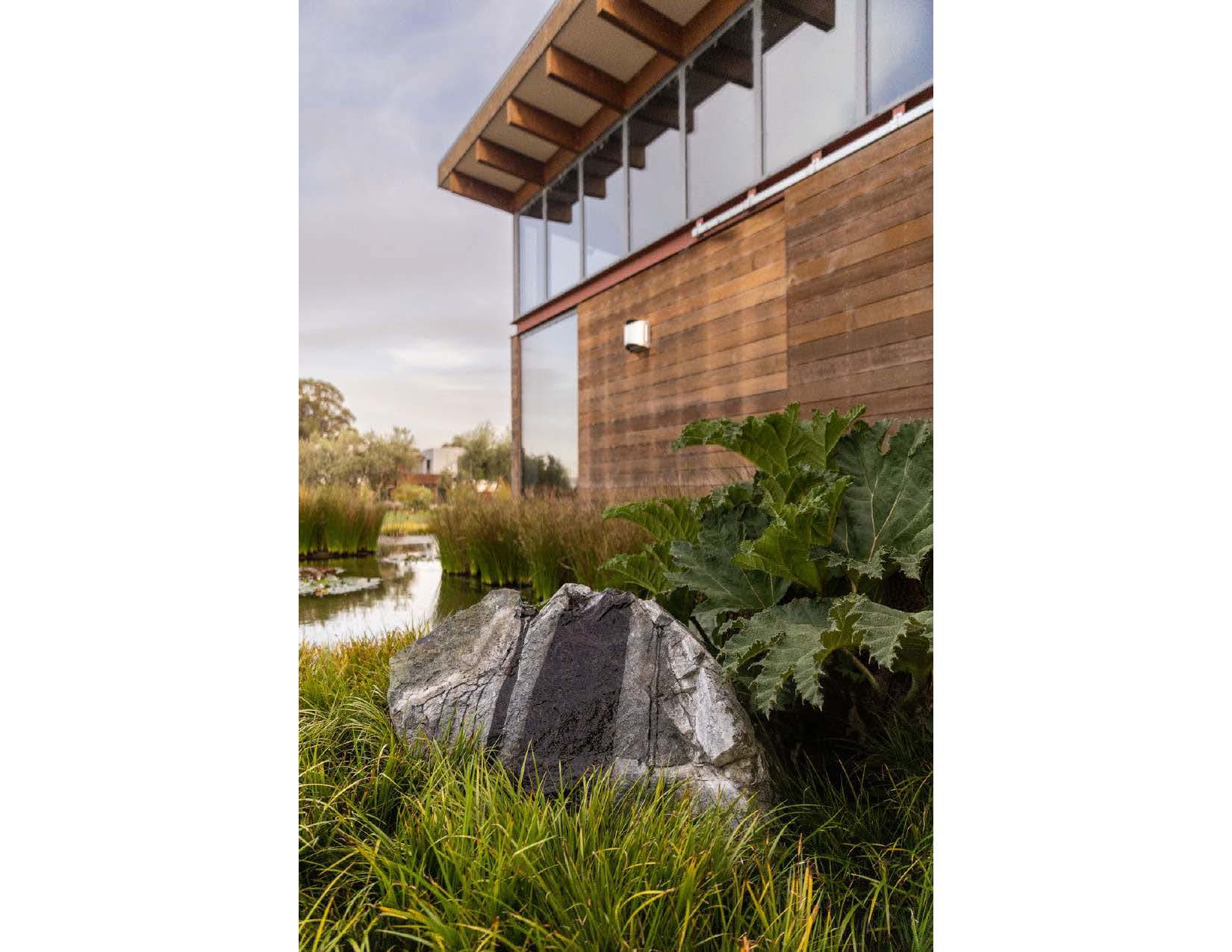
One of the three existing boulders drilled for water recirculation, nested in a bed of Sweet Flag with a Giant Gunnera.
©Sabine Scherer
Client
Project Team
David F. Roche, ASLA, PLA, Lead Landscape Architect
Nancy Roche, Landscape Designer & Horticulturist
Iain Pryor, PLA, Landscape Architect
Paul Cowley, Potomac Waterworks, Pond Install
Owen Mitchell, Mitchell Landscapes, Landscape Contractor
Scandia Landscape, Landscape Install
Project Statement
Flanking the entry walk and wrapping around two sides of this home outside the City of Sonoma was a contemporary concrete reflecting pool. Shallow, chlorinated and lined with Mexican beach pebbles, it felt more appropriate for an office park than for the country setting. We transformed the water feature into a living pond, re-using the concrete shell and three large existing boulders drilled for water recirculation, and existing plumbing and lighting where possible, to reduce waste to the landfill. We added overlapping rectilinear flow-through planters of fiberglass FRP panels at different water depths, filled with a special aquatic soil mix topped with gravel to keep the soil in place. Shallow aquatic planters and marginal planters support a diverse plant scape, reducing use of chemicals, creating habitat, and improving air quality, while creating a more welcoming entry to the home; a big impact for a relatively small investment.
Project Description
When our clients found their dream home outside the City of Sonoma, they loved almost everything about it: the location, the western views of neighboring vineyards and the hills beyond, the mature oaks and seasonal creek, and the beautiful modern architecture. Where they felt they needed help was making the front entry softer and more welcoming.
Flanking the entry walk and wrapping around two sides of the home was a contemporary concrete reflecting pool. Shallow, chlorinated and lined with Mexican beach pebbles, it felt a little sterile for the country setting. We pitched the idea of transforming the water feature into a living pond, and brought in a living pond specialist to rework the plumbing and filtration, and advise on planting media and depths.
To reduce carbon footprint and reduce waste to the landfill, the existing concrete shell, lighting and much of the plumbing was reused. Three large existing boulders already drilled for water recirculation were joined by overlapping rectilinear flow-through planters of fiberglass FRP panels at different water depths, filled with a special aquatic soil mix topped with gravel to keep the soil in place. Shallow aquatic planters support Water Hawthorne, Sacred Lotus and Flat Rush; marginal planters for Kahili Ginger, Horsetail Restio, Mexican Lobelia, Cape Rush, Fairy Lily, and Soft Rush. One end of the feature is anchored by a Giant Gunnera, whose large, coarse leaves overarch the stiff boulder and contrast with the fine underplanting of Licorice Japanese Sweet Flag. In the deeper water, Water Lilies in special aquatic fabric planters spread out their horizontal pads in contrast to the verticality of the Cape Rush. Mosquitofish patrol the shadows, and as soon as it was filled and planted, the pond attracted dragonflies, bees, butterflies, frogs, and all kinds of birds. Outside the water feature at grade, a specimen Olive tree rests in a bed of Lomandra grasses. More Lomandra and Cape Rush wrap the concrete fountain shell in soft green foliage, while blurring the line between aquatic and terrestrial plantings. Overall, the transition from fountain to living pond reduces the use of chemicals, created habitat, and improves air quality, while creating a more welcoming entry to the home; a big impact for a relatively small investment.