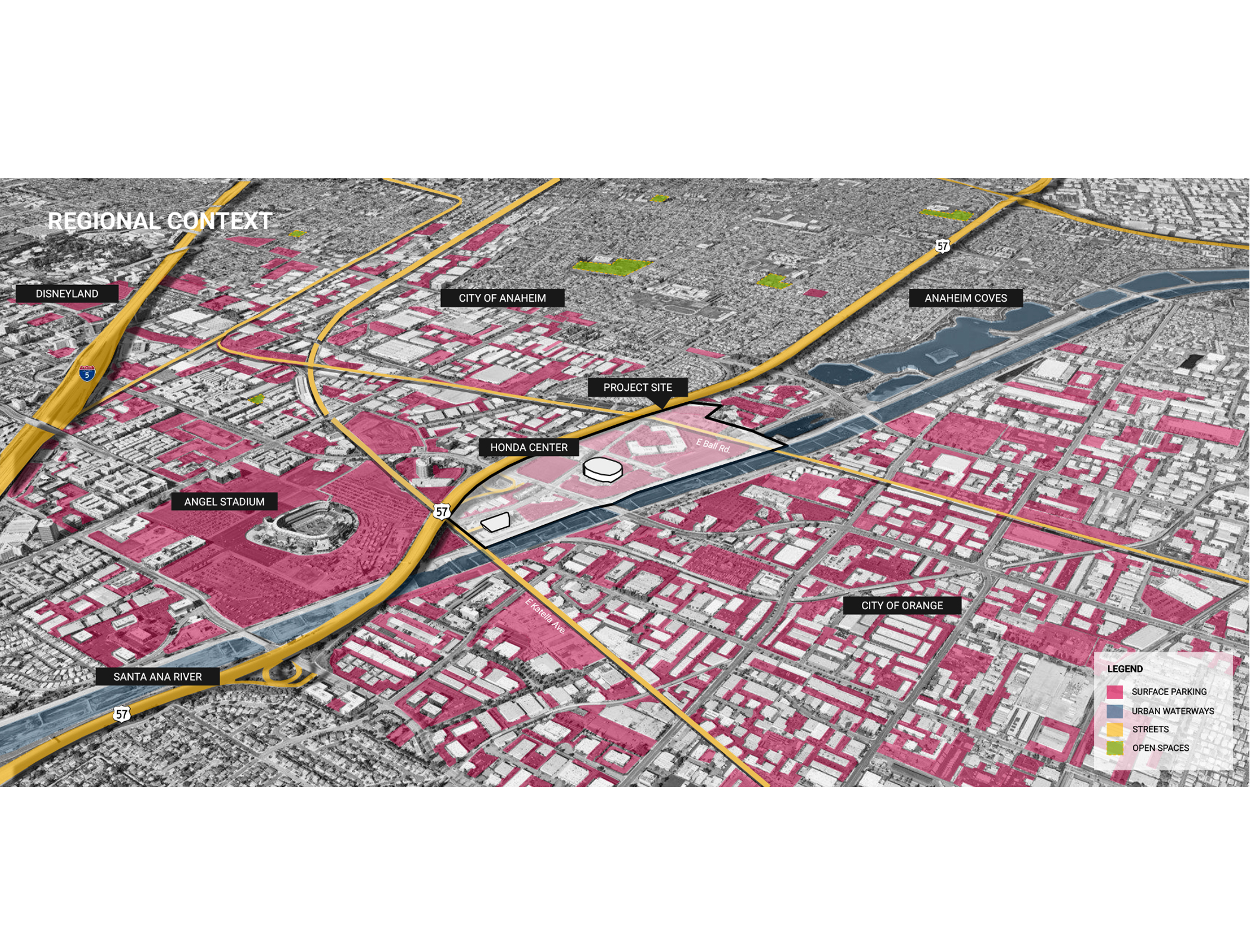
10.7% of land in Orange County, California, is dedicated to surface parking. Located in Anaheim, the project site contains 62 acres of parking, the majority of which is used intermittently for events.
©Fletcher Studio
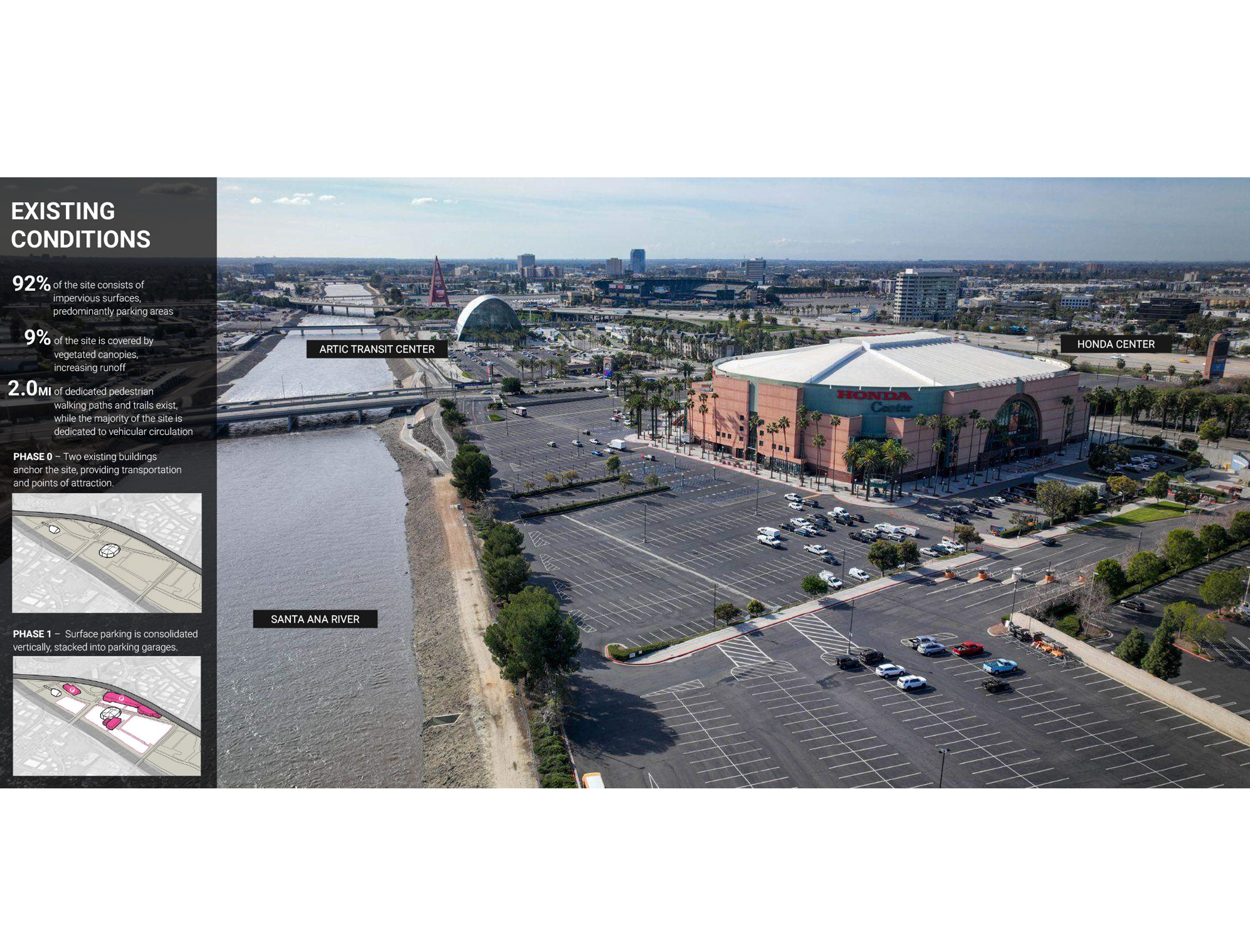
The project demonstrates a planning alternative to the growth of America’s car-centric suburbs, where parking is reimagined as open space networks that reintroduce habitat and enhance social well-being.
©OCVIBE, ©Fletcher Studio
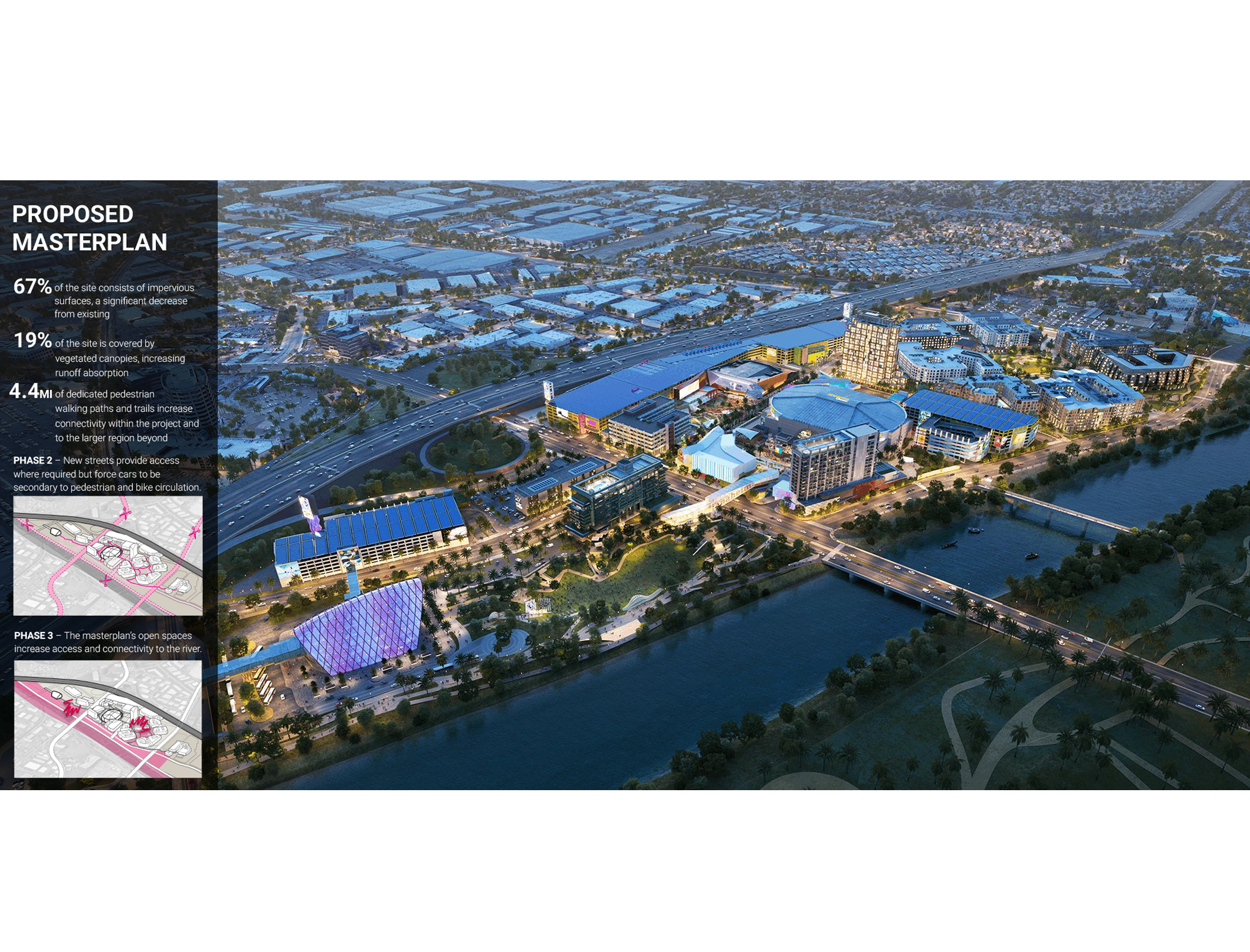
Boasting over 22 acres of open space, the masterplan increases connectivity, builds economic vitality, and promotes social gathering by providing a diverse variety of third–spaces.
Aerial rendering by ©Populous, diagrams by ©Fletcher Studio
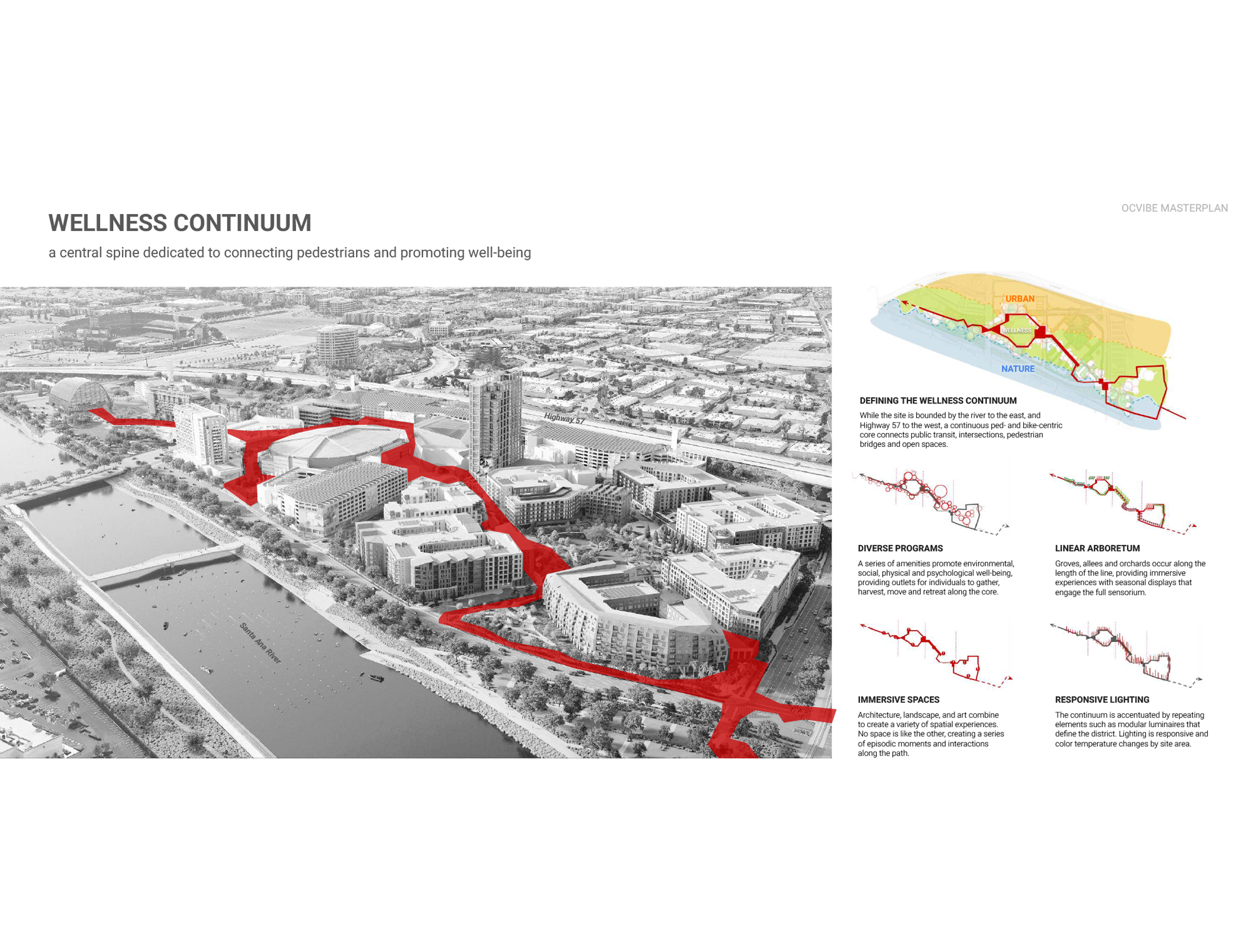
A pedestrian and bike centric core grows from the middle of the project, connecting the project areas. The path promotes movement and fitness.
©Fletcher Studio
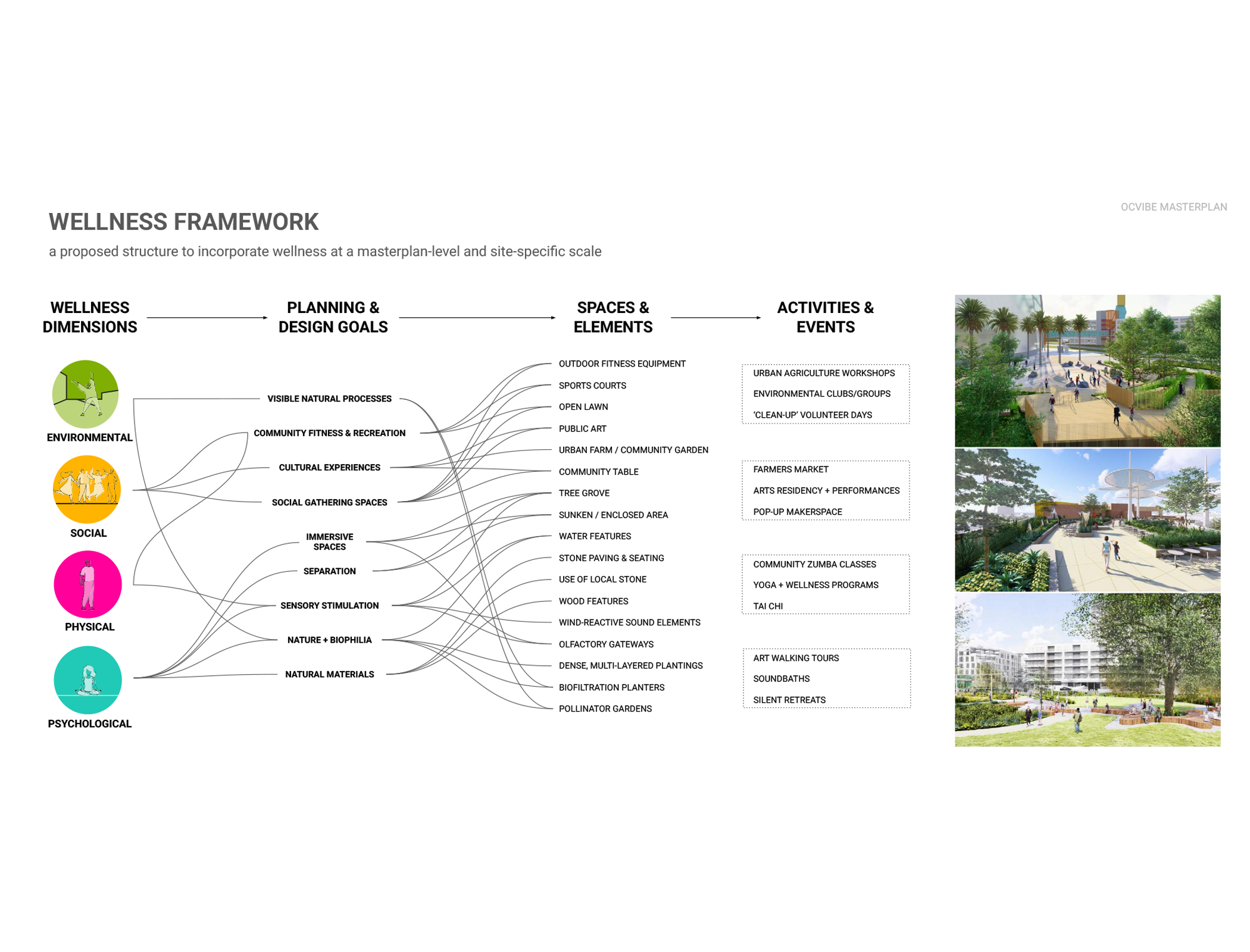
The team devised a structure to deploy wellness planning initiatives at four scales: environmental, social, physical and psychological.
©Fletcher Studio
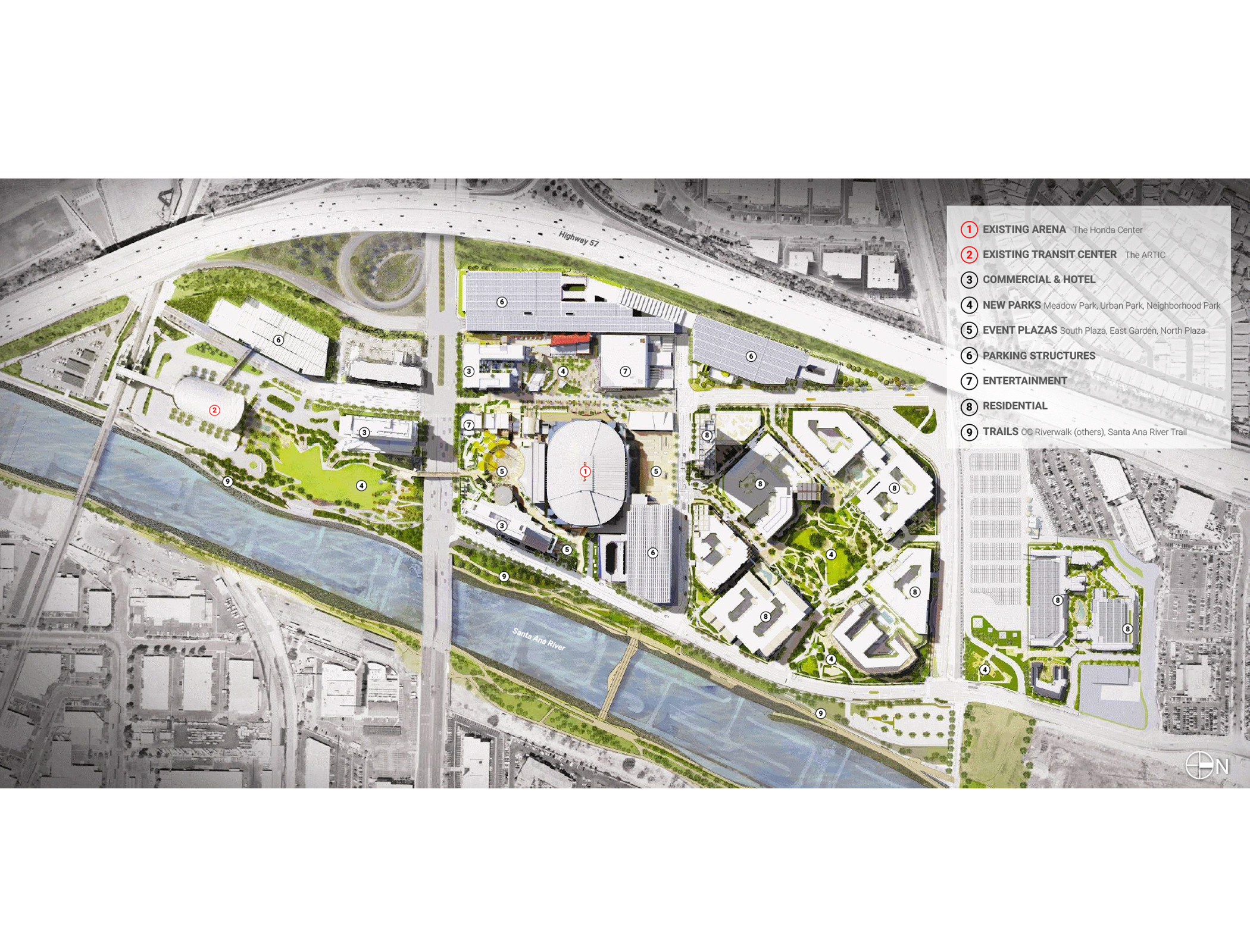
The team’s planning strategy prioritizes active transportation modes, minimizing streets to meet basic traffic access needs while closing off parks and plazas to cars completely.
©Fletcher Studio
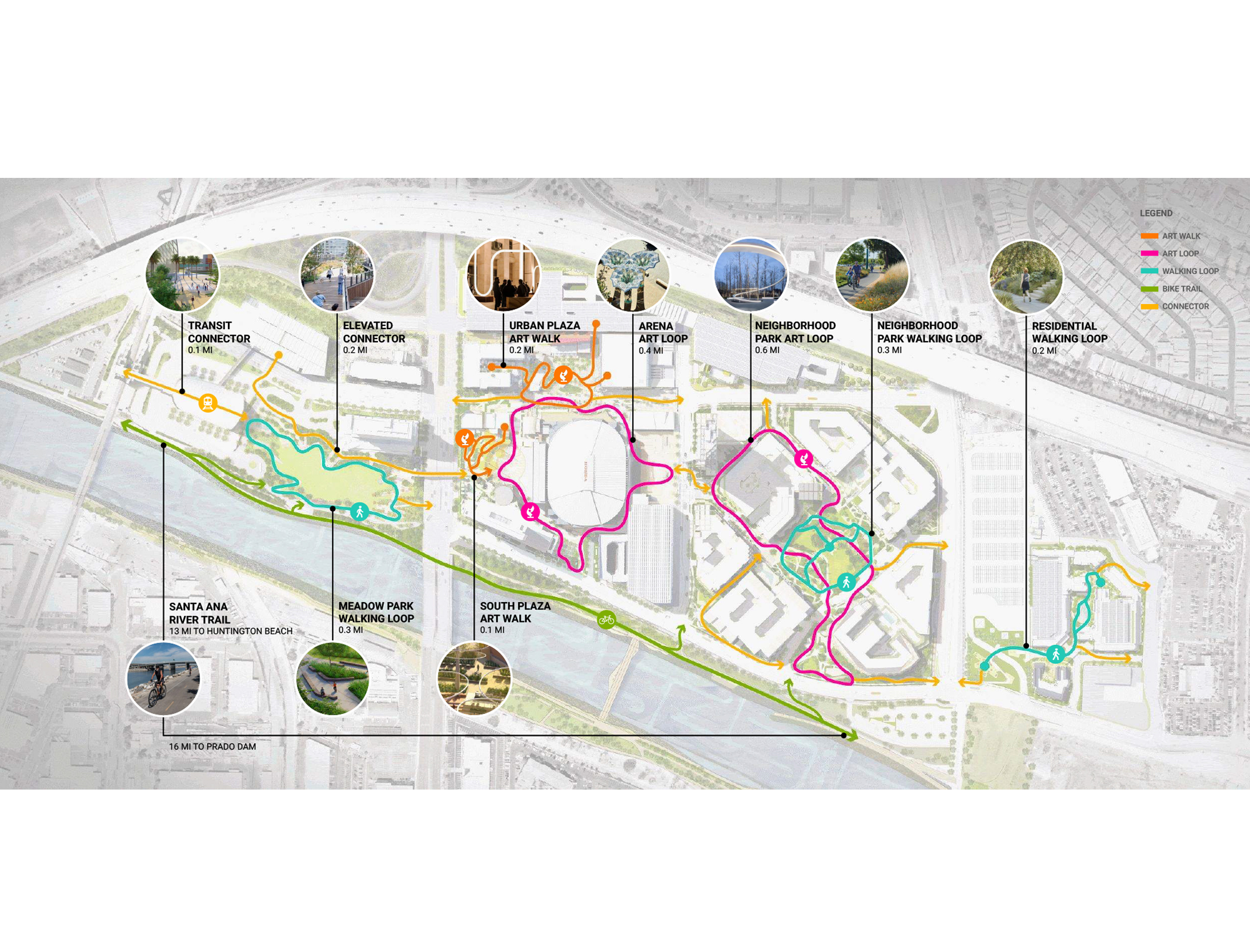
Internal walking paths and interconnected attractions encourage active transportation modes for residents, workers, and visitors to explore the full extents of the wellness district.
©Fletcher Studio
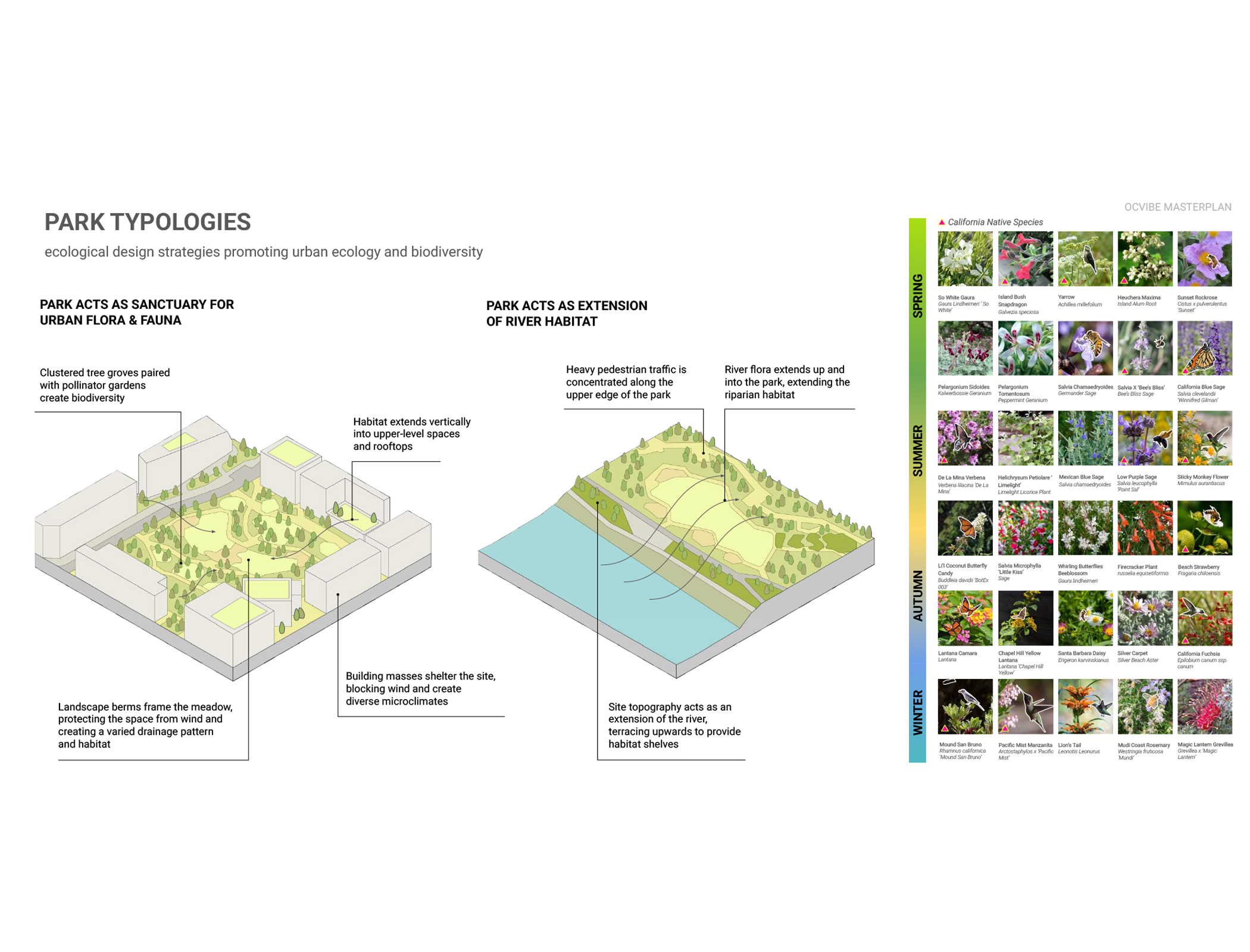
The main park spaces contribute to a larger ecological framework using two distinct strategies.
©Fletcher Studio
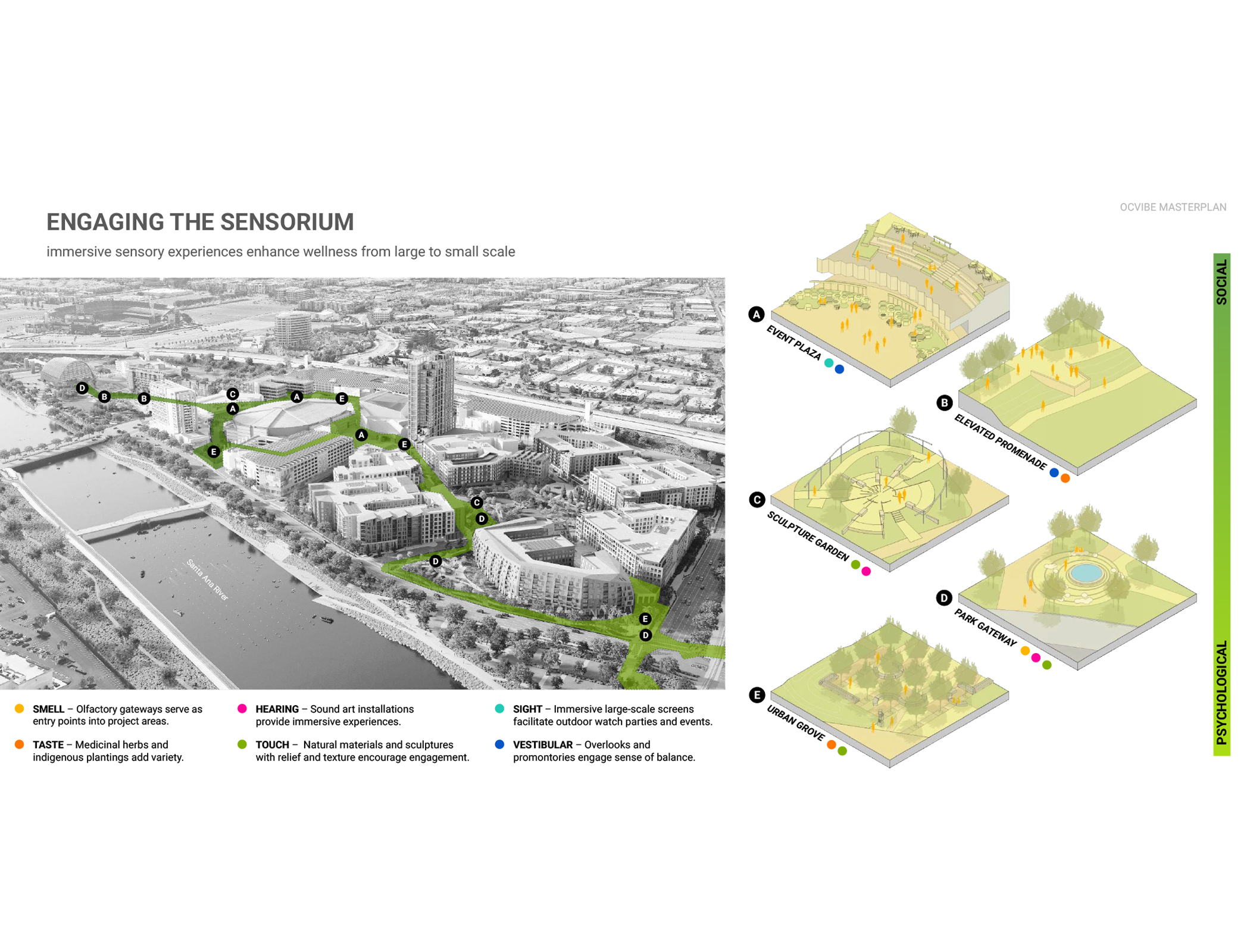
A variety of spatial experiences arranged along the wellness continuum engage the full sensorium, creating a network of episodic experiences that guide visitors through the site.
©Fletcher Studio
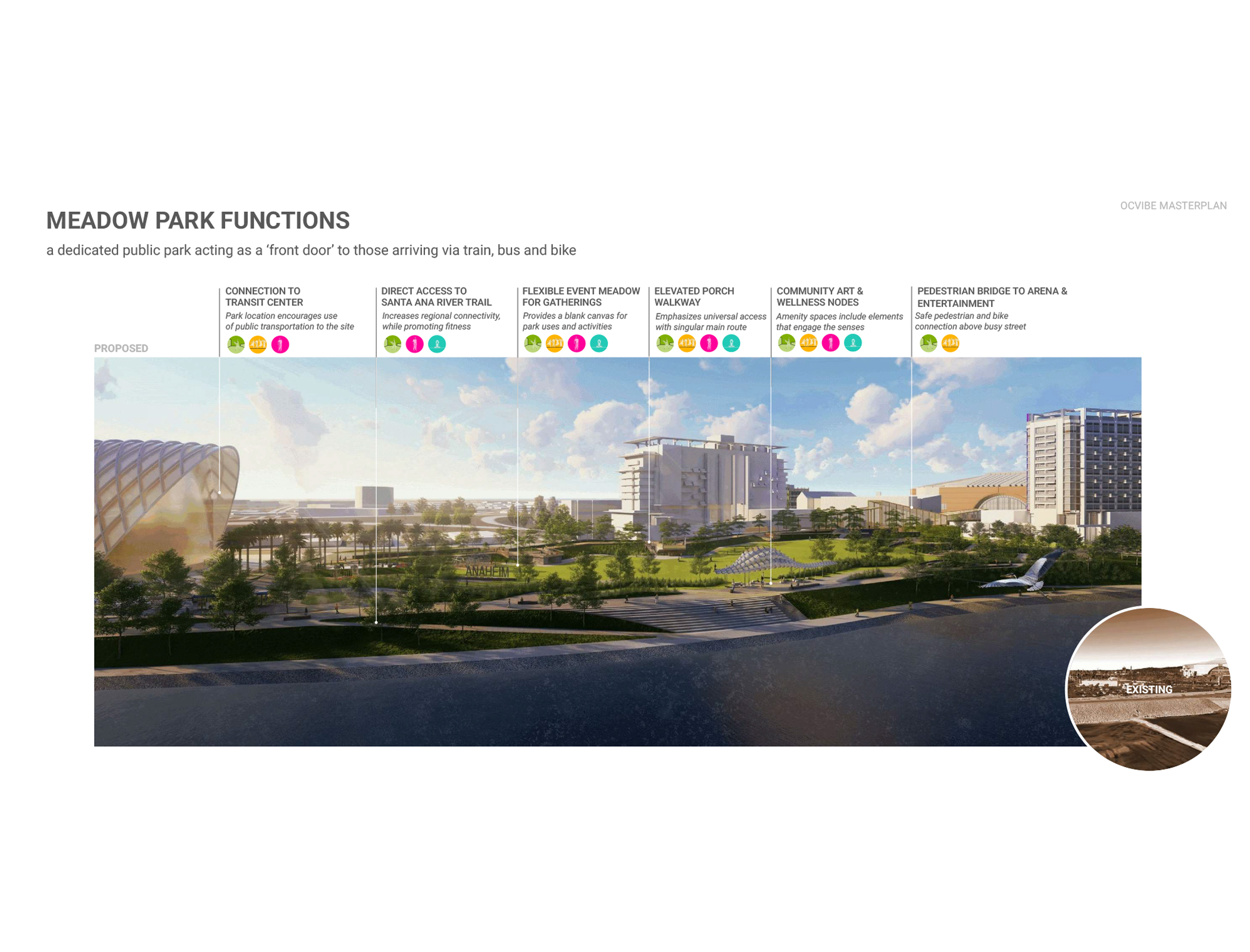
Meadow Park, the district’s 4.75-acre ‘front door,‘ provides access to the Santa Ana Riverwalk (by others) and hosts an annual concert series.
©Fletcher Studio (Santa Ana Riverwalk Design by ©PACE Engineers, Studio MLA, and City of Anaheim)
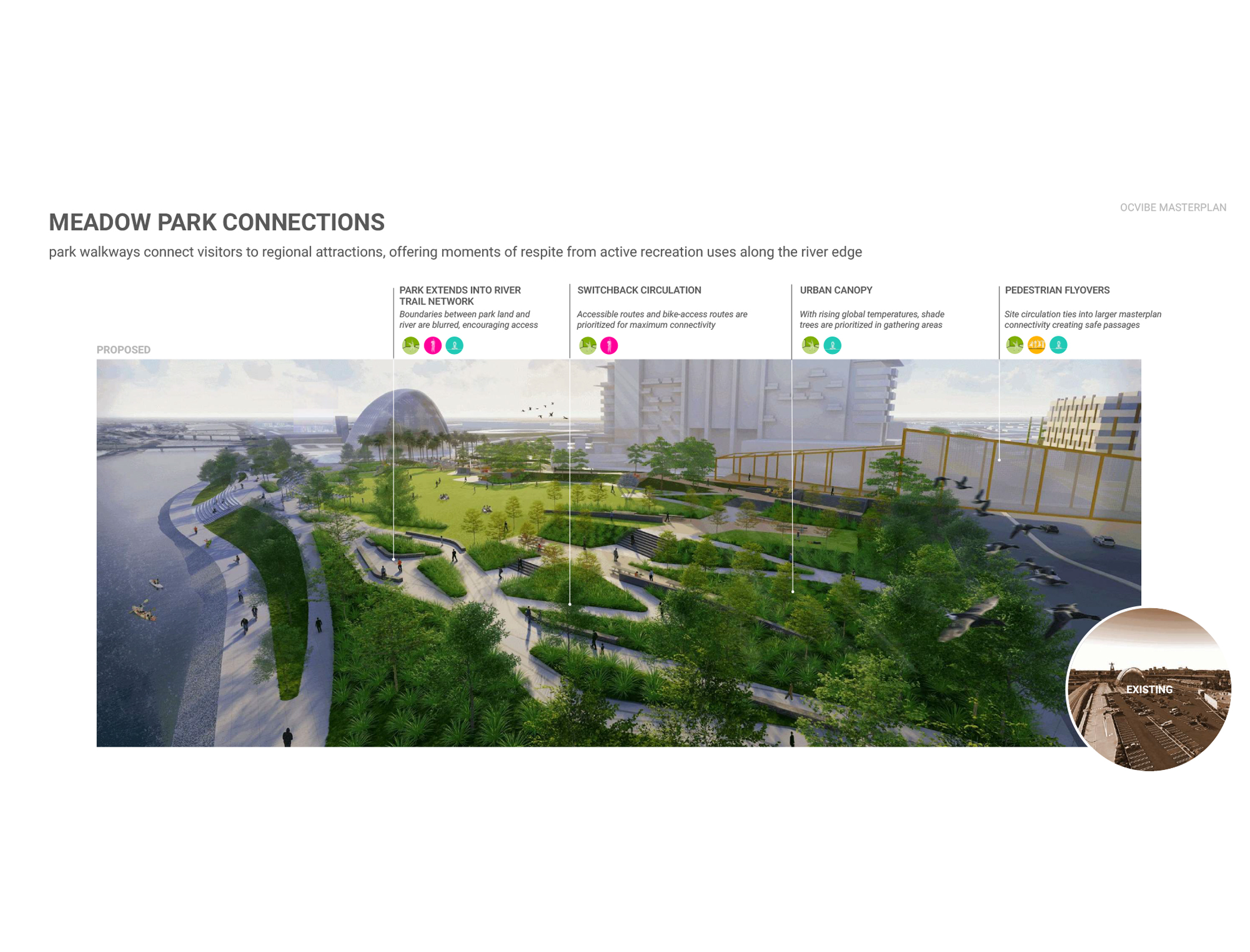
A string of park terraces transition seamlessly into the Santa Ana River Trail, switchbacking up to a pedestrian bridge that acts as a key connector across Katella Avenue.
©Fletcher Studio (Santa Ana Riverwalk Design by ©PACE Engineers, Studio MLA, and City of Anaheim)
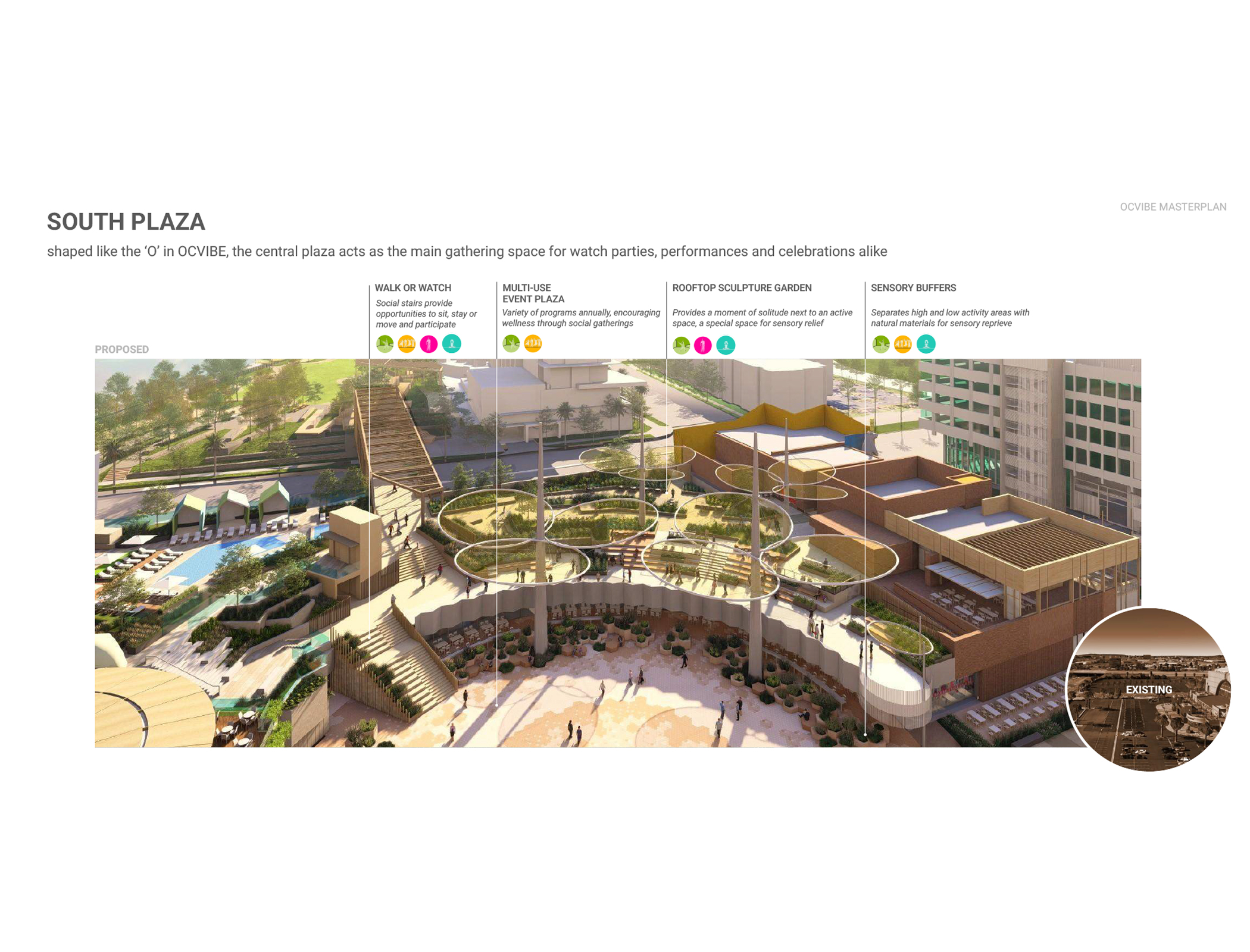
“Meet me at the O!“-Circular like the ‘O‘ in OCVIBE, the district is anchored by a central gathering space, South Plaza, that regularly hosts watch parties and performances.
©Fletcher Studio
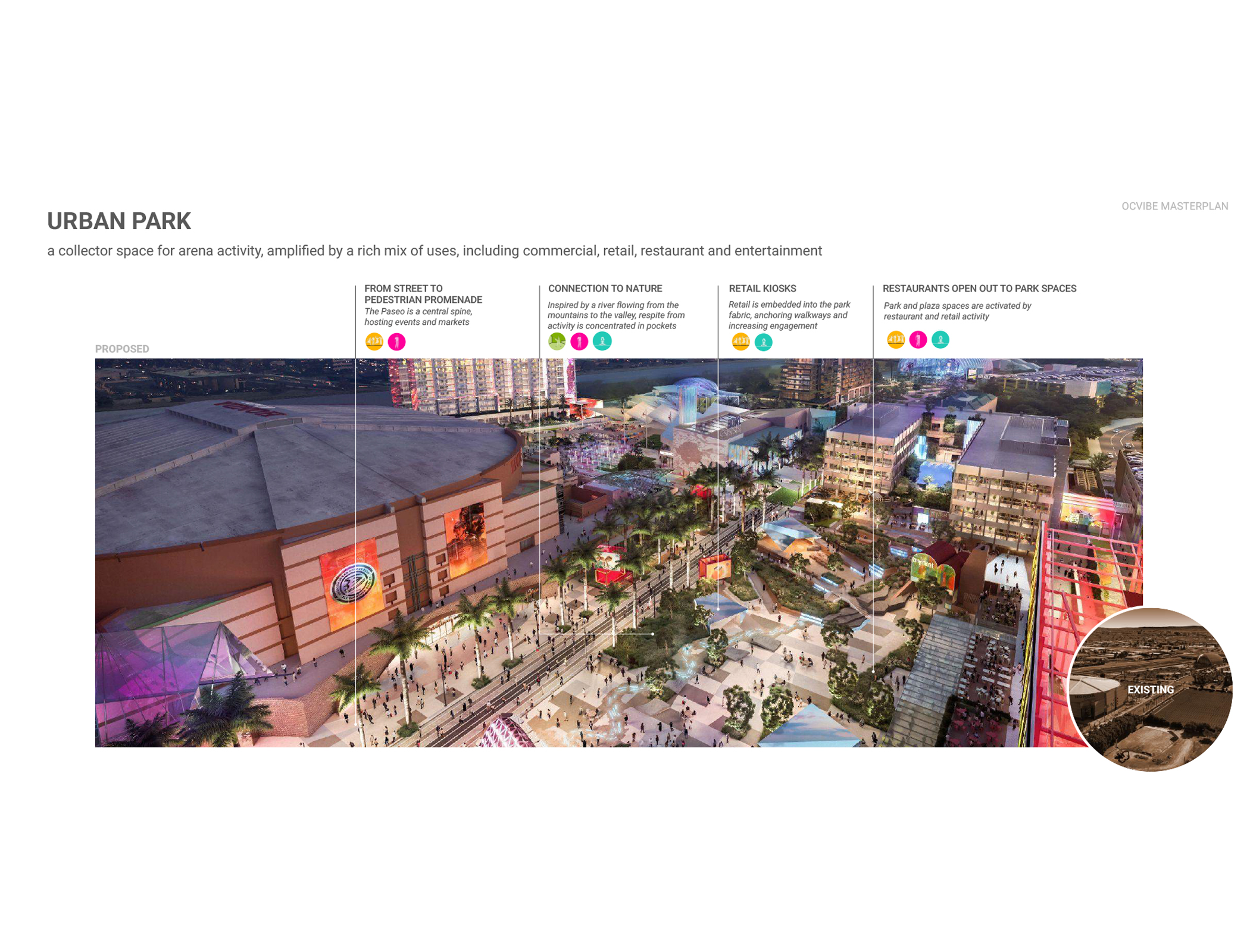
Urban Park acts as a central square where visitors enjoy a continuous hum of activity, with restaurant patios, rooftop bars and concert queues.
©Kilograh
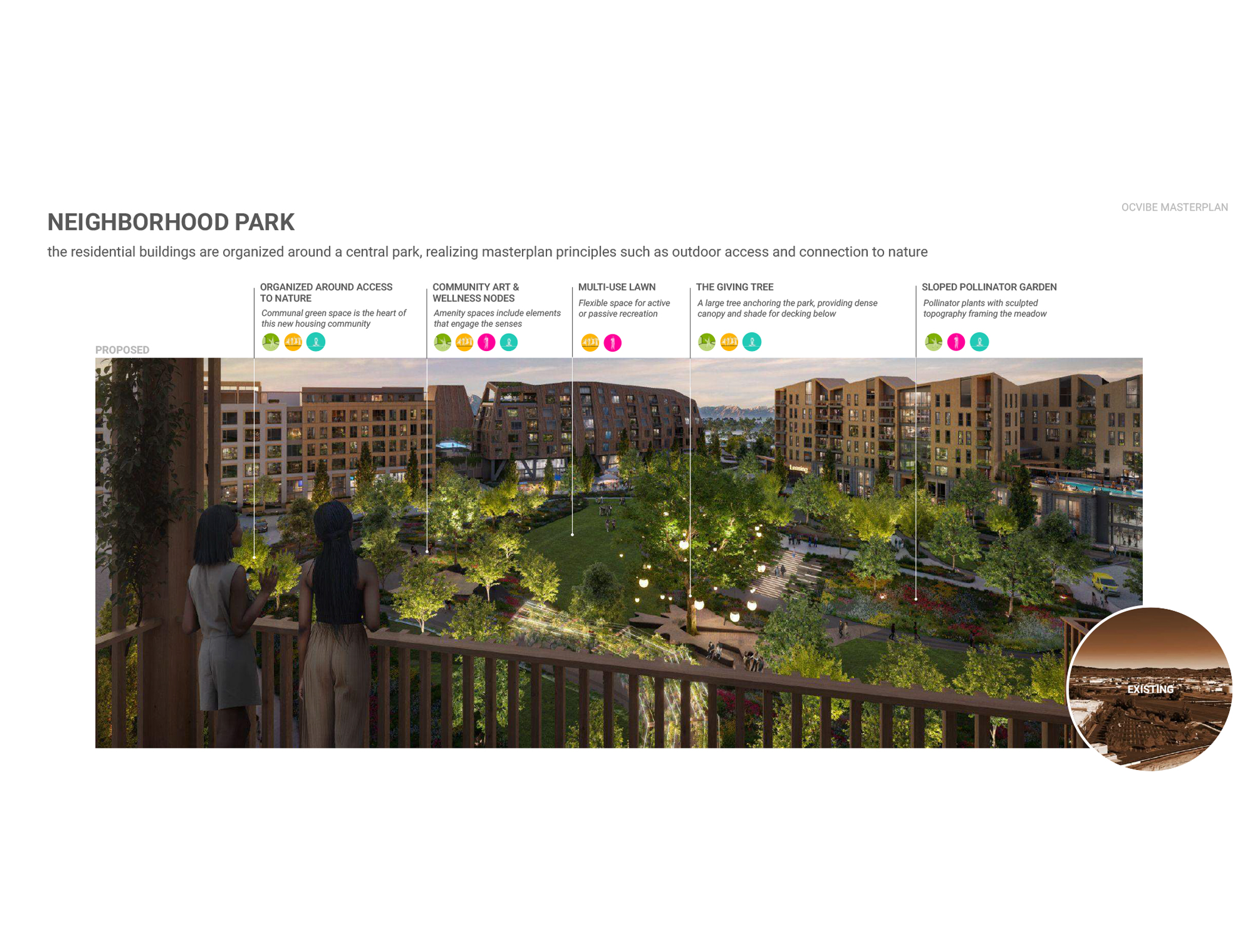
Tucked away from the bustling entertainment zone and high-use pedestrian pathways, Neighborhood Park is a sanctuary for residents, flora and fauna.
©Kilograh
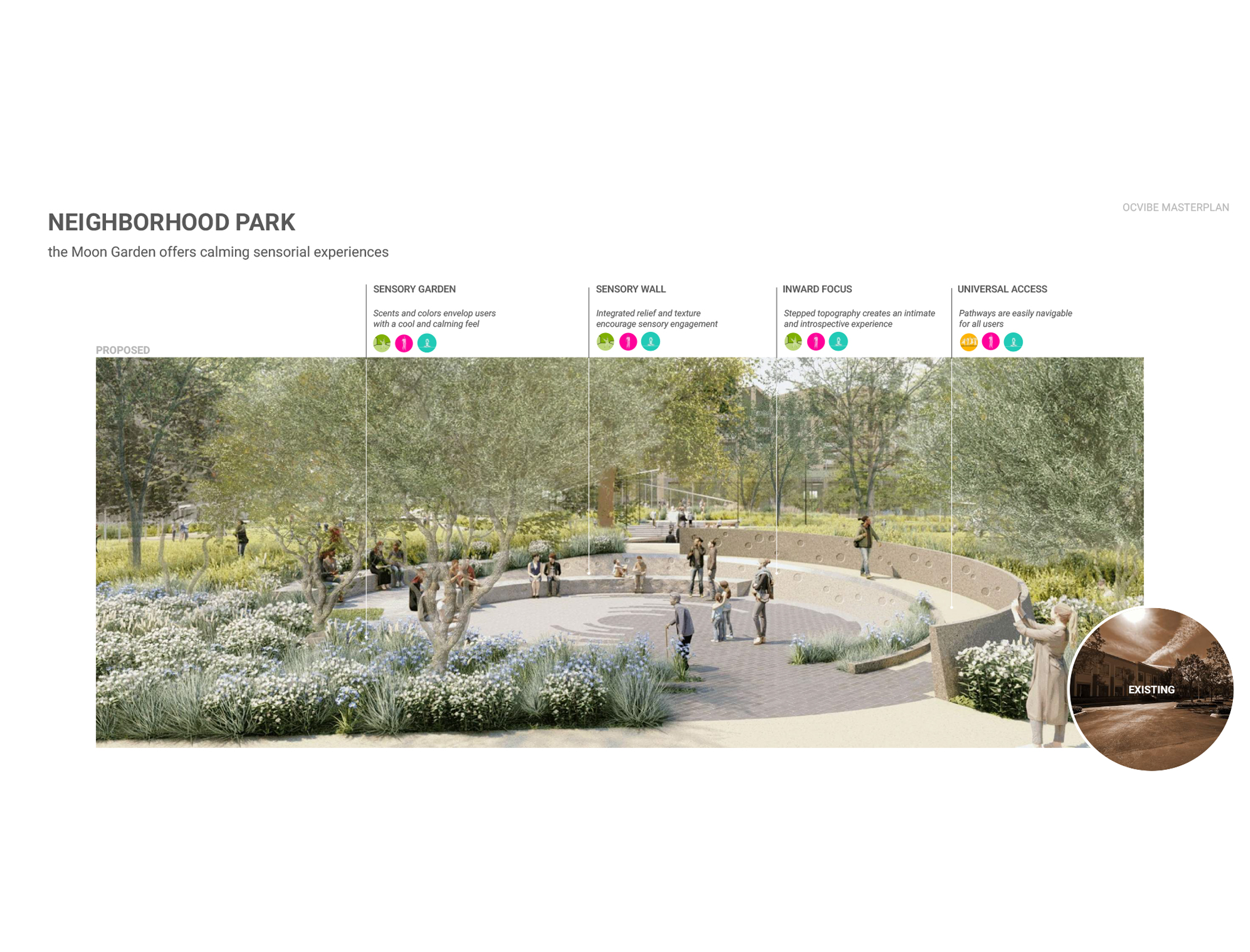
A collection of immersive spaces allow for unique sensorial experiences at Neighborhood Park. Natural stone and gently sloping walls encircle the Moon Garden, encouraging quieter, reflective moments.
©Fletcher Studio
Client
OCVIBE
Project Team
David Fletcher, Project Manager and Design Lead
Design Architect: Smith Clementi
Hotel Architect: WATG
Concert Hall and Honda Center Addition Architect: Populous
Residential Architect: MVE Architects
Phase 1 Landscape Architecture: Burton Studio
Design Landscape Architect and Phase 2 Landscape Architecture: Fletcher Studio
Civil Engineering (Multi-Family Res. and Phase 1): Fuscoe Engineering
Planning and Civil Engineering (Affordable Housing): Hunsaker & Associates
Civil Engineering (Phase 2): Stantec
Lighting Design: Lighting Design Alliance
Select Renderings: Kilograph
Planning & Entitlements: Christine Saunders & Associates
Development Team: Camino Enterprises (Dan Young) and Nuquest Ventures (Brian Myers)
Art Masterplanning: Futureforms
Site Utilities: Moran Engineering
Fire Engineering: Holmes
Signage: 3-d Identity
Project Statement
The OCVIBE project presented an opportunity to plan and design a 100-acre mixed use entertainment campus in Orange County. At the core of the project is the existing Honda Center, home of the Anaheim Ducks NHL hockey team, and regional concert venue, seating approximately 8,400 attendees. The existing site is relatively flat, and mostly dedicated to event parking. The masterplan vision creates a lush green “modern Mesopotamia” around two existing buildings: the arena and a regional transit hub. These buildings are figural rocks that drive the site re- organization. The resultant plan anticipates a revitalized waterfront to the east, and is a prototype for the re-use of single use parking lots typically surrounding suburban venues and sports arenas.
Project Description
OCVIBE is a 100-acre, transit-oriented mixed-use district in Orange County, California, anchored by the Honda Center and the Anaheim Regional Transportation Intermodal Center (ARTIC). Developed through public–private partnerships, the project transforms a vehicle-dominated entertainment zone into a connected transit–oriented development that champions wellness as its core planning framework.
Planning Goals & Objectives
The planning process was guided by four core objectives:
- Reallocate land from vehicle storage to pedestrian-centered activity;
- Embed wellness as a measurable planning methodology;
- Integrate ecological and cultural systems as organizing infrastructure; and
- Design for temporal change through phased growth and adaptive use.
Using Wellness as a Planning Framework
Wellness principles were used in the masterplanning decisions to inform land use, programs, amenities, circulation, and ecological systems. Drawing on wellness criteria and indicators (from certification checklists such as WELL, USGBC Living Building Challenge, and Blue Zones research), the team developed metrics for prioritizing wellness principles where movement, social interaction, environmental comfort and psychological nourishment are embedded into everyday life, rather than in isolated programs or amenities. The success of the planning framework is seen in the implementation of the wellness strategies at the site-specific scale and design of open spaces. Prioritizing People over Parking
Parking and vehicular circulation are de-emphasized in the masterplan. Through consolidation and vertical stacking, land previously dedicated to event parking was reclaimed for public space, alternate transportation modes, and long-term development flexibility. Vehicular access is concentrated at the district’s edges, while internal circulation prioritizes walking, cycling, and transit. A continuous network of car-free ‘wellness‘ walks transforms circulation into wellness infrastructure, supporting movement, social connection, connection to art and individual health. Measuring Results
The success of the wellness principles is evaluated through defined spatial metrics. All residents, visitors and workers at the project are within a 5-15 minute walk to open spaces. There is a combined total of 4.4 miles of uninterrupted car-free circulation, with smaller 0.5-mile internal recursive routes within each superblock. The master plan is devised so that driving a car to the restaurant is more of an inconvenience than walking. Topographic design and vertical circulation extend privately-owned but publicly accessible spaces across roofs and terraces. Sports, music, public art, work, and daily life overlap spatially and temporally through shared infrastructure and flexible adjacencies.
Environmental Stewardship, Equity, & Implementation
By placing human wellness at the center of planning, environmental performance emerges as a structural outcome rather than a parallel objective. Landscape systems support thermal comfort, air quality, water management, and sensory restoration, informed by the Santa Ana River’s historic flow patterns. Equity and access are foundational: public spaces are continuous, legible, and free to enter, supported by direct transit connections and intuitive wayfinding.
The OCVIBE Master Plan Phase 1 is currently under construction and scheduled to open in alignment with the 2028 Olympics, establishing long-term urban infrastructure beyond a single global event.