
Urban Oasis: A Destination for a Green Retreat in Historical Industrial Campus of Downtown Beijing
Merit Award /
2026, International Project
Chaoyang District, Beijing, China

A revitalized green public space became the breathing lung for people and habitat within a historical campus in downtown Beijing.
© Onescape

Inaccessible and outdated spaces were revitalized to reveal and showcase beautiful large tree groves.
© Onescape

Preserving 237 matured trees within 3 acres of the campus, while providing a series of outdoor gathering and relaxing spaces for the community.
© Onescape

The open space is structured into several featured gardens and connecting pedestrian corridors, offering natural experiences and flexible programs.
© Onescape
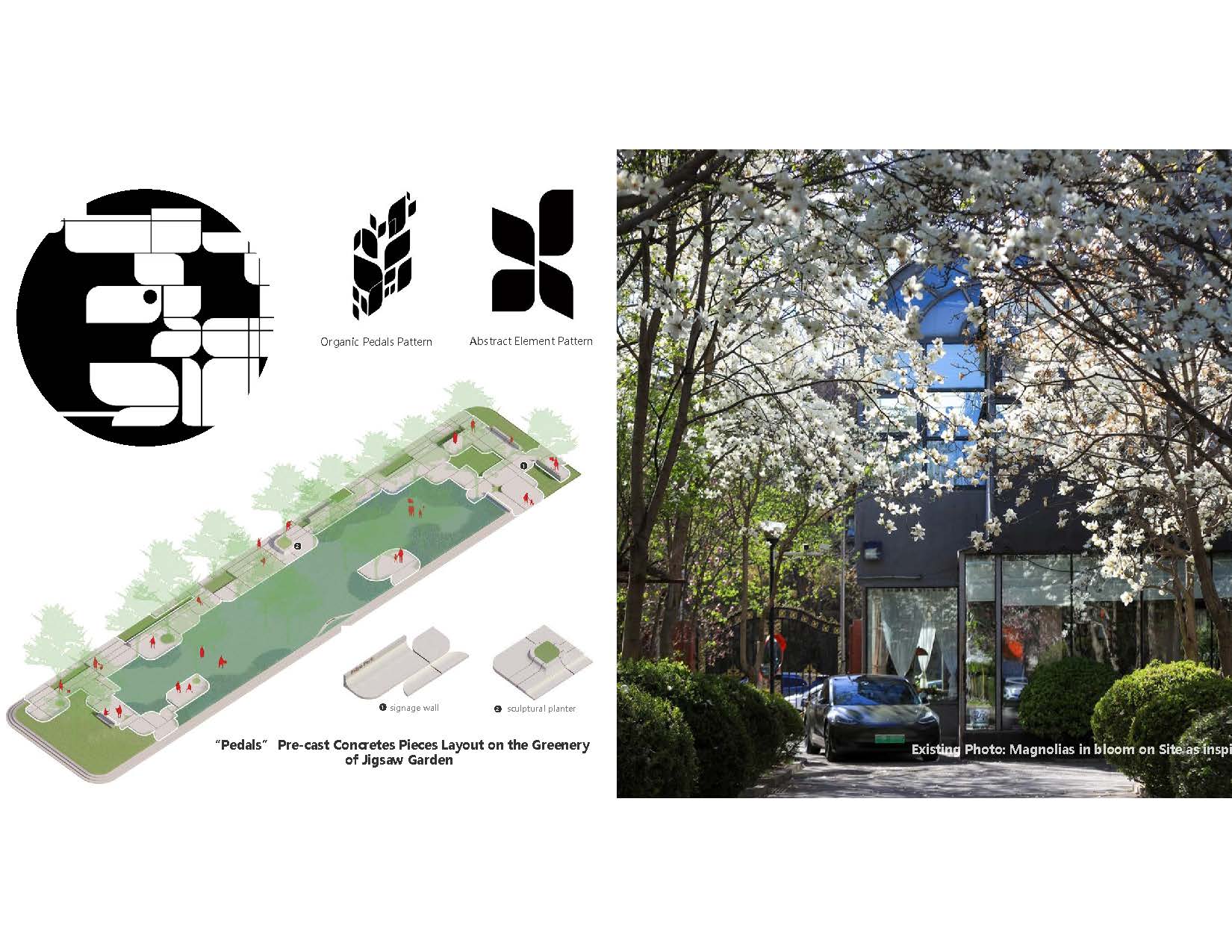
The petal-shaped paving pattern draws inspiration from the existing magnolia, a significant and recognizable landmark on the campus.
© Onescape

The iconic pedal-shape concrete paving pattern provides flexibility to protect existing trees alongside 32 perennial planting species for habitat
© Onescape
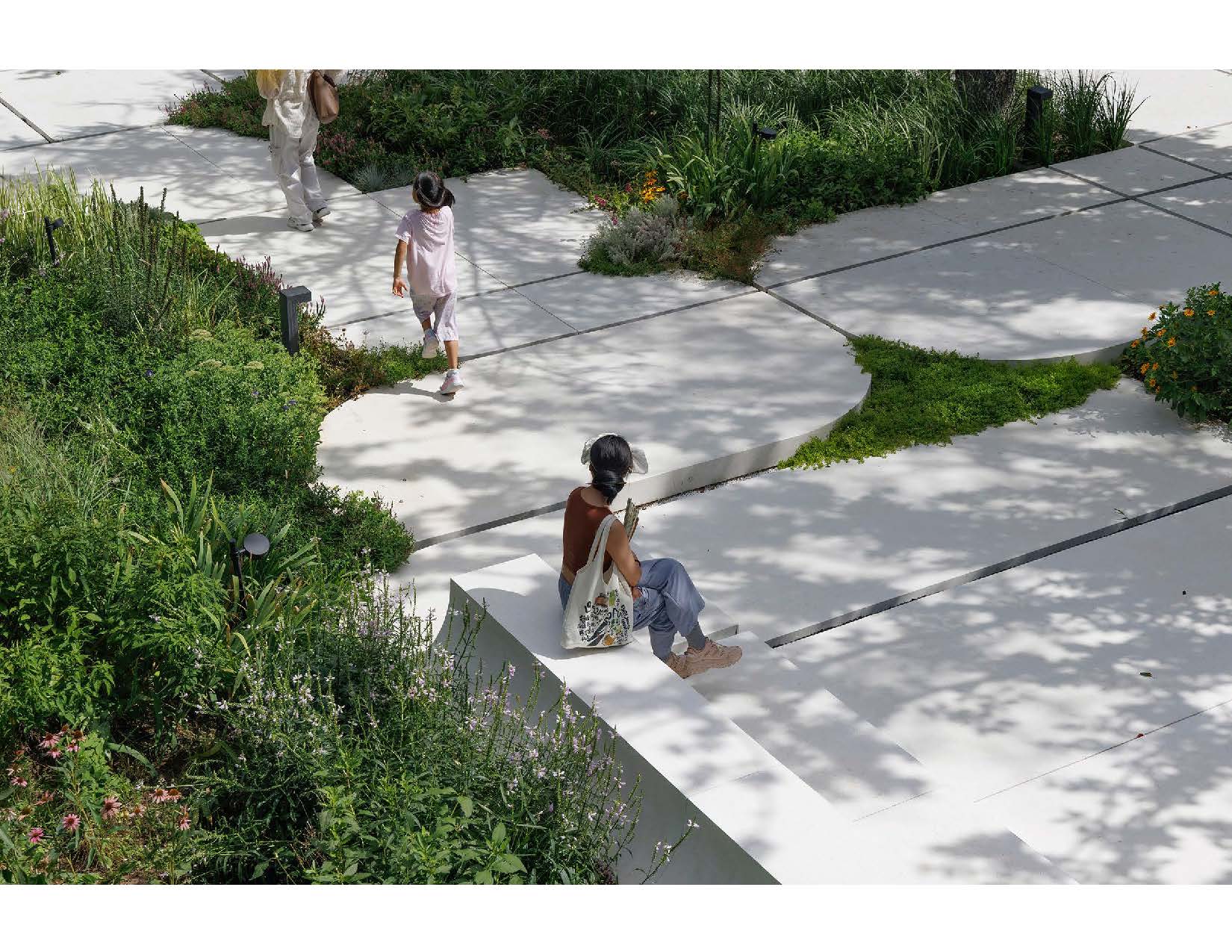
Replaced high-maintenance hedges with native perennial, the garden provides flexible places for people of different ages.
© Onescape
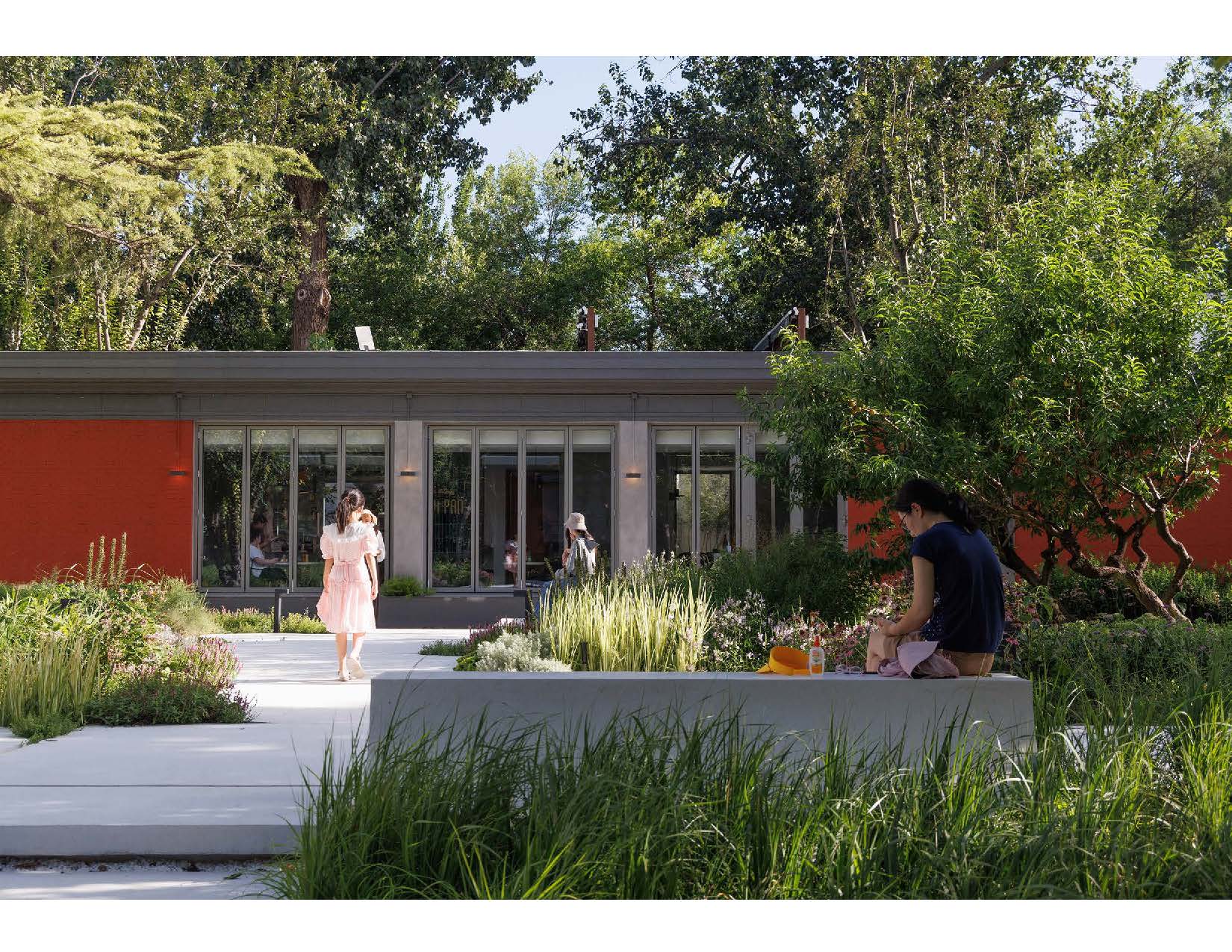
The garden revitalized the site when it creates welcoming, public-facing, and accessible spaces for all, the campus boundary is dissolving.
© Onescape
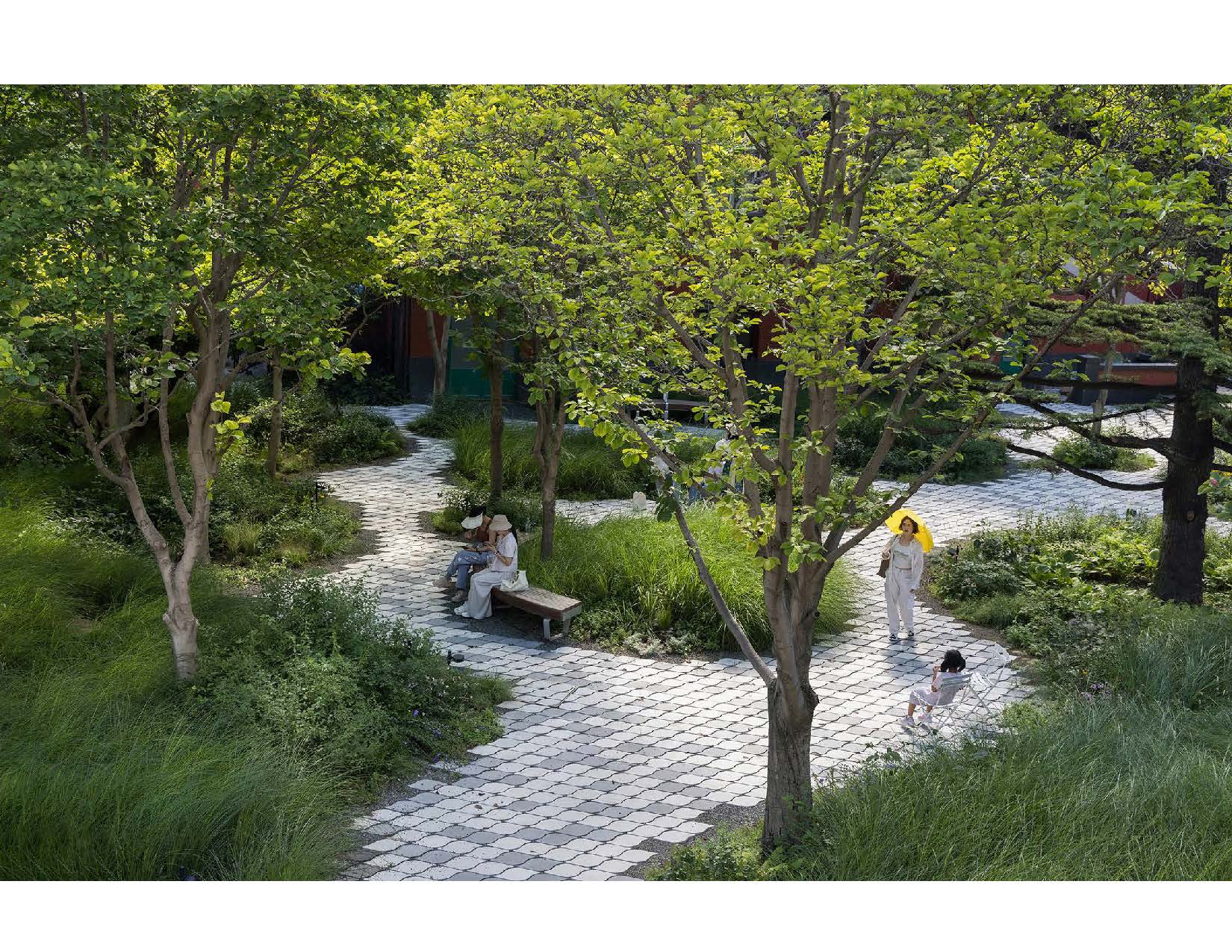
Fall foliage became a destination for people since completion, which is a growing tourist attraction on social media.
© Onescape

Once a hidden abandoned urban space, the site became a pleasant surprise by many residents, who enjoy the revitalized spaces.
© Onescape
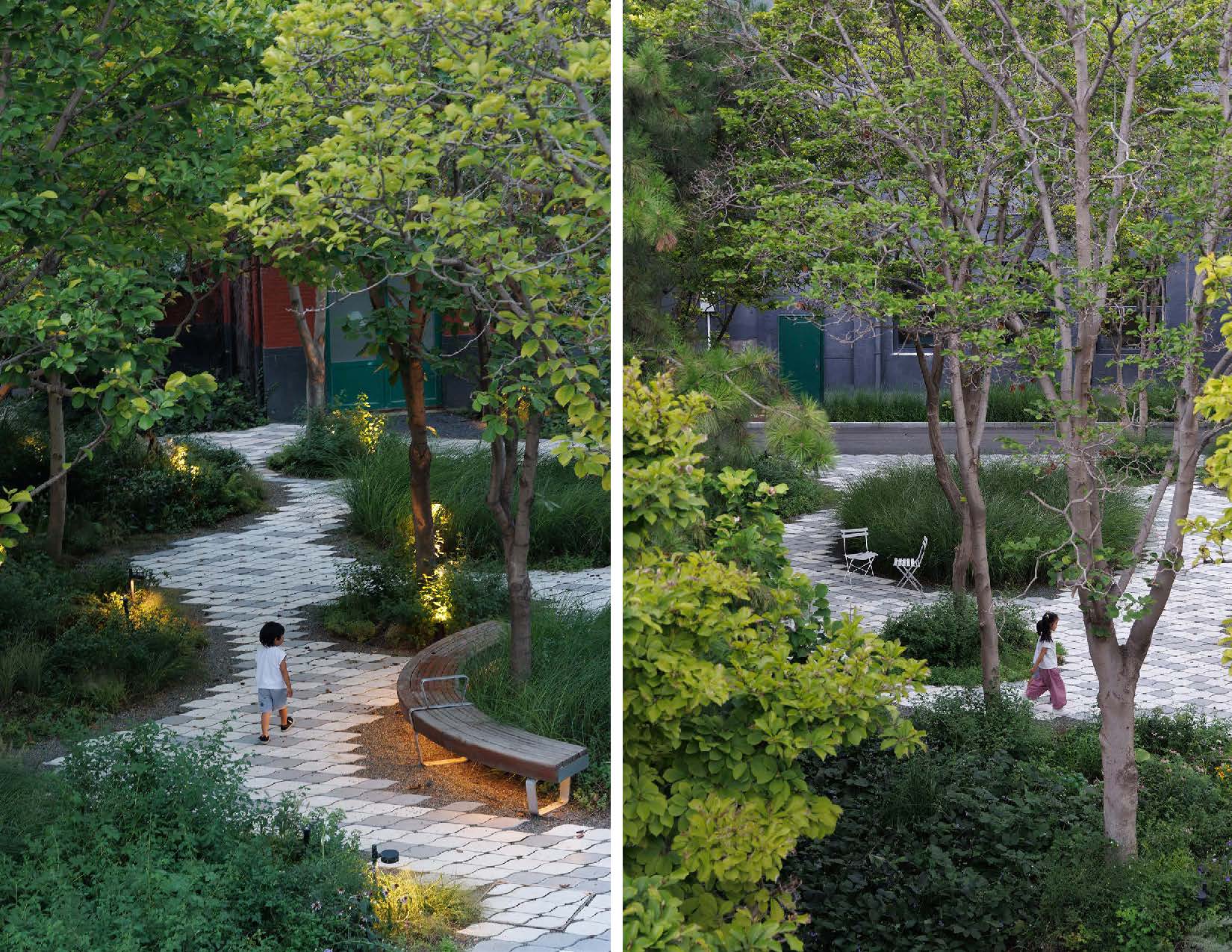
Serving as backyard for adjacent office workers, the north garden provides quiet ambiance for people to retreat from a busy day.
© Onescape

Tranquil Space—Below: provide healthy soil and growth. Above: strategic clearing and pruning to allow natural sunlight for 20 native species.
© Onescape

Symbolic magnolia elegance pattern is expressed throughout the site using concrete and timber which were sourced locally.
© Onescape

Seasonality is celebrated and appreciated by all. Dozens of native perennial species brought to site locally for a continuously dynamic landscape.
© Onescape

A modest 3-acre site with 237 matured trees have been preserved and well loved by many.
© Onescape
Client
Beijing Electronics Holding Co.Ltd
Project Team
Lu Peng, Lead Designer
Jia Hao, Landscape Designer
Project Statement
Urban Oasis located in downtown Beijing preserved 237 existing matured trees across 10-acre historical industrial campus. Multiple underused hidden areas transformed into engaging green open spaces and urban habitats. By opening the site to the public, the project strengthens community connections and contributes to revitalizing adjacent urban district economically. More than 56 perennial species are introduced and carefully sourced locally to improve biodiversity. Inspired by the existing magnolia trees on site, petal shaped paving pattern is flexible and aesthetic to accommodate existing constraints. The green oasis enhanced community well-being and is becoming a destination for people and near and far.
Project Description
Project Background
Nestled in the embassy district in downtown Beijing, the 10-acre historic industrial campus consists of 3 acres forgotten greenery for decades. The site, sitting between two urban hubs, Sanlitun and Liangma River, was outdated and inaccessible green space which was closed off to the public. It requires to adapt to the transformed setting as cultural and social spaces, and preserve all 237 existing matured trees. The site is now a destination to rest and escape for visitors and office workers since its open to the public. The design is the first landscape renovation in the district to improve local businesses, provide public green space, and preserve the existing matured trees.
Design Inspiration
The design “subtraction” approach to protect the health of large trees consist of magnolias, native crabapples, ginkgoes, and cypresses. The design team was inspired by the matured magnolia flower’s natural shape which was used to create the paving pattern. The “addition” strategy is to introduce pedestrian paths and activity spaces beneath the trees canopy as well as to create more recreational areas for leisure, and commercial cultural vitality. A series of petal shaped flower pavements to protect the tree roots as well as to introduce pathways seamlessly as a mosaic jigsaw pattern.
South Living Garden
Central garden serves as the living room. The renovation connects two green spaces as one large lawn area. Magnolia shaped precast concrete blocks function both as pathways and plazas. They were placed carefully during construction with the flexibility to move and protect the mature trees. The residents from above identify with the of the large white petals fallen and flowing throughout the year. This becomes ionic feature of the site especially for children.
Hidden Gem Garden
The northwest side of the park serves as the “backyard” for offices and restaurants, featuring higher vegetation coverage as a refuge in the summer from the blazing sun. Mature magnolia groves and large cedars have already established a serene atmosphere by preserving existing large trees and introducing natural woodland trails. Small shape concrete bricks, resembling scattered magnolia petals, are dispersed throughout the garden.
Green Canopy Corridor
Pedestrian circulation serves as both essential routes for leisure strolls, connecting multiple garden space nodes. A new road for vehicles with similar paving pattern next to pedestrian corridor to optimize walking and driving experience under the canopy.
Urban Garden Significance Impact
Since complication, southern street entrance facing commercial store front became a popular destination for office workers, tourists, city dwellers, and residents. Access to the park became public and quickly became well loved by many. Courtyard transformed into an open district where there is no boundary for store fronts shops and cafes to spill out and utilize the spaces.
The main goal is to provide economic benefits to surrounding businesses with the open space. The project utilizes low-maintenance seasonal flowers, as well as selecting adaptable native plants and long-lived perennial species, which saves ongoing public funding as well as effectively creates sustainable, context-specific public landscapes. Well-being originates from daily life, these long- lasting, low-maintenance urban gardens bring satisfaction and happiness to the resident’s daily life, both environmentally ecologically and socially.

