After the Fire: A Glamping-Inspired Napa Valley Tasting Experience
Merit Award /
2026, General Design
Calistoga, California

The playful and elegant “glamping”-inspired tasting area in an unused open space between vineyard blocks.
©Eileen Roche Photography

Plan
©Eileen Roche Photography

Site context imagery: the airstream, boulders, cobble deposits along the creek, and burnt stumps.
©Eileen Roche Photography

A pair of burnt-out tree trunk totems mark the entry to the winding path.
©Eileen Roche Photography

Mounded river cobble sculptural elements evoke historic deposits along the creek that winds through the property.
©Eileen Roche Photography

Charred stumps–christened “Dragon’s Heads“– meadows along the path.
©Eileen Roche Photography

Mature oaks and pines were supplemented with new oaks and maples to establish the next generation of trees.
©Eileen Roche Photography

An intimate lounge organized around a fire feature fabricated from a steel funnel and ship’s chains salvaged from a local grading contractor’s yard.
©Eileen Roche Photography
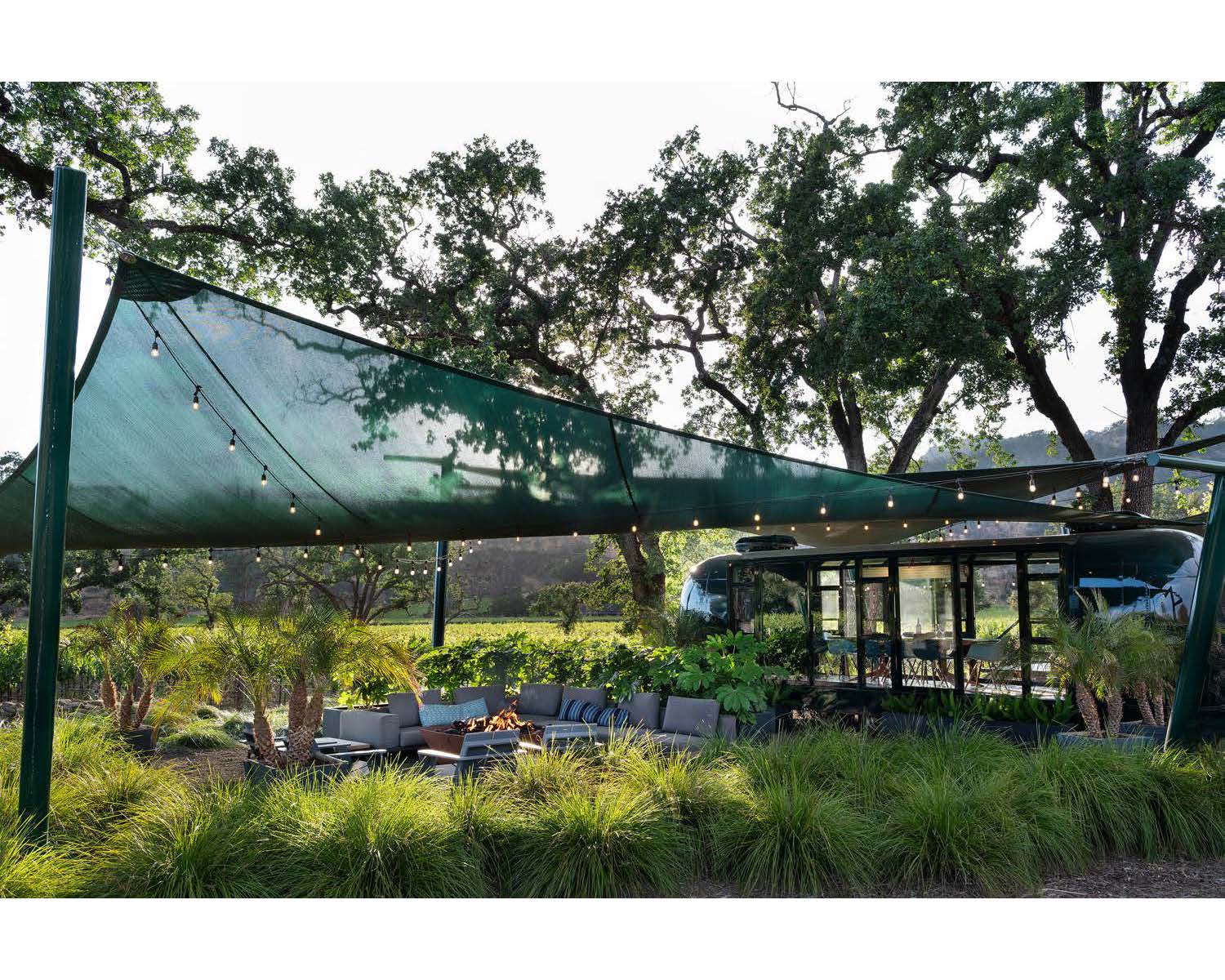
Shade sails supplement the shade provided by surviving valley oaks.
©Eileen Roche Photography

The fire feature’s ship chain spills out and disappears through the gravel into the planting.
©Eileen Roche Photography

The airstream is customized with the client’s audiophile stereo and vintage vinyl.
©Eileen Roche Photography

The landscape architect’s concept sketch for the outdoor kitchen.
©Eileen Roche Photography

The outdoor dining and culinary space defined by a farm table of the client’s design.
©Eileen Roche Photography

Guests and employees share the bounty of the chef’s garden.
©Eileen Roche Photography
Client
Project Team
Dave Roche, Lead Landscape Architect
Nancy Roche, Owner, Principal, Horticulturist
Iain Pryor, Landscape Architect, Project Manager
Carlos Landscape, Inc., Landscape Installation
Lizz Earnest, Steel Fabrication
Project Statement
In August 2020, the Glass Fire destroyed the original ranch house tasting room at this Calistoga winery. Rapid reconstruction of the crush pad and production facilities was possible, but creating a new permanent tasting room would require years of design, permitting, and construction. Due to the urgency of both schedule and budget, the landscape architect proposed a playful and elegant “glamping”-inspired solution in an unused open space between vineyard blocks. Utilizing the clients’ Airstream trailer, a shipping container, shade canopies, and a handful of custom elements using upcycled local materials, a resilient, refined, and deeply place-based tasting environment was created.
Project Description
In August 2020, the Glass Fire swept through Napa Valley, destroying the original ranch house tasting room at this Calistoga winery, along with the crush pad facilities, some vines, and many mature trees. Rapid reconstruction of the crush pad and production facilities was possible, but creating a new permanent tasting room would require years of design, permitting, and construction. Recognizing the clients‘ artistic backgrounds (one an interior designer and the other a musician in addition to being partners in the winery) and the urgency of both schedule and budget, the landscape architect proposed a playful and elegant “glamping“-inspired solution in an unused open space between vineyard blocks that references the site’s fire history.
Guests leave their vehicles along the vineyard road and embark on a 100-yard level, accessible path between two vineyard blocks, winding through surviving oaks and firs. Marking the entry to the path are a pair of burnt-out tree trunk totems relocated from elsewhere on the property. Other charred stumps christened “Dragon’s Heads”— are positioned as art pieces within Carex meadows that flank the path, referencing the fire. Mounded river cobble sculptural elements evoke historic deposits along the creek that winds through the property.
Guests arrive at a cluster of surviving Valley Oaks, augmented by shade sails that create a shady respite among the sunny vineyards, with views of the vineyards and the hills beyond in every direction. The landscape architect placed the clients’ custom Airstream trailer and a standard shipping container as spatial anchors, dividing the site into two outdoor rooms. The first is an intimate lounge organized around a fire feature fabricated from a steel funnel and ship’s chains salvaged and upcycled from a local grading contractor’s yard. The second an outdoor dining and culinary space defined by a farm table and a bespoke steel and stone kitchen backed by the shipping container, used for back of house storage and staging. Beyond, a chef’s garden of raised wood planters with simple steel fences and pergolas invites guests to wander and sample from the garden.
The result is a resilient, refined, and deeply place-based tasting environment that allowed the winery to welcome guests back long before a new building could be realized.