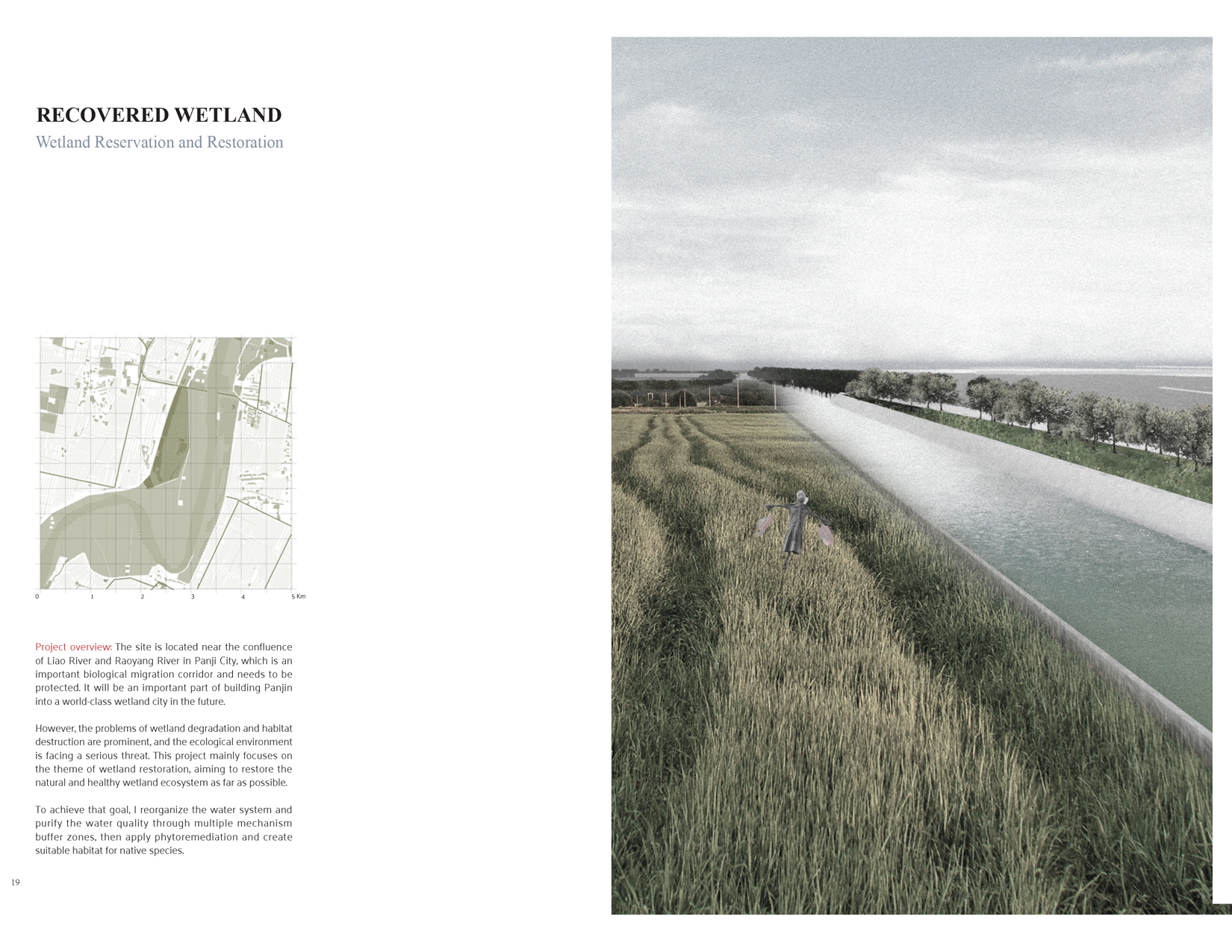
Project overview.
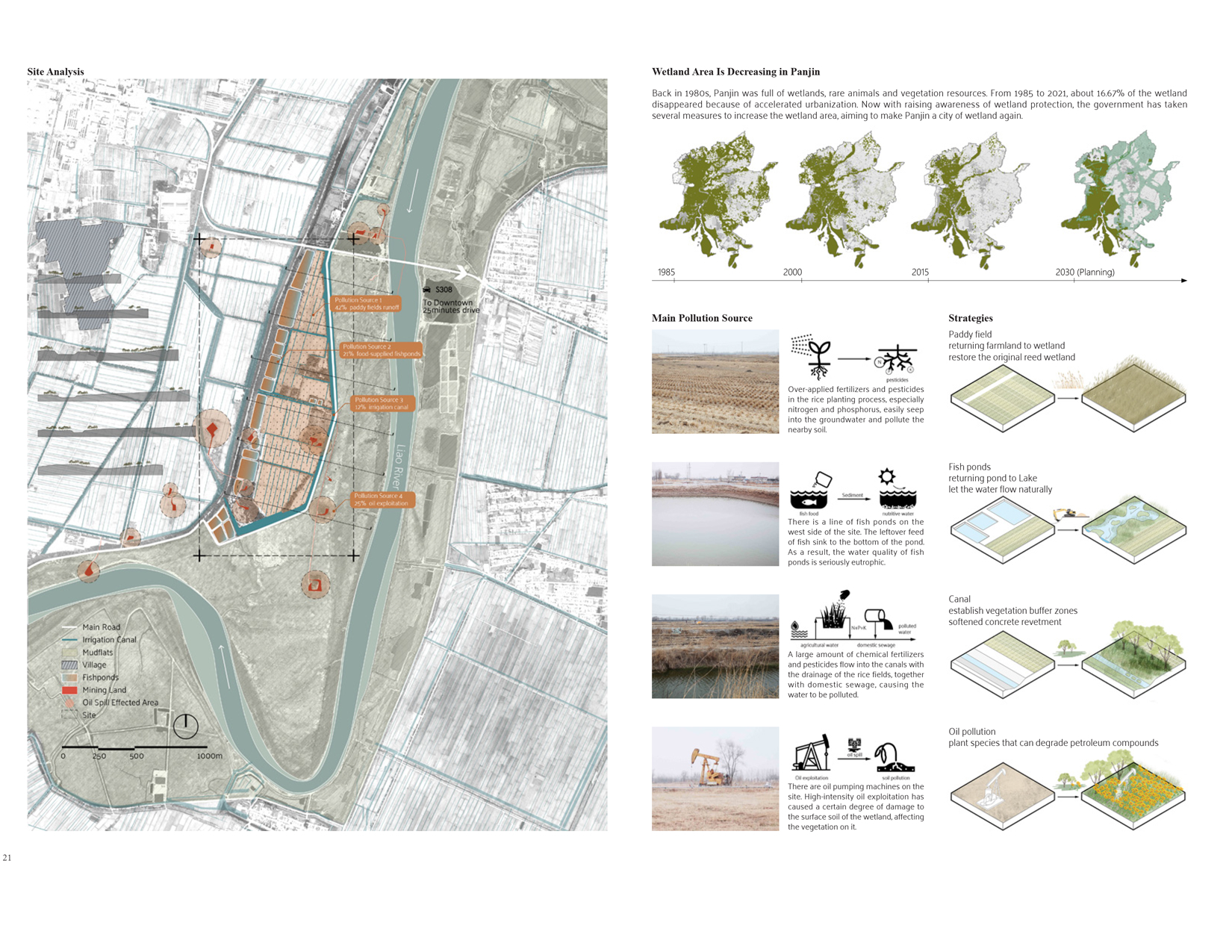
Site Analysis: Identify Four Major Sources of Pollution and Propose Corresponding Solutions.
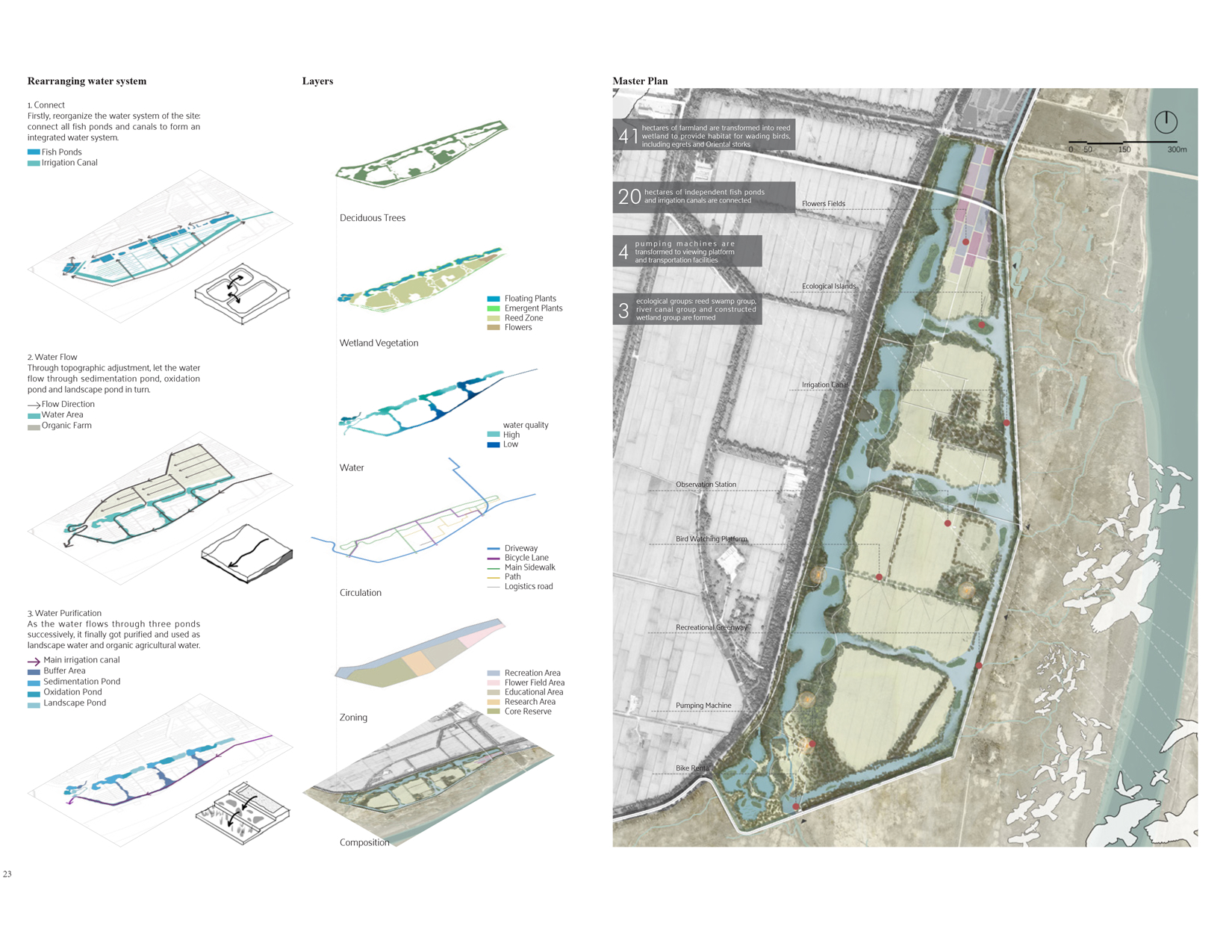
Strategies and Master Plan.
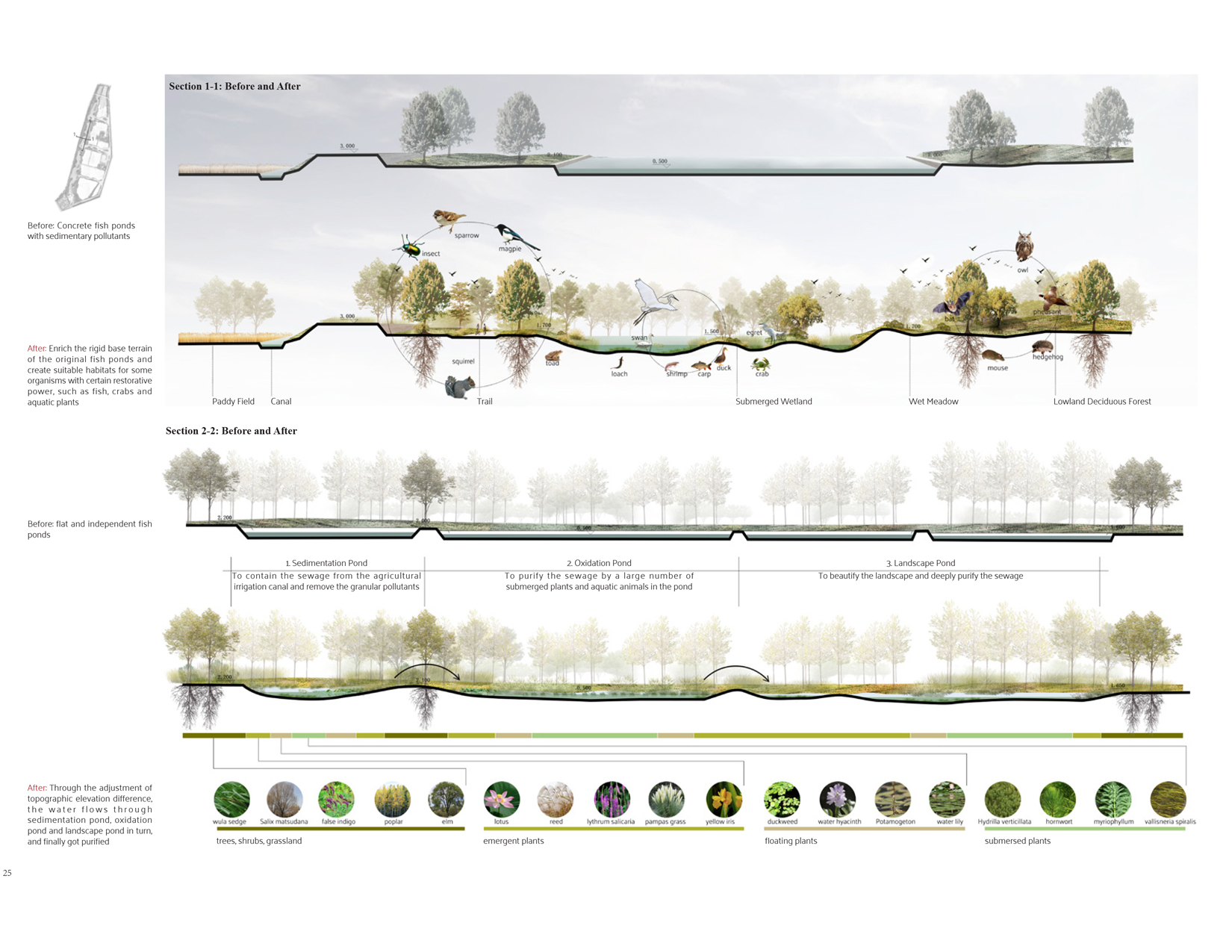
Sections: Before and After.
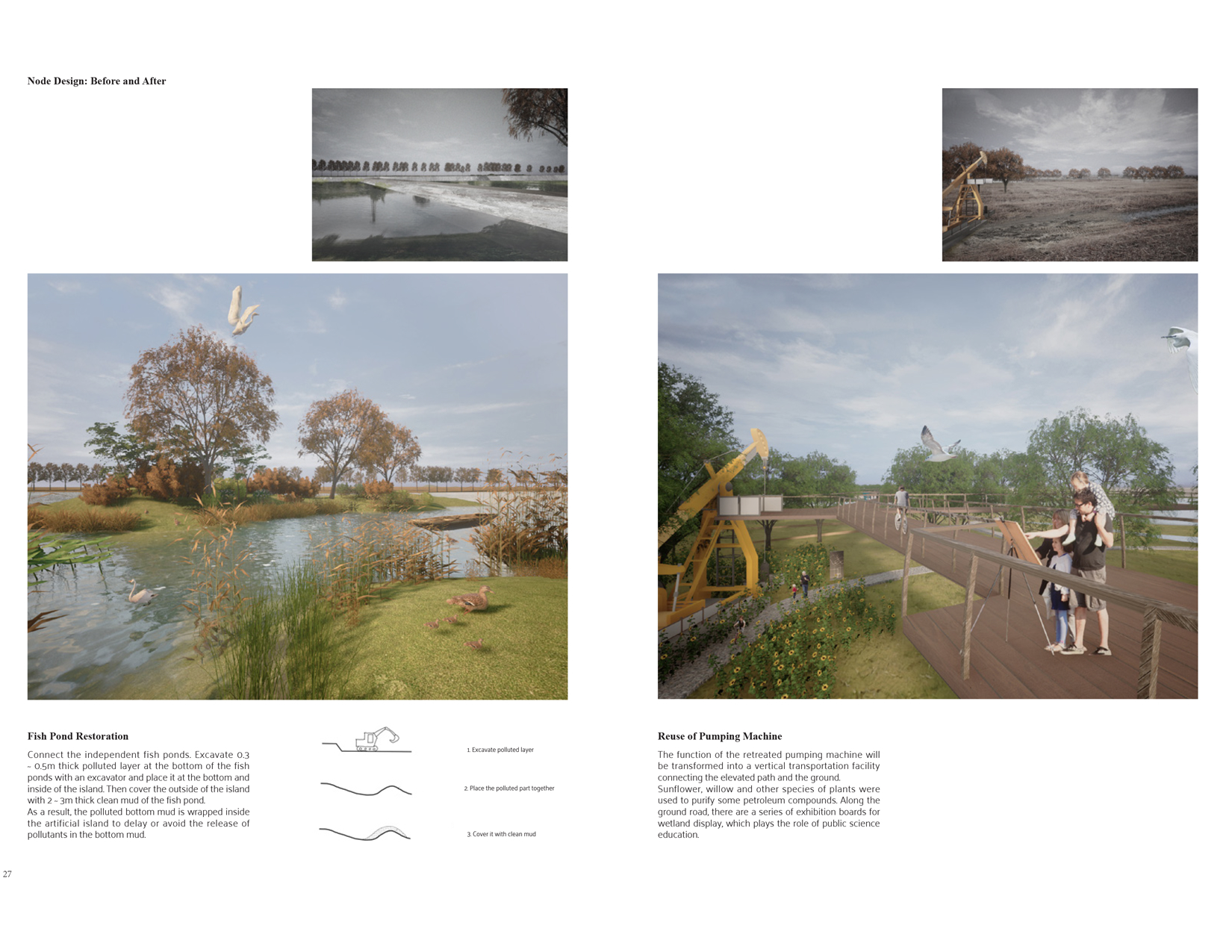
Node Designs: Before and After.
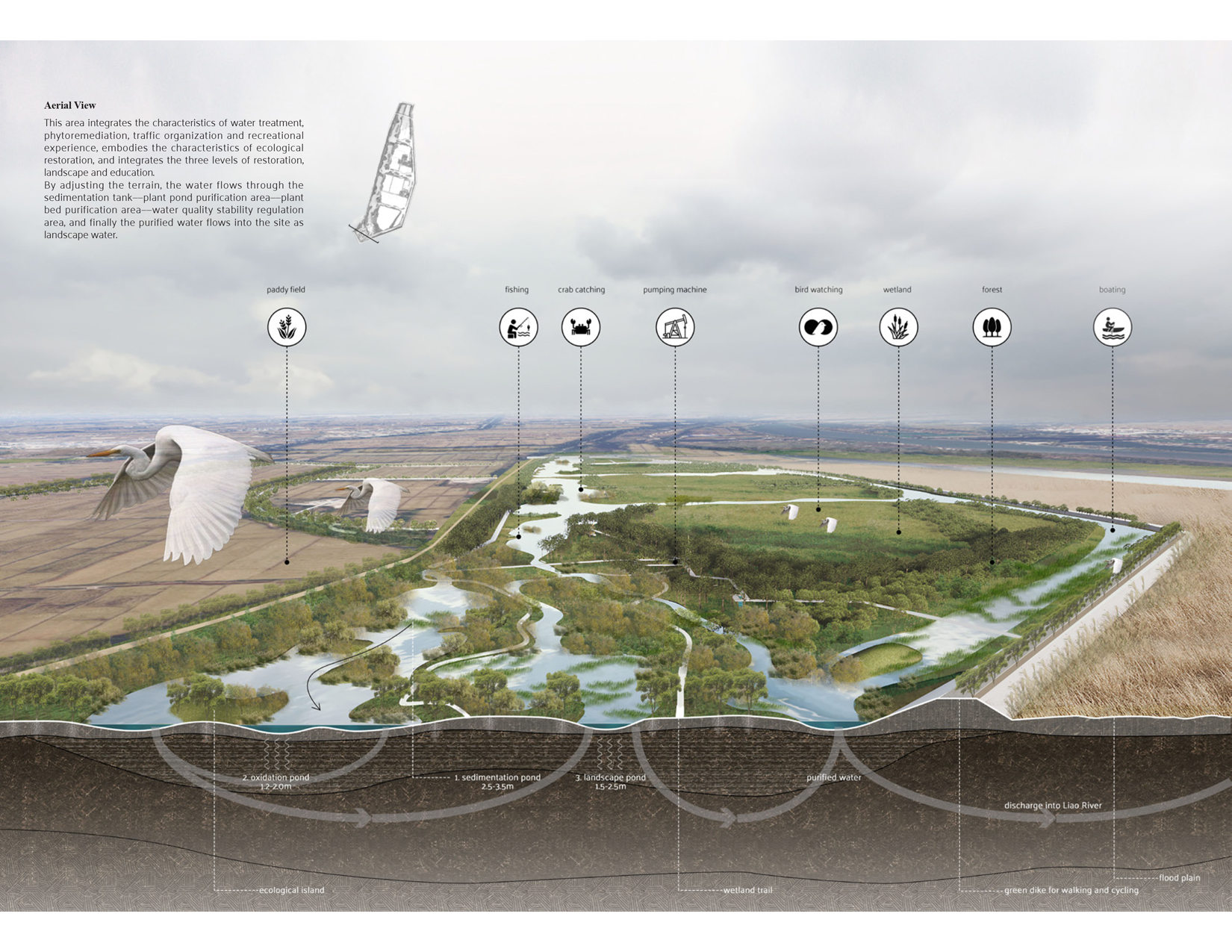
Aerial view.
Client
University of California, Berkely
Project Team
Jie Han
Project Statement
This wetland restoration project in Panjin, northern China, addresses severe wetland degradation and habitat destruction, which pose significant ecological threats. The primary goal is to restore a natural and healthy wetland ecosystem by improving water circulation, purifying water quality through multi-layered buffer zones, and utilizing phytoremediation to remove contaminants. Additionally, the design creates suitable habitats to support native species and promote biodiversity. By integrating these ecological restoration strategies, the project aims to revitalize the wetland, enhance environmental sustainability, and ensure long-term resilience.
Project Description
This wetland restoration project in Panjin, northern China, is designed to revive degraded ecosystems, enhance biodiversity, and mitigate pollution. Once abundant in wetland resources, the area has suffered from habitat loss and pollution, threatening local wildlife and ecological balance. In response, this project focuses on restoring a healthy, self-sustaining wetland ecosystem while integrating responsible human interaction.
Through analysis, I identified four major sources of pollutants and developed targeted removal strategies. One of the key interventions was restructuring the water system, connecting fragmented water bodies into a continuous network that enables natural hydrological processes and water purification. Additionally, I implemented phytoremediation technology, leveraging the ability of plants to absorb and break down pollutants to the maximum extent possible. This not only cleanses the water but also revitalizes aquatic habitats, providing a foundation for a more resilient ecosystem.
A crucial aspect of this project was the rehabilitation of fish ponds, which were previously isolated and unable to support diverse aquatic life. By reconnecting them and reshaping the topography, water flow was optimized to facilitate filtration, oxygenation, and natural regeneration. The introduction of native wetland vegetation further improves water quality, stabilizes the soil, and creates suitable habitats for fish, amphibians, and bird species. Additionally, I explored advanced pollutant treatment techniques, such as sediment encapsulation, where contaminated mud is safely contained and capped with clean soil, transforming polluted areas into thriving ecological islands that support diverse species.
Another innovative strategy involved the adaptive reuse of abandoned oil pumping machines. Inspired by the Hoover-Mason Trestle project, I reimagined these structures as vertical transportation elements, supporting an elevated pedestrian path that allows visitors to experience the wetland without disturbing sensitive habitats. This approach not only preserves historical industrial elements but also minimizes environmental disruption while encouraging public engagement with the restored landscape.
Ultimately, this project has transformed a degraded site into a thriving wetland park, where native flora and fauna can flourish once again. By balancing ecological restoration with carefully integrated human access, the design strengthens biodiversity, enhances climate resilience, and provides cleaner water. This project serves as a scalable model for Panjin City, demonstrating how urban wetland networks can be restored and expanded to foster long-term ecological health and sustainability.