San Francisco Street Tree Nursery
Merit Award /
2025, Community Impact & JEDI
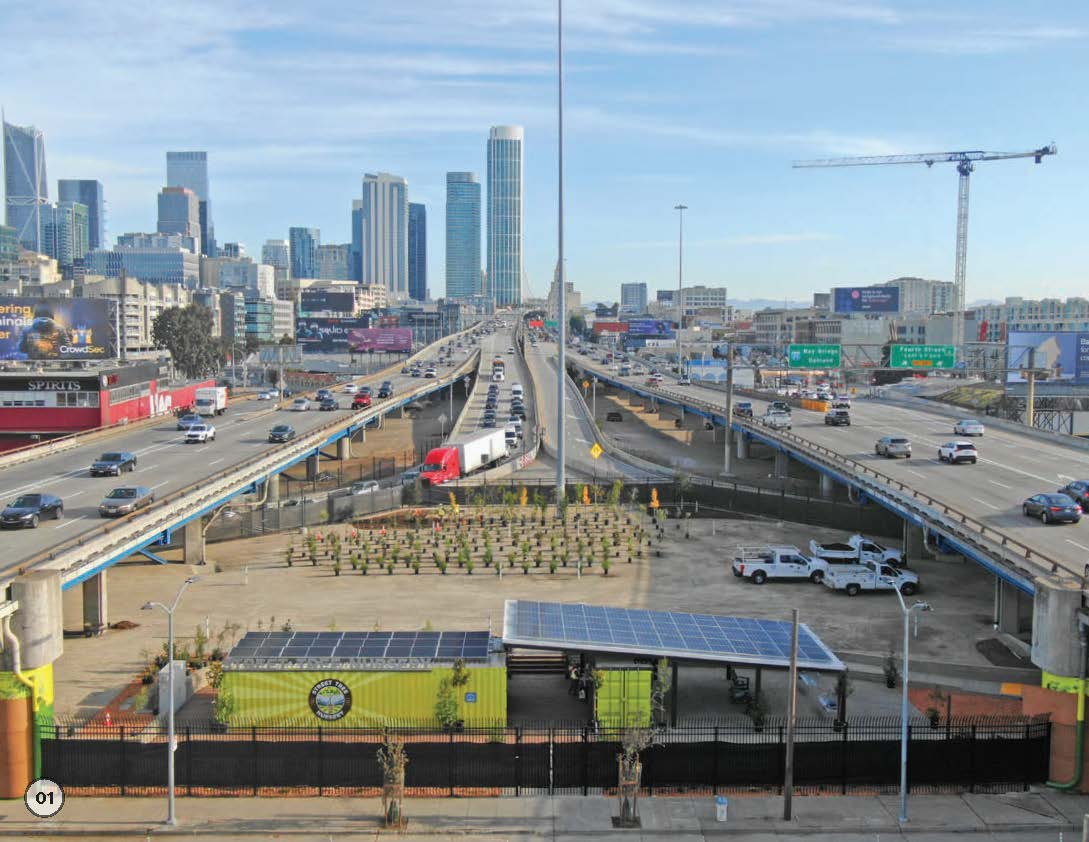
The San Francisco Street Tree Nursery transformed a neglected, trash-strewn 14,000-square-foot freeway parcel lot into a state-of-the-art tree nursery and climate education center in the heart of the city.
©Jon Swae
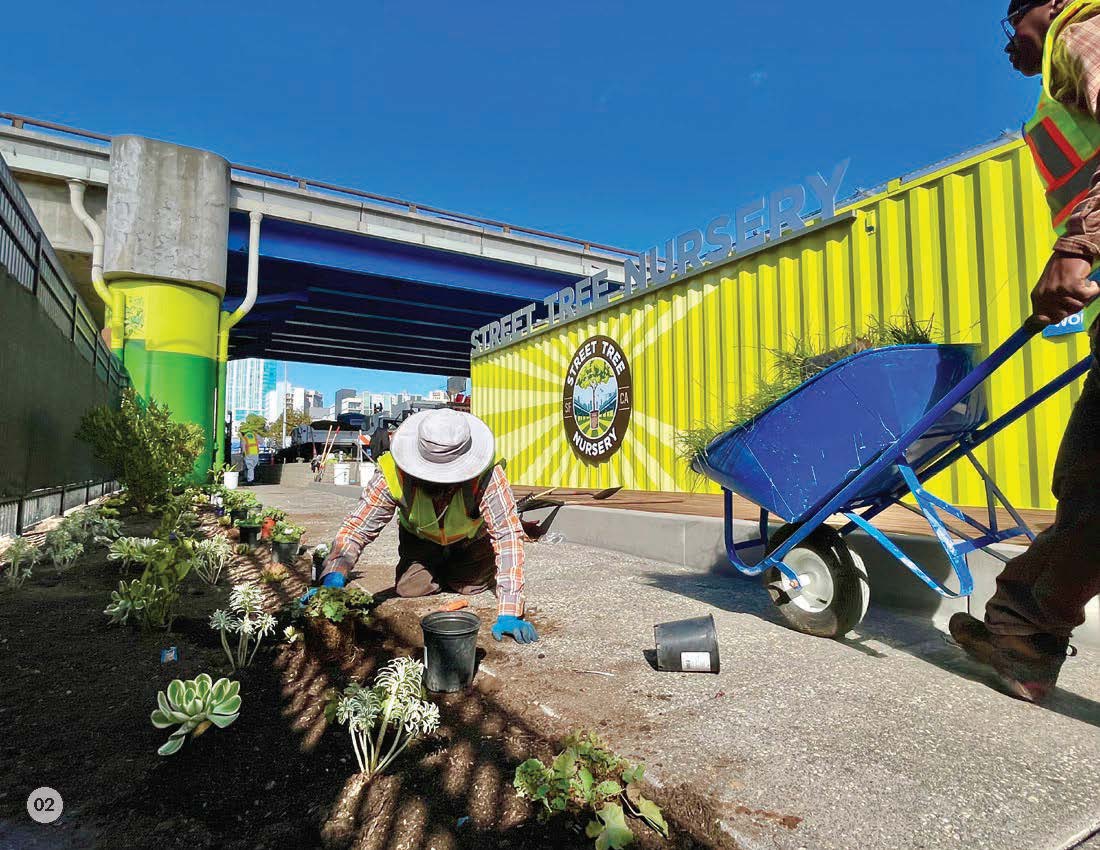
The San Francisco Street Tree Nursery has introduced much needed green space, trees and environmental benefits to the freeway-burdened South of Market community – a climate, air pollution and environmental justice hotspot.
©Rebecca Sunter
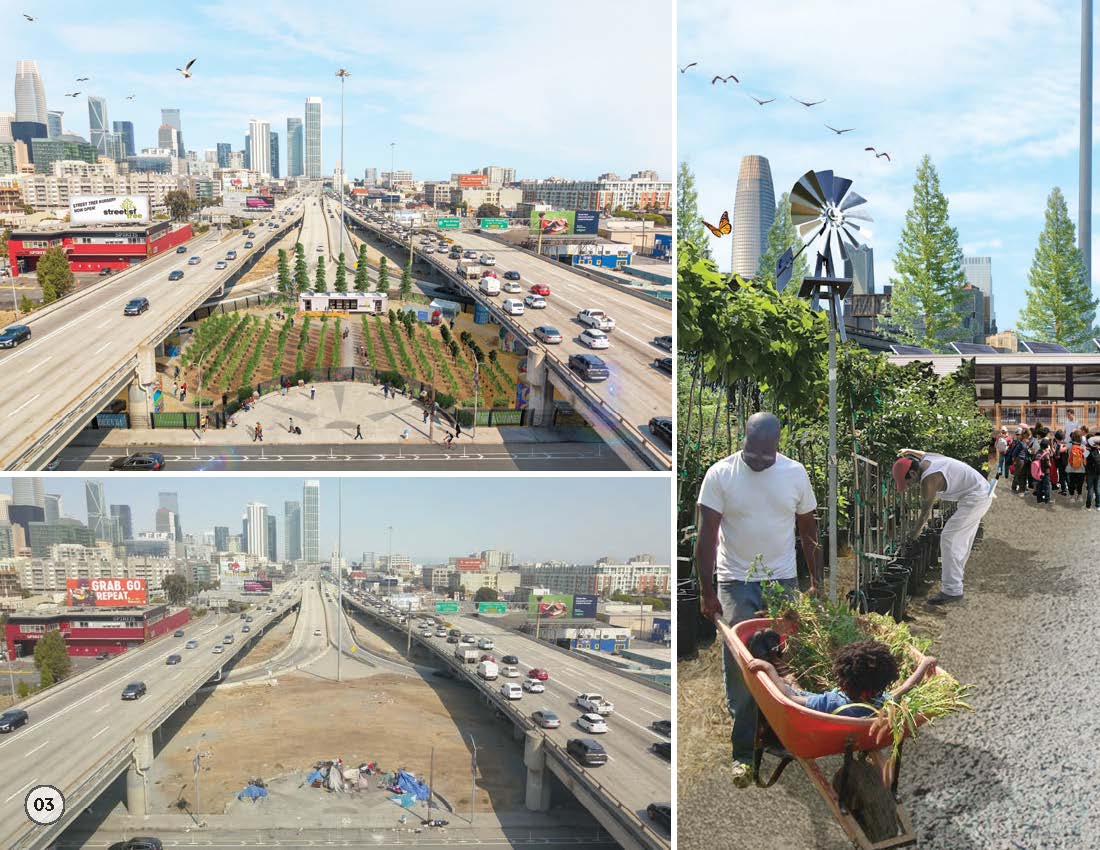
The highly visible location (5th Street/I-80 interchange) is a primary entry and exit point to San Francisco with direct access to the San Francisco-Oakland Bay Bridge. The site has struggled with ongoing dumping, encampment and maintenance challenges. Landscape architectural renderings illustrating the site’s potential were critical in generating support for the project and funding from the State of California (Caltrans) and the City of San Francisco.
©Chris Heredia
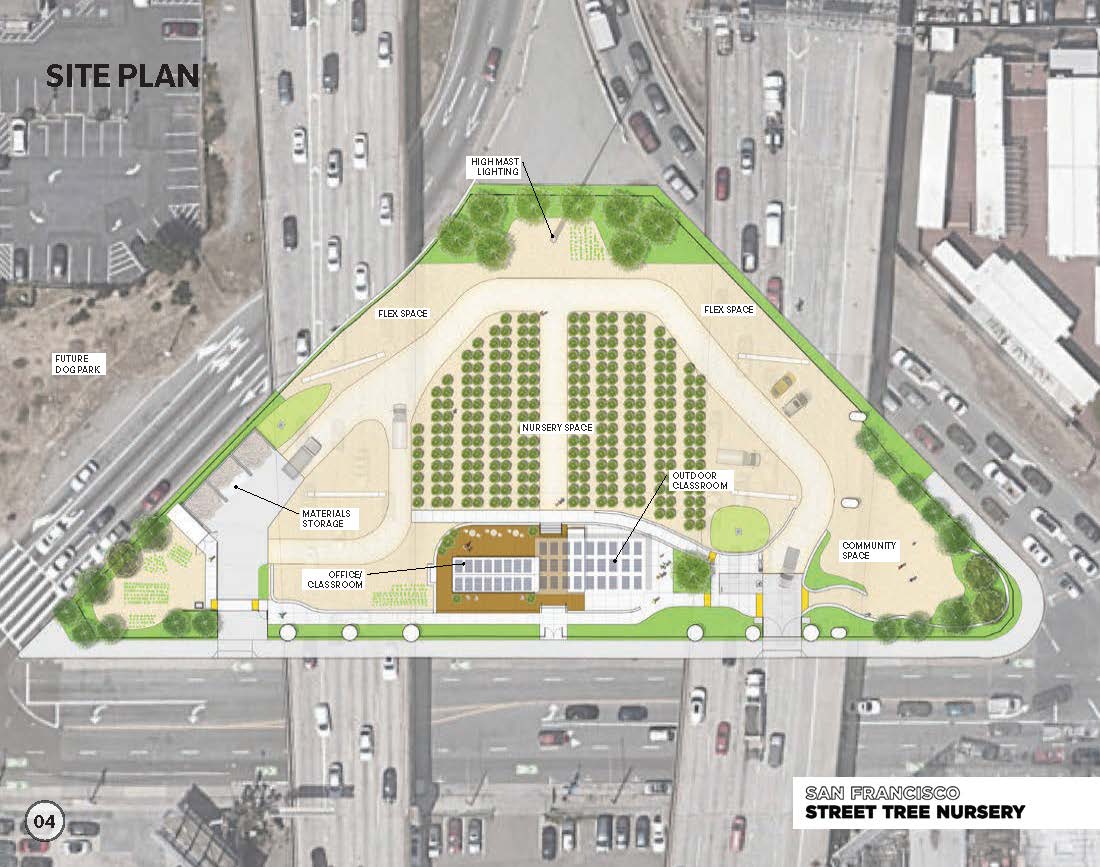
The nursery site plan was developed by the Bureau of Landscape Architecture and was based off of evaluation of other nursery operations as well as client inputs on the preferred layout and operational needs of city staff.
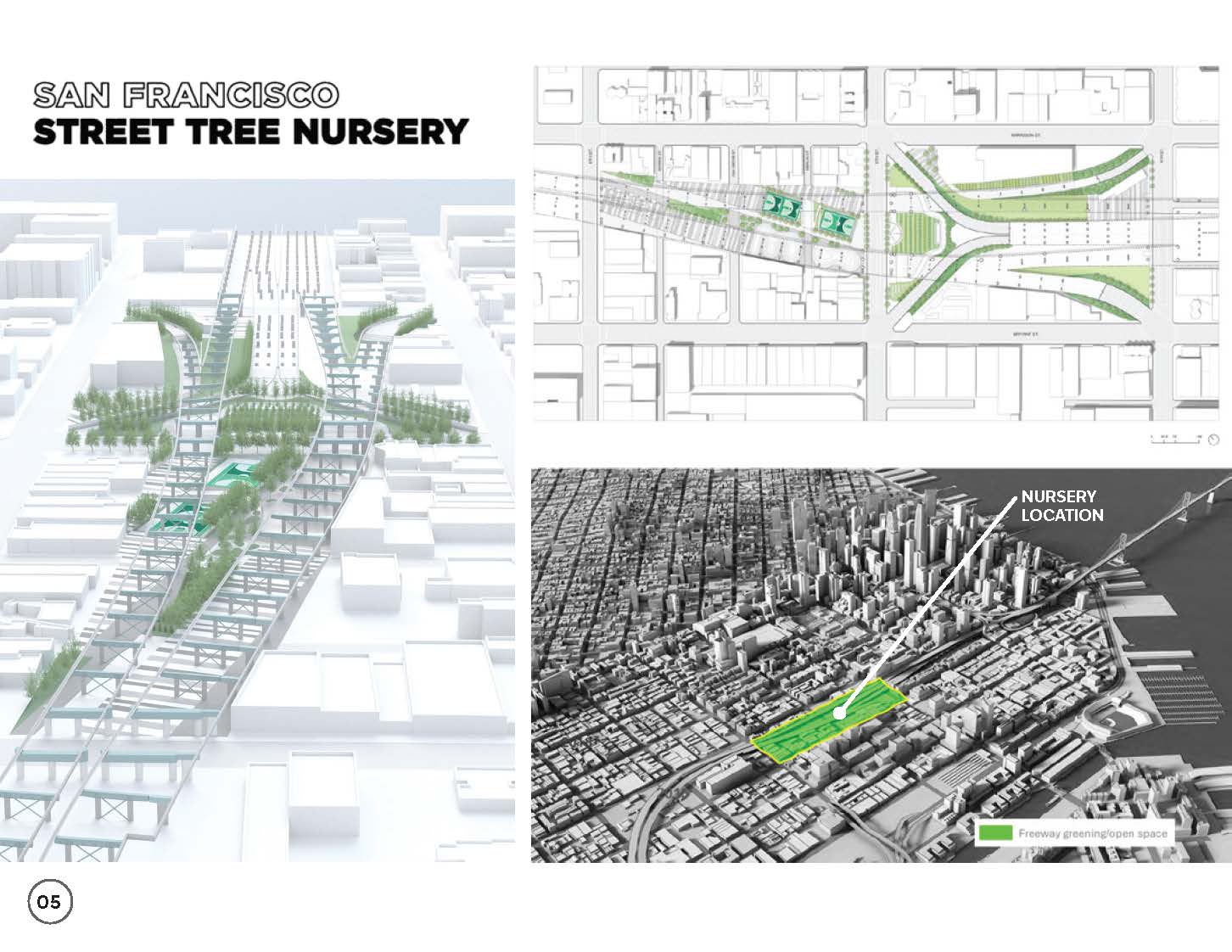
The nursery has served as a catalyst for green space creation in the nature-starved South of Market (SoMa) neighborhood. The nursery is the first in an envisioned future network of “green lungs” in SoMa – under freeway open spaces filled with plants, trees and recreational opportunities. A neighboring dog park is set to open later this year and planning concepts are being developed for a multi-block “SoMa Under Freeway Park.”
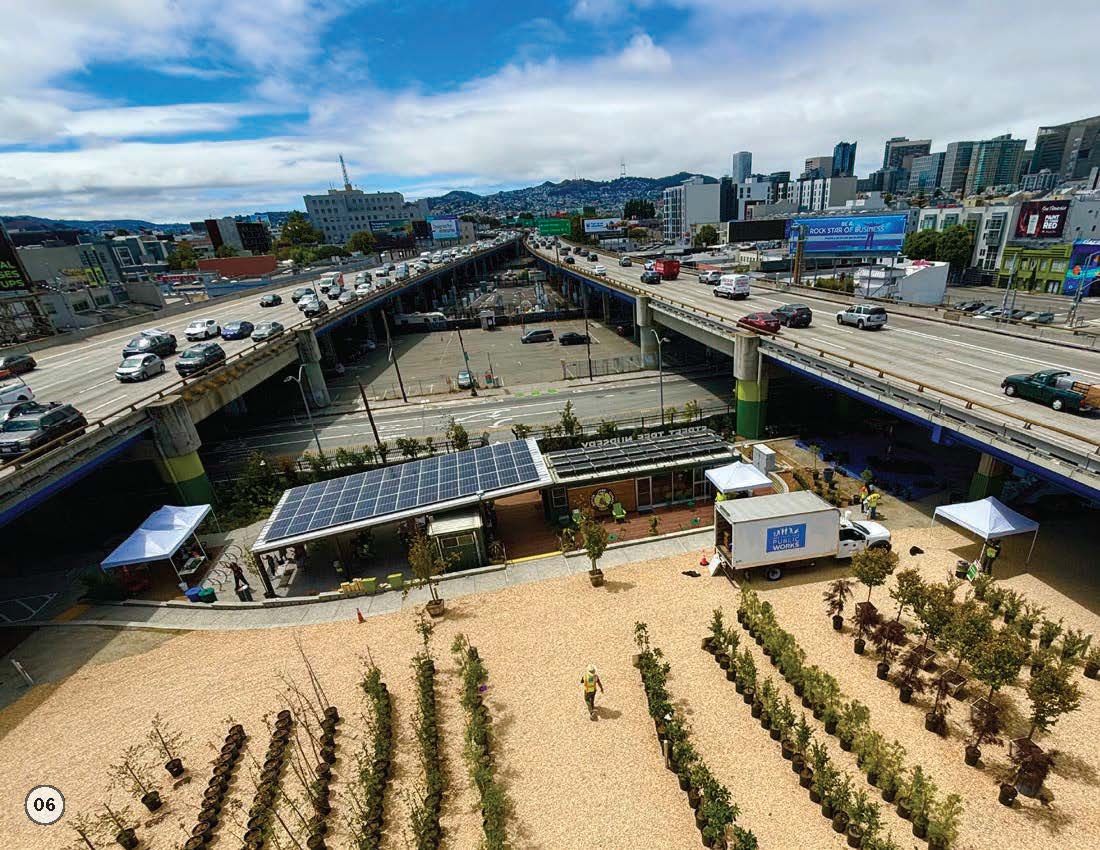
Powered completely by the sun, the nursery is the largest fully off-grid municipal solar facility in the City of San Francisco. 100% of electricity needs are generated by an extensive rooftop photovoltaic (PV) system that includes battery storage.
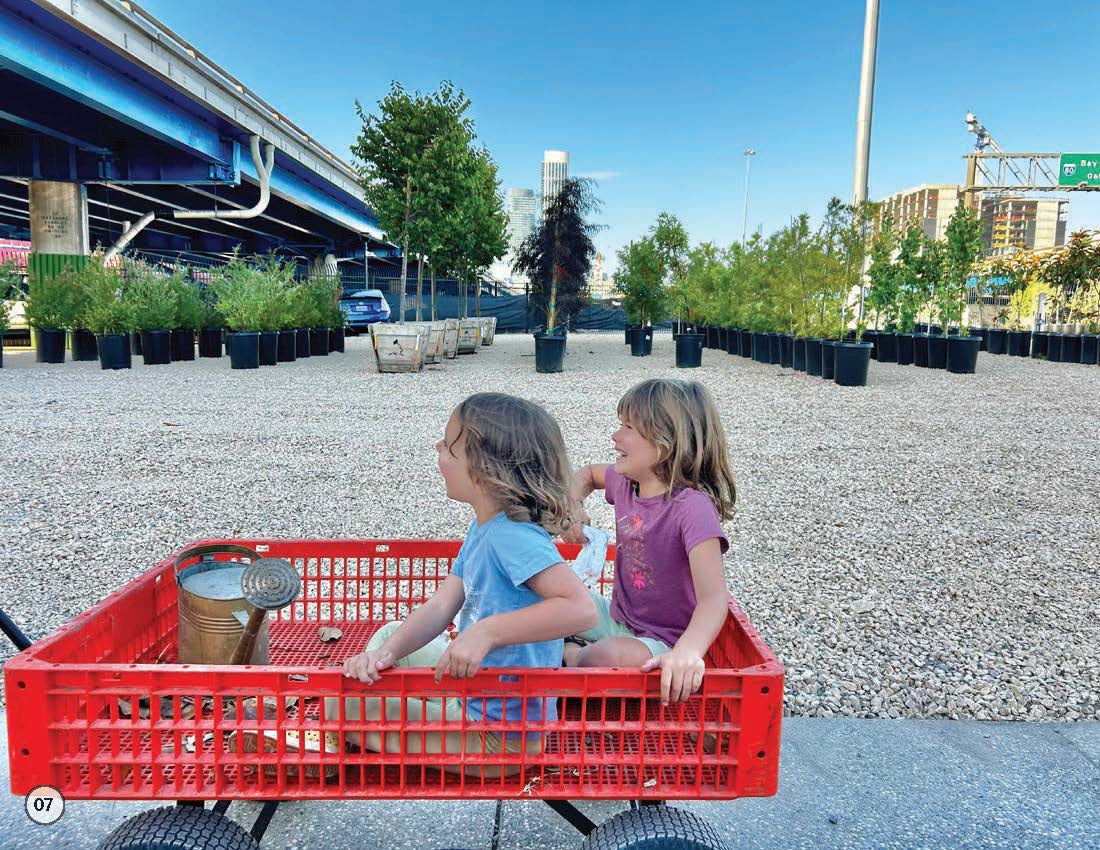
The Street Tree Nursery demonstrates how even the most urban places can become a sanctuary for both people and nature.
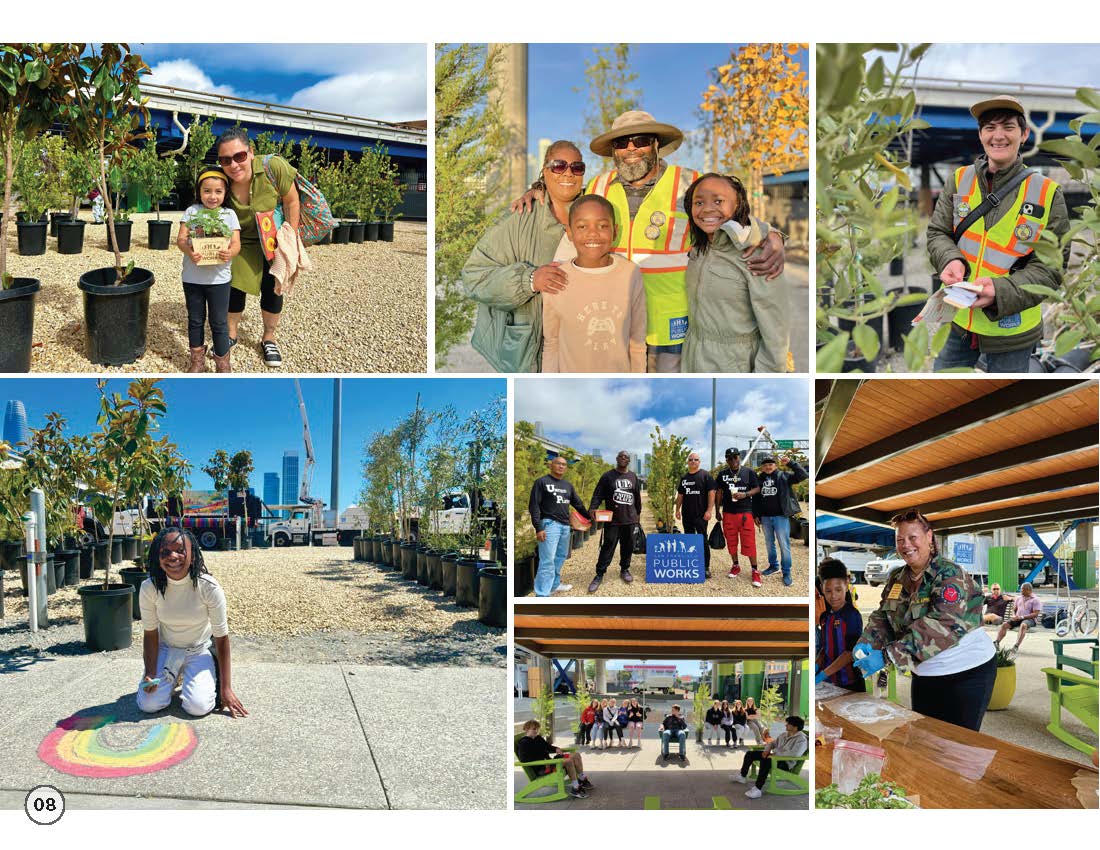
The Street Tree Nursery was designed to function both as an urban nursery and a vibrant, community-serving space. The nursery has become a popular spot for tours, gatherings, volunteer events, art exhibitions and community events.
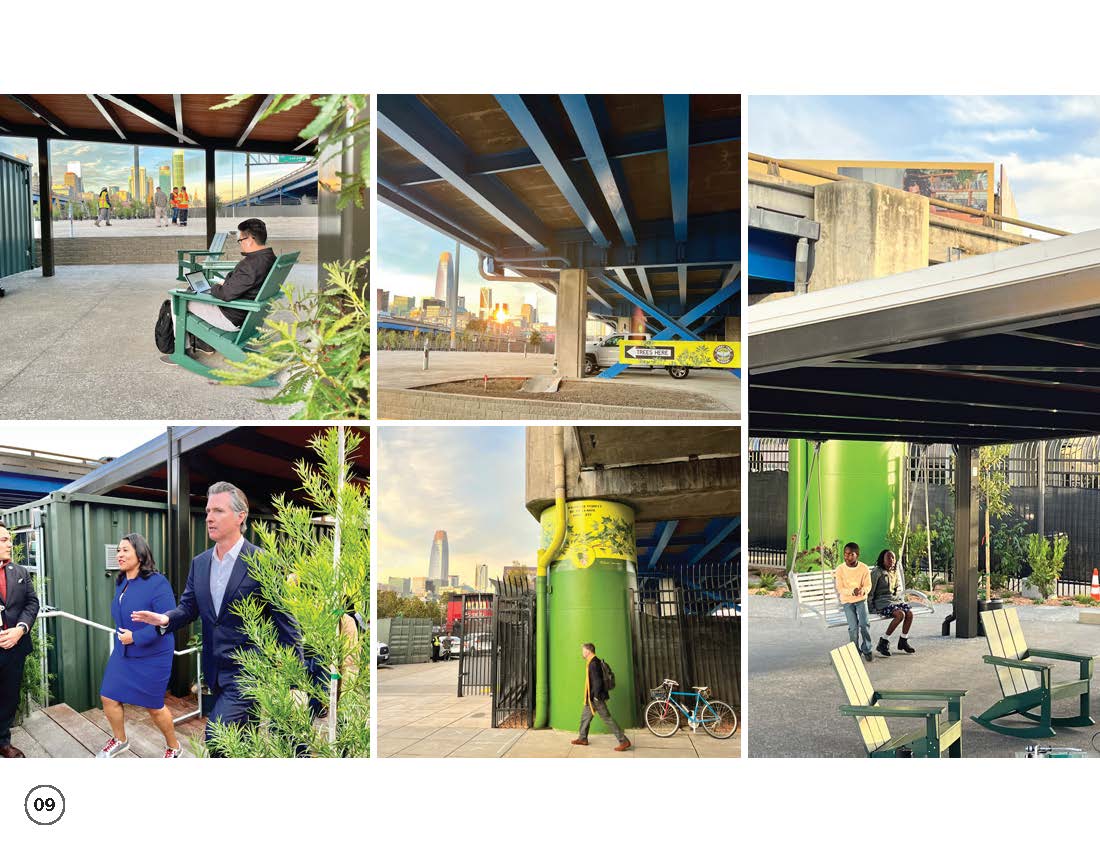
Located on one of San Francisco’s most challenging sites between two heavily trafficked freeway structures, the design team focused on creating a place that is both functional and calming. Features like porch swings, wooden decking, plants, outdoor furniture and placemaking graphics humanize the space and enhance comfort.
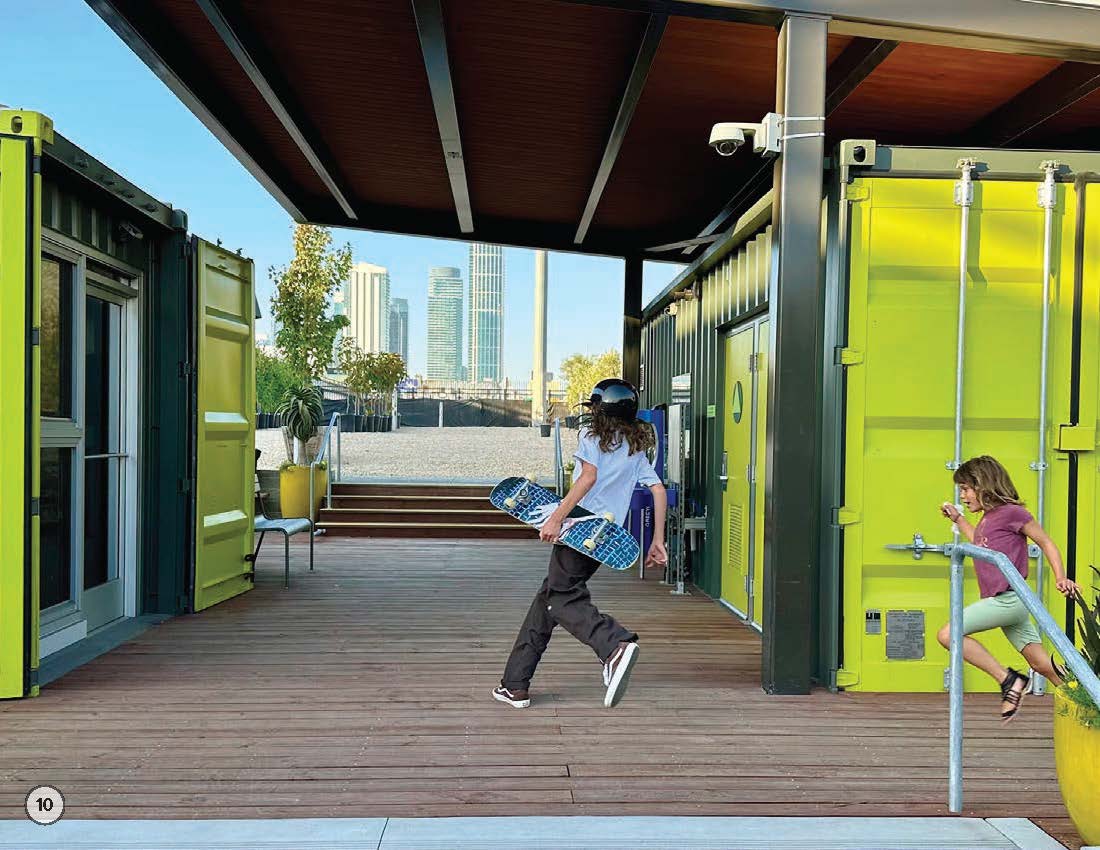
The nursery’s prefabricated structures designed offsite including two shipping container buildings and a steel and wood pergola allowed for the quick transformation of the site while also reflecting its unique context.
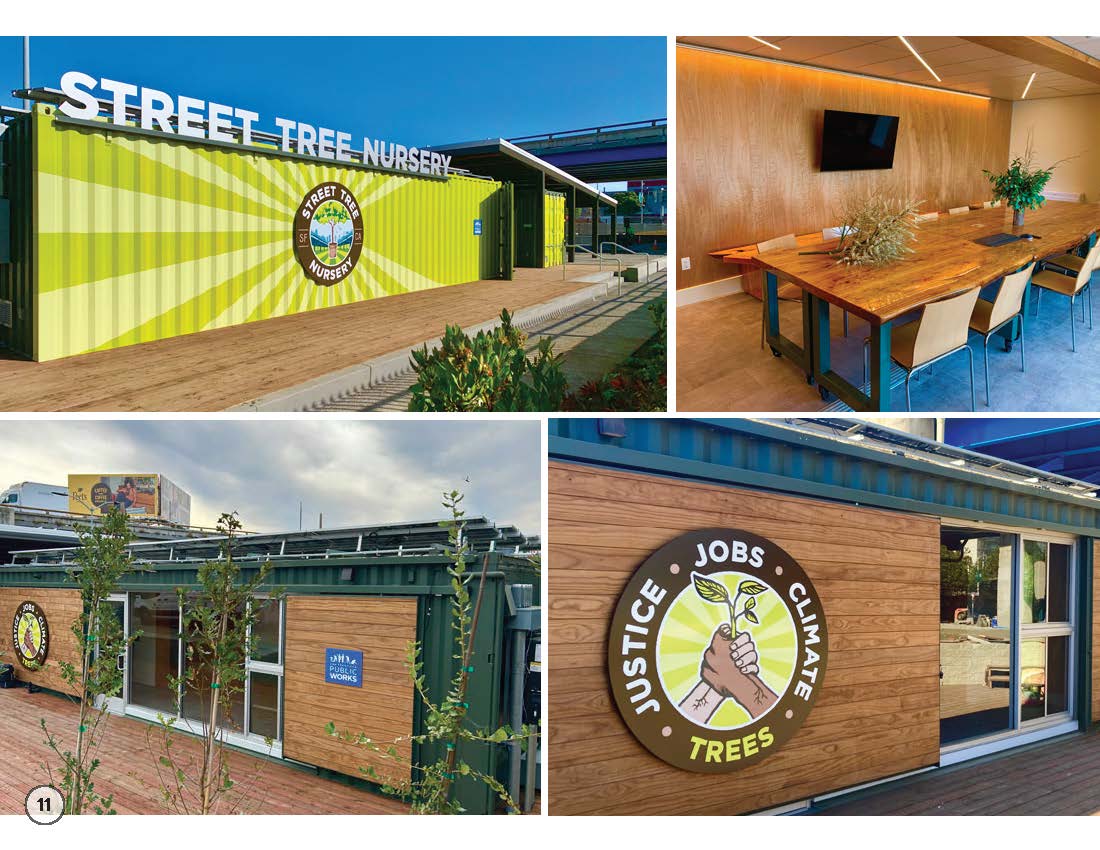
A carefully selected color palette, custom graphics and signage convey the nursery’s mission and support themes of climate protection and social justice. The nursery’s slogan, “Justice, Jobs, Climate, Trees,” is boldly displayed on the classroom building.
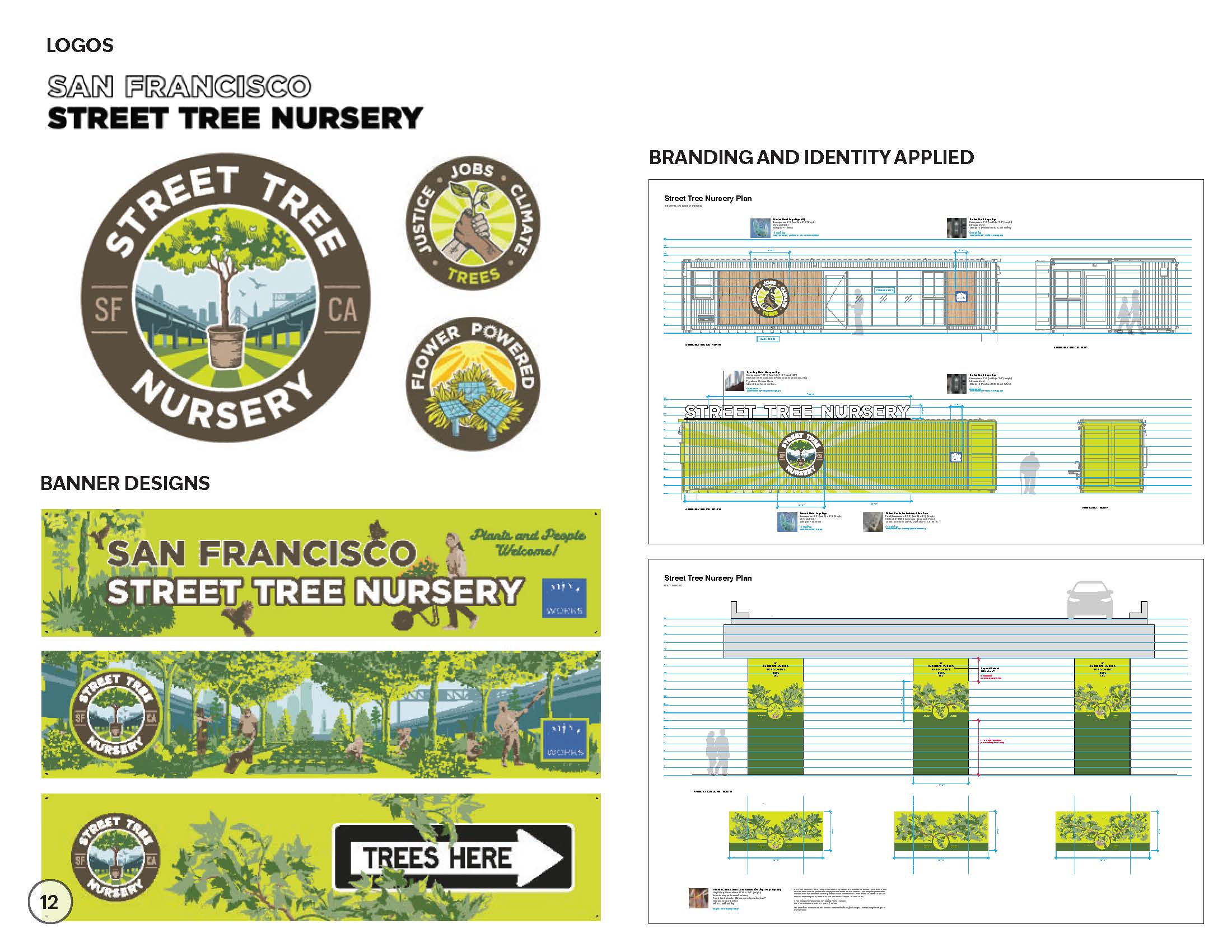
A carefully selected color palette and a series of branded graphics and signage convey the nursery’s mission and support themes of climate protection and social justice.
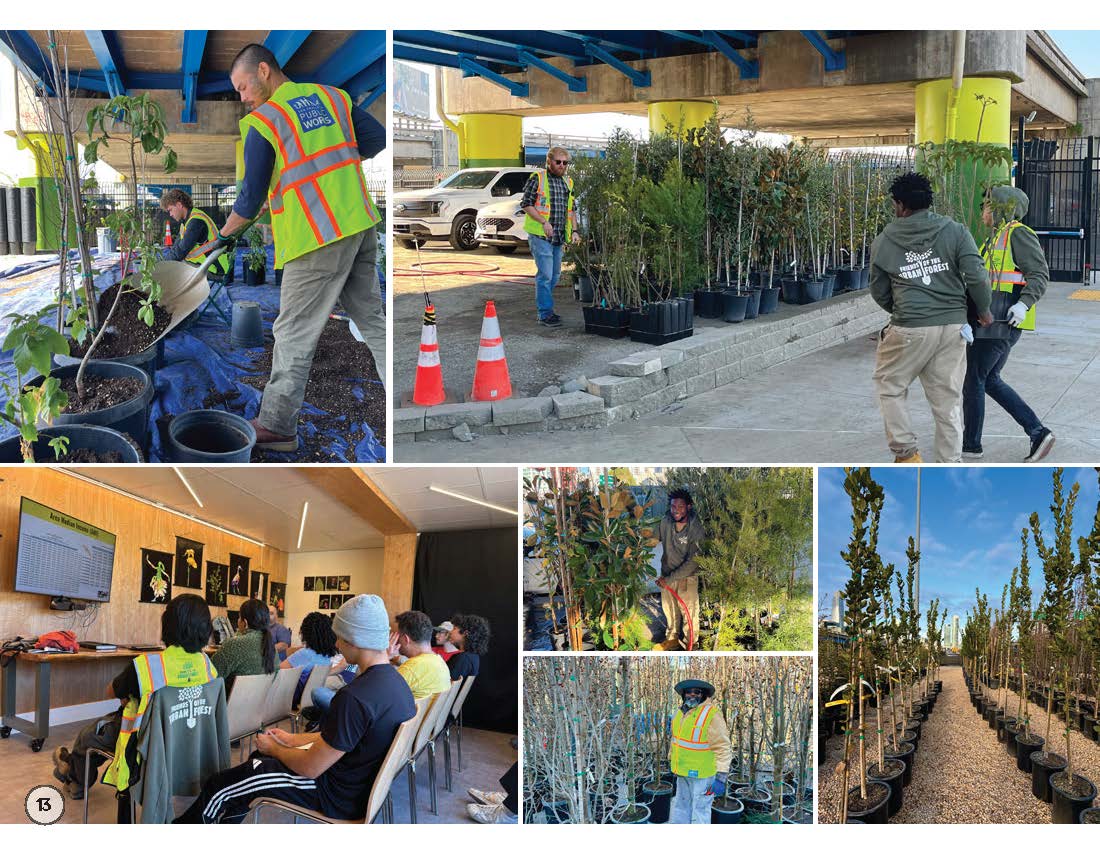
The nursery’s New Roots Workforce Development Program offers job training to 20 young adults facing barriers to employment. The site supports both classroom and hands-on field work to prepare them for careers in urban forestry.
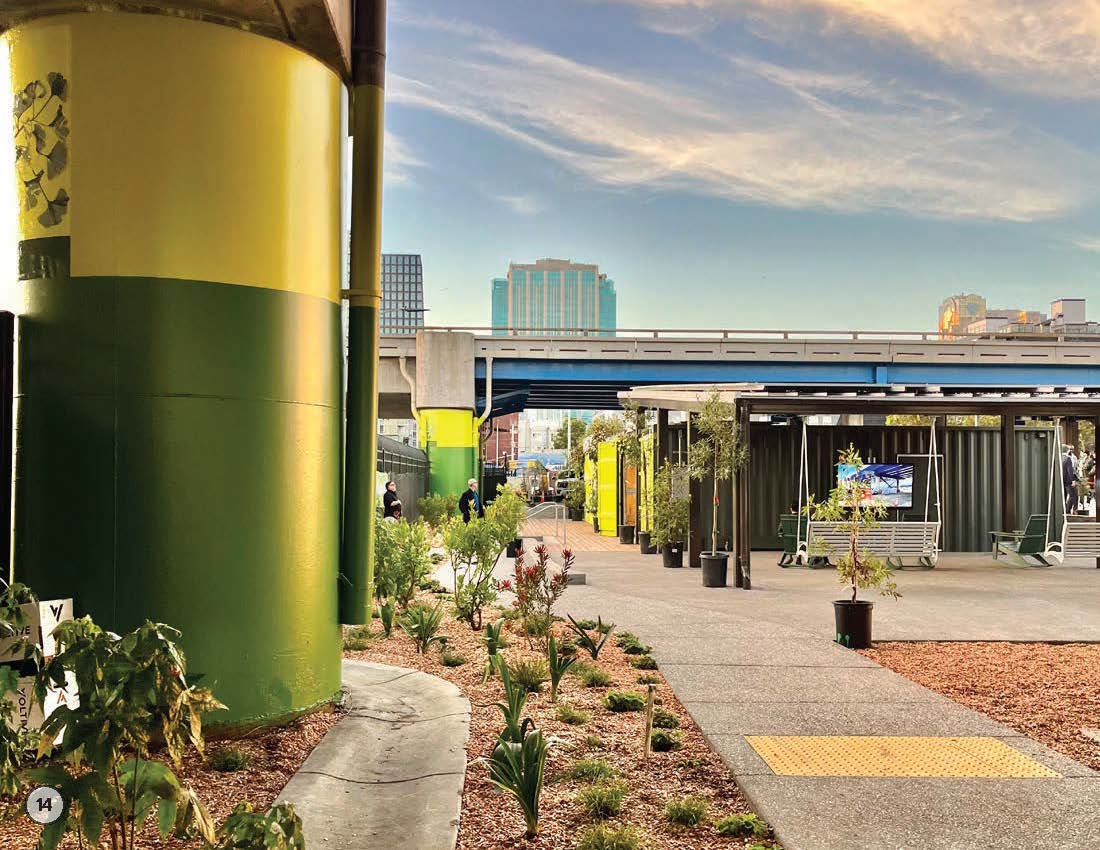
The nursery’s stunning juxtaposition of the San Francisco skyline, overhead freeway, moving traffic, plants and vibrant colors creates many unexpected moments of beauty.
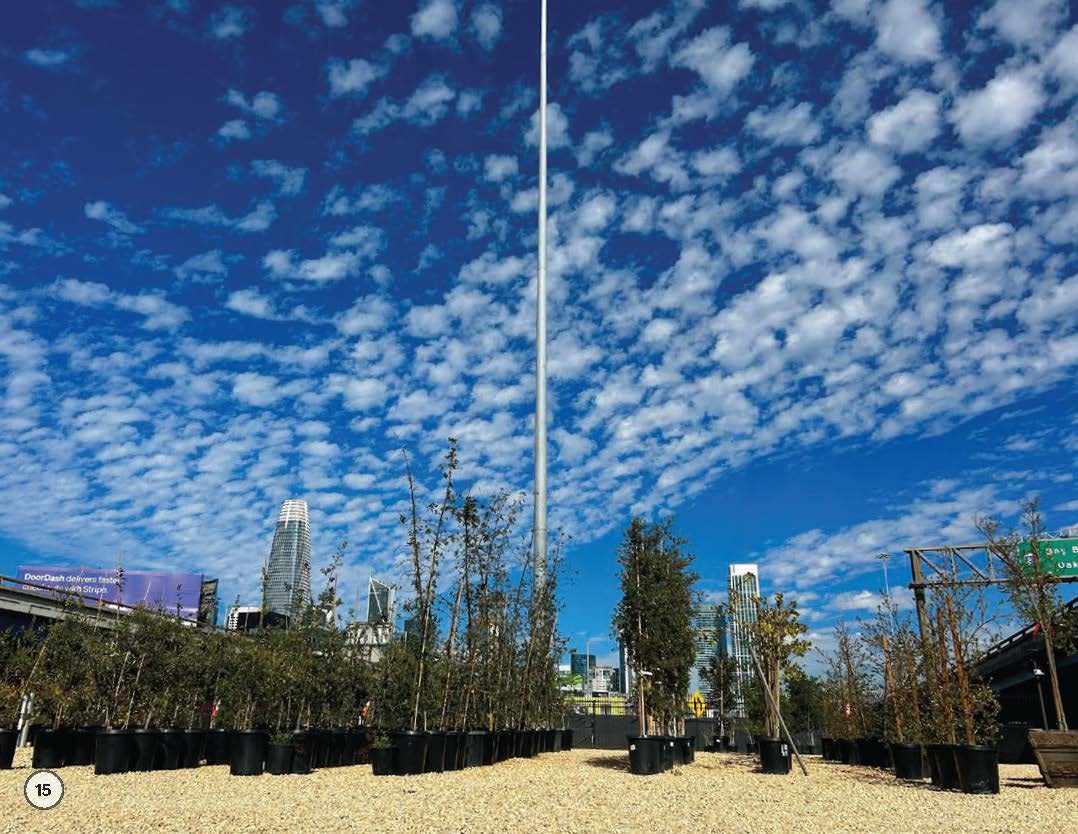
The nursery’s central growing area nestled between the two overhead I-80 freeway decks receives ample sunlight and supports a local tree propagation system for up to 2,000 street trees that will be planted throughout San Francisco.
Client
Governmental Agency
Project Team
Tony Esterbrooks, Lead Landscape Architect
Bill Bulkley, Landscape Architect
Andrew Saephan, Landscape Designer
Jennifer Cooper, Landscape Architect
Jon Swae, Client/Owner’s Representation
Carla Short, Director
Ray Lui, Structural Engineering
Michelle Woo, Project Manager
Ruby Yu, Construction Management
Lesley Wong, Hydraulic Engineering
Caltrans, California Department of Transportation
Yerba Buena Construction + Sub Contractors
Gary Chen, SF Planning, Graphics + Murals
Project Statement
San Francisco’s new Street Tree Nursery has sprouted up between two freeway ramps, nestled against the downtown skyline. The innovative project transformed a neglected, trash-strewn 14,000-square-foot lot into a state-of-the-art tree nursery and climate education center in the heart of the city. The nursery supports a local tree propagation system for up to 2,000 trees as well as volunteer, educational and workforce development opportunities. The custom-designed 100% solar facility features a central growing area, outdoor gathering spots, modular classroom and office buildings, landscaped areas and vibrant murals. Beyond its environmental impact, the small project is sparking the development of a new park system beneath the freeway in the nature-deprived South of Market neighborhood. It also contributes to increased tree planting in San Francisco’s underserved, low-canopy communities and offers job training to 20 young adults facing employment barriers.
Project Description
The Street Tree Nursery was designed with a vision to create an urban nursery that functions as a vibrant, community-serving space. The project demonstrates a high level of design creativity while modeling how urban spaces can be transformed into hubs for community, sustainability, and environmental justice.
Located on one of San Francisco’s most challenging sites between two heavily trafficked freeway structures, the design team focused on creating a place that is both functional and calming.
The nursery incorporates elements of parks, botanical gardens and outdoor dining environments to create an inviting and beautiful atmosphere.
Calming features like porch swings, wooden decking, plants, outdoor furniture, natural wood finishes and a carefully selected color palette humanize the space and enhance comfort.
Placemaking elements include a series of branded graphics and signage that convey the nursery’s mission and support themes of climate protection and social justice. The nursery’s slogan, “Justice, Jobs, Climate, Trees,” is boldly displayed on the classroom building. Murals featuring illustrations of local tree species adorn freeway columns, adding vibrancy to the City’s gritty urban core.
An innovative approach to project delivery was crucial for speedy transformation of the site. Close collaboration between landscape architects and the construction team enabled real-time decision-making, allowing for efficient changes as needed.
Prefabricated structures designed offsite played a critical role in reducing construction time. Two custom-designed shipping container buildings were constructed offsite, housing essential facilities such as a classroom, office space, breakroom, and restrooms for workers and visitors.
A custom designed steel and wood pergola was also prefabricated and assembled onsite. These structures were then crane-lifted onto pier foundations, ensuring a quick and smooth installation process.
The nursery’s design reflects a strong understanding of its cultural, ecological, and physical context. Educational programming commemorates the site’s history showcasing its evolution from an ecologically rich pre-colonial marshland to its urban configuration shaped by the freeway system of the mid-20th century.
Native Coast live oak trees were planted in collaboration with and blessed by the Ramaytush Ohlone during the nursery’s ribbon-cutting ceremony along with a commitment to make the nursery space accessible to indigenous groups for gathering and education.
A bronze plaque displayed among small tree seedlings honors workers who died during the construction of the nearby San Francisco-Oakland Bay Bridge in the 1930’s, ensuring the project’s connection to both history and community.
The success of the nursery has sparked a broader movement for green space creation in the nature-starved South of Market (SoMa) neighborhood. The nursery demonstrates how small creative landscape projects can catalyze larger community and environmental improvements.
Plans are underway to design a “SoMa Under Freeway Park” to connect the nursery to a series of new green spaces along the freeway from 4th to 6th Streets.
A neighboring freeway off-ramp parcel is set to be constructed as a dog park (late 2025).
The project’s impact extends beyond environmental benefits. It also serves as a hub for workforce development. The “New Roots” program operated by a nonprofit partner provides job training for individuals facing barriers to employment, helping to prepare them for careers in urban forestry.
Sustainability is at the heart of the nursery’s design. The project is powered entirely by an onsite solar system featuring two large arrays of solar panels, one on the main classroom building and another on the pergola structure.
Solar panels generate 100% greenhouse gas-free electricity, ensuring that the site’s operations do not contribute to climate change.
The nursery’s trees filter air pollution and sequester carbon while also creating shade after planted, reducing urban heat islands in low-canopy neighborhoods.
Biodiversity is supported through the nursery’s propagation of native trees like Coast live oak and California buckeye from locally harvested seedstocks on Yerba Buena Island and San Bruno Mountain.
The Street Tree Nursery is a shining example of how urban spaces can be transformed into centers for community, sustainability, and environmental justice. Its design, innovative execution, and impact on both the local community and the broader landscape make it a model for future landscape design projects on challenging urban sites. Through its integration of green space, workforce development and sustainability, the nursery offers a powerful message about the potential for urban land to provide a sanctuary for both people and nature.