
UC Berkeley Landscape Climate Adaptation Plan
Excellence Award /
2026, Analysis and Planning
Berkeley, CA

UC Berkeley’s landscape has long defined the university’s identity as a place where nature, culture, and learning intersect. This plan looks at end-of-century conditions to envision a legacy strengthened through climate adaptation, ecological renewal, and thoughtful stewardship.
©SCAPE
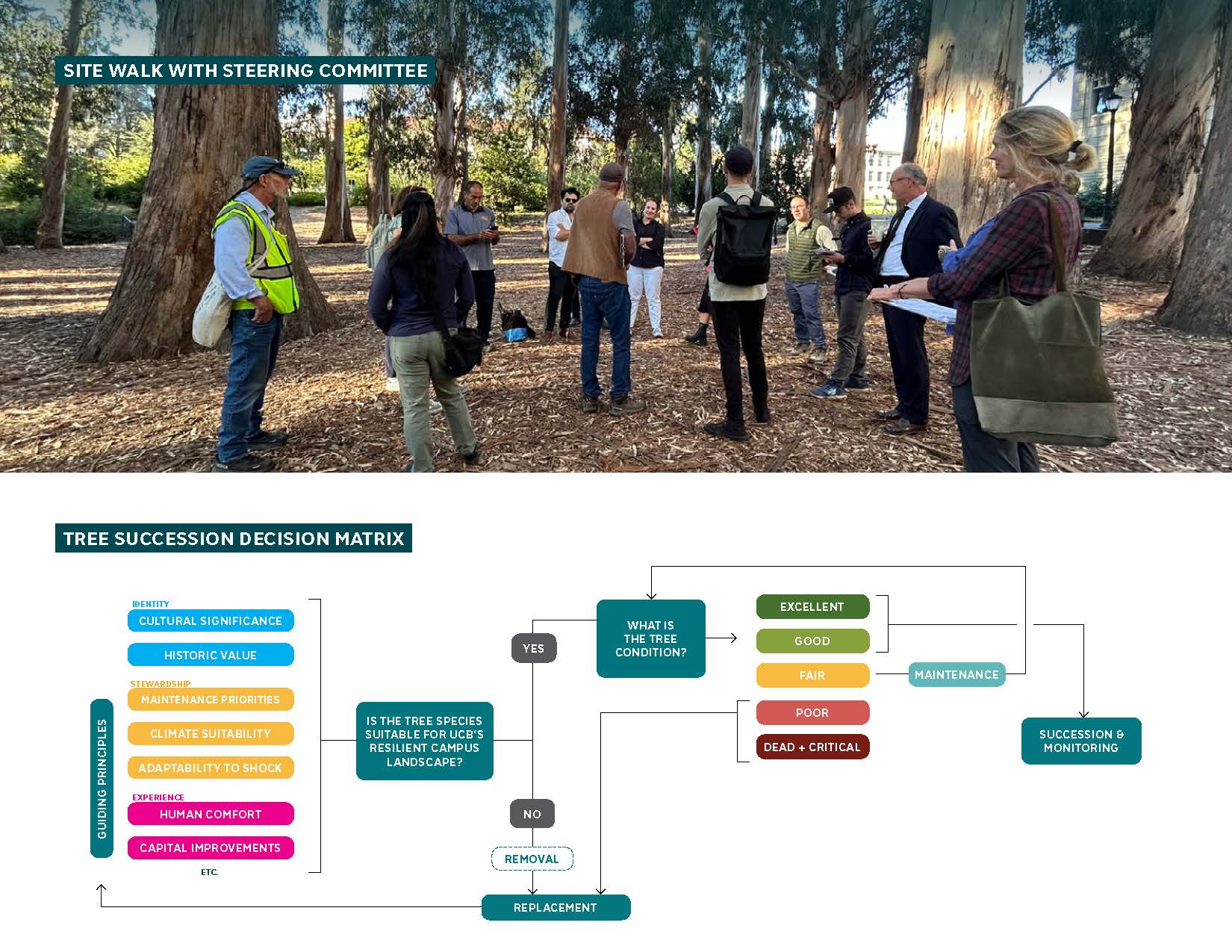
Developed in collaboration with university leadership, faculty, grounds & maintenance staff, students, and technical experts, the Landscape Climate Adaptation Plan (LCAP) delivers climate adaptive plant palettes, tree succession strategies, and implementation tools that support phased renewal.
©SCAPE

Alongside a landscape inventory and analysis, the team conducted a climate risk assessment to understand vulnerabilities and potential risks to the existing campus makeup and character. This would be crucial to the next step of envisioning resilience.
©SCAPE
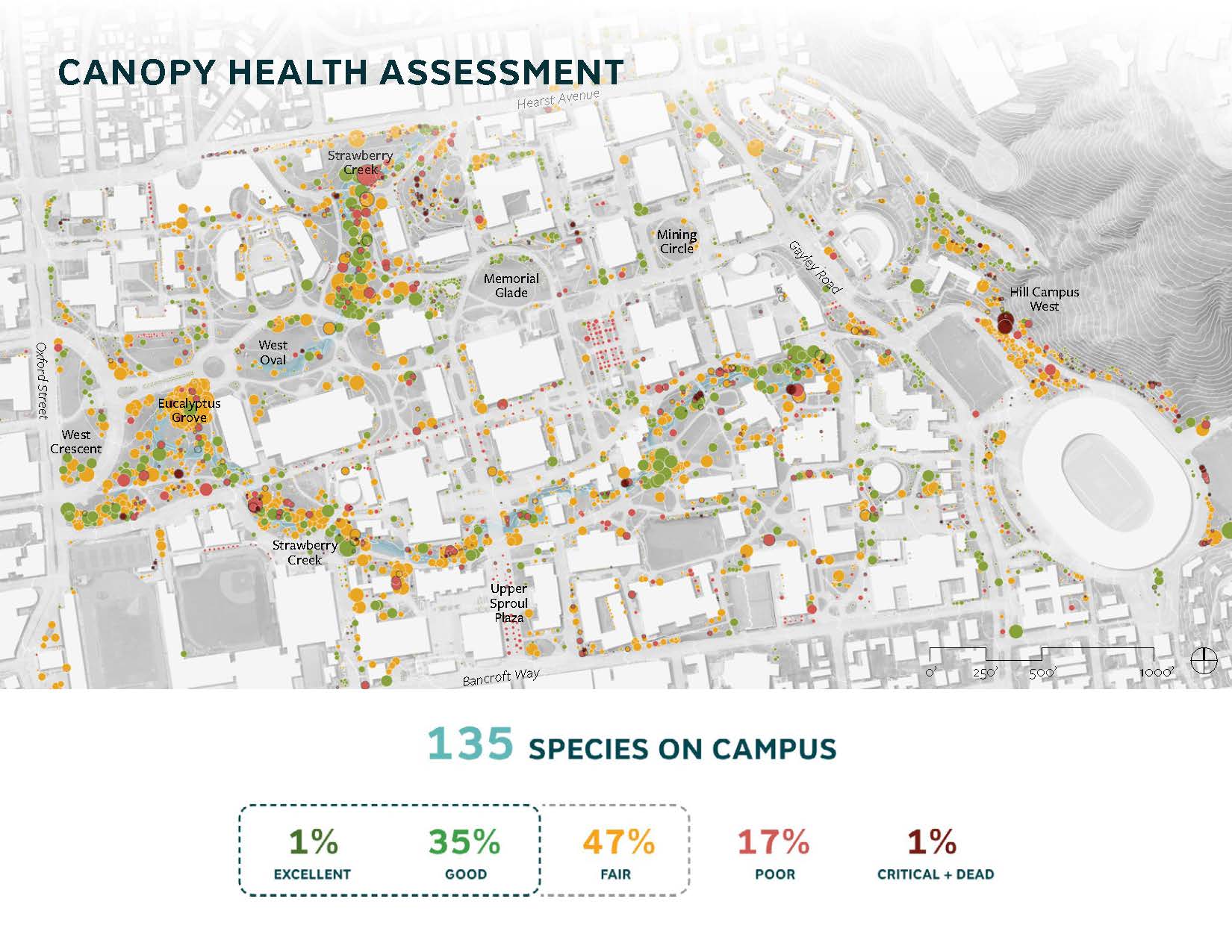
With nearly half of the trees in “Fair” condition, the campus‘ canopy is reaching a critical point in its lifespan. The plan reveals that near–term maintenance of existing trees as well as new tree planting are crucial to increasing resilience.
©SCAPE
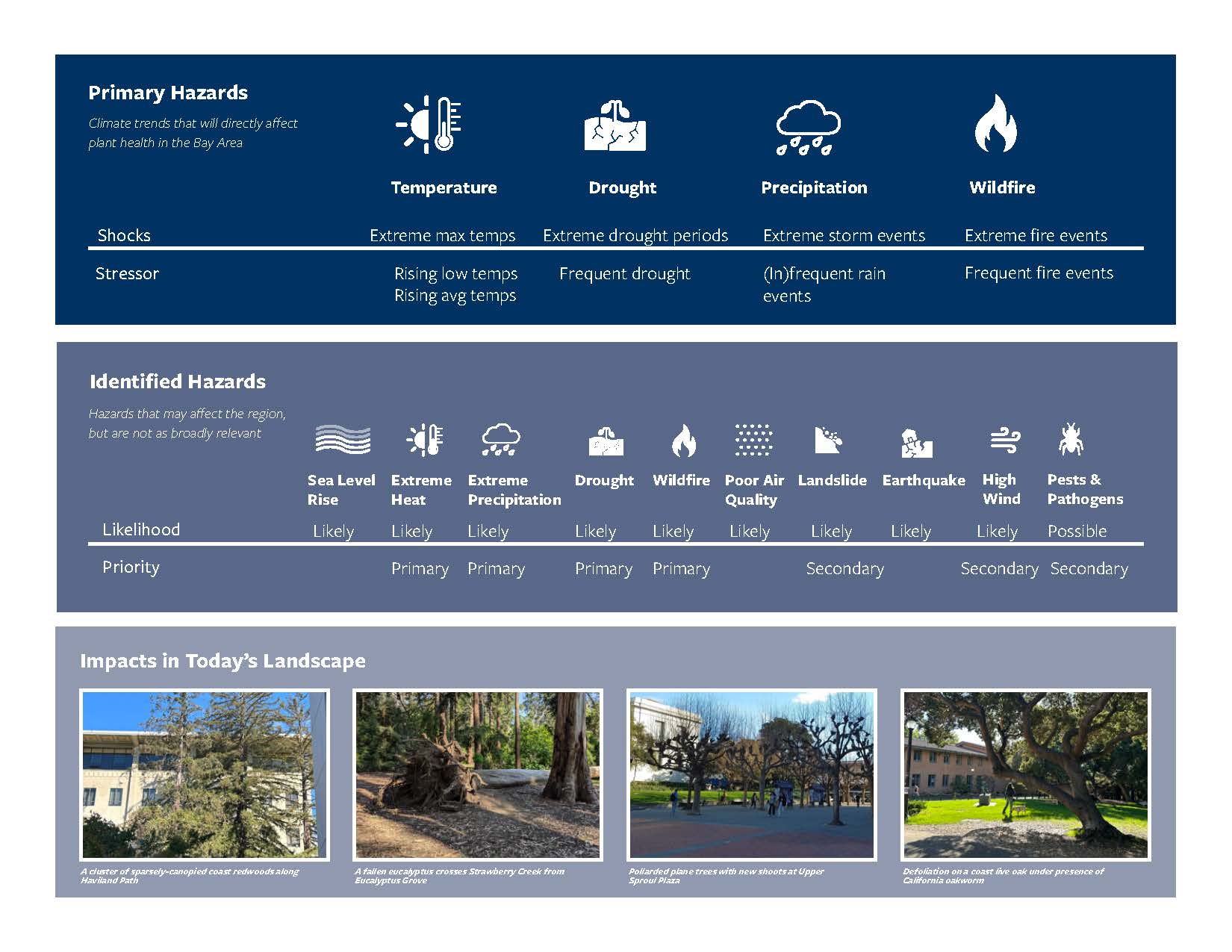
Already, the campus landscape is under climate–related stress, notably rising temperatures and a diminishing fog layer. While projections show these effects intensifying, the LCAP prioritizes climate hazards to address in the near and long term.
©SCAPE

The Bay Area’s future climate is expected to resemble the Southern California Coast. Referencing Sunset Climate Zones and how they might shift over time, the plan assesses the future suitability of key existing canopy species on campus.
©SCAPE

The plan provides guidance from both a planning and planting lens, ensuring that future landscape design and management decisions will align. The planning scale reinforces character and cohesion, while the planting scale supports the daily work of maintenance teams.
©SCAPE

Adaptation strategies were assigned within five campus typologies: Gather, Restore, Reinforce, Experiment, and Connect. Each typology is based on existing landscape characteristics and future climate conditions. These strategic groupings will guide long-term planning, design, and stewardship.
©SCAPE
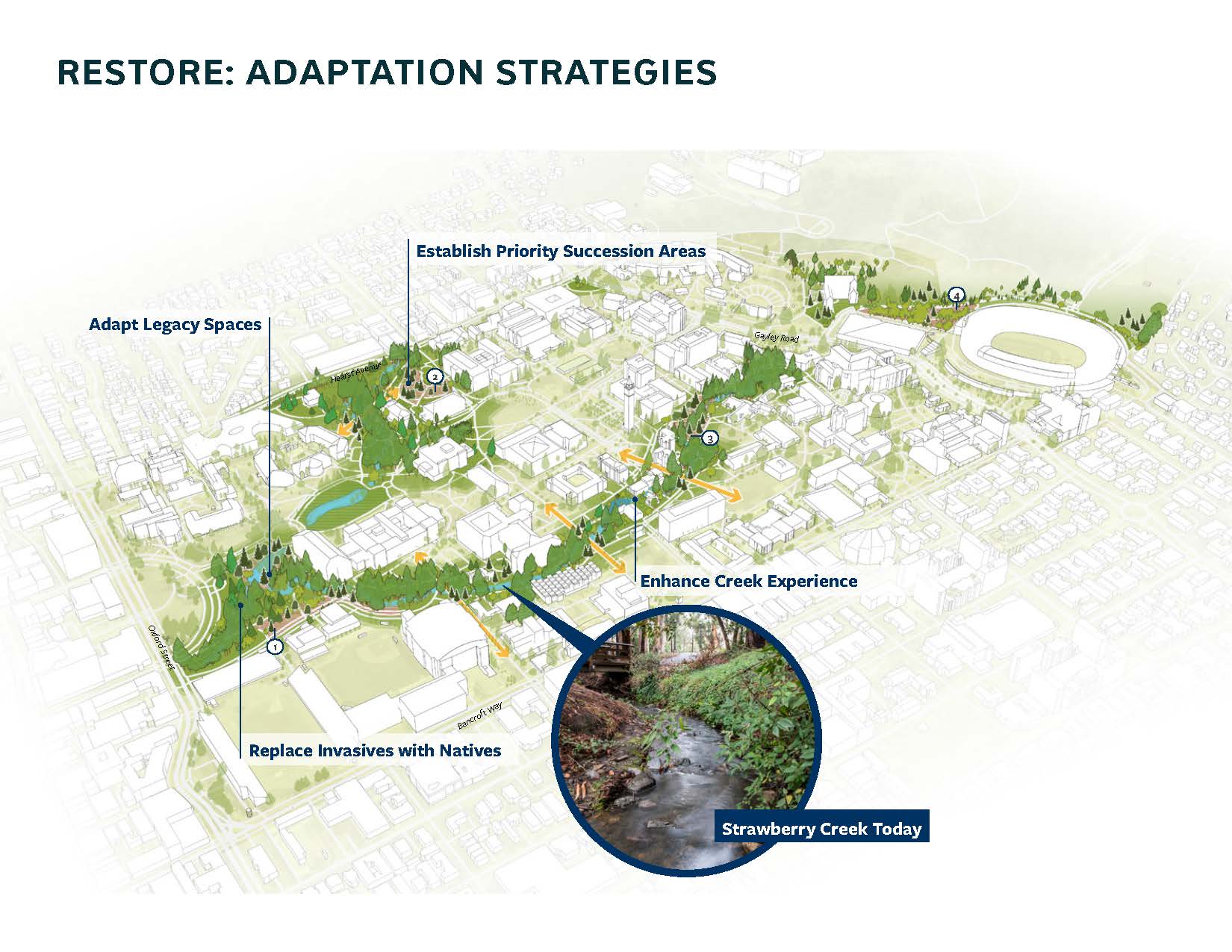
“Restore” includes Strawberry Creek and nearby natural areas, which define the campus‘ ecological foundation. They support biodiversity, filter stormwater, and provide hands-on learning environments. Restoration efforts emphasize native and climate–adapted species, habitat diversity, and low-maintenance systems that strengthen resilience.
©SCAPE

Each strategy outlines typical guidelines for achieving desirable spatial quality and experience. Providing this detail will ensure the existing character of these key campus spaces are upheld through the process of adaptation.
©SCAPE
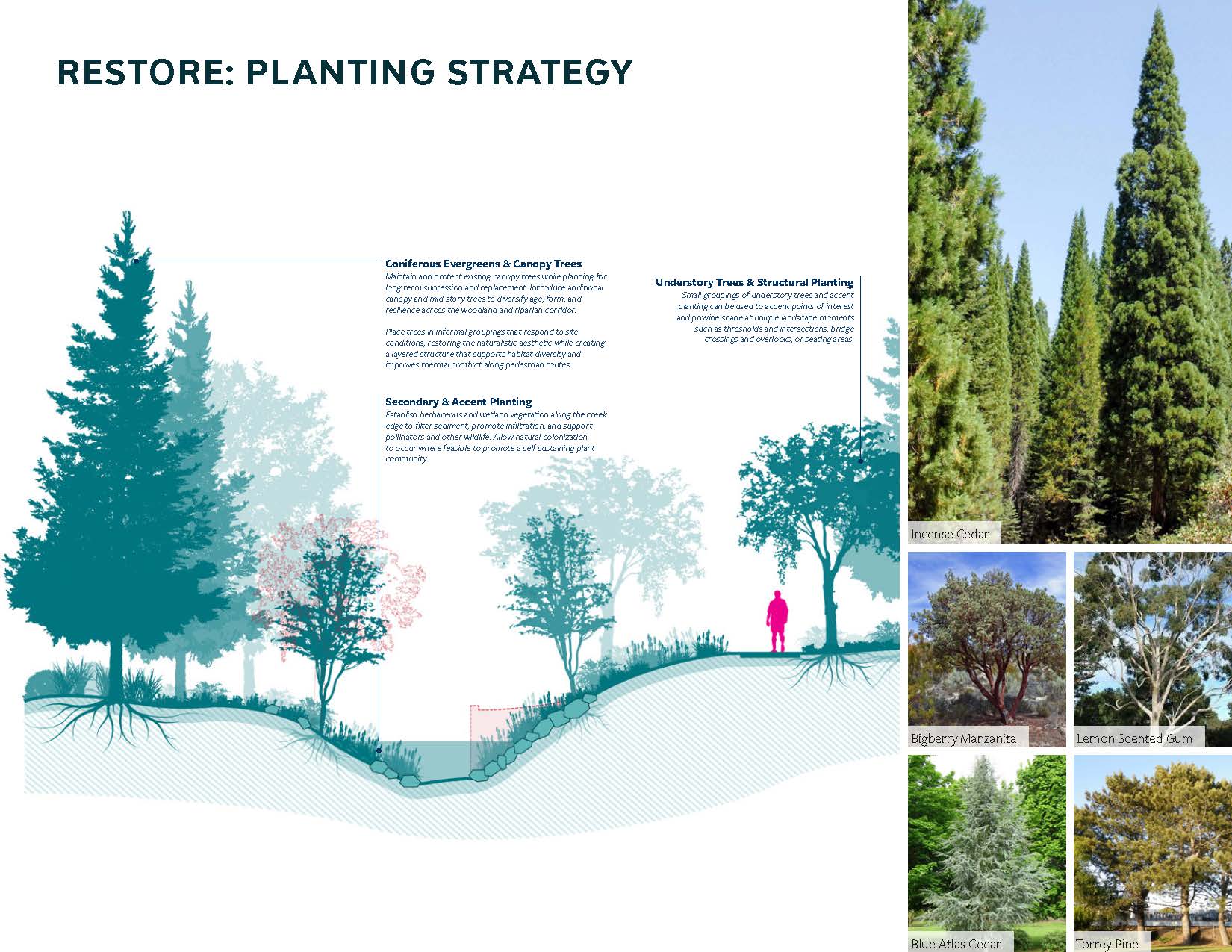
Integral to the plan is its climate-adaptive plant palette. Guided by a set of ecological, functional, and aesthetic criteria, the palette prioritizes species that will thrive in a more variable climate while meeting the expectations of UCB’s distinct campus character.
©SCAPE
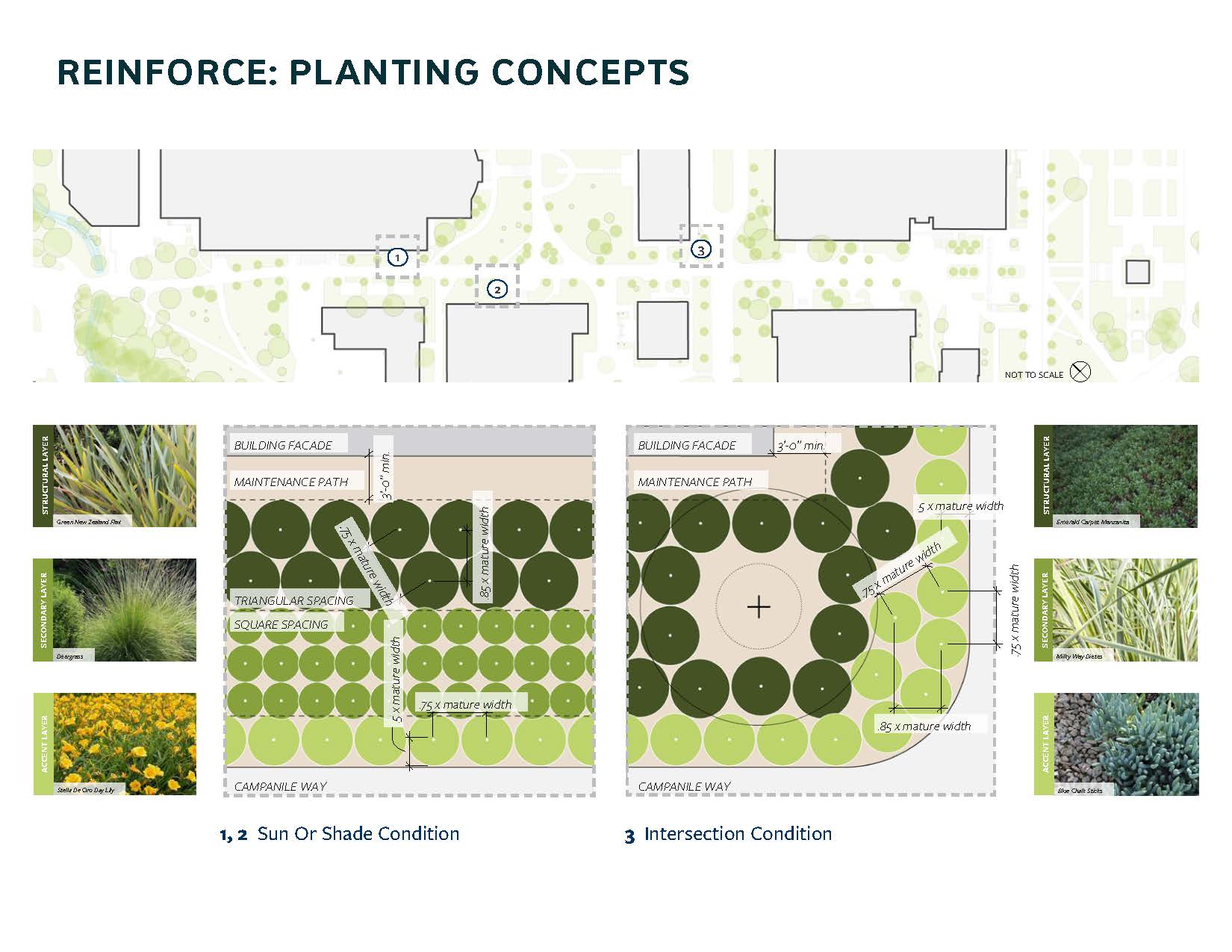
In priority locations, the LCAP offers guidance in composition and spacing of new plantings, supporting the existing landscape design language throughout campus. This guidance ensures improved soil conditions, stormwater infiltration, and seasonal variation with plants that are durable and drought-tolerant.
©SCAPE

The plan identifies two priority project areas. The Eucalyptus Grove is one of UC Berkeley’s most culturally significant and recognizable landscapes. The plan identifies climate vulnerabilities and proposes three adaptation concepts.
©SCAPE

A complex of poor site conditions, species selection, and cultural practices has diminished the pollarded plane trees along Campanile Way. The plan outlines strategies to reestablish this key corridor as a cohesive and legible canopy, improving its experience and resilience.
©SCAPE

The plan is grounded in the realities of campus maintenance, re-categorizing areas by level of input rather than geography or typology. The landscape operations team will use the plan to steer adaptation efforts from the ground up.
©SCAPE
Client
UC Berkeley
Project Team
SCAPE, Lead Landscape Architect
WRA, Ecologist
SBCA, Arborist & Soils
Project Statement
The Landscape Climate Adaptation Plan (LCAP) for the University of California, Berkeley is a campus-wide framework that guides the evolution of one of Northern California’s most iconic heritage landscapes in response to accelerating climate change. As the campus faces prolonged drought, extreme storm events, increasing temperatures, wildfire risk, and a diminishing coastal fog layer, the plan establishes site-specific strategies that align daily stewardship with long-term climate projections.
Through the lens of species health, longevity, ecological performance, habitat value, and cultural significance, the team evaluated the existing campus canopy and understory alongside UC Berkeley’s planning vision and sustainability goals. Developed in collaboration with faculty, staff, students, and technical experts, the plan delivers climate adaptive plant palettes, tree succession strategies, and implementation tools that support phased renewal. It equips teams—from campus planning leadership to maintenance teams with practical guidance to sustain both the landscape’s spatial character and its evolving ecological systems.
Project Description
The Landscape Climate Adaptation Plan (LCAP) establishes a long-term vision for UC Berkeley’s campus landscape to thrive under projected Bay Area climate conditions while sustaining the spatial structure and cultural identity that define the university. Located within a climate shaped by seasonal drought, episodic rainfall, and coastal fog, the campus is now experiencing intensified stress from rising temperatures, extended dry periods, wildfire risk, and canopy decline. The plan embeds climate adaptation within everyday landscape management, strengthening ecological performance while sustaining the campus’s spatial character.
Berkeley’s Campus Park is characterized by a mature and diverse tree canopy, the winding riparian corridor of Strawberry Creek, and a sequence of glades, plazas, and courtyards that balance Beaux- Arts formality with naturalistic character. Many of these defining elements are increasingly vulnerable. Redwood trees face heat stress and reduced coastal fog frequency. The Eucalyptus Grove is vulnerable to wildfire and wind damage. Shifts in precipitation patterns challenge soil health, irrigation practices, and long-term plant viability. Rather than responding reactively to canopy loss, the LCAP establishes a deliberate framework for phased ecological transition.
The LCAP process began with a comprehensive review of campus planning documents, design standards, and sustainability policies to understand the evolution of Berkeley’s landscape framework. While prior plans articulated strong guiding principles, they lacked implementation pathways tied directly to climate projections. The LCAP translates those shared values into an actionable roadmap that integrates capital planning, regulatory requirements, and daily maintenance operations.
A campus-wide climate risk assessment examined the tree canopy and understory in relation to projected shifts in temperature, precipitation, and extreme weather patterns. Species were evaluated for their long-term health, ecological contribution, structural stability, and maintenance demands under future conditions. This analysis clarified which canopy species can be sustained, which require phased transition, and where climate-adapted plant communities should be introduced. To guide adaptation, the LCAP organizes the campus into five interrelated succession strategies aligned with distinct landscape typologies. Restore focuses on Strawberry Creek and natural areas, prioritizing riparian health, biodiversity, and reduced maintenance and irrigation. Gather supports glades and connective green spaces, reinforcing their role as social destinations while transitioning canopy and understory plantings toward climate-adaptive assemblages. Reinforce addresses primary gateways, plazas, corridors, and building adjacencies, strengthening and unifying the campus landscape structure. Connect concentrates on the campus-city interface, enhancing edge conditions to improve ecological continuity, shade, and welcoming gateways. Experiment centers on campus courtyards, where smaller-scale spaces serve as testing grounds for experimental species and more varied design expressions. Together, these strategies create a flexible yet legible framework for phased canopy succession and climate-responsive stewardship.
The LCAP provides landscape guidelines and climate-adaptive plant palettes for each typology. Each recommended species is evaluated for mature size, water use, drought tolerance, habitat contribution, lifespan, and maintenance considerations. By embedding performance criteria into plant selection, the plan provides practical tools that are directly usable by designers and grounds staff.
Tree succession planning is central to the strategy. The plan establishes phased canopy renewal approaches for character-defining groves, storm-damaged areas, and species vulnerable to future climate conditions. Succession is treated as long-term infrastructure planning: defining canopy coverage targets, identifying priority replacement species, and aligning renewal cycles with capital projects and maintenance schedules.
The plan proposes adaptation strategies at two interrelated scales: planning and planting. Immediate actions include soil rehabilitation, targeted replanting, irrigation adjustments, and revised maintenance protocols. Longer-term interventions re-envision key campus spaces, such as Campanile Way and the Eucalyptus Grove, in coordination with anticipated capital improvements. This incremental approach allows adaptation to unfold without disrupting the campus’s continuity of use or spatial coherence.
The process engaged campus planners, faculty, sustainability leaders, maintenance teams, and daily users of the landscape. By positioning maintenance and operations staff as key partners in adaptation, the LCAP embeds resilience within institutional governance rather than treating it as a standalone initiative. Clear monitoring pathways and canopy renewal benchmarks ensure that the plan remains a living and actionable framework.
In a region where public landscapes are confronting canopy decline, water scarcity, and wildfire risk, the LCAP positions UC Berkeley as a model for climate-responsive campus stewardship. It demonstrates that heritage landscapes can evolve without losing spatial identity and that long-term ecological resilience can be achieved through deliberate, phased design and management.
 Revealing Risk: An Historical Ecology of Flooding in the Pájaro Valley