The Plus Plan: A Framework for downtown Portland and the University District
Merit Award /
2025, Urban Design
Portland, OR

Overall Site Plan.
©Jason Liske

The Plus Plan.
©Jason Liske

Park Axis + Urban Axis.
©Jason Liske

Plus Parts.
©Jason Liske
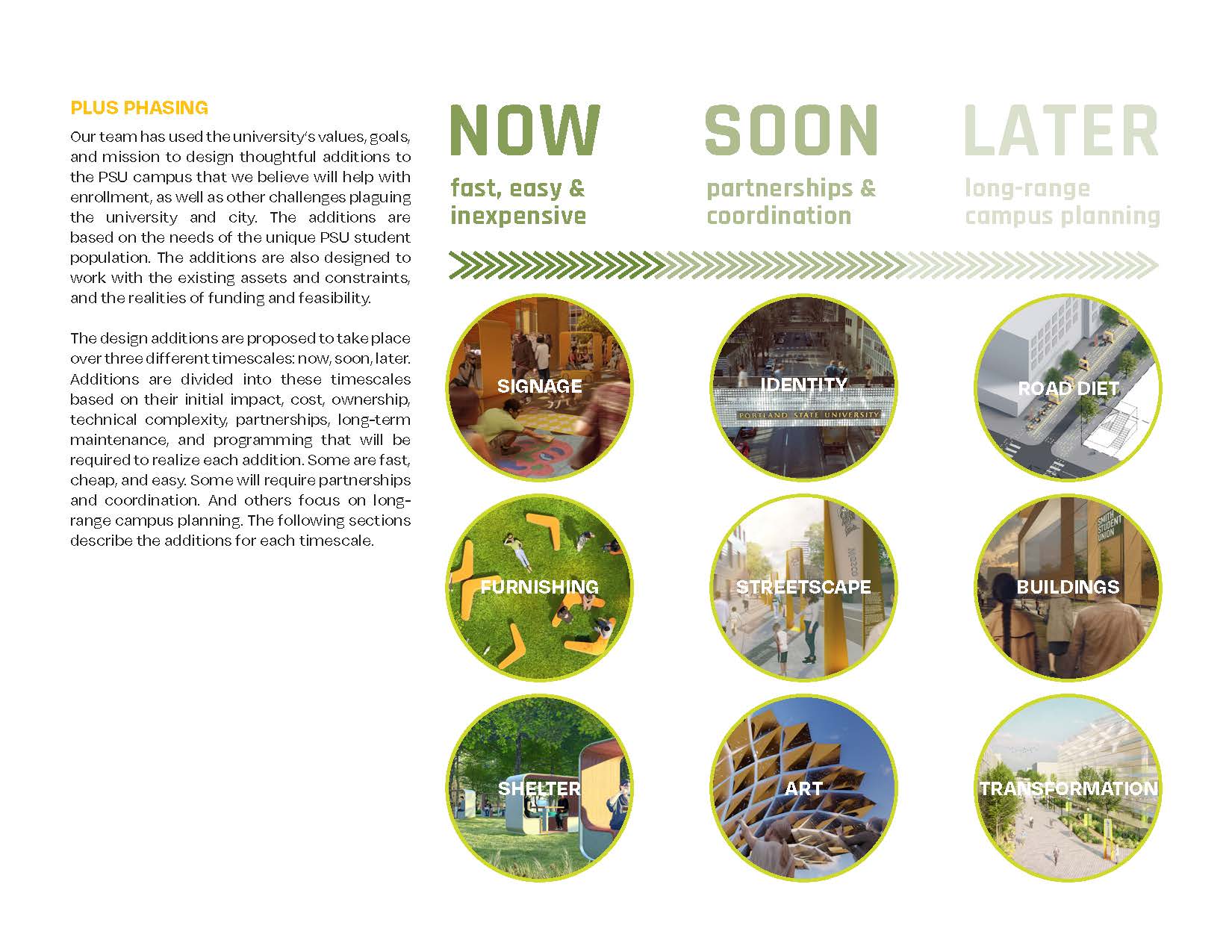
Plus Phasing.
©Jason Liske

Now // First Phase Interventions.
©Jason Liske
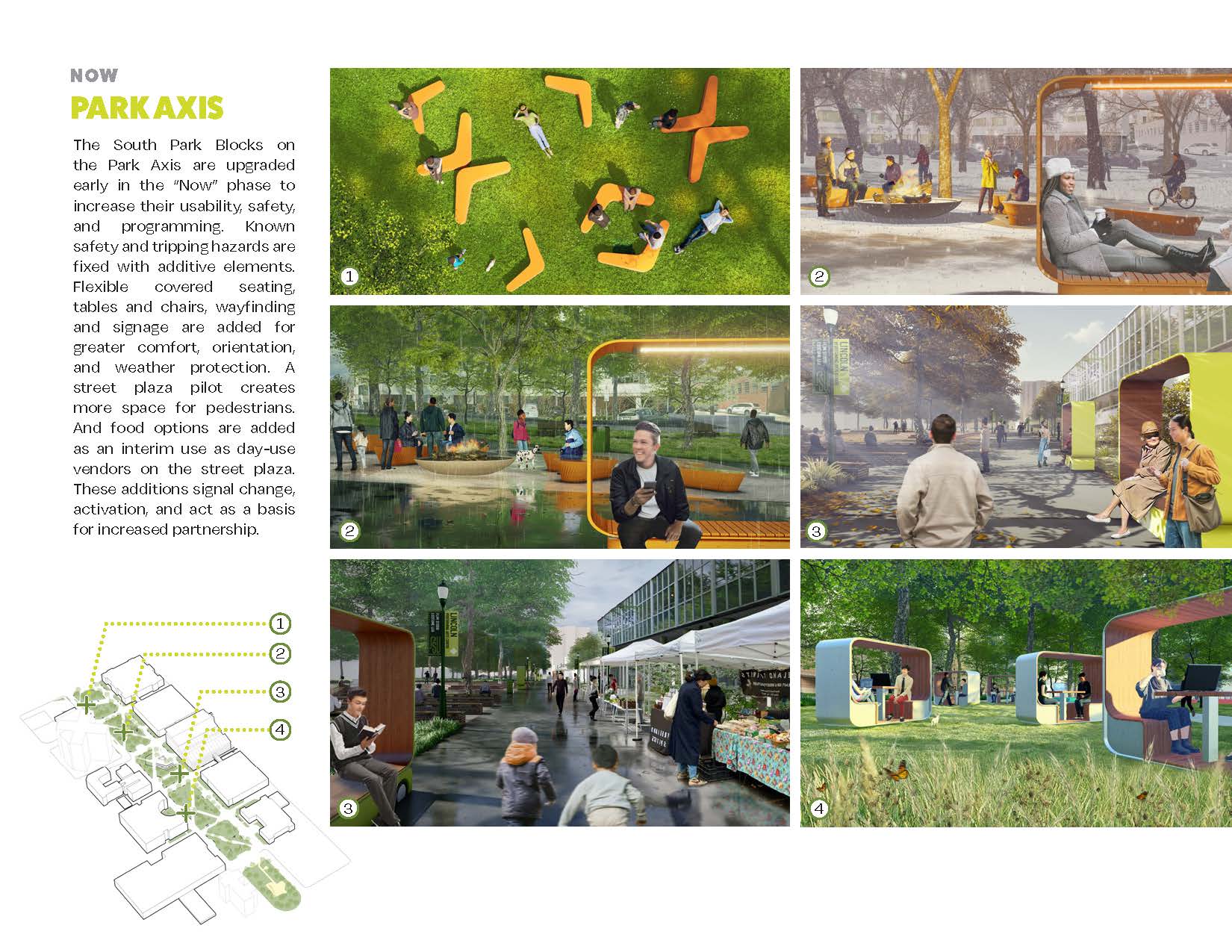
Park Axis.
©Jason Liske

Urban Axis.
©Jason Liske
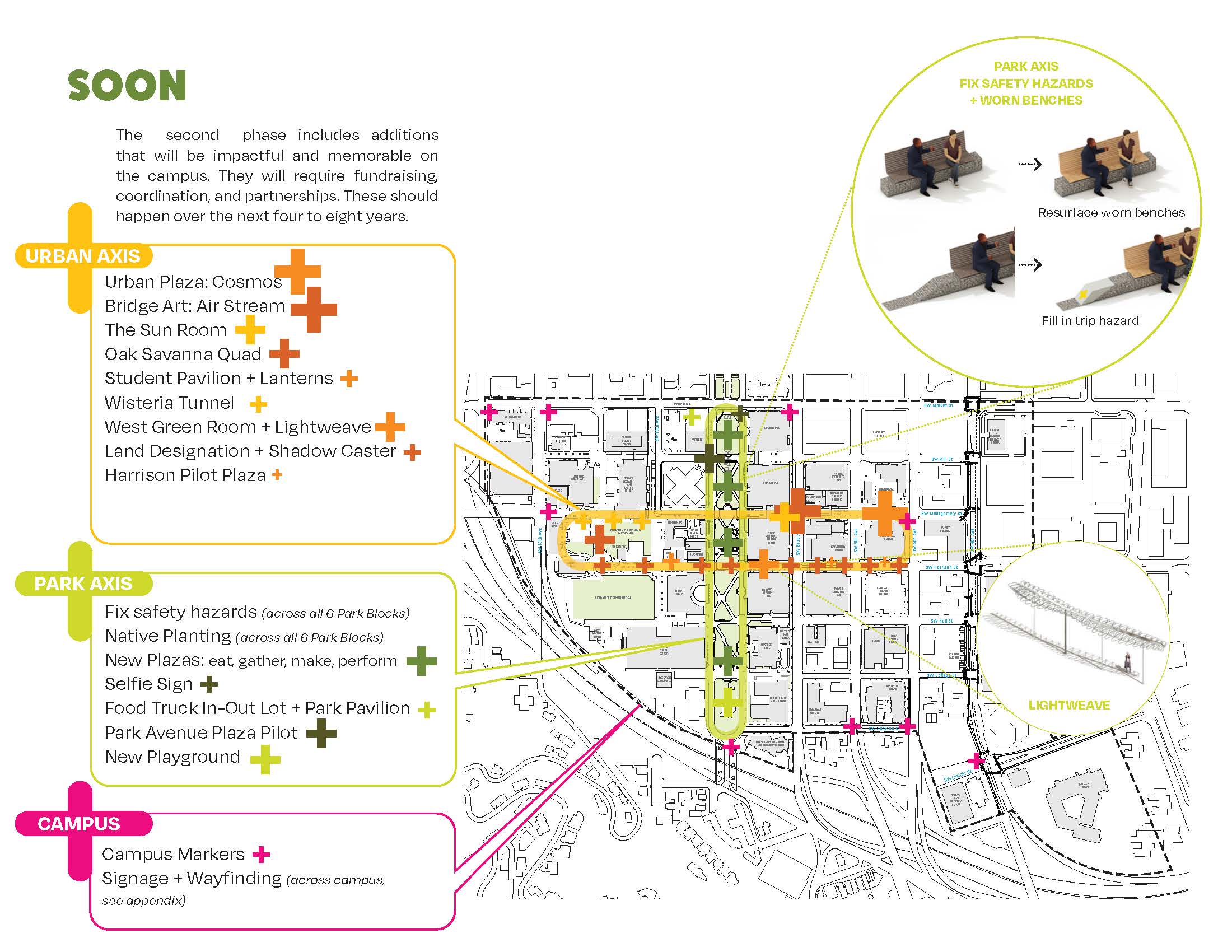
Soon // Second Phase Interventions.
©Jason Liske
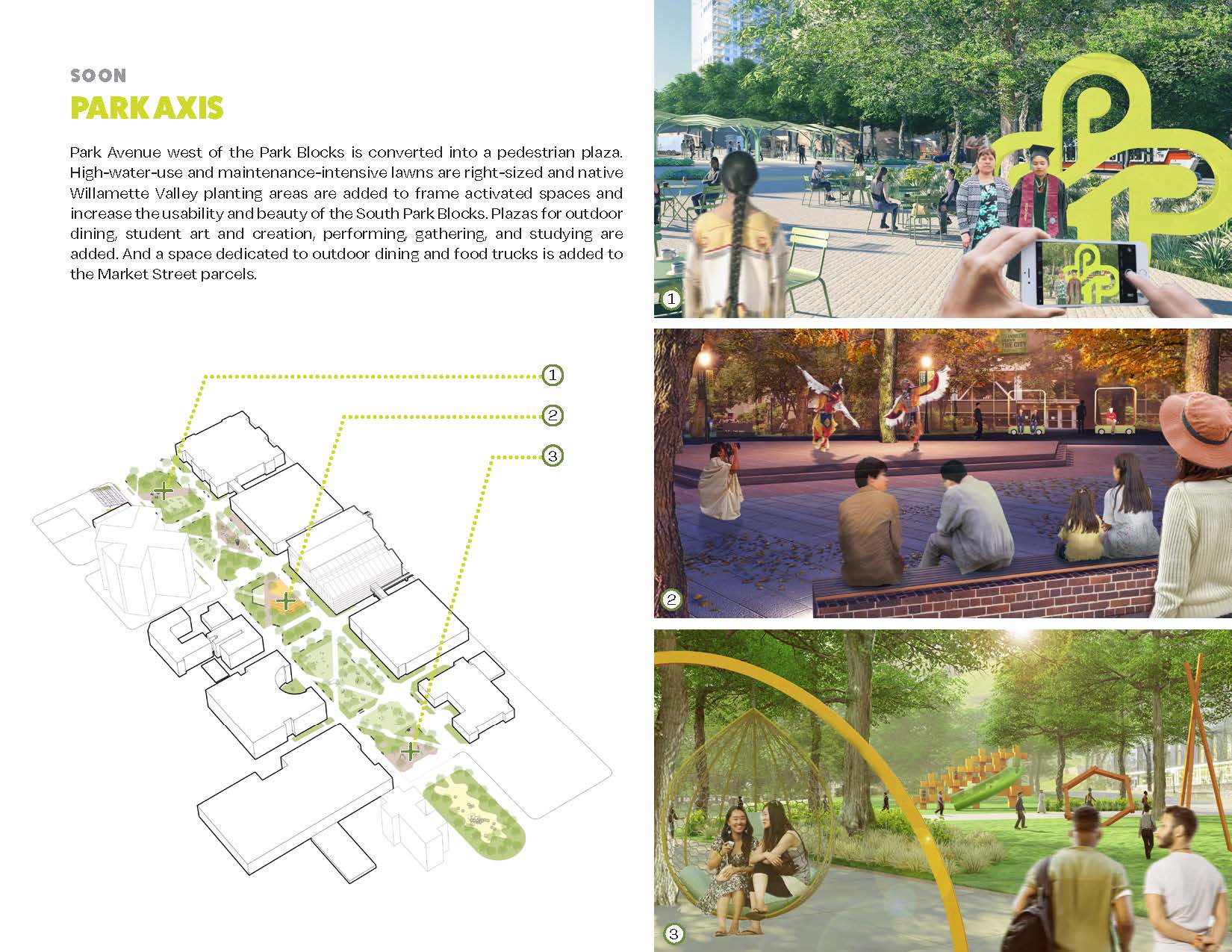
Park Axis.
©Jason Liske

Montgomery Mall.
©Jason Liske
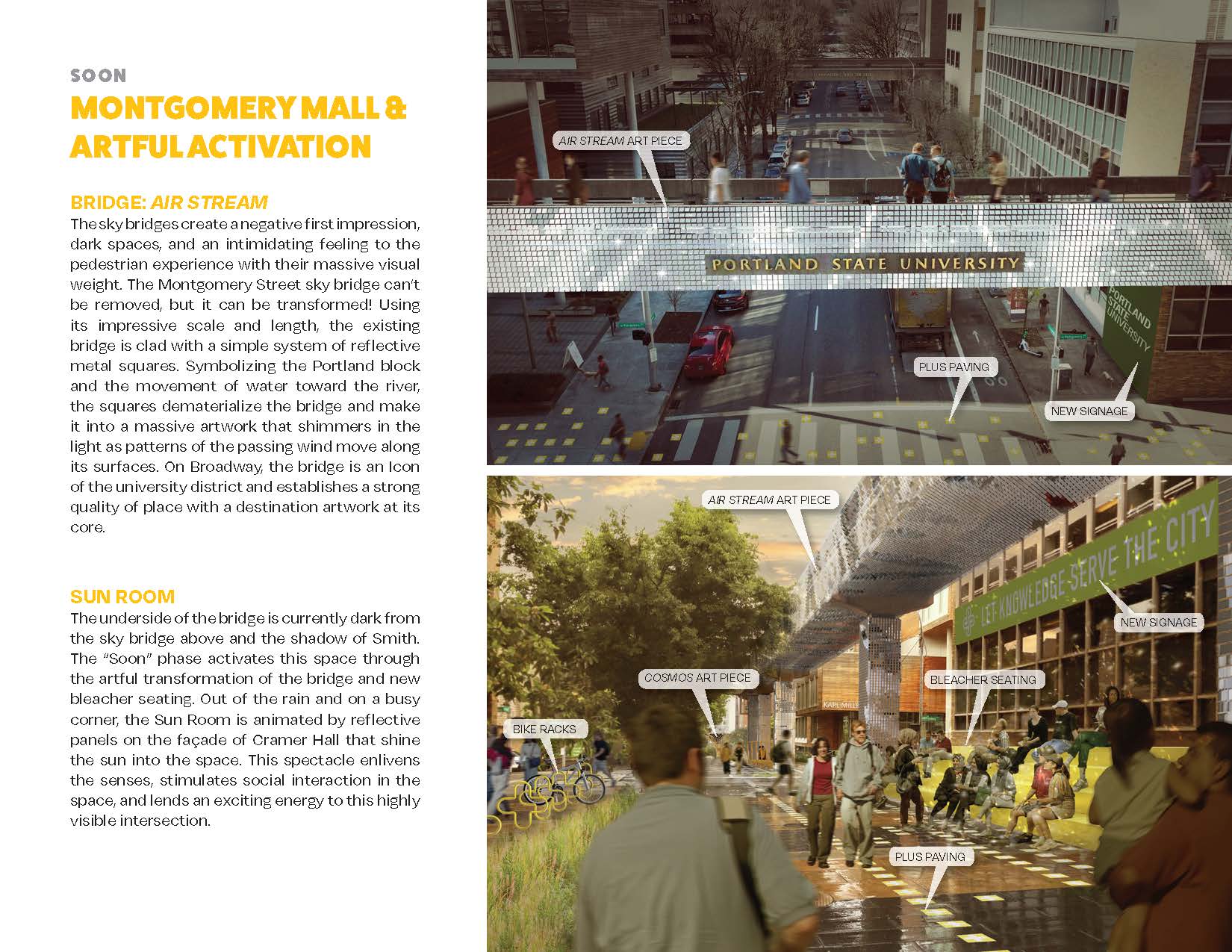
Montgomery Mall & Artful Activation.
©Jason Liske

Urban Axis & Harrison Heritage.
©Jason Liske
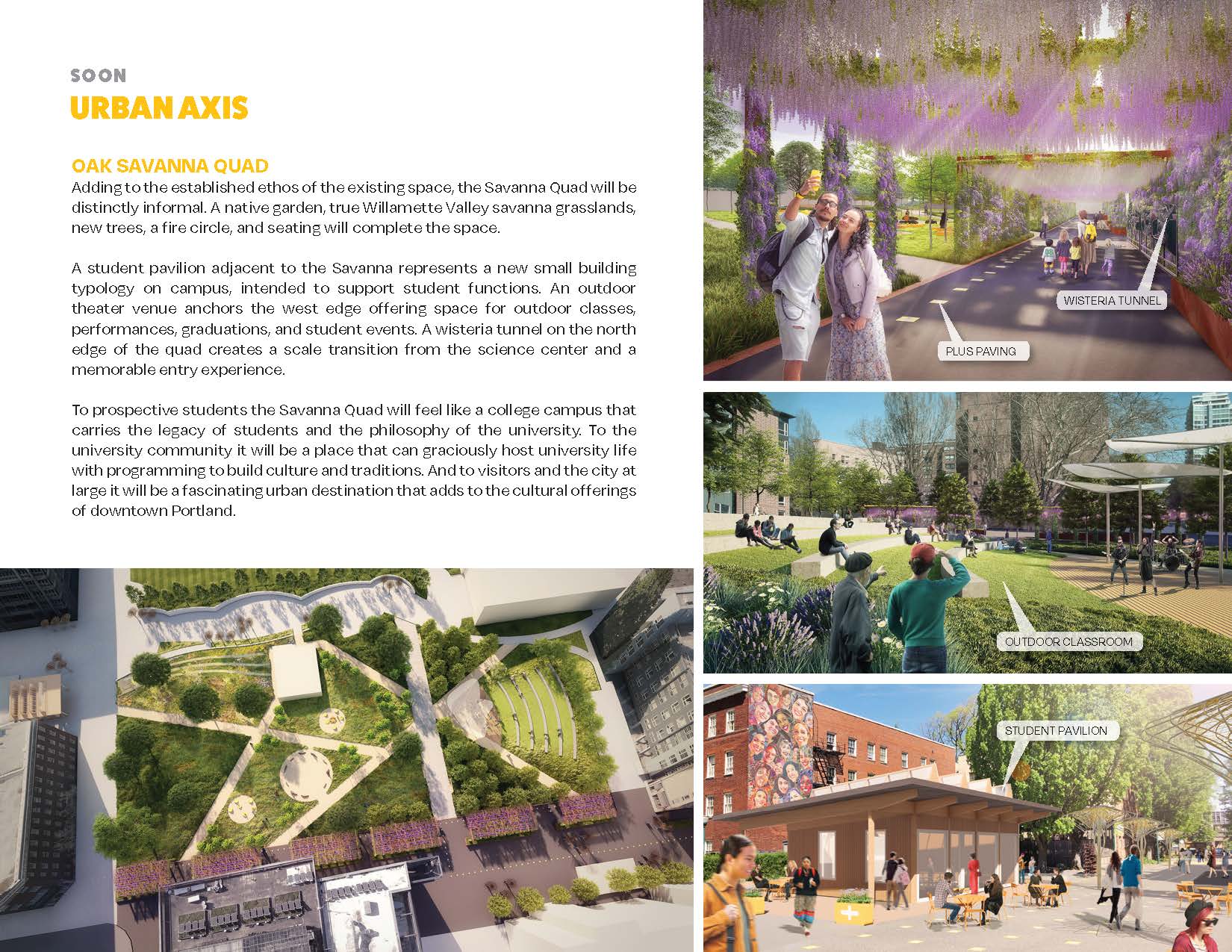
Urban Axis & Harrison Heritage.
©Jason Liske

Campus Markers.
©Ground Studio
Client
Communicate.Design
Project Team
Marcel Wilson, Lead Landscape Architect
Cody Clark, RSM Design
Nataly Gattegno, FUTUREFORMS, Artist
Isaac Campbell, AIA, NCARB, OFFICE 52 Architecture
Project Statement
Portland State University (PSU) faces a critical challenge of declining enrollment while simultaneously needing to strengthen its identity within downtown Portland. The Plus Plan responds to this challenge with an elegantly simple yet powerful urban design framework that leverages the existing urban grid structure to create immediate impact and long-term transformation. The design recognizes that Portland’s architectural identity is fundamentally defined by its city grid, with public placemaking occurring in the spaces between blocks and buildings—what we call “the Plus.” This concept forms both the physical organizing structure and the philosophical approach to the project: additive, positive, inclusive, and expansive. Intersecting axes form the “Plus” and provide a clear organizational framework that connects disparate campus elements and creates a legible campus experience. The framework doesn’t require wholesale redevelopment; instead, it works within existing constraints while establishing a coherent identity through strategic interventions.
Project Description
Urban Armature for a Campus in Transition
Portland State University (PSU) faces a critical challenge of declining enrollment while simultaneously needing to strengthen its identity within downtown Portland. The Plus Plan responds to this challenge with an elegantly simple yet powerful urban design framework that leverages the existing urban grid structure to create immediate impact and long-term transformation.
The design recognizes that Portland’s architectural identity is fundamentally defined by its city grid, with public placemaking occurring in the spaces between blocks and buildings—what we call “the Plus.” This concept forms both the physical organizing structure and the philosophical approach to the project: additive, positive, inclusive, and expansive.
A Mega-Organizing Structure
The Plus Plan establishes two primary axes that already exist within the campus fabric but have lacked coherence and programming:
The Park Axis: Embracing the historic South Park Blocks as the green spine of the campus
The Urban Axis: Creating a vibrant corridor of activity and campus identity
These intersecting axes form the “Plus” and provide a clear organizational framework that connects disparate campus elements and creates a legible campus experience. The framework doesn’t require wholesale redevelopment; instead, it works within existing constraints while establishing a coherent identity through strategic interventions.
Strategic Placemaking Through “Plus Parts”
The design introduces a collection of “Plus Parts”—modular interventions strategically deployed along the axes that can be implemented incrementally over time. These range from movable furniture and signage to architectural pavilions and major public art installations.
Critical interventions include:
The Cosmos: A landmark art piece for Urban Plaza reflecting the diversity of the student body
Air Stream: A transformative cladding system that turns an oppressive pedestrian bridge into a shimmering icon
The Game Room and Yearbook: Quick activation strategies for Montgomery Mall
Oak Savanna Quad: A native landscape that creates an authentic sense of place
Harrison Heritage Walk: Interpretive elements honoring the cultural history of the Willamette Valley
Campus Markers: Distinctive elements at key perimeter points establishing university presence
Phased Implementation for Immediate and Lasting Impact
The Plus Plan recognizes financial realities by organizing interventions into three implementation phases:
Now: Fast, easy, and inexpensive interventions that create immediate visual impact and activation. These include flexible seating, signage upgrades, temporary art installations, and standard furnishings that establish the Plus identity.
Soon: Medium-term projects requiring partnerships and coordination, including landmark art pieces, pedestrian plaza pilots, and native landscape transformations.
Later: Long-range planning elements that require significant investment and institutional commitment.
This phased approach enables the university to demonstrate progress quickly while building momentum for larger transformations. The immediate interventions signal change, create student ownership, and establish a foundation for increased partnerships with the city and community.
Creating a Campus Front Door
The Plus Plan transforms the front door experience of the university—critical for prospective students’ first impressions. The Montgomery Mall and Urban Plaza become vibrant, activated spaces that project a dynamic identity into the public realm. The design introduces artful elements that animate spaces, signaling to visitors that this is a place of creativity, energy, and student engagement.
An Urban Design Framework for Campus Revival
The Plus Plan exemplifies urban design that strengthens the connection between university and city. Rather than creating a separated campus, it embraces Portland’s urban grid as the framework for campus identity. The design works at multiple scales—addressing immediate activation needs while establishing a coherent planning framework that can guide development for decades.
This strategic approach to urban design demonstrates how thoughtful interventions within existing infrastructure can create transformative change. The Plus Plan doesn’t just reimagine the PSU campus; it contributes to the renaissance of downtown Portland by creating a dynamic, accessible, and culturally rich district that benefits both the university community and the broader public.