
Madrone Ridge Residence
Merit Award /
2026, Residential Design
Dry Creek Valley, Ca
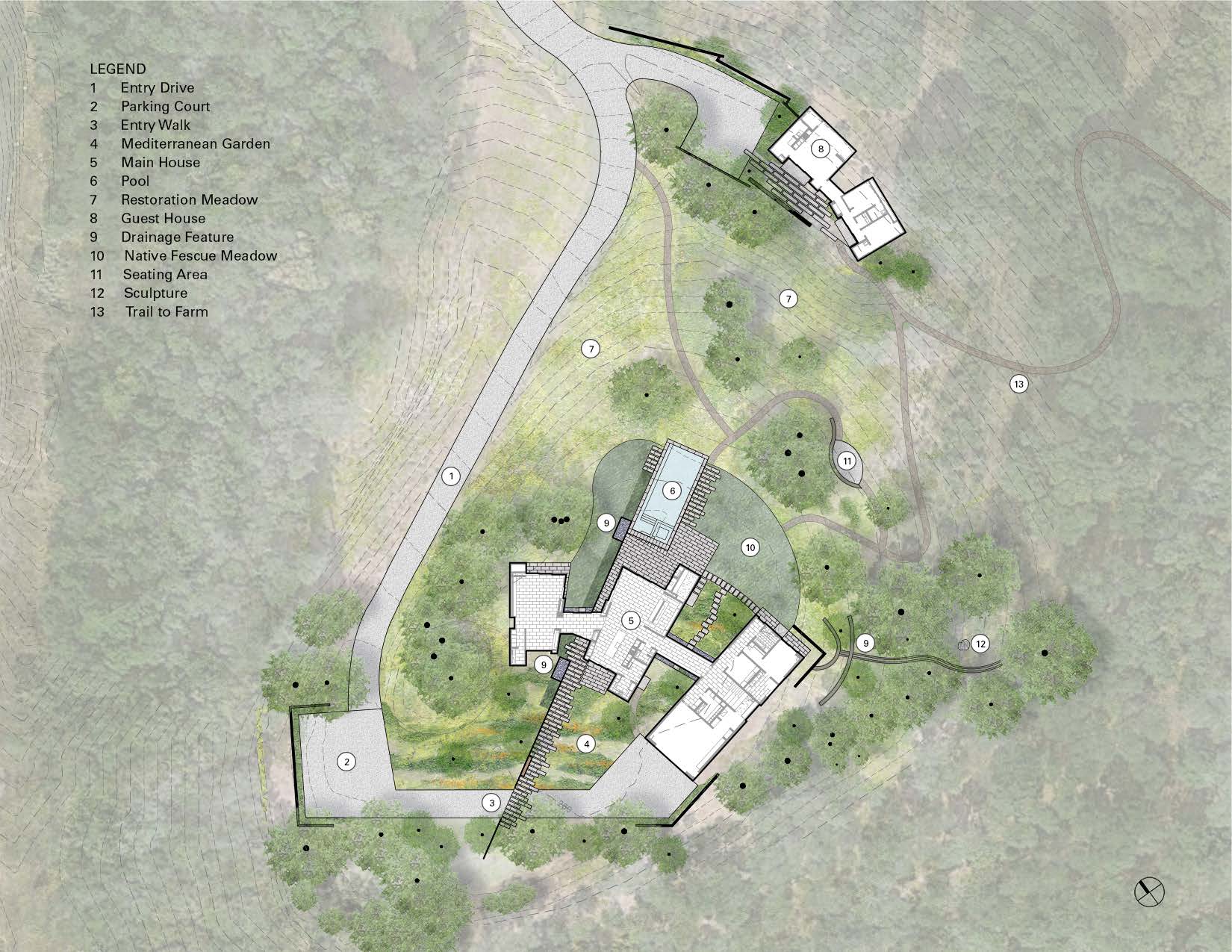
Site Plan.
© Joe Fletcher

The single-family residence sits amongst the existing oak woodland, atop a ridge overlooking the Dry Creek Valley in the heart of Sonoma County.
© Marion Brenner

The entry path is defined by a strong architectural axis that cuts through a colorful display of native-inspired planting.
© Marion Brenner

The materials pay homage to the natural environment. Weathered steel panels and copper cladding mirror the rusty colors of the madrone tree trunks and seasonal foliage.

Rain gardens filled with irises mirror the site’s hydrology, reinforcing the entry axis and guiding visitors through the house to the view beyond.

The main axis leads to the swimming pool that extends across the fescue lawn toward the valley.

Aligned with the existing oaks, the pool anchors the site’s primary axis.

Interior spaces open up and extend seamlessly into the landscape.

Mediterranean plantings flow through a transparent breezeway defined by fragmented building masses, stitching the landscape between the structures.

Site swales are enhanced with layered plantings that map the flow of stormwater across the site.

Upon departure, the entry path gestures back to an old madrone grove flanked by layered plantings that restore the forest edge.
Client
N/A
Project Team
Ron Lutsko, Lead Landscape Architect
Andrea Kovol, Project Manager
Project Statement
Above the vineyards of Dry Creek Valley, this residence celebrates the movement of water and seasonal change, while restoring the health of the site, allowing for a young family to root themselves in their agrarian community and form a deeper connection with their natural surroundings.
Architectural roofs catch and channel rainwater into basins, slowing and filtering runoff, recharging underground aquifers. Beds of iris cut through the building footprint in a gesture towards the valley, forming the remainder of each raindrop’s journey across the site.
A drought-tolerant plant palette enhances the surrounding terrain and aids restoration. Drifts of grasses and layered perennials offer texture and an extended seasonal bloom that supports pollinators and adds shifting color. Native chaparral and wildflower meadows damaged by fire and erosion were enhanced through deliberate planting that improves soil health, stabilizes slopes, and begins a restorative process for the homeowners to see unfold year after year.
Project Description
On occasion, landscape architects are called to create an intervention on a site so beautiful and sensitive that even the slightest enhancement through design would mark a resounding success. Dry Creek Residence is one of these occasions.
Perched atop a ridge within the heart of Sonoma County, the first things one might notice from this single-family residence are the idyllic views of Dry Creek Valley. Oak and Madrone woodland surround the other sides of the residence, giving the architecture a quintessential wine-country background in which to integrate seamlessly. Buildings nestle into a restored woodland edge, bridging the site’s built and unbuilt areas. The restoration and building placements balance a sense of enclosed refuge without compromising the wide vista.
This balance also plays out programmatically. With backgrounds in food production, the owners sought a place of respite for their young children to explore the outdoors freely but hoped to maintain a connection to their cherished farming community. As wild landscape interfaces with restored landscape and built structure, the family can enjoy a blend of nature both unfettered and curated. This experience is heighted by the trails that meander through the trees, offering a guided, comfortable experience through both the designed and natural habitats.
Architectural, metal-clad structures draw inspiration from earthen forms and their arrangement in a small cluster strategically separates the entry approach from the valley. The driveway up the ridge terminates at a crushed-stone auto court; itself framed by mature Madrones and Oaks. Approaching the buildings, the valley is glimpsed only through glass openings between the masses. This view becomes an architectural axis, establishing an entry sequence that begins in the woodland and carries through the buildings to the view beyond. Cut stone pavers and weathered steel panels reinforce this axis as slices through the organic drifts of the landscape leading to the front door.
The site’s hydrology is a core design element, expressed in landscape and architecture. Rainfall is managed to prevent erosion, sustain meadows, and support pollinators. Architectural roofs channel rainwater into a sequence of weathered-steel catch basins filled with river rocks, which slowly recharge underground aquifers. A raindrop may also continue into swales and beds of blue and purple iris, nourishing native plant communities and marking a path across the site. The constructed hydrology’s integration into natural flows creates a dynamic system where water movement becomes a key organizing principle that links building, landscape, and valley.
Inspired further by the natural environment, the materials palette connects the architecture to its surroundings. Weathered steel panels and copper building facades mirror the rusty colors of the madrone trunks and seasonal foliage. The stone pavers, a refined expression of the rocky ground plane, extend outward from the architecture, blurring the line between inside and out. River stones and gravel evoke a dry creek bed, the project’s namesake.
Designed to harmonize with the existing natural features, the constructed landscape minimizes its impact on the environment and improves the overall site health. Buildings are located to reduce grading and protect existing trees. The design amends the thin, rocky topsoil to support diversified plant communities. Extended seasonal bloom cycles support longer pollinator activity. Native chaparral and wildflower meadows were restored, while invasive species were meticulously hand- weeded, avoiding pesticides.
All plants take on the wilder aesthetic of the woodland. Though selected for their texture, form, and feel, the palette does not prioritize aesthetic over function. Instead, it mixes drought tolerant, low- maintenance plants adapted and suited for the site’s dry climate. Functional fescue lawns take on the appearance of meadows. Lusher, water-indicating plants are used sparingly to express the path of water. Organic-shaped drifts weave between swales, meadows, and groves, and feature a dynamic choreography of blooms throughout the year.
As time unfolds and the landscape evolves, its spirit remains. Metals patina, stone weathers, and plants grow while the views remain steadfast and picturesque. As trees mature and the restoration of the forest edge grows stronger, the architecture and designed landscape embed themselves further into their context. Over the long term, careful decisions from the design process go on to minimize the disruption of its creation and allow for healing on-site, underscoring the project’s harmony between privacy and community, ridge and valley, constructed and natural.

