Lion Mountain Park
Honor Award /
2025, International Project
Suzhou, China

Renewal and Restoration of Lion Mountain to a place of dignity and the centerpiece of district growth – building on Suzhou’s cultural traditions.
©TLS
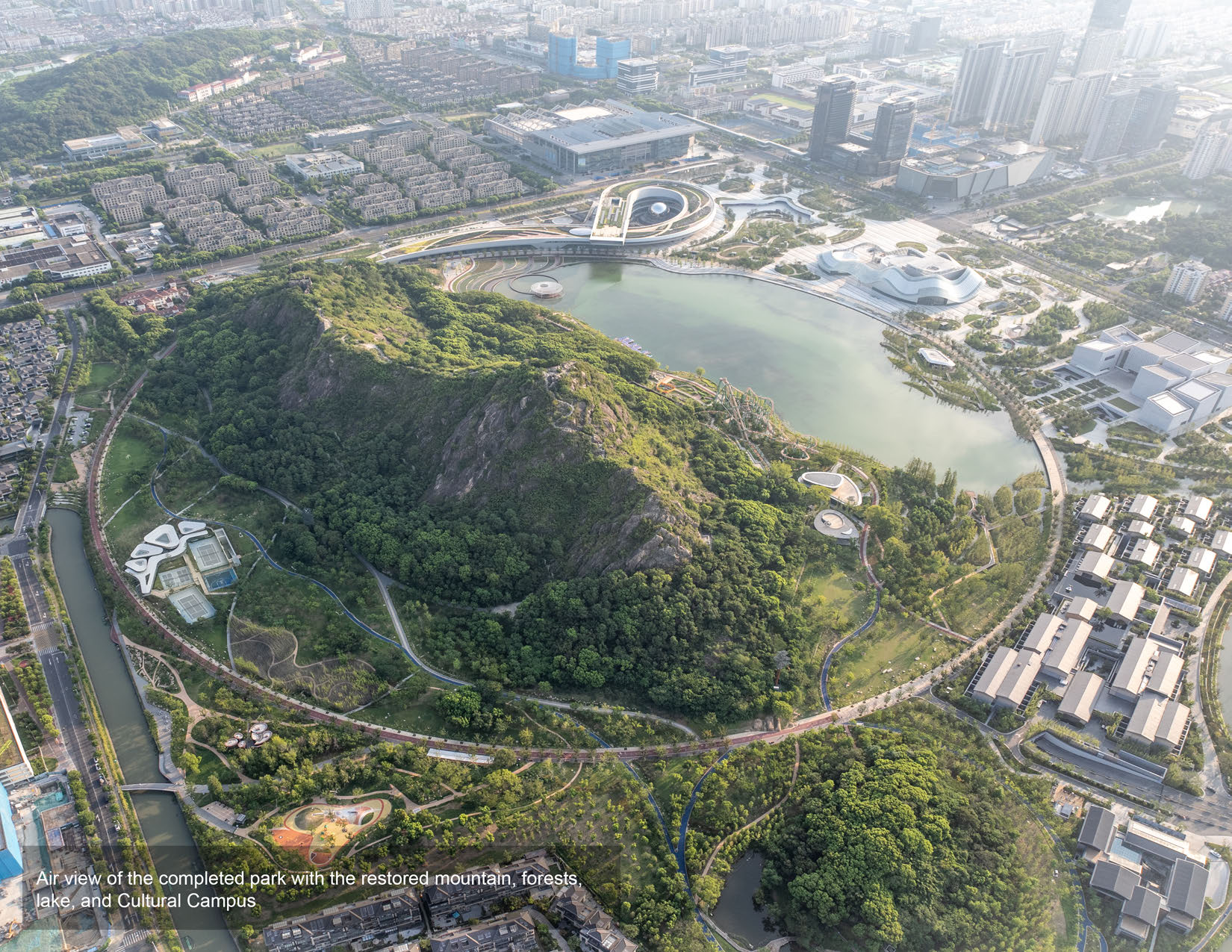
Air view of the completed park with the restored mountain, forests, lake, and Cultural Campus.
©Xi Chen
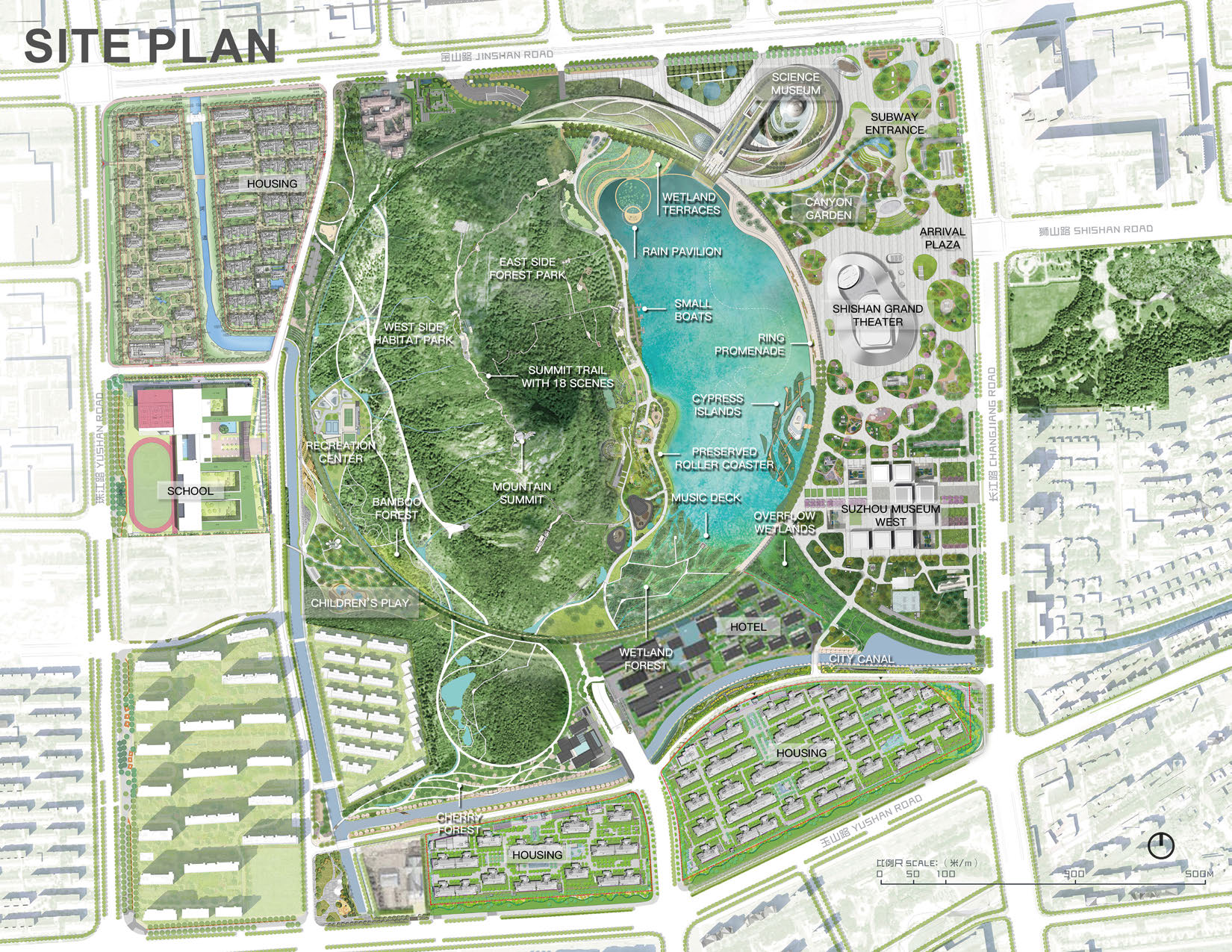
Site Plan.
©TLS
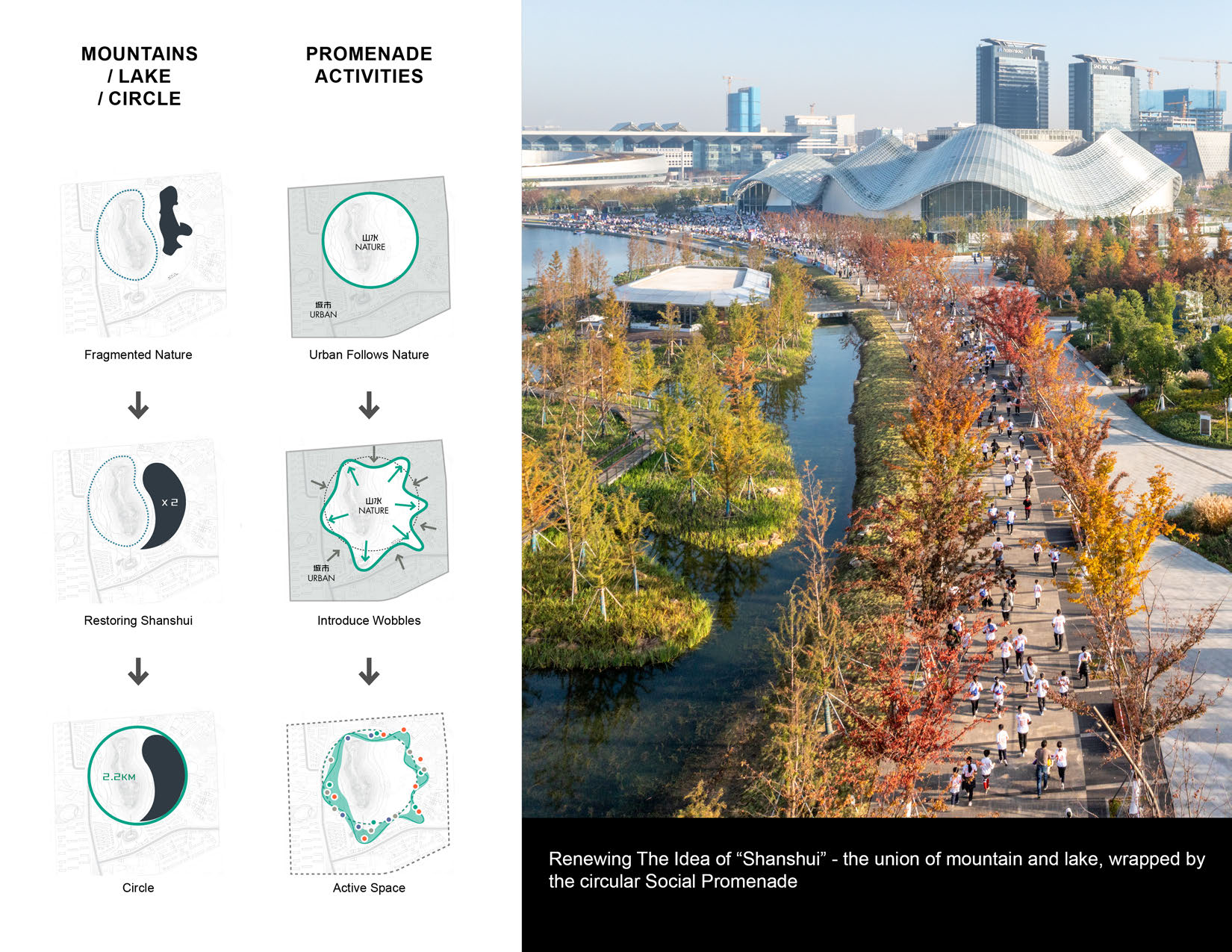
Renewing the idea of “Shanshui” – the union of mountain and lake, wrapped by the circular Social Promenade.
©TLS/Xi Chen

A New Watershed – Flowing all runoff through wetlands and biofilter terraces raise the water quality to safe level for small boats and human contact.
©TLS
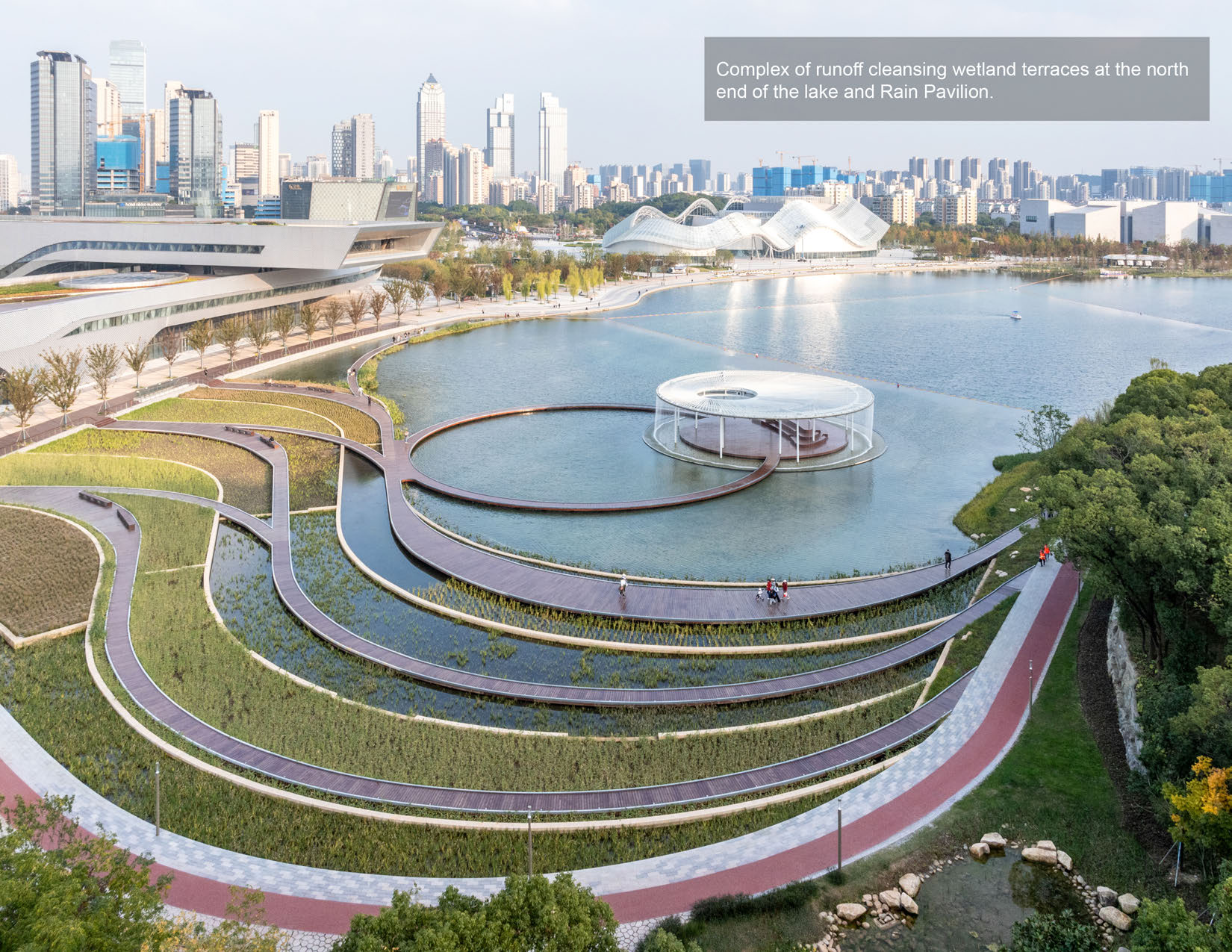
Complex of runoff cleansing wetland terraces at the north end of the lake and Rain Pavilion.
©Xi Chen
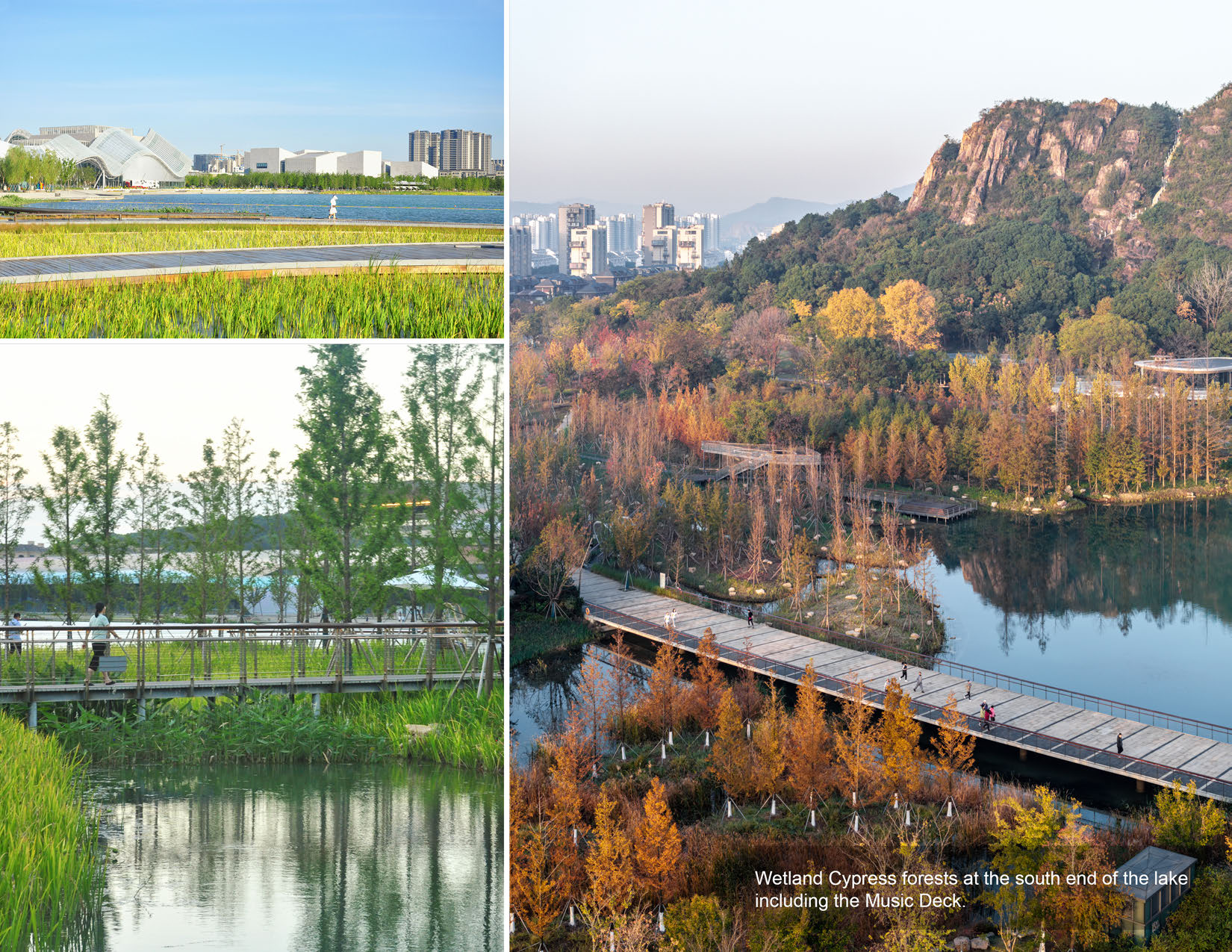
Wetland Cypress forests at the south end of the lake including the Music Deck.
©TLS/Xi Chen
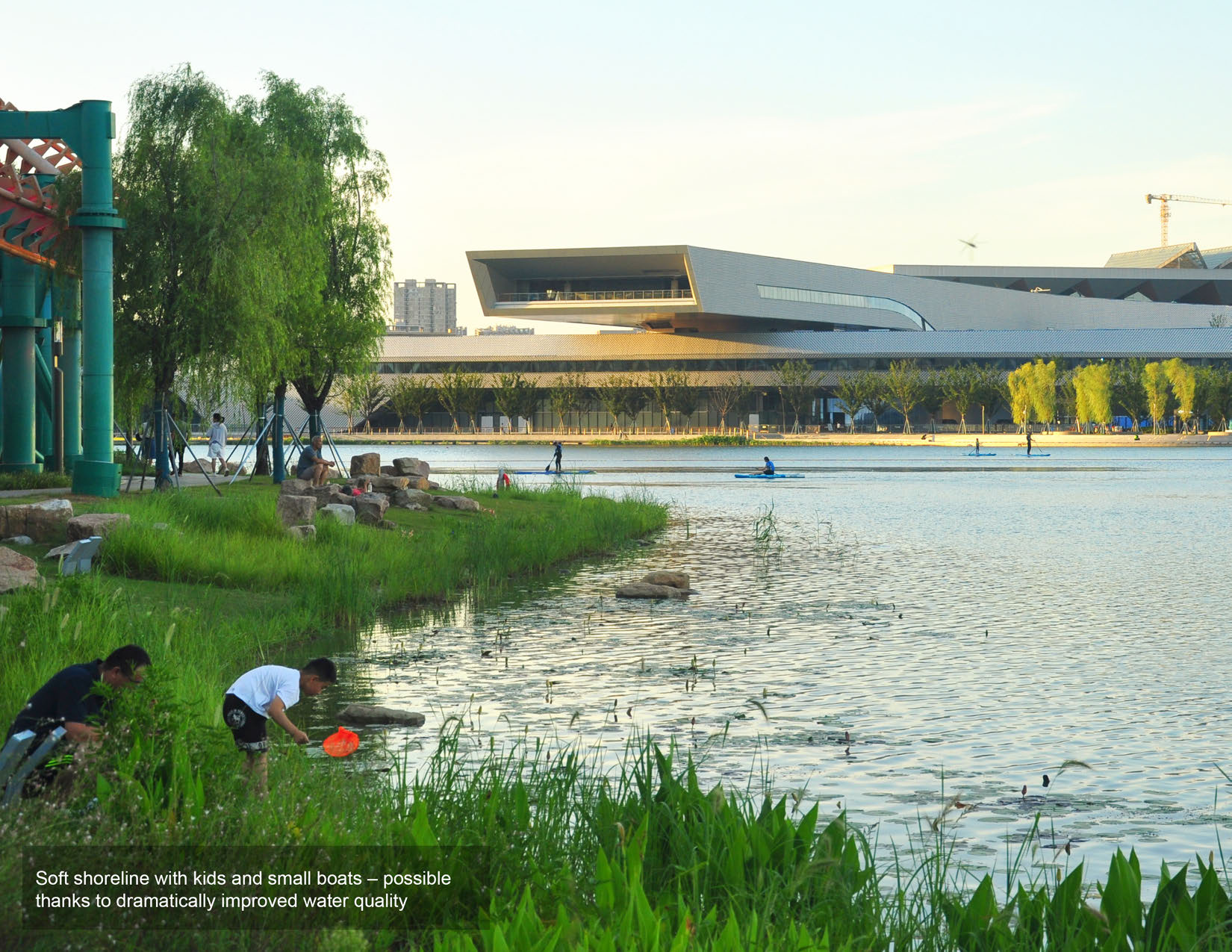
Soft shoreline with kids and small boats – possible thanks to dramatically improved water quality.
©TLS

The Cultural Campus – new gathering place for art, performance and science in Suzhou.
©Xi Chen
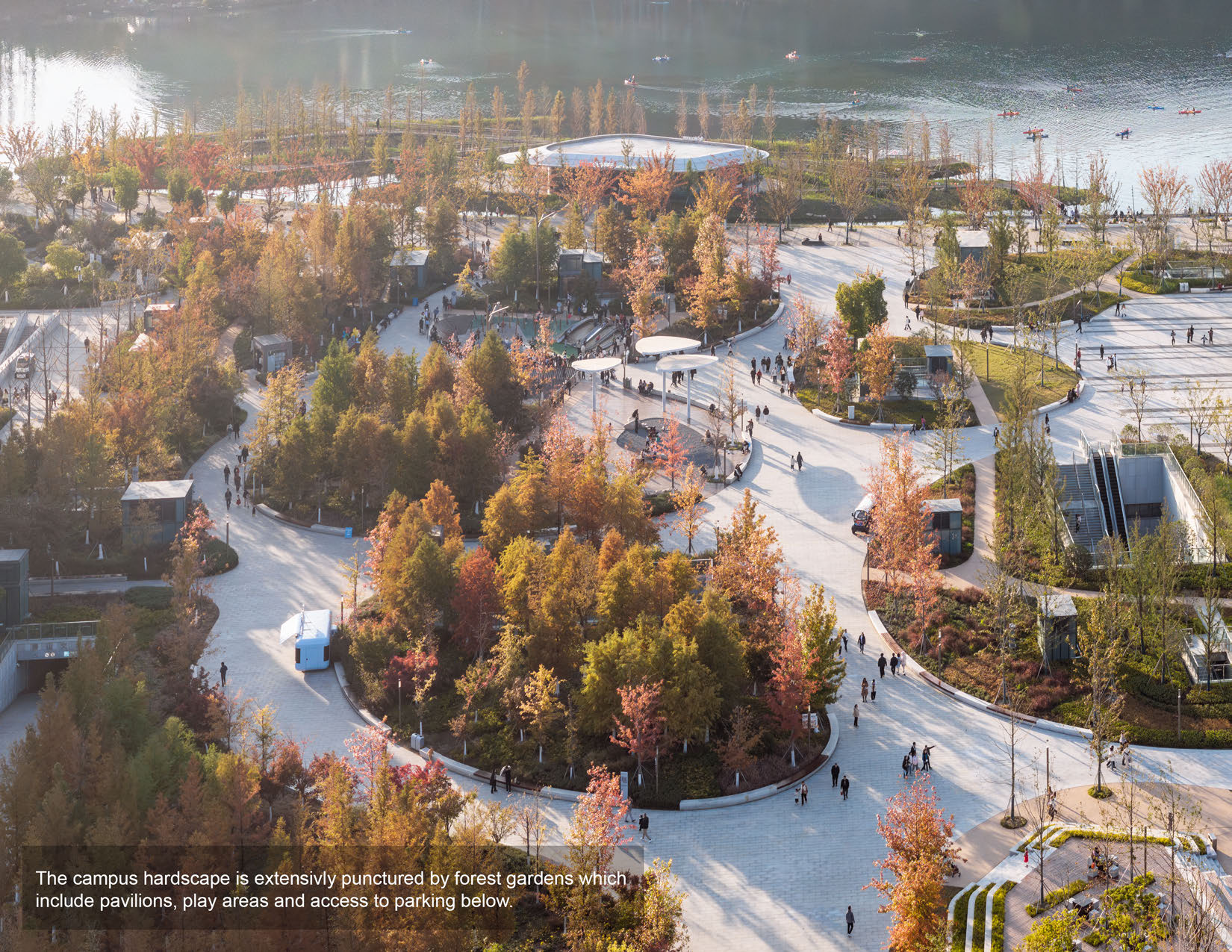
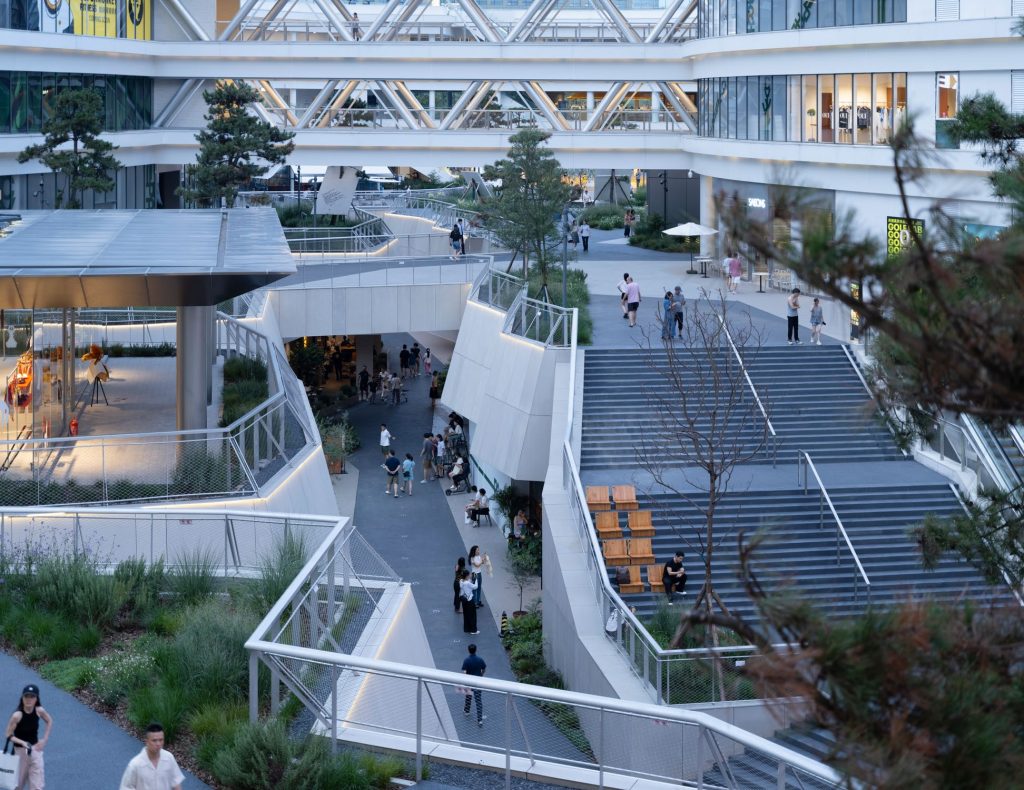
The campus hardscape is extensively punctured by forest gardens which include pavilions, play areas and access to parking below.
©Xi Chen
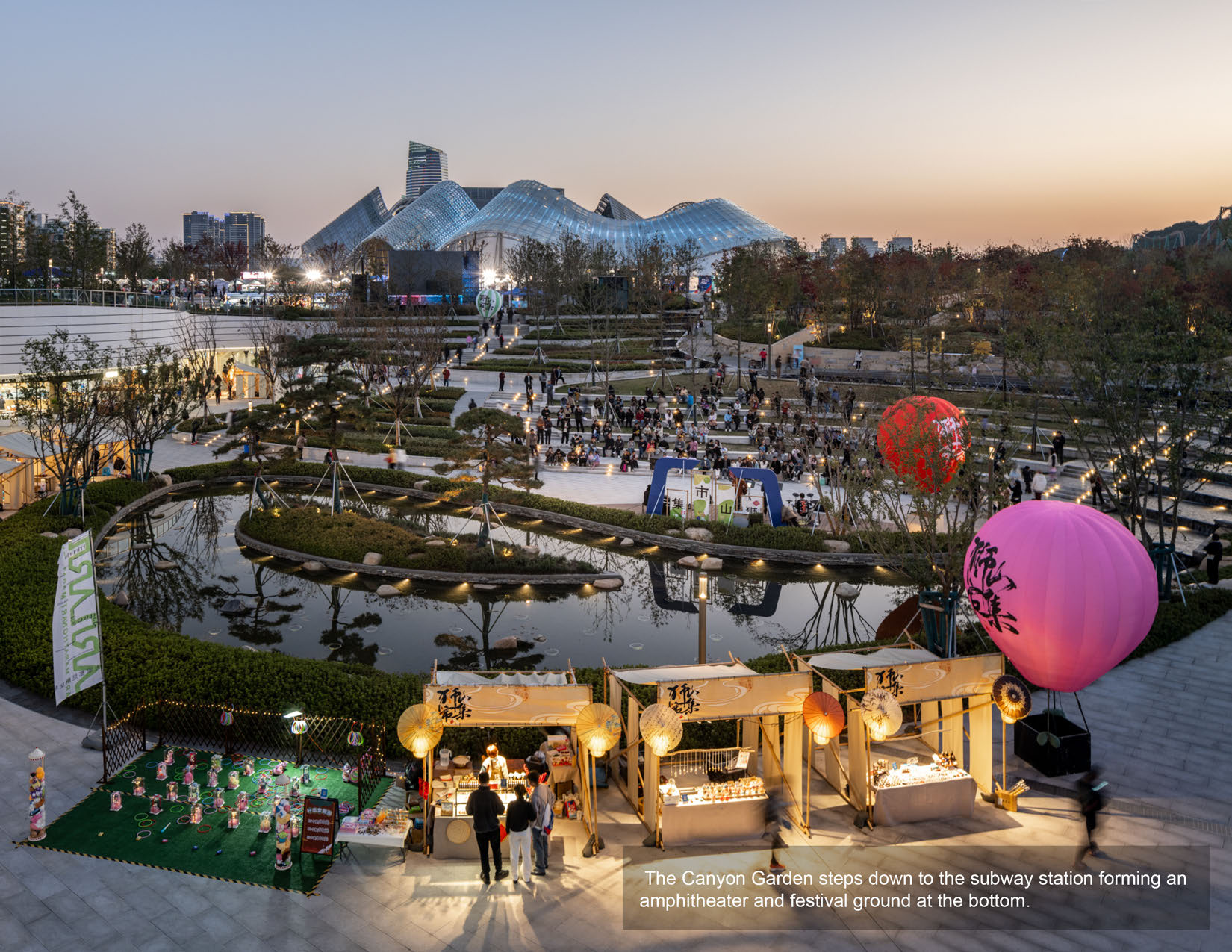
The Canyon Garden steps down to the subway station forming an amphitheater and festival ground at the bottom.
©Xi Chen
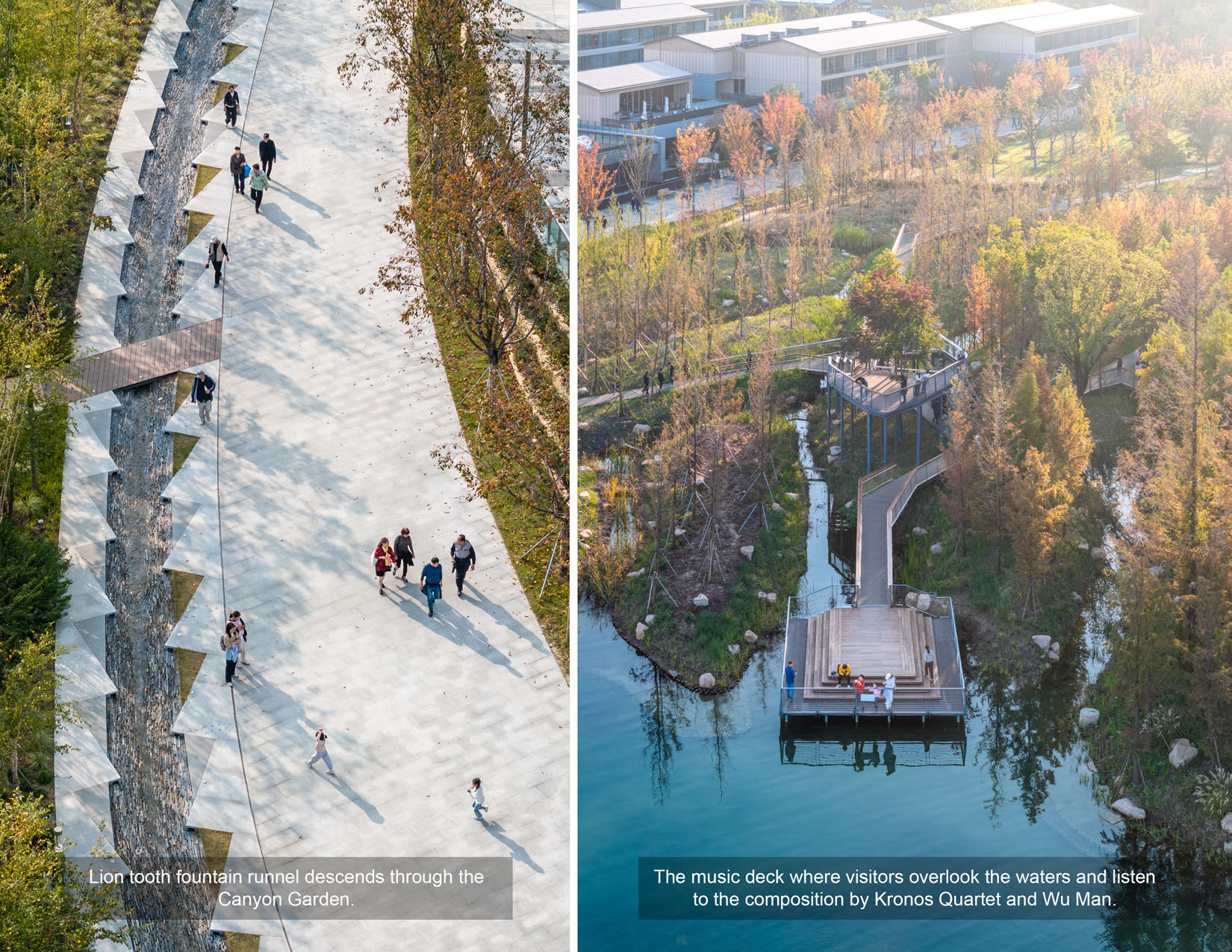
Left, Lion tooth fountain runnel descends through the Canyon Garden. Right, the music deck where visitors overlook the waters and listen to the composition by Kronos Quartet and Wu Man.
©Xi Chen
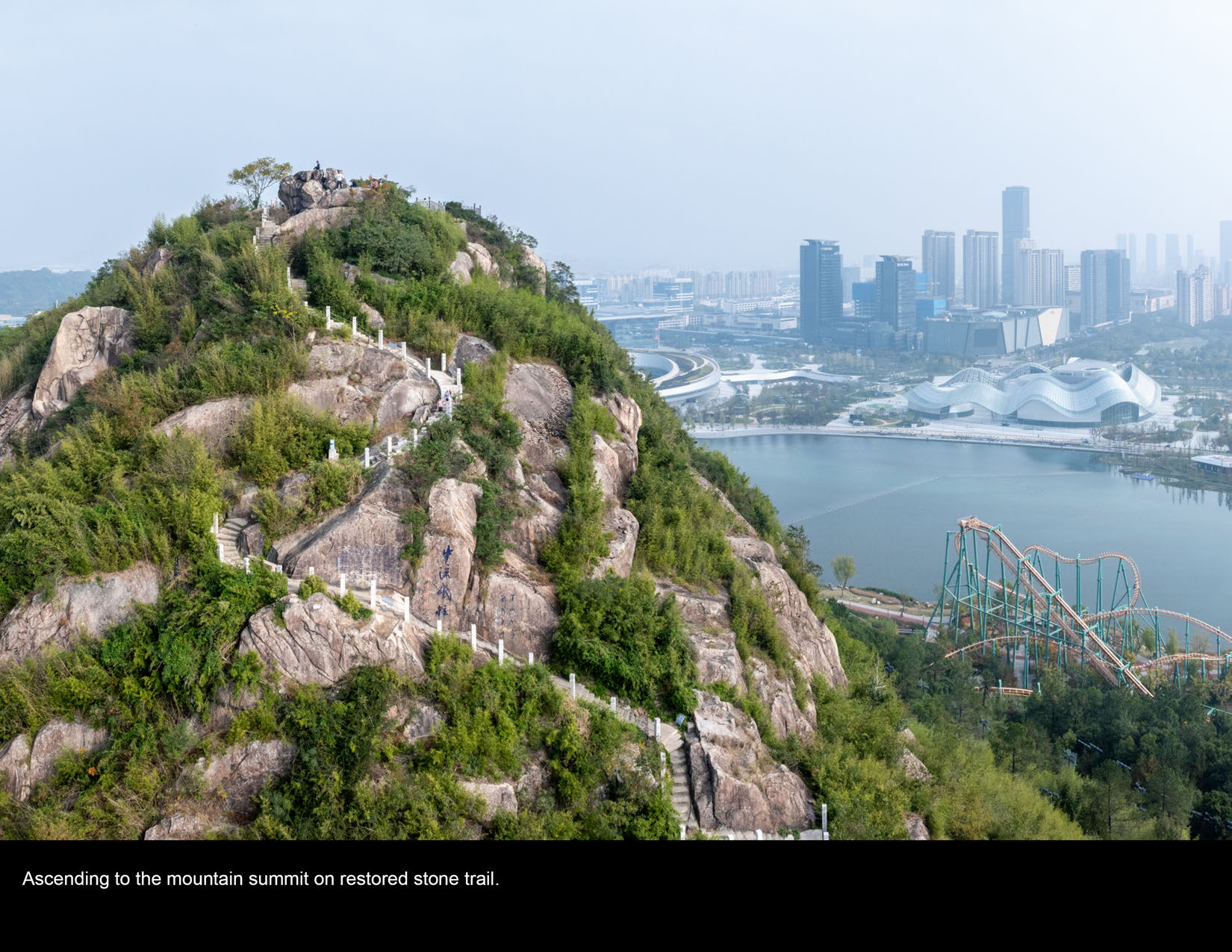
Ascending to the mountain summit on restored stone trail.
©Xi Chen
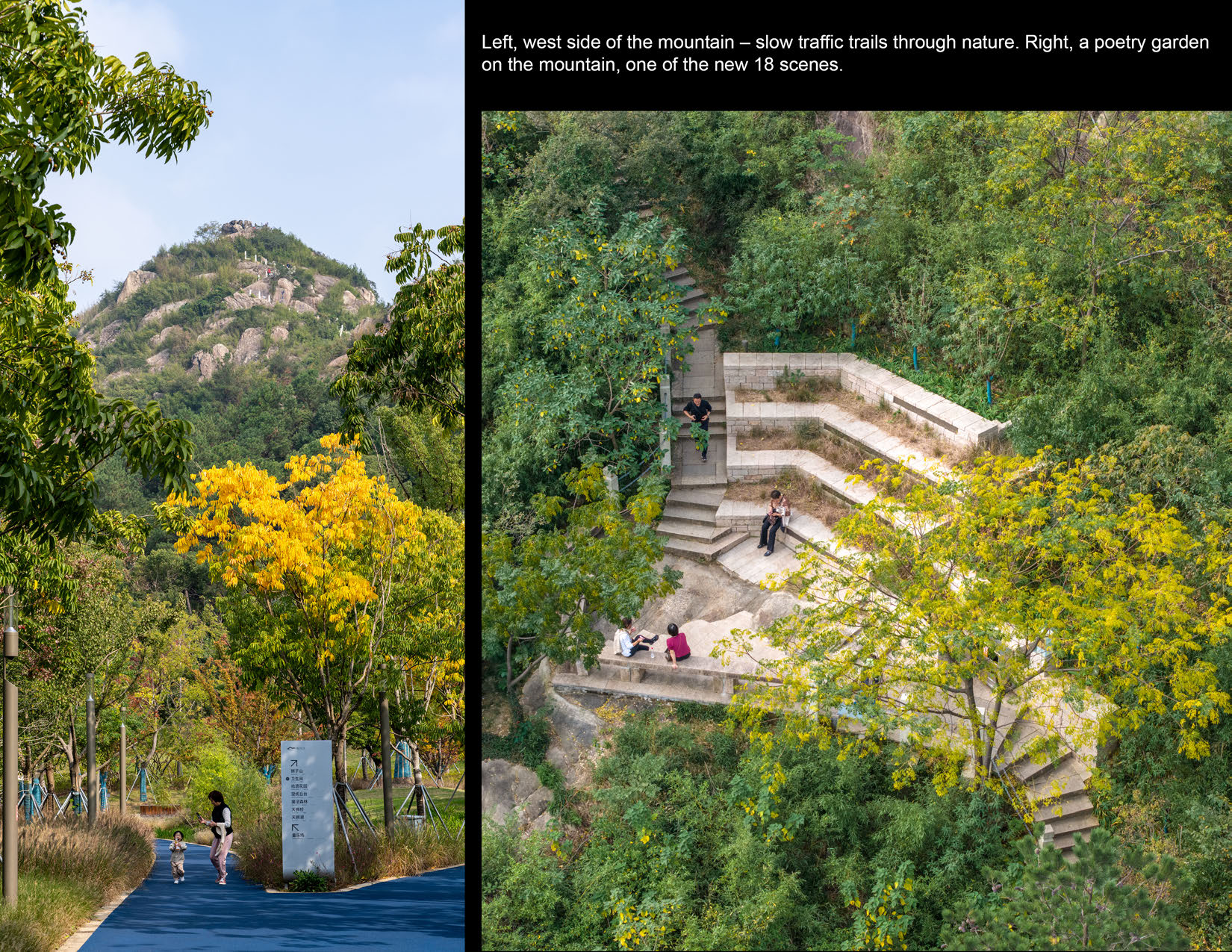
Left, west side of the mountain – slow traffic trails through nature. Right, a poetry garden on the mountain, one of the new 18 scenes.
©Xi Chen
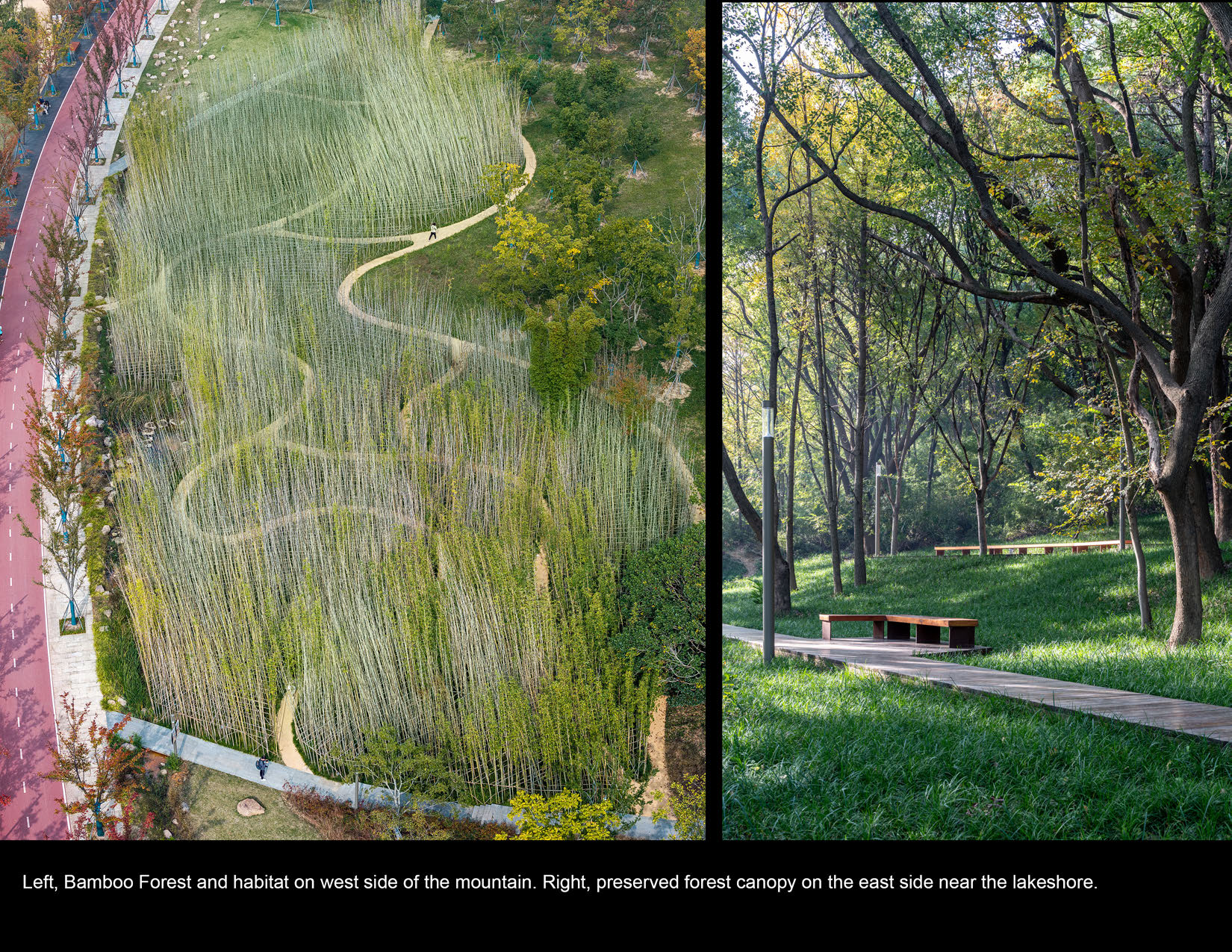
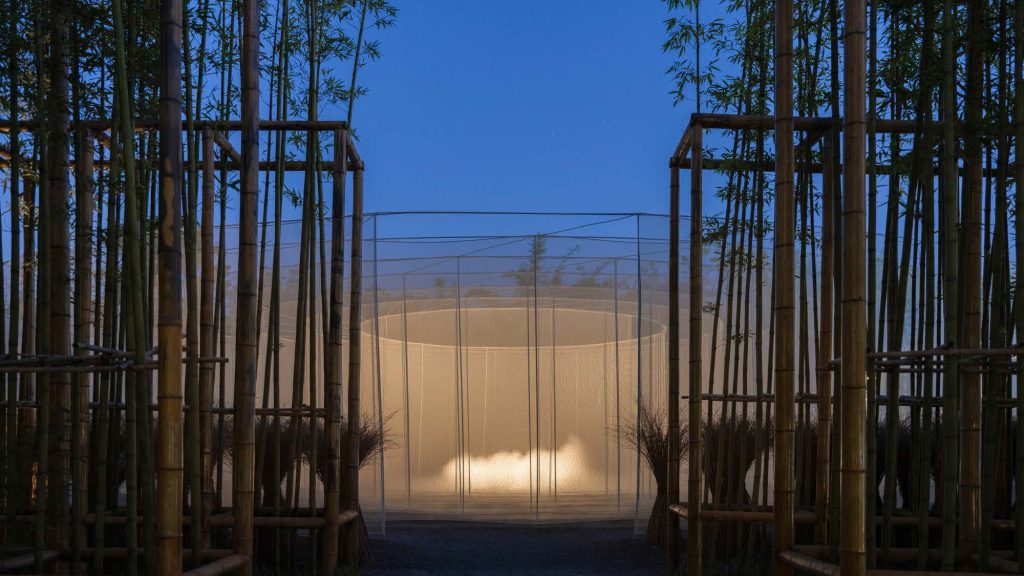
Left, Bamboo Forest and habitat on west side of the mountain. Right, preserved forest canopy on the east side near the lakeshore.
©Xi Chen
Client
Suzhou Shishan Plaza Development Co., Ltd.
Project Team
Tom Leader, Lead Landscape Architect
Suzhou Architecture Gardens Landscape Planning Design, Landscape Architecture of Record
Jiangsu Zhuyan Design & Consulting, Sponge City Consultant
Project Manager: Huan Zheng, Wei Fan
Competition Team: Wei Chen, Pablo Alfaro, Mario Accordino, Xin Zhong, Hang Su, Yi -Shan Chen, Robert Cabral, Wenmo Zhang
Design Team: Yang Yu, Shuping Ye, Kathryn Drinkhouse, Dawei Huang, Zhaowei Yu, Kushal Lachhwani, Si Zheng, Chen Sun, Xiaoye Xing, Wanpeng Zu, Qianyu Li, Jiawen Chen, Aiai Bao, Ying Wei, Mengyao Xing, Xiayao Shi, Chunjin Li, Ivan Valin, Thor Anderson, Scott Getz
Project Statement
Lion Mountain Park recovers the beauty and dignity of a mountain beloved in the local history and mythology of Suzhou. The Lion looks out to the nearby Tiger Mountain and defends its community! Previously the site of a rundown amusement park with a muddy, algae-choked pond, the new design recovers the concept of “Shan-shui” – the union of mountain and lake. The renewal of trails, forested slopes, and the creation of extensive new wetlands allows runoff cleansing to a level suitable to human contact and boating. A great circular social promenade binds the mountain and new lake together in an ageless union of nature and traditional ethos. This forms the core of a new cultural district featuring a new theater, science museum and art museum.
Project Description
Dramatic Lion Mountain in Suzhou is an ancient natural feature that has forever watched over Suzhou. Prominent among local peaks, the Lion looks out to nearby Tiger Mountain and is said to defend its community! Local literati carved long lost poetry into the stone in “18 Scenes” along its steep trails. Recently, the mountain was diminished by a run-down amusement park at its base, a small muddy lake dwarfed by roller coasters, attractions, and an aerial tram up the mountain. Large billboards and advertisements were plastered to its face. In 2016, an international competition selected this scheme to restore the greatness of Lion Mountain and create a new lake, park, and district that honors this landmark. After nine years of work and frequent change in leadership, the scheme survives, and the park is complete!
Key to the transformation is the major expansion and development of the lake as a beautiful reflecting surface and ecologically diverse complement to the mountain. The lake is fed by both urban and natural watersheds directed to flow through broad wetland terraces and inundated cypress forests. This has elevated water quality to a level suitable for human contact and is protected by a spillway from back-flooding from polluted local canals. The improved water now supports a thriving small boat program that creates a convivial replacement for the amusement park and reflects the restored mountain above.
A great circular promenade, two kilometers in length binds together mountain and lake. It is home to an active social program that organizes and links daily life in the park together. The mountain, lake, and promenade together form the natural and cultural anchor for development surrounding including a major cultural campus. The campus program includes a Science Museum, a Civic Theater, and a new satellite of the Suzhou Museum. The crisp hardscape of this campus is extensively punctured by forest islands containing play areas, small pavilions, and access to parking below. The campus is served by a new below-grade subway station. Emerging from the shadows of the station, views open directly to the restored mountain and visitors ascend to the promenade level through a “Canyon Garden” with a public amphitheater, spilling pools, and fountain runnels for kids’ enjoyment.
The green flanks of the mountain are preserved and their richness expanded with new forested zones. A new network of discrete mountain and forest trails expands and improves the safety of the existing slightly scary stone scramble up the mountain. The eighteen narrative “scenes” along these trails have been recovered, interpreted with new artifacts, and places to rest on the ascent.
While the east side of the mountain faces the urban cultural campus, the west side is rich with natural features, biodiversity, and habitat. Discrete mountain pathways thread through the forest and rocky outcrops overlooks over the region and eventually arrive at the summit and its 360-degree experience of the city and other mountains in the distance. From the west side of the Ring promenade there are ADA accessible recreation opportunities including cafes, tea houses, swimming, bamboo mazes, and children’s nature play which fill the lower reaches.
Visual art for public spaces in China can be tricky so here, music composes the park’s art program. A modern forest meditation by emerging composer Yihang Han, will fill the space of a pavilion along the promenade. At a terraced wood deck overhanging the lake edge one will hear a traditional / modern composition including sounds of the old amusement park. The work is composed and performed by The Kronos Quartet in collaboration with famed Pipa player, Wu Man.
The Lion should be soothed and pleased.