Jingzhang Railway Park
Honor Award /
2025, International Project
Beijing, China
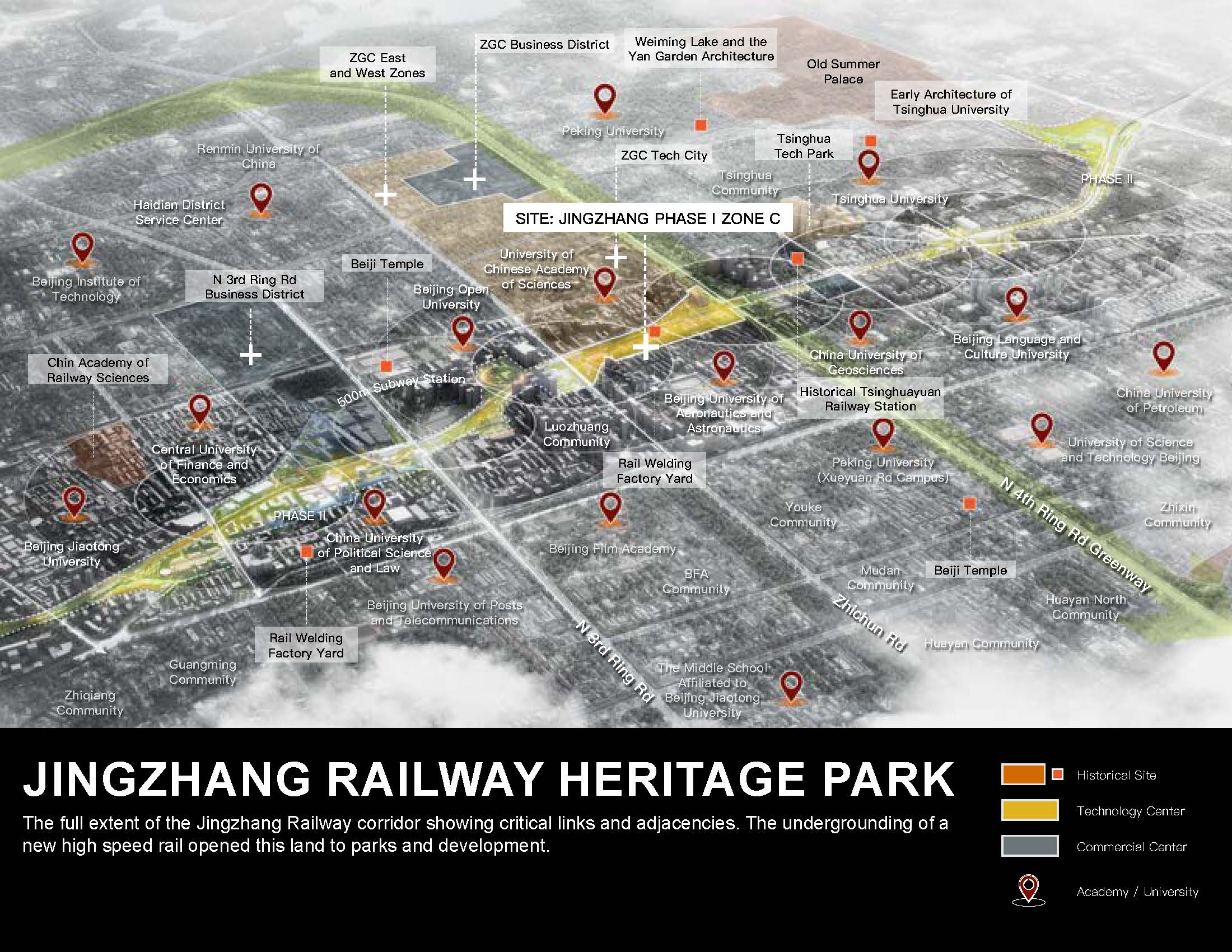
The full extent of the Jingzhang Railway corridor showing critical links and adjacencies. The undergrounding of a new high speed rail opened this land to parks and development.
©TLS
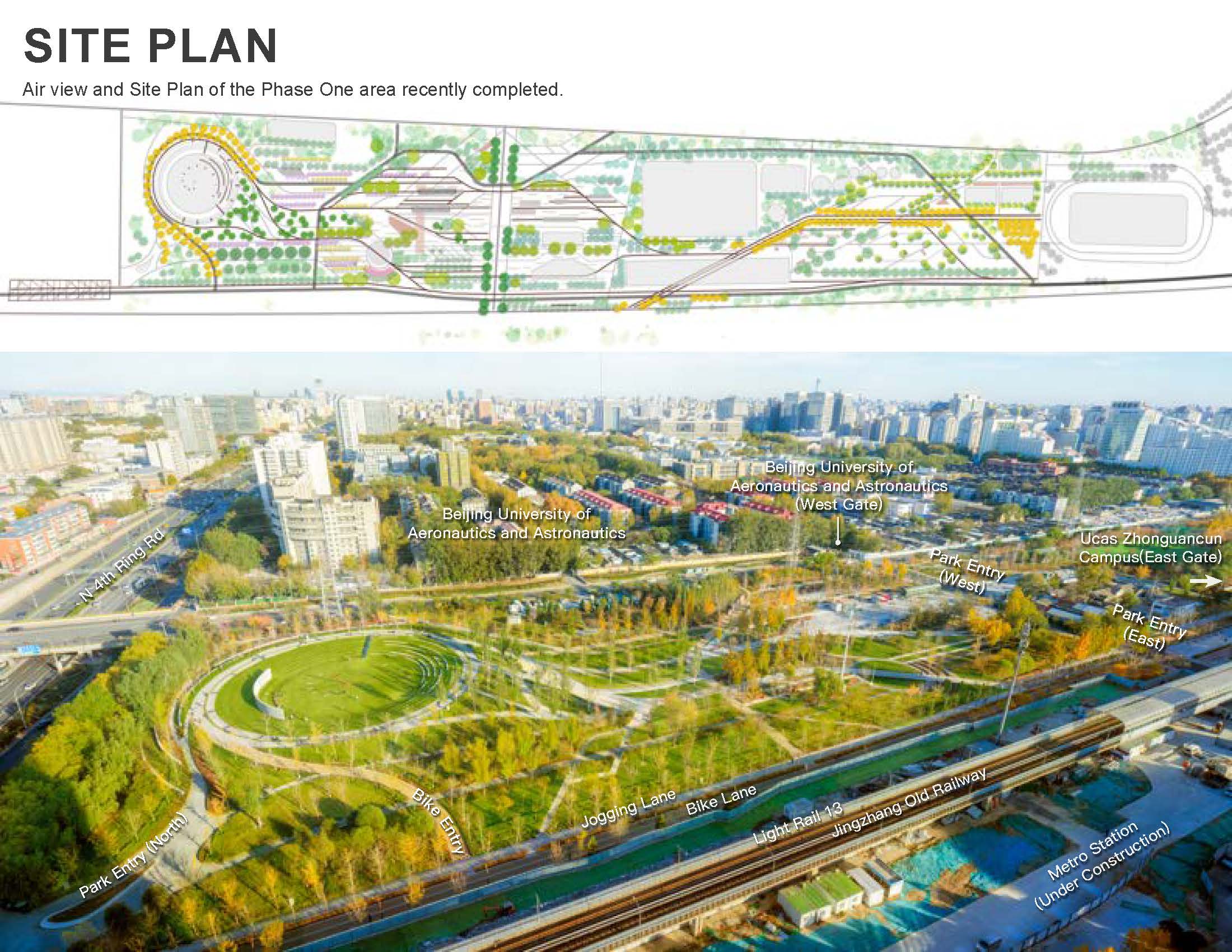
Air view and Site Plan of the Phase One area recently completed.
Top ©TLS. Down ©Holi Landscape Photography
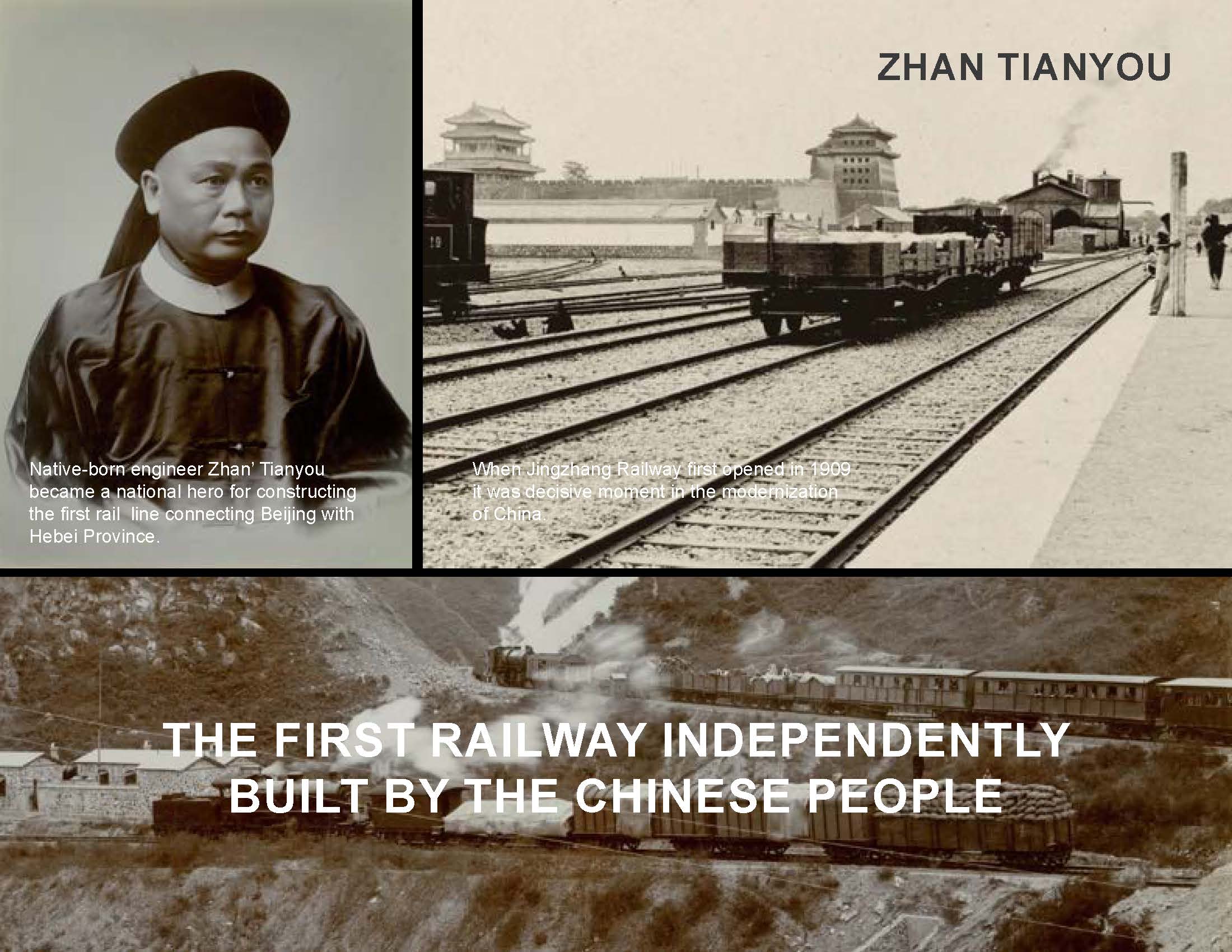
Native-born engineer Zhan’ Tianyou became a national hero for constructing the first rail line connecting Beijing with Hebei Province. When Jingzhang Railway first opened in 1909 it was decisive moment in the modernization of China.
Top left and down ©K.T.Thompson. Top right historical photo.
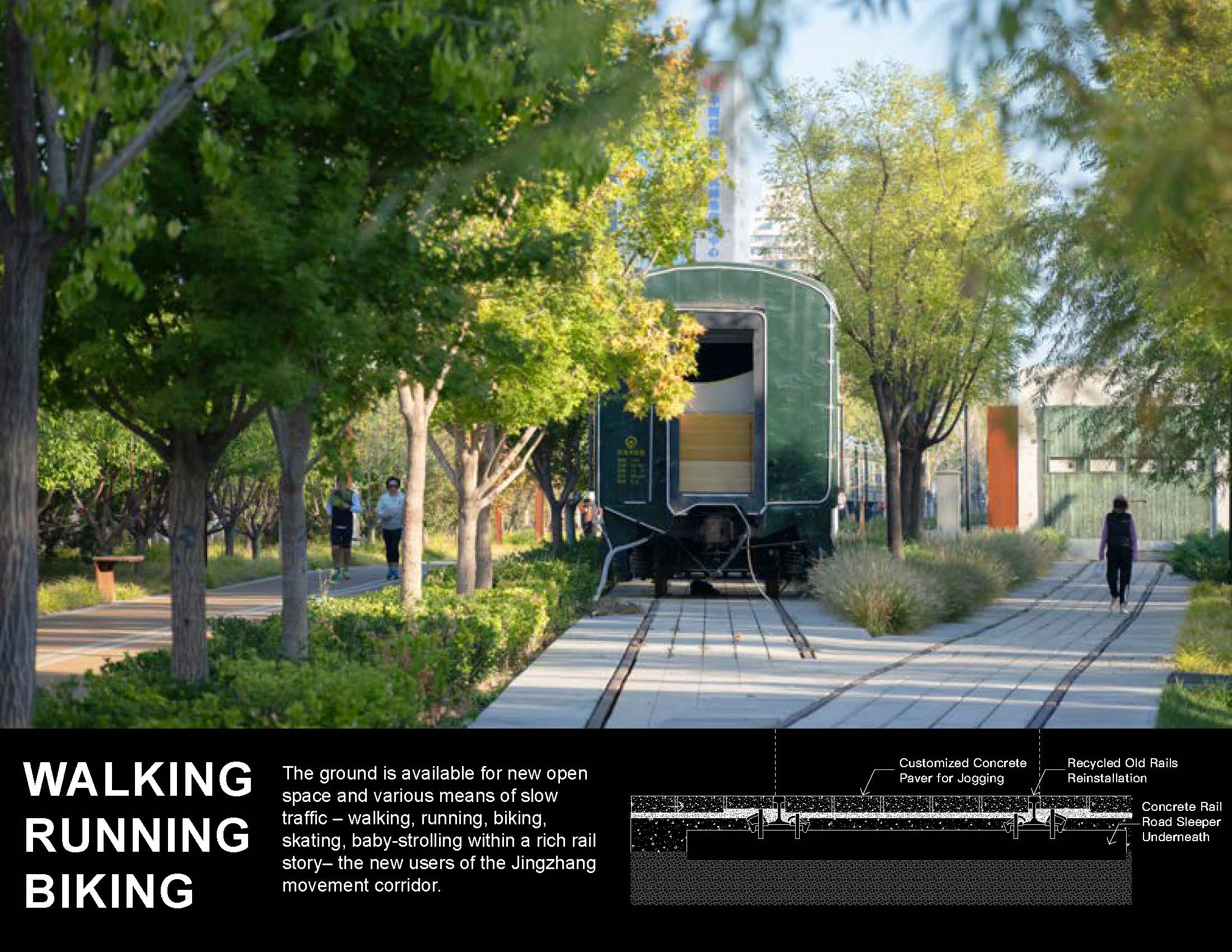
The ground is available for new open space and various means of slow traffic – walking, running, biking, skating, baby-strolling within a rich rail story– the new users of the Jingzhang movement corridor.
©Holi Landscape Photography
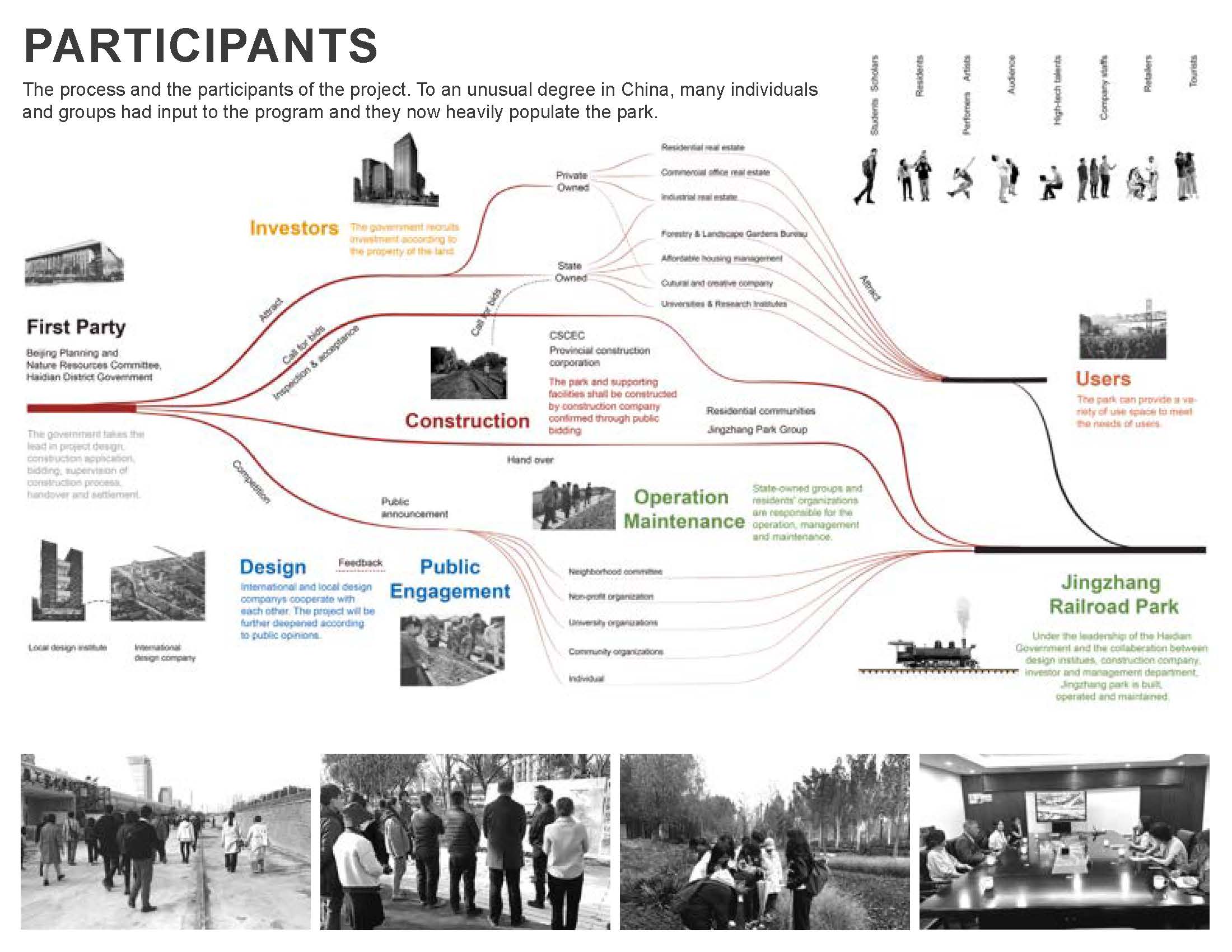
The process and the participants of the project. To an unusual degree in China, many individuals and groups had input to the program and they now heavily populate the park.
©TLS
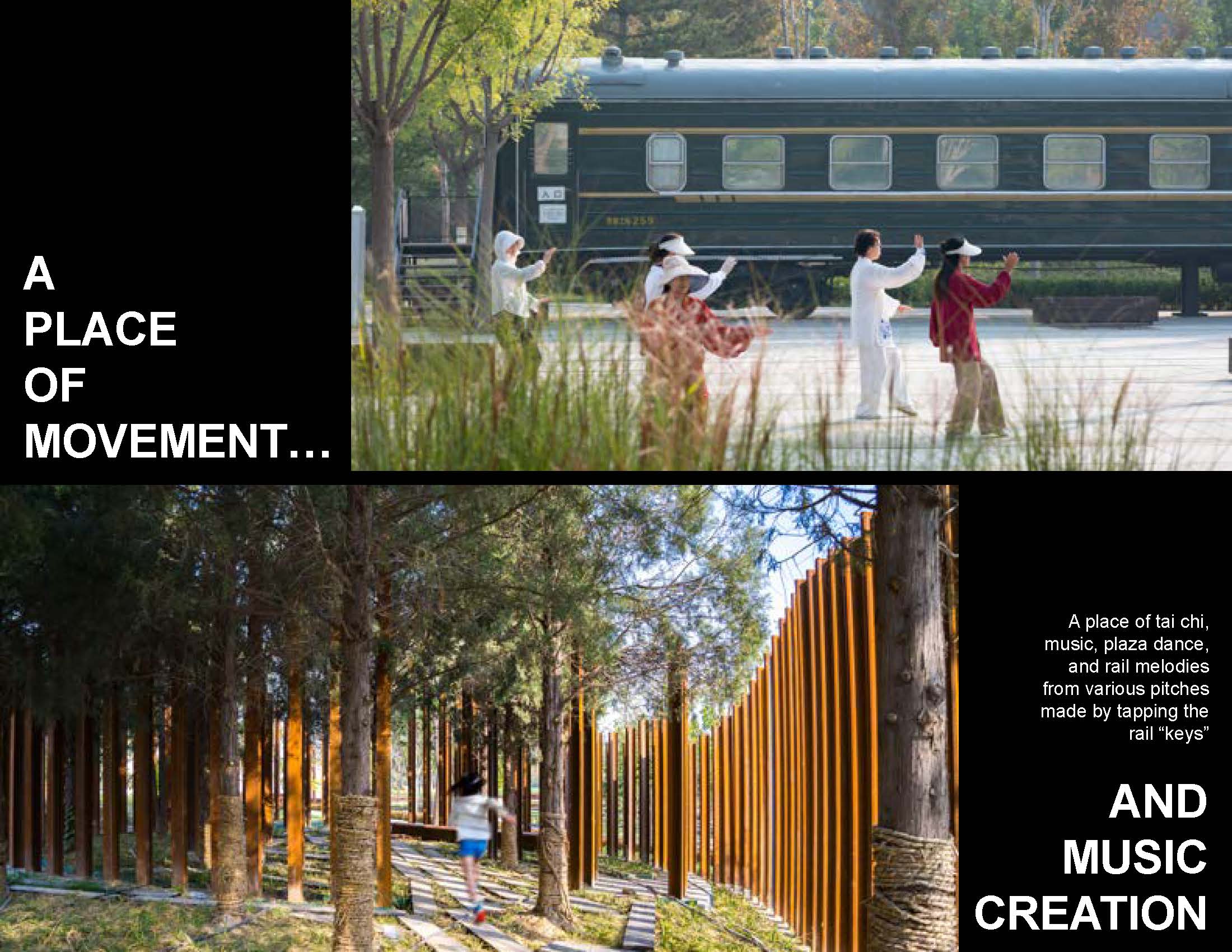
A place of tai chi, music, plaza dance, and rail melodies from various pitches made by tapping the rail “keys”.
Top ©Holi Landscape Photography. Down ©TLS
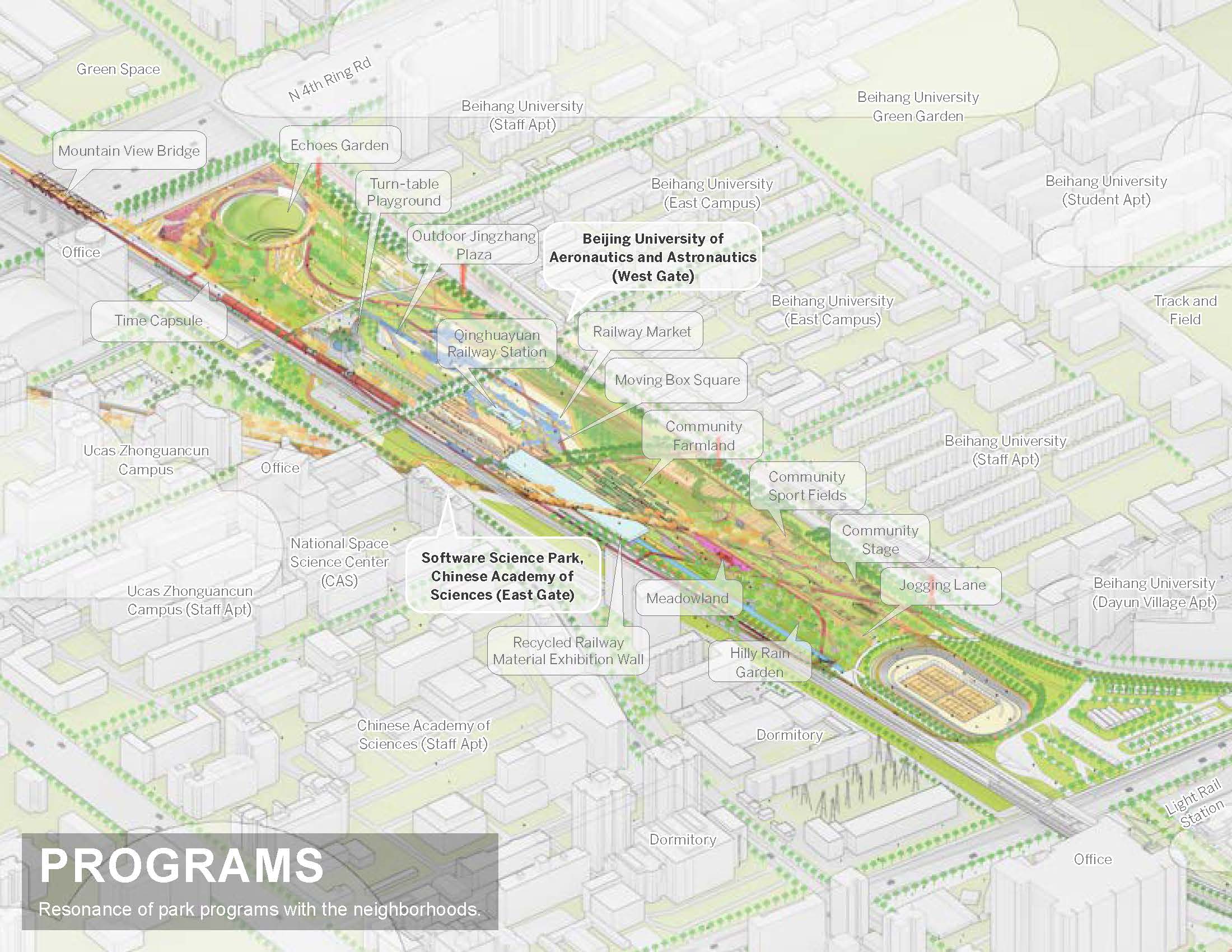
Resonance of park programs with the neighborhoods.
©TLS
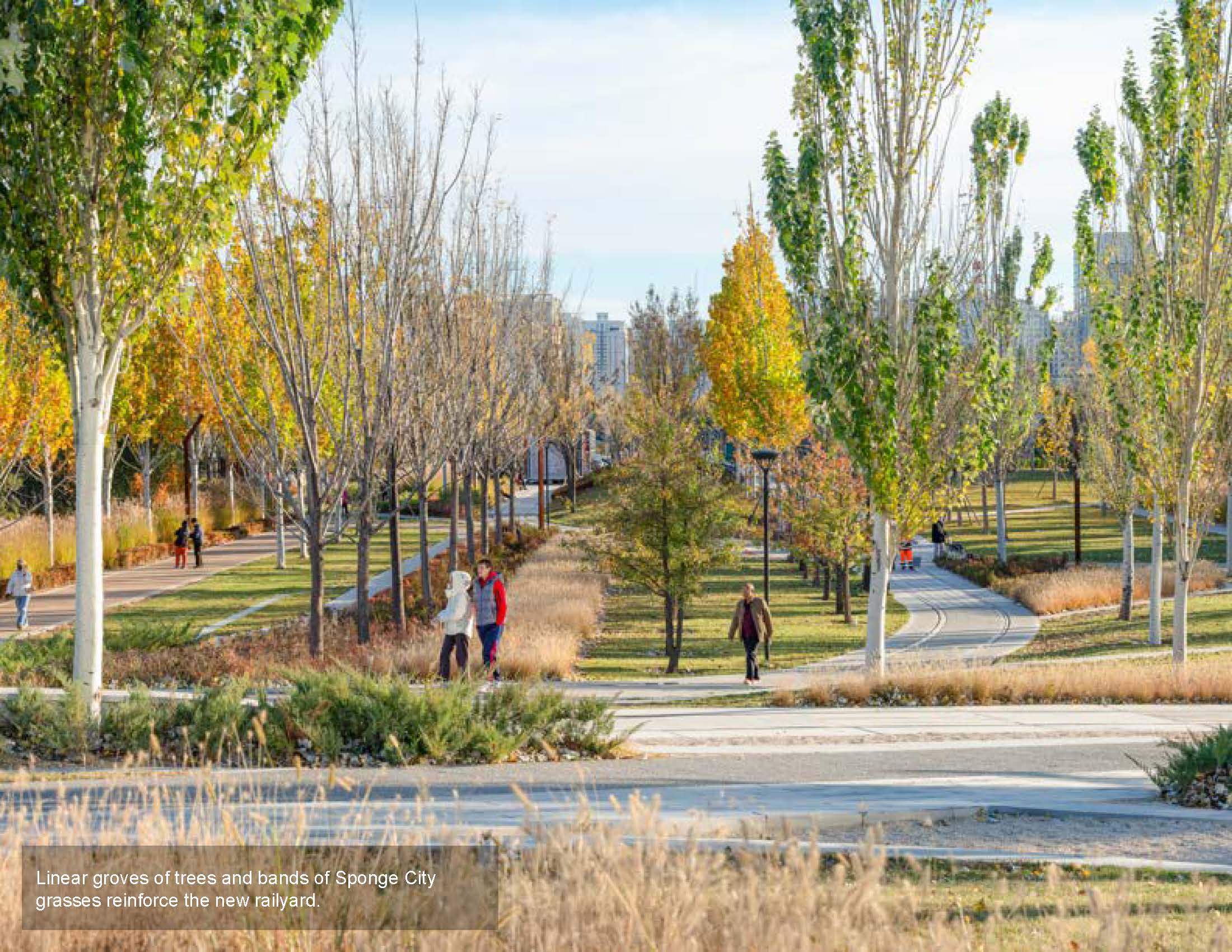
Linear groves of trees and bands of Sponge City grasses reinforce the new railyard.
©Holi Landscape Photography
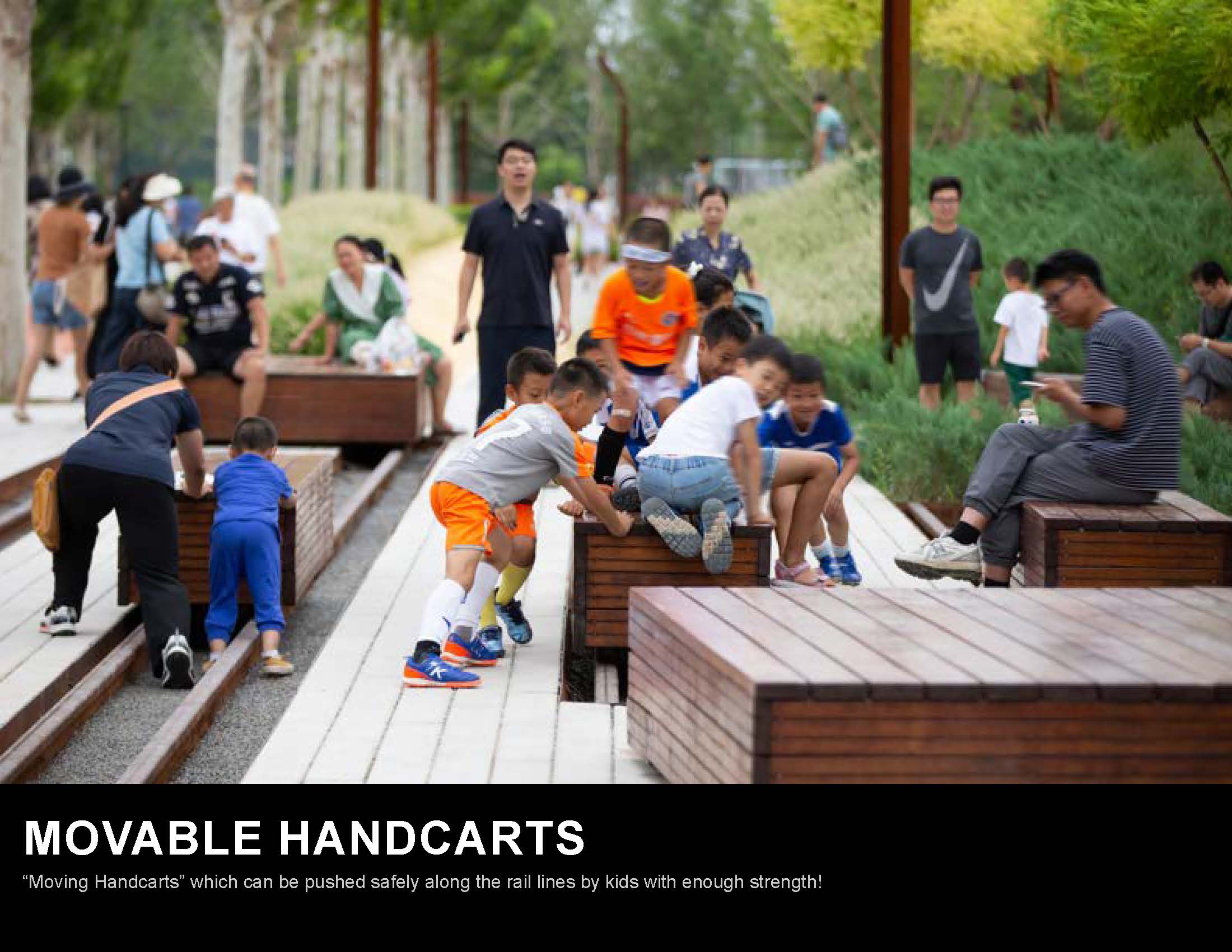
“Moving Handcarts” which can be pushed safely along the rail lines by kids with enough strength!
©ZHANGJIN PHOTOGRAPHY
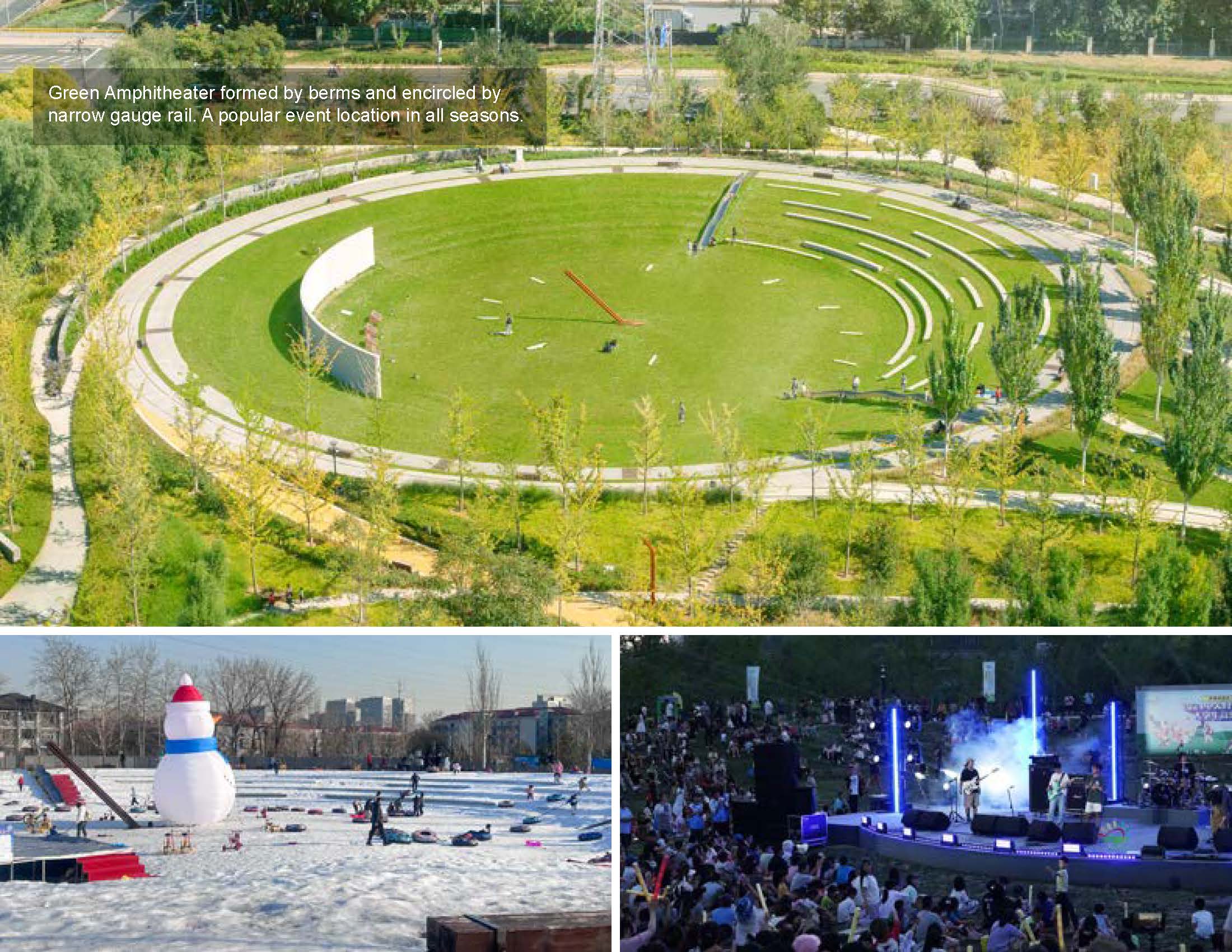
Green Amphitheater formed by berms and encircled by narrow gauge rail. A popular event location in all seasons.
Top ©Holi Landscape Photography. Down ©TLS
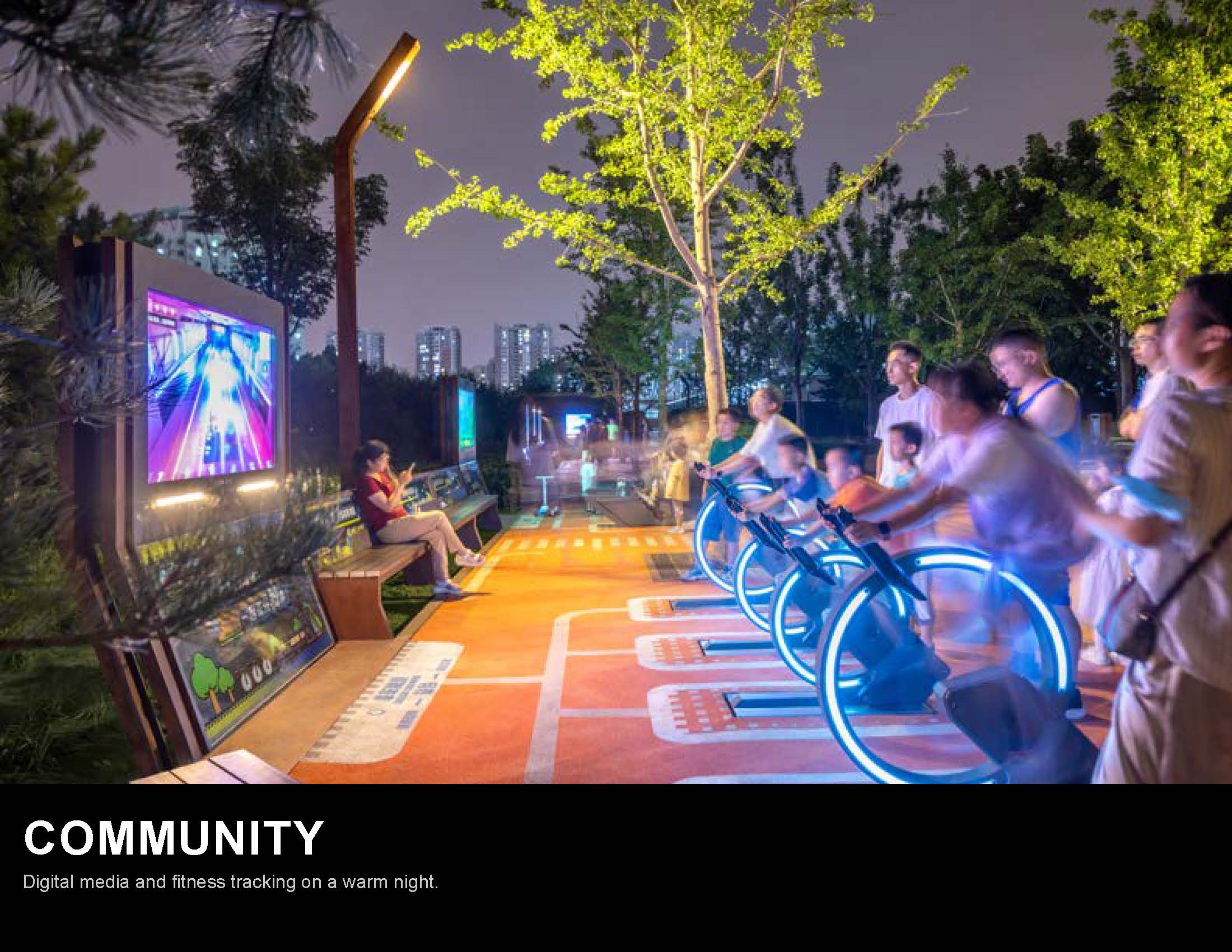
Digital media and fitness tracking on a warm night.
©ZHANGJIN PHOTOGRAPHY
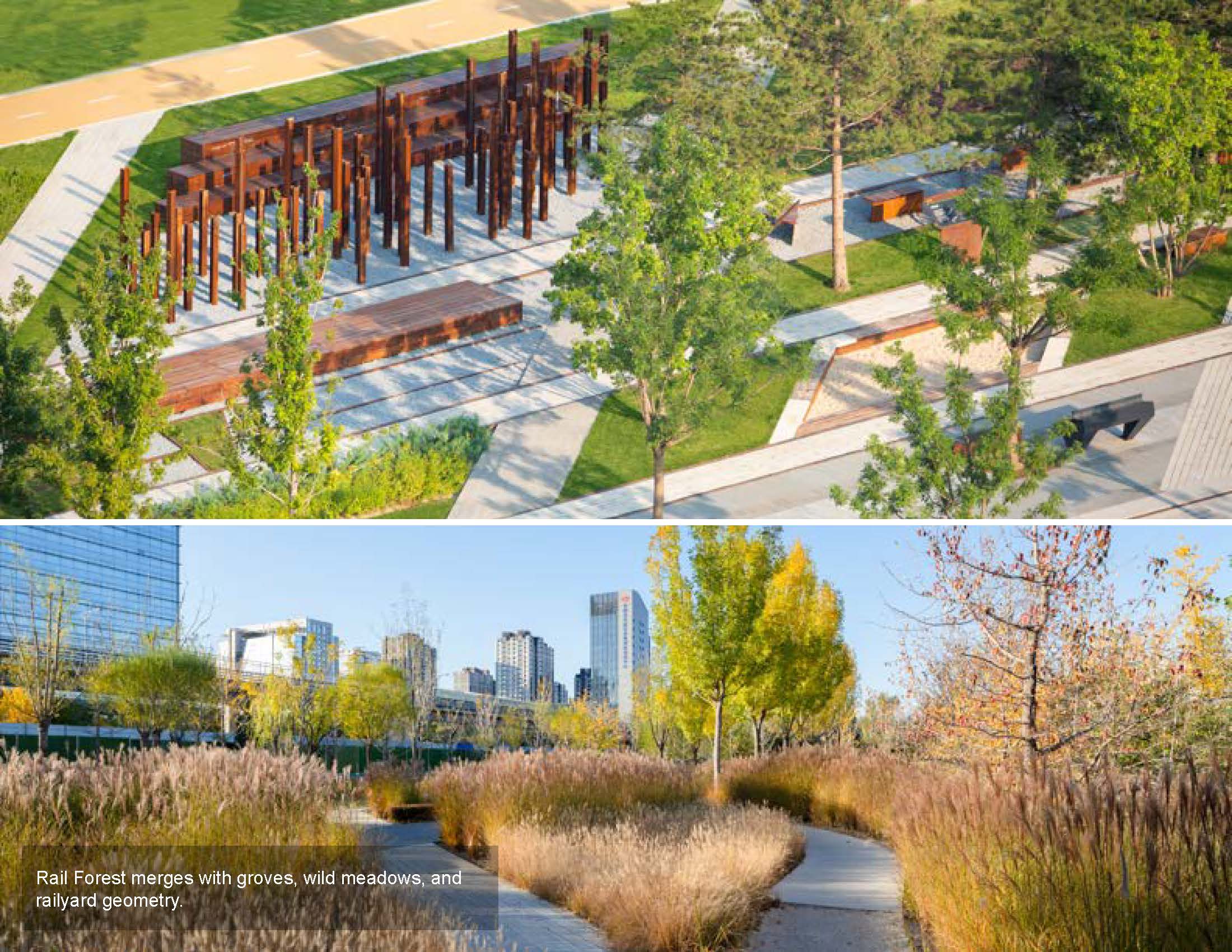
Rail Forest merges with groves, wild meadows, and railyard geometry.
Top ©ZHANGJIN PHOTOGRAPHY. Down ©Holi Landscape Photography
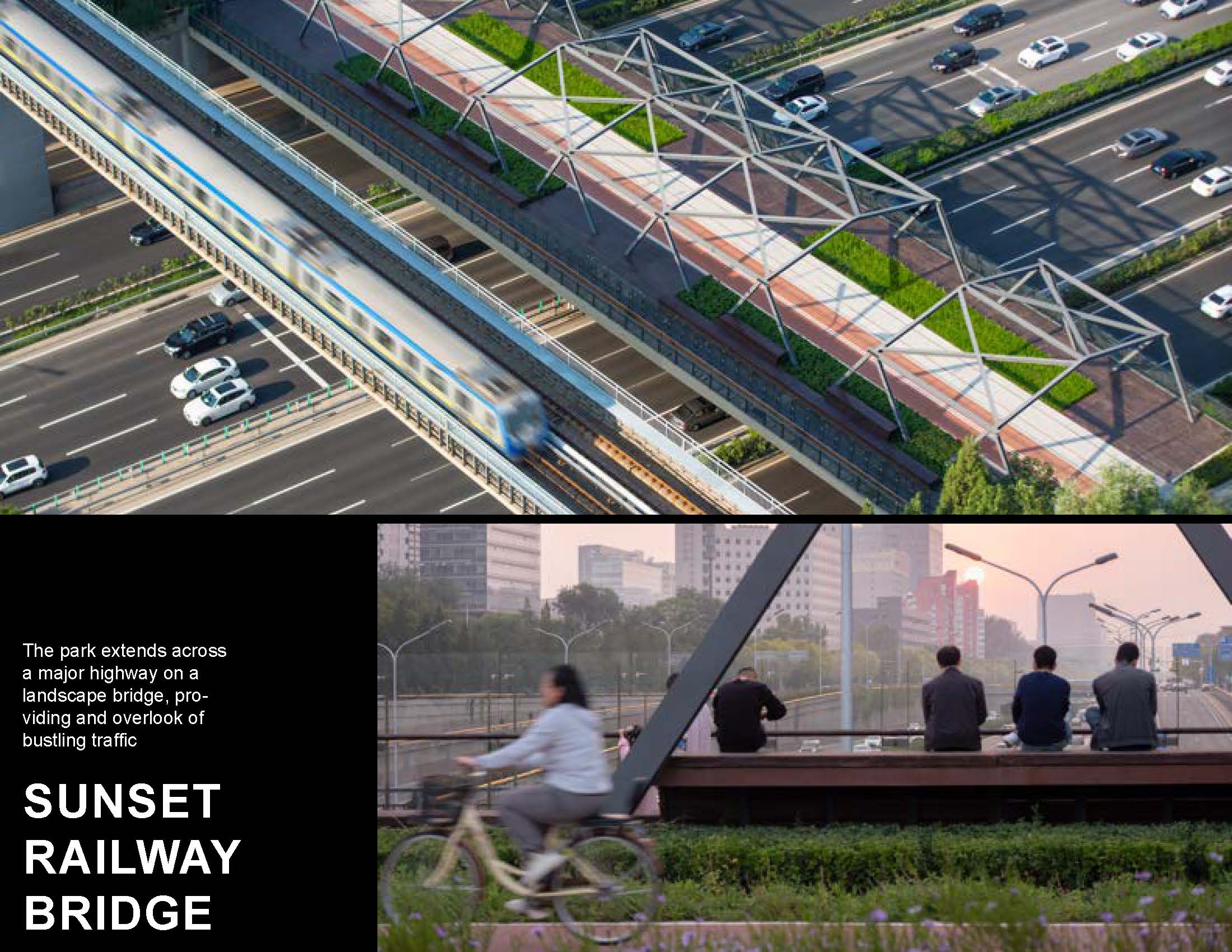
The park extends across a major highway on a landscape bridge, providing and overlook of bustling traffic.
Top ©ZHANGJIN PHOTOGRAPHY. Down ©Holi Landscape Photography
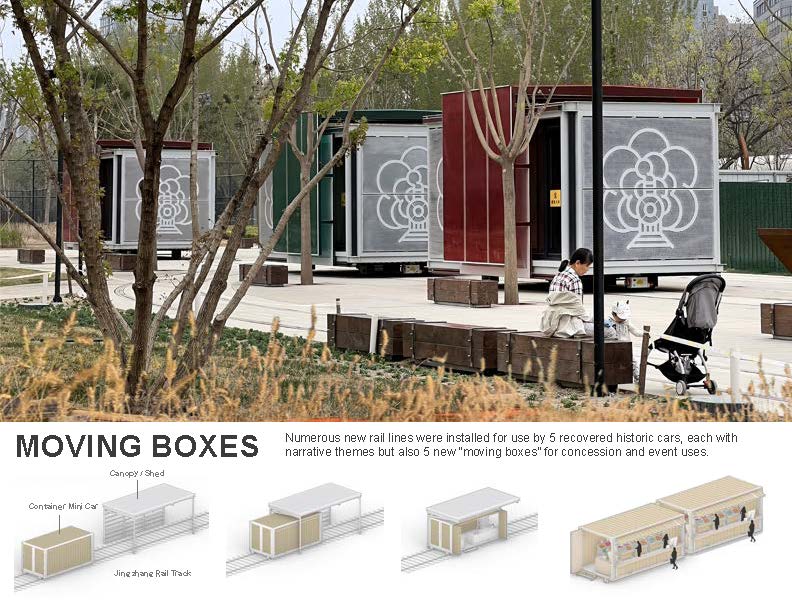
Numerous new rail lines were installed for use by 5 recovered historic cars, each with narrative themes but also 5 new “moving boxes” for concession and event uses.
©TLS
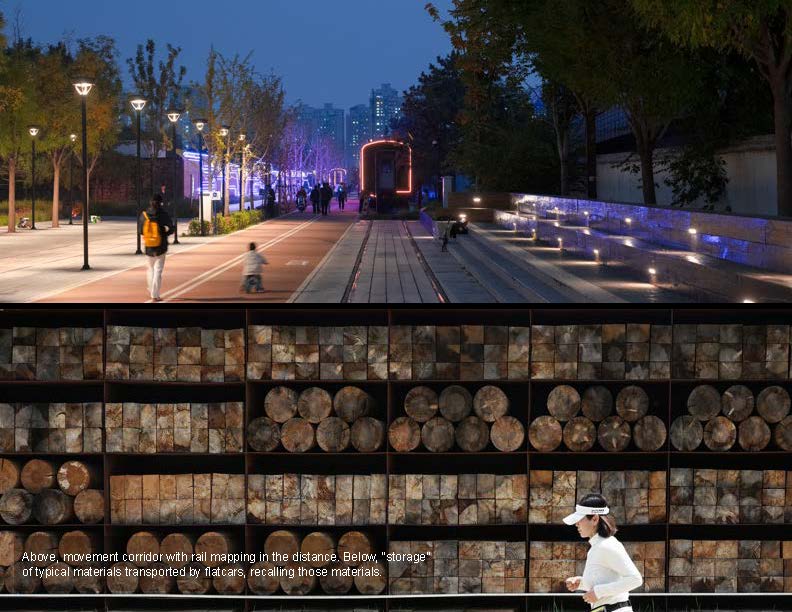
Above, movement corridor with rail mapping in the distance, Below, “storage” of typical materials transported by flatcars, recalling those materials.
Top ©Holi Landscape Photography. Down ©TLS.
Client
Haidian Branch of Beijing Municipal Commission of Planning and Natural Resources and Haidian District Bureau of Forestry and Parks
Project Team
Tom Leader, Lead Landscape Architect
Wanpeng Zu: Project Manager/Lead Designer
Shuang Zhao, Lead Designer
Wei Chen, Project Designer
Fan Wei, Shanshan Bai, Aiai Bao, Zhaowei Yu, Ying Wei, Shuping Ye, Yang Yu, Schematic Design
Prof. Xiangrong Wang and Team, Beijing Forestry University, Urban Research & Design Consultant
Beijing BLDJ Landscape Architecture Institute Co., LTD., Urban Research & Design Consultant
Prof. Xiangrong Wang and Team, Beijing Forestry University, Urban Research & Design Consultant
Lu Zhang, Dongyun Liu, and Team, Beijing BLDJ Landscape Architecture Institute Co., LTD – Local Landscape Architecture Firm
Project Statement
In 1909 China took a major step toward the modern age and independence by designing and constructing its first railroad without participation of foreign engineers and funding. Native born engineer Zhan Tianyou became a national hero for constructing the first rail line connecting Beijing with Hebei Province. With the recent undergrounding of a new high-speed rail on the Jingzhang line, the 15-kilometer historic corridor through Beijing presented the opportunity to reclaim this ground and its heritage, as well as reconnect the many neighborhoods and districts along its length. The completed first phase of this project is a celebration of Zhan’s achievement as well as the culture and practices of early rail engineering. There was huge interest from the public and their participation in the process was quite unusual and trendsetting in China. The linear complexity of railyards as well as new “moving lines” shapes the design.
Project Description
When Jingzhang Railway first opened in 1909 it was decisive moment in the modernization of China. Up to that time China had been heavily influenced and frequently exploited by foreign powers such as Britain, France, Russia, and Germany. Almost all infrastructure was engineered and financed by those countries including the early rail system. So, there was immense pride in this feat of native-born engineering in the heroic person of Zhonghe as well as the use of locally manufactured steel and other materials. The following 115 years have seen the steady growth of technological prowess that today heads toward possibly leading the world. In this context Beijing planners were understandably keen to look back and honor the real first step in that process.
100 years after the opening of Jingzhang Railway the equipment and the line had gone out of service and the corridor, in the center of Beijing, closed to the public. Meanwhile new transportation plans developed for both below-ground high speed rail and elevated light rail serving municipal destinations. This left the ground available for new open space and various means of slow traffic – walking, running, biking, skating, baby-strolling – the new users of the Jingzhang movement corridor. These are all threaded through the new park and skillfully spliced into the adjacent neighborhoods and institutions. Areas of the city which had been divided for 100 years now have the chance to be joined together by the park.
In many ways the park is constructed from rails and rail artifacts, most of them recovered from dead storage and old sites including this one. The project incorporates repurposed train tracks, steel components and fittings, railway doors, concrete, and timbers. Reclaimed wood and salvaged stonework have also been utilized for retaining walls, while old railway signals, signage, and mechanical components have been integrated into the site wayfinding, seating areas, play structures, interactive walls, and display signage, not only preserving their historical identities but also extending their lifecycle.
Numerous new rail lines were installed for use by 5 recovered historic cars, each with narrative themes but also 10 new “moving boxes” for concession and event uses. They can be moved about the site on rails for diverse types of gatherings or distributed throughout for individual uses including birthday parties. There are also “handcarts” which can be moved safely along the lines by kids with enough strength! Finally, there is a narrow-gauge rail line which will run through the park with various stops. The idea is to continue the dynamic of moving along rails but dedicated to new social uses. Navigating the numerous parallel pathways and rails allows endless routes, thinking and moving like a train.
Long lines of deciduous shade trees reinforce these lines and keep people cool in the summer. Linear beds of biofiltration grasses and perennials are inset within “sponge city” storm water detention zones and give a sense of the wild between tracks and pathways. Trains need a circular place to turn around, so the west end of the park is occupied by a large circular amphitheater formed by grassy berms for seating and for slides and the narrow-gauge train tracks around the rim. A semi-circular super wide screen allows for moving videos to be projected and makes a useful backdrop for the frequent concerts held there.
The local community is ever-present as they have been since the very beginning of the project. It is a heavily populated park. While China is still not a place where we see public workshops and post it notes, there was a very iterative and active web interaction with the community which led to many of the programs found here. And the interaction continues with constant public updates back and forth between organizers and the people including coming events and performances.
People are grateful and we think Zhan Tianyou would be proud – a second time.