
Force Field: Ecological Park shaped from Wind, Water, Motion & Science
Honor Award /
2025, General Design
San Francisco, CA

Emergent Modern Ecological Park // This new research facility channels the flows of the site and building to create an ecological wetland park.
©Bionic

Historical Preservation of Natural Ecology // The project preserved the historical natural ecology and allowed the evolution of the seasonal wetland to inform the site design.
©Bionic
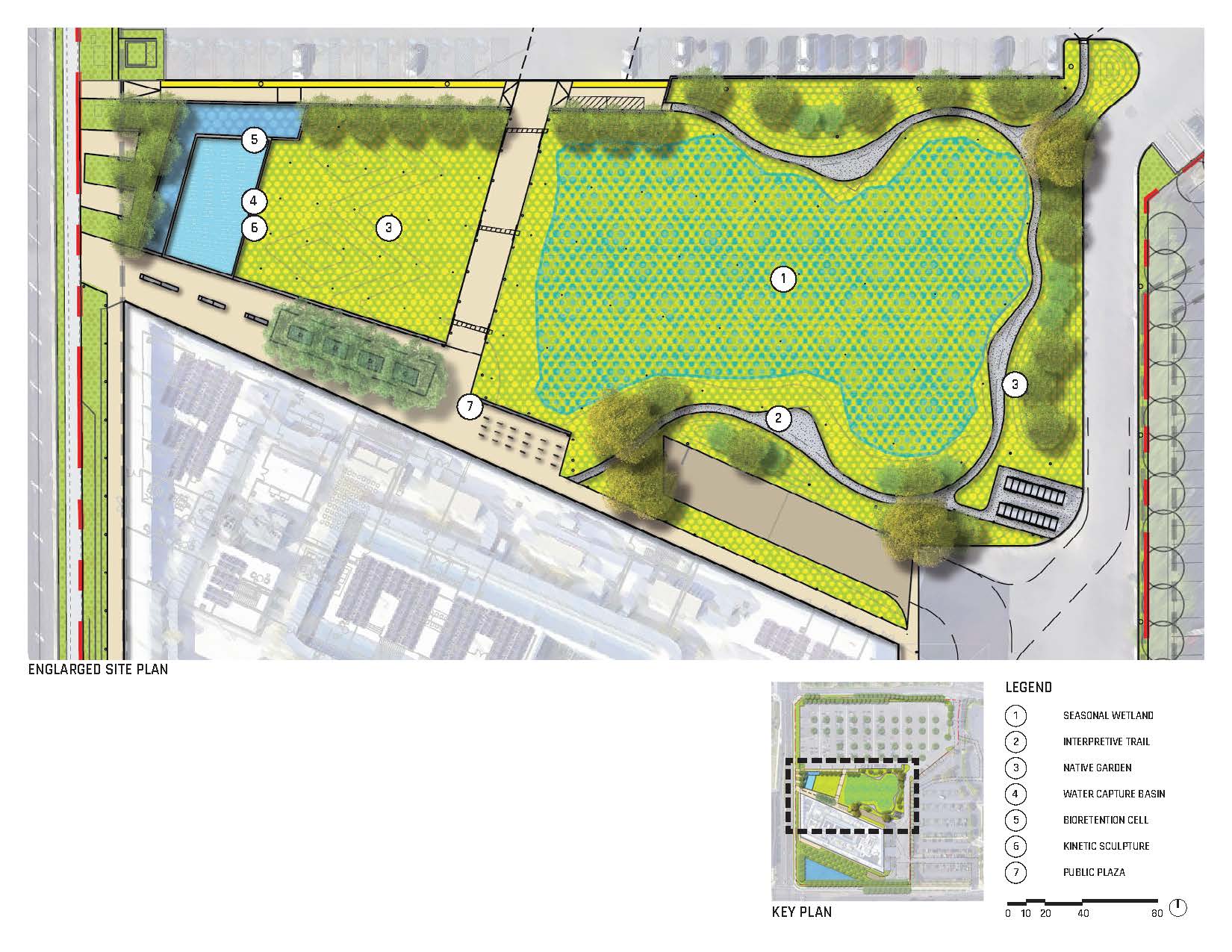
Seasonal Wetland Informs Paradigm Shift // The typical privatized facility became a landscape with environmental dynamics, site flows, and technology for human purpose and ecological function.
©Bionic
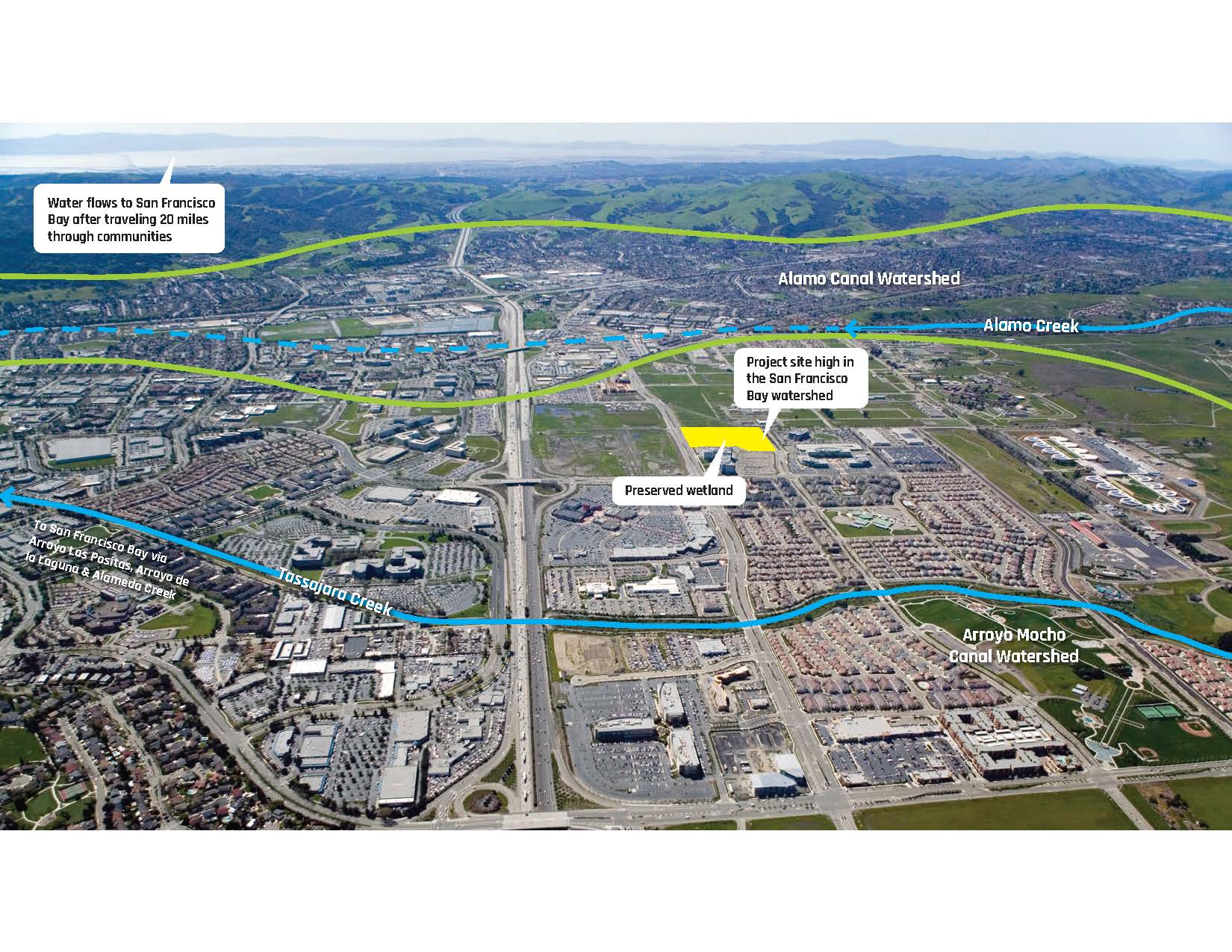
Context in San Francisco Bay Watershed // Located high in the San Francisco Bay watershed, this project allows water to slowly infiltrate in stark contrast to surrounding development.
©Bionic

Complex Water System to Save Seasonal Wetland // Site infrastructure, grading, and building systems efficiently capture water and deliver it to multiple above-grade treatment cells and the wetland.
©Bionic
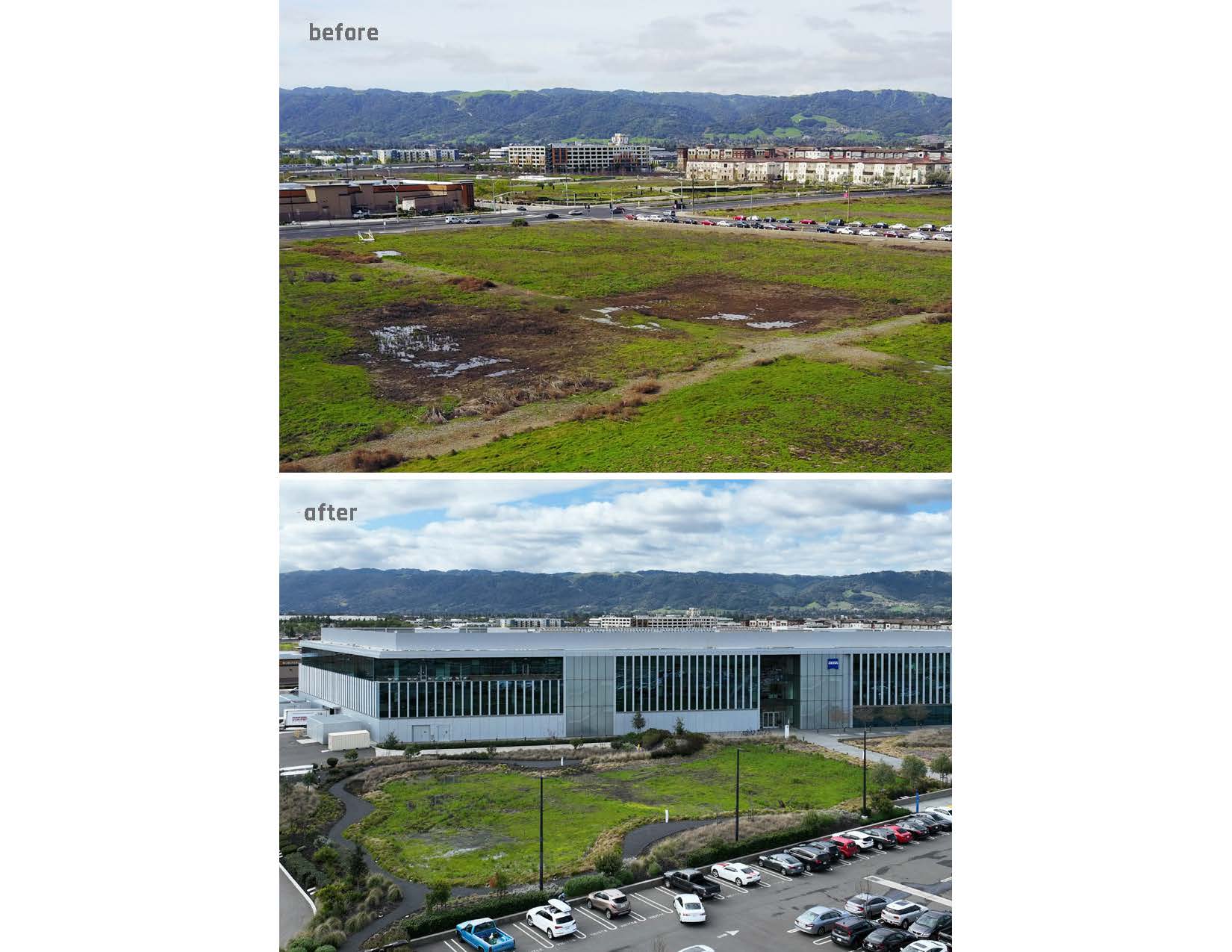
Process Informed Paradigm Shift // Drone surveillance identified a seasonal wetland at the center of the 11.65-acre site. The solution was a paradigm shift and an integrated landscape.
©Bionic
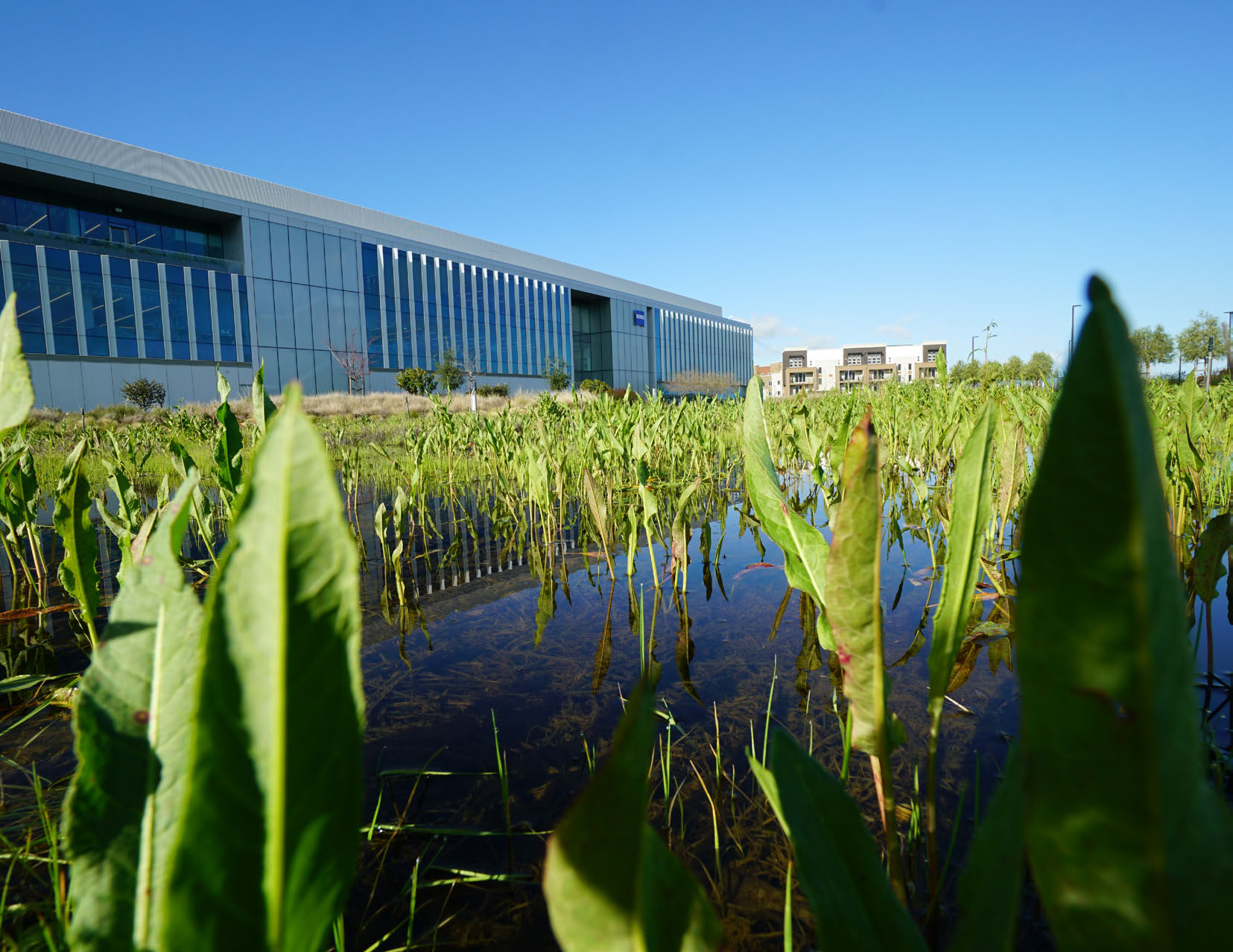
Thriving Ecologies // Today the wetland surges with life. Shallow layers of water fill the microtopography and birds, invertebrates, rodents, and mammals live in the niches.
©Bionic
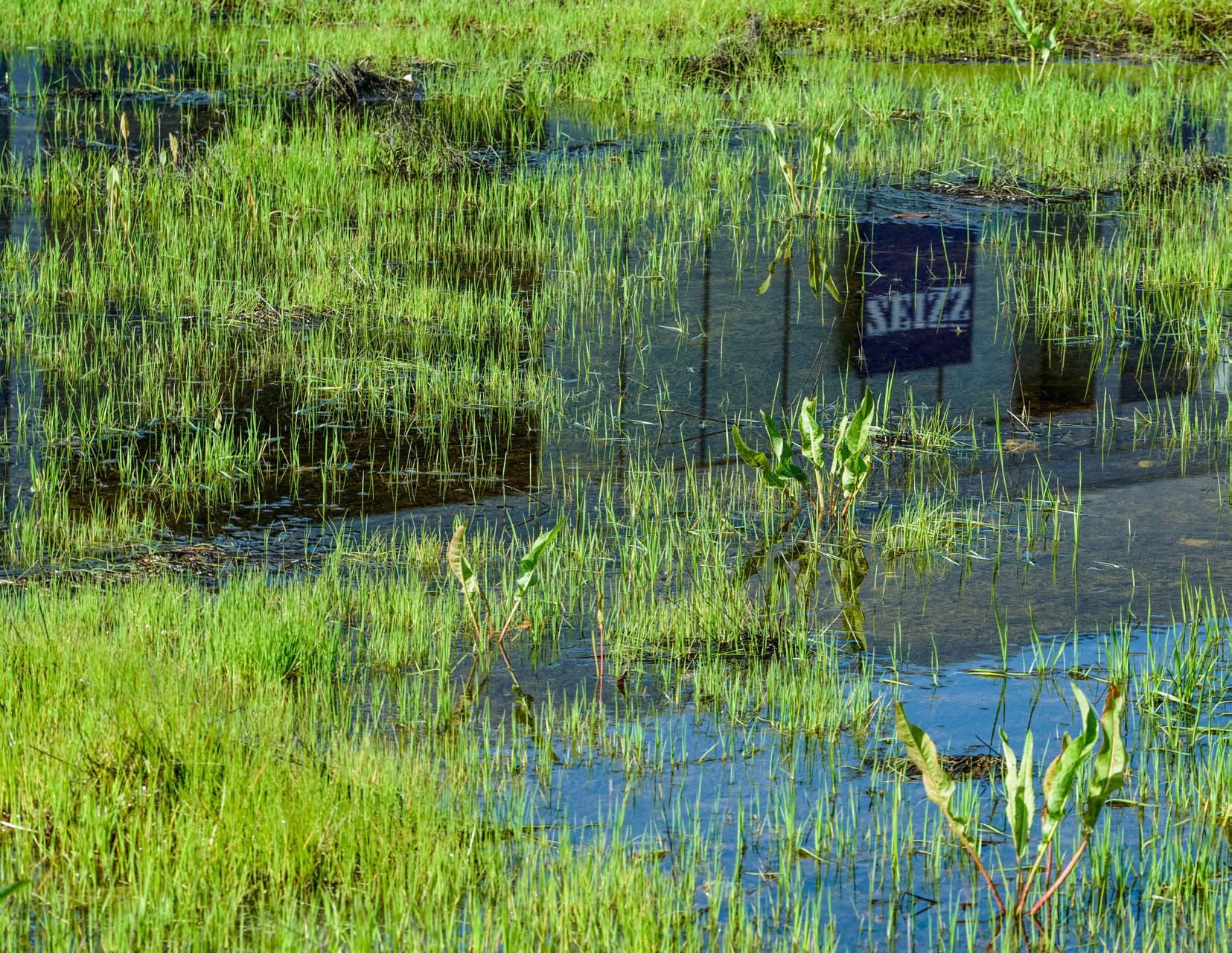
Seasonality in the Landscape // By funneling extra high-quality water to the wetland, the habitat thrives in saturated expansive soils to support native plant communities year-round.
©Bionic

Wetland Experience & Interpretive Elements // The wetland is evolving, and people are welcome to watch and understand it over time along a public trail laced with interpretive elements.
©Bionic

Transition from Urban City to Soft Native Garden // A polar geometry organizes the site into a gradient that ranges from precise and mechanized to unstructured and soft.
©Bionic

Public-Facing Campus // A large kinetic sculpture welcomes people to experience the ecological park and articulates the environmental and technological forces at play.
©Bionic

Windy Site Conditions Inspires Kinetics // The dynamic wind patterns inspired a large-scale kinetic sculpture at the site’s entry that is constantly in motion.
©Bionic
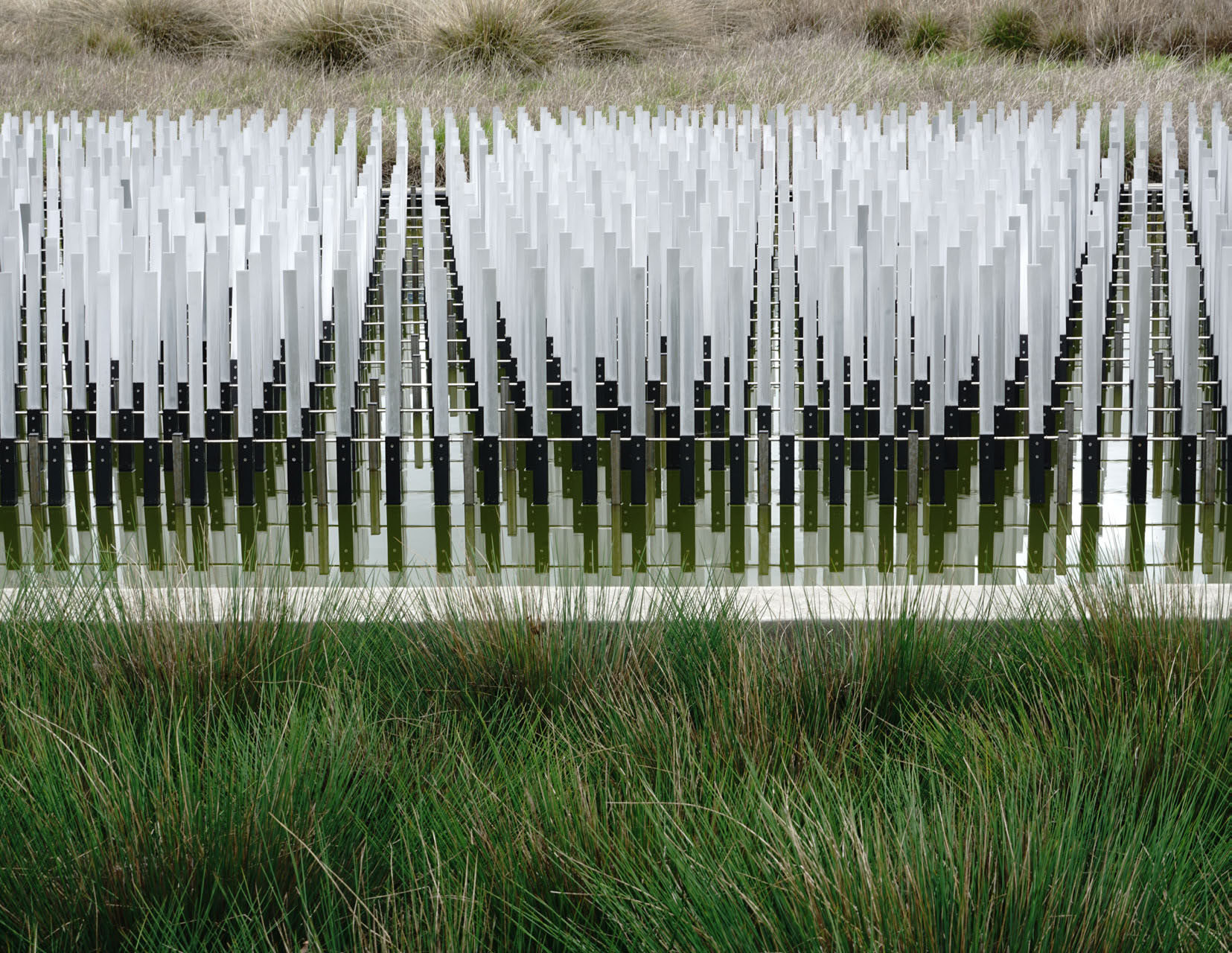
Contrast of Moving Hard and Soft Blades // The contrasted hard sculpture and soft grasses blend together in motion as the sculptural and grass blades both blow in the wind.
©Bionic
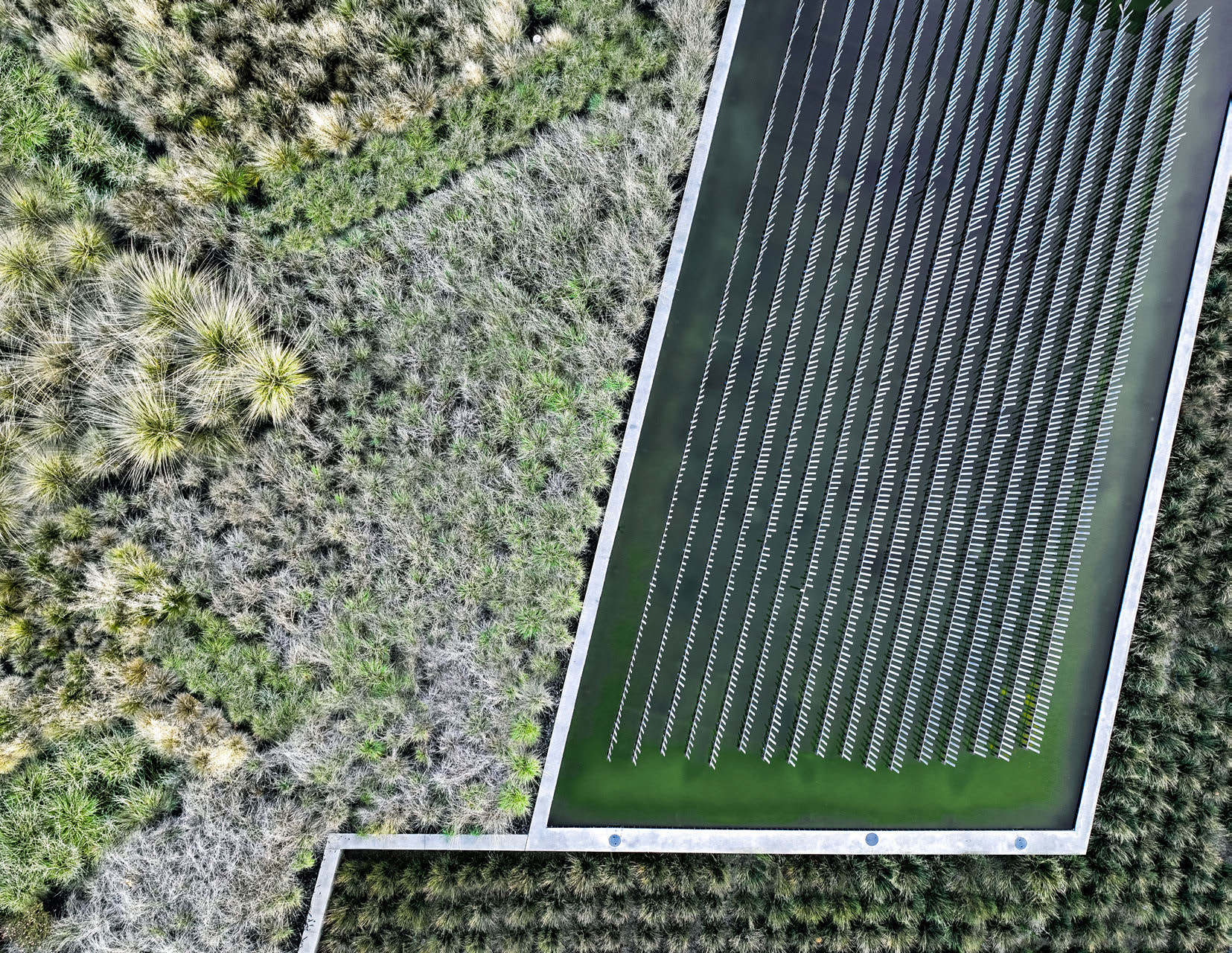
Juxtaposition // The landscape juxtaposes soft and hard elements to emphasize the natural systems and highly-technical human-made environments.
©Bionic

Private Company, Public Purpose // This project creates public access to nature and demonstrates a high standard for watershed innovation and citizenry.
©Jason O’Rear
Client
Carl Zeiss AG
Project Team
Marcel Wilson, Lead Landscape Architect
Caroll Crump, Gensler, Architect
Simon North, BKF, Civil Engineer
Brandon Thrasher, HLB, Lighting Designer
Ned Kahn, Ned Kahn Studios, Artist
Project Statement
Unlike other closed-off campuses in rapidly urbanizing Dublin, CA, this project is a public-facing ecological wetland park. Designed around a complex water system to protect and enhance an existing seasonal wetland, the project creates equal access to nature and ecologically centered systems to demonstrate the potential every development offers to stimulate ecology. It proposes a new model for suburban development that synthesizes the forces of development, science, ecology, and art to create positive ecological and economic effects.
Project Description
Situated in rapidly urbanizing Dublin, California, the project demonstrates how the forces of development, science, and art can be synthesized to create positive ecological and economic effects. This new research facility channels the flows of the site and building to create an ecological wetland park in a city where sprawl and privatization are the norm. This project creates public access to nature and demonstrates a high standard for watershed innovation and citizenry.
Through drone surveillance the landscape architect discovered seasonal wetlands at the center of the 11.65-acre site. Often misunderstood and destroyed by development, seasonal wetlands hold water high in the watershed, slowly infiltrate water, and host sensitive habitats. This discovery introduced significant regulatory challenges to the feasibility of the project. The client, a German company known for producing highly technical optics products, relied on the landscape architect to save the project. The solution was a paradigm shift away from typical privatized corporate facilities to an integral landscape that engages environmental dynamics, site flows, and technology as forces for human purpose and ecological function.
The existing wetland was the result of previous agricultural uses and benign neglect. Situated at the site’s low point, the wetland’s original watershed was a broad flat grassland. Urbanization severed its flows over time. The new facility is a highly specialized machine for innovative science. Hundreds of scientists from the region travel by car to the facility and require acres of parking. Site infrastructure, grading, and building systems were configured to efficiently capture surface water and deliver it to multiple above-grade treatment cells. This configuration generates more water than the historic watershed did and enhances the biodiversity possible in the optimized seasonal wetland. A polar geometry organizes the site into a gradient that ranges from precise and mechanized to unstructured and soft. Water is conveyed across the gradient from the treatment cells to channels below the central walkway to the wetland where it saturates expansive soils and supports native plant communities.
In stark contrast to the adjacent campus landscapes lined with high-water use and non-native plants, native and drought-tolerant plant species were carefully selected for this project to reactivate the site’s biodiversity using upland and aquatic species. Grown in special native plant nurseries, the new plants were hand-planted in the wetland and are subject to an extensive monitoring plan for long-term sustainability. Today the wetland surges with life. Shallow layers of water fill the microtopography of the wetland. Migratory and resident birds, invertebrates, rodents, and mammals are now finding and establishing themselves in its niches. The wetland is evolving, and people are welcome to watch and understand it over time. A trail around the seasonal wetland includes interpretive elements and educational signage. And a kinetic sculpture that engages dynamic wind patterns animates the site entry. It is a welcoming public gesture that invites the community to experience the ecological park and learn about the environmental and technological forces at play.

