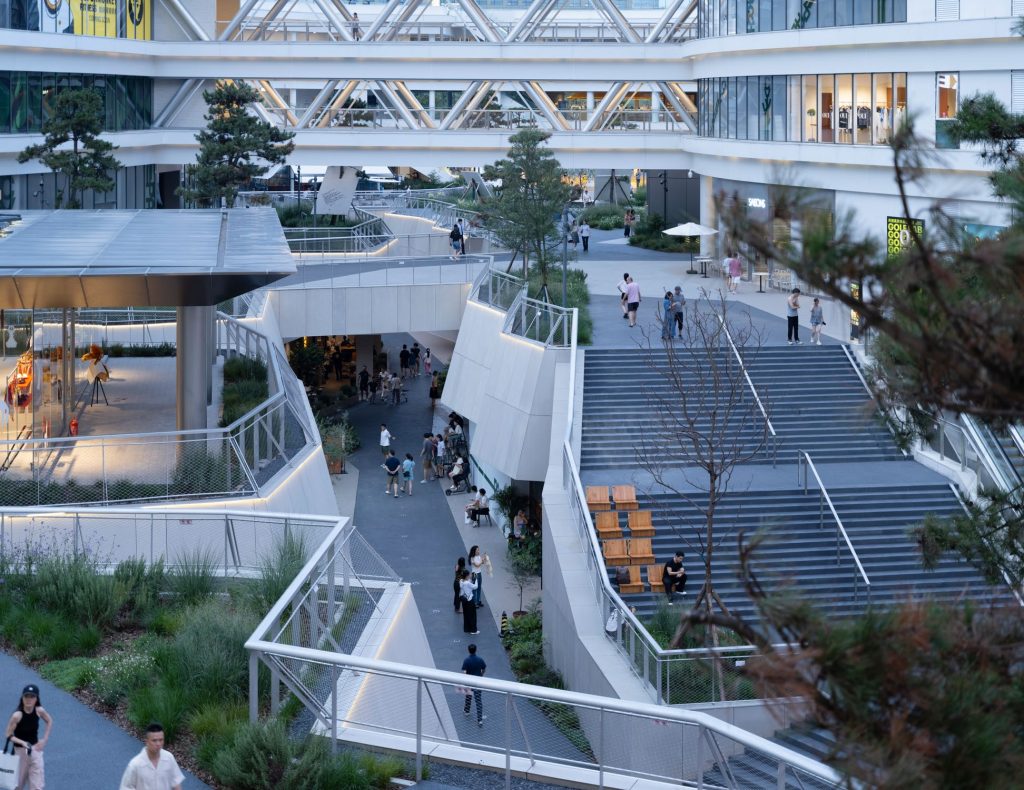

The basement retail courtyard becomes an evocative “cave,” where sculpted stone walls echo the erosive power of flowing water. Through this immersive experience, visitors reconnect with nature’s organic forms, expanding their imagination of water’s timeless journey.
©Chill Shine
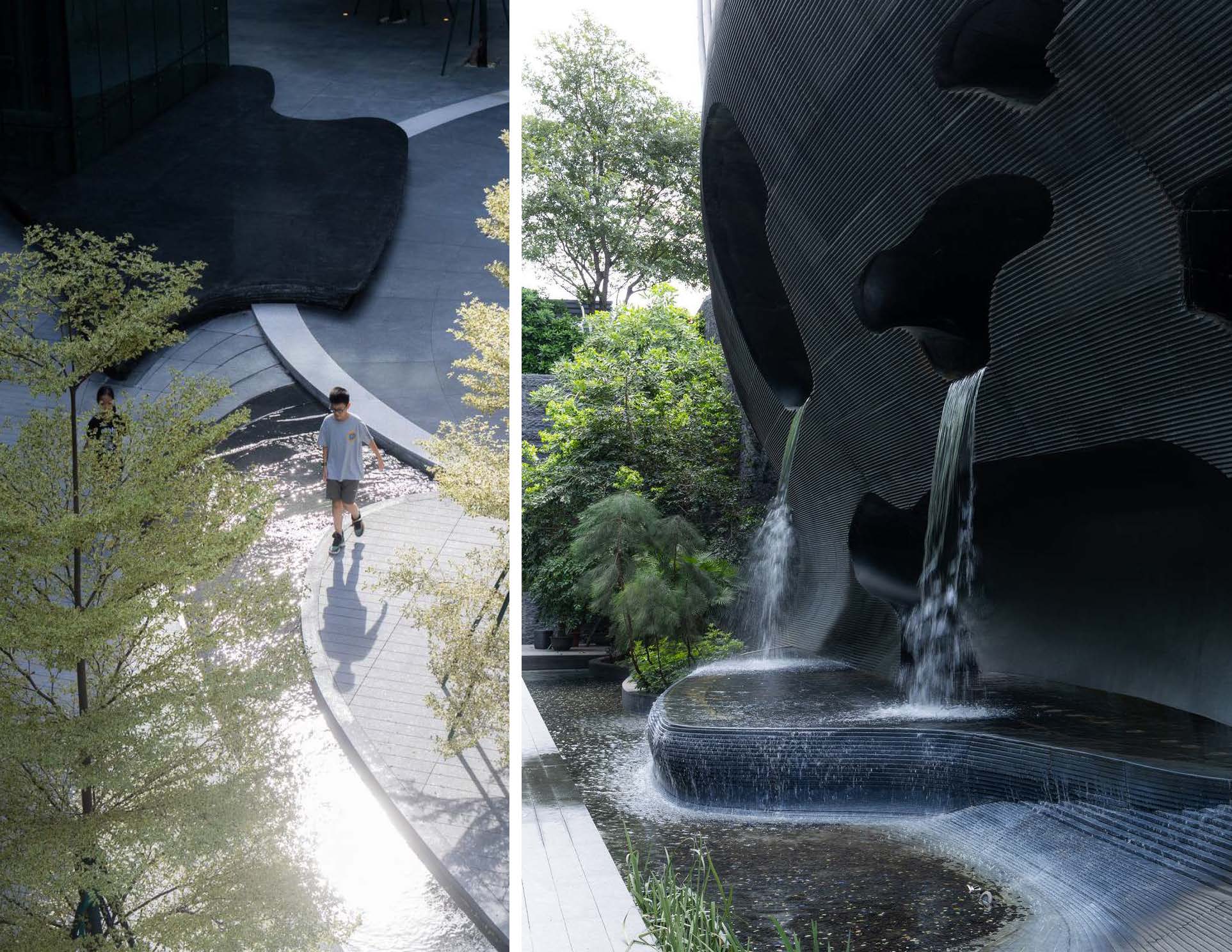
Inspired by the site’s natural water flow, the design mimics a cave sculpted by erosion, featuring curved stone formations, perforations, and cascading water elements that evoke the dynamic movement of water within the urban landscape.
©Chill Shine
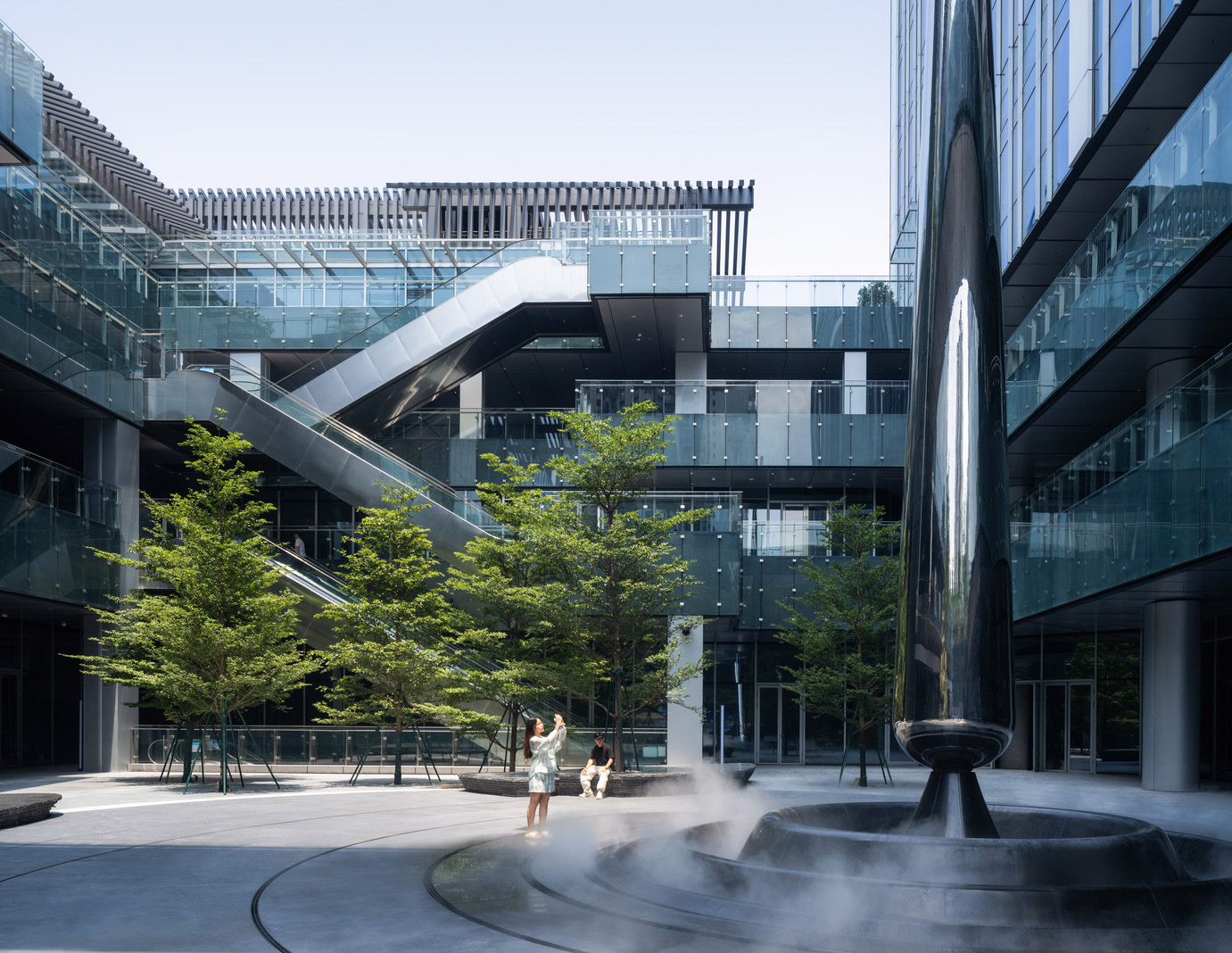
The water narrative continues into the retail courtyard, linking seamlessly with the cantilevered swimming pool above, which is complemented by a sculptural water droplet envisioned as falling from the towers.
©Chill Shine
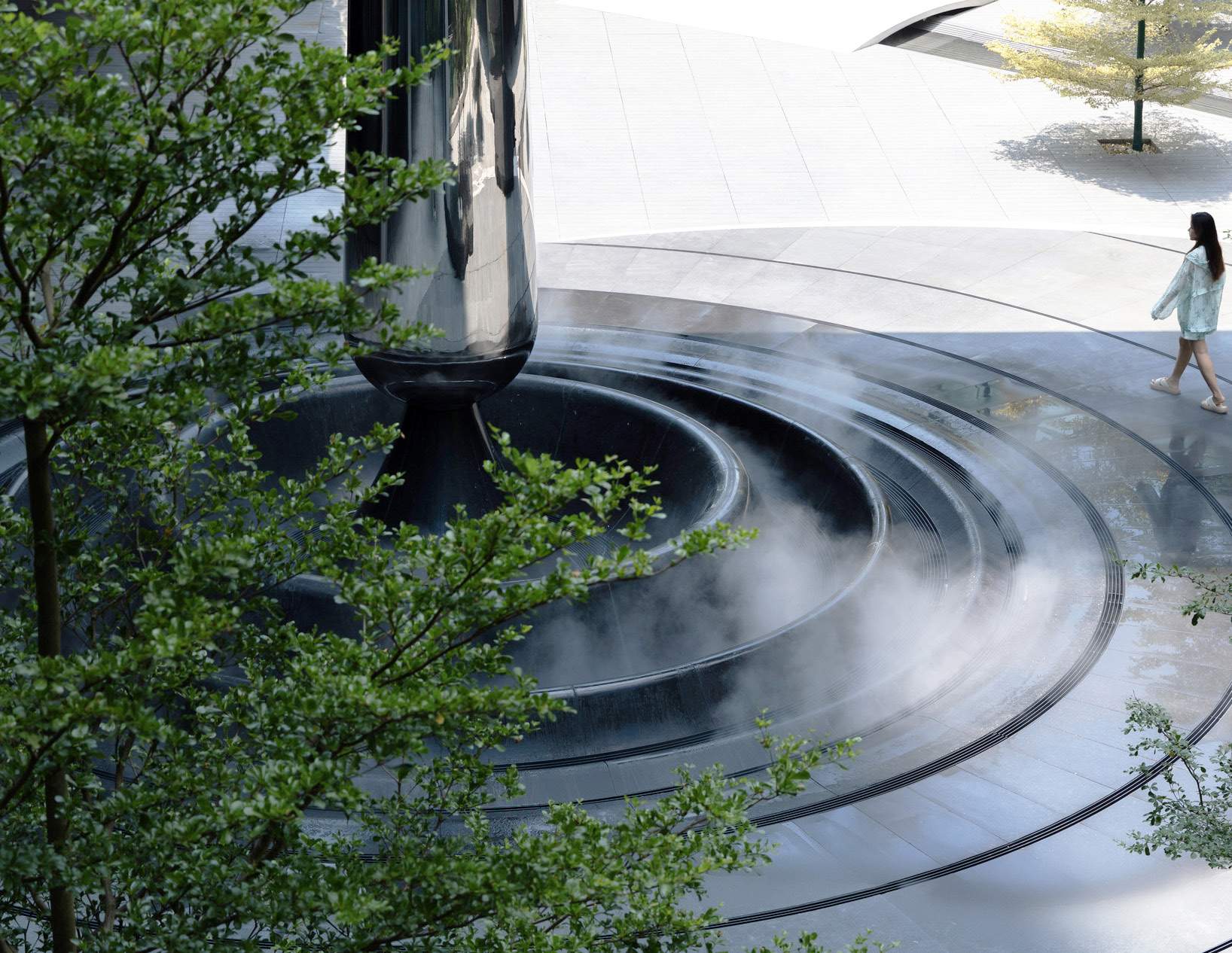
A mist fountain introduces an interactive and imaginative play element for children, reinforcing the theme of water’s dynamic presence.
©Chill Shine
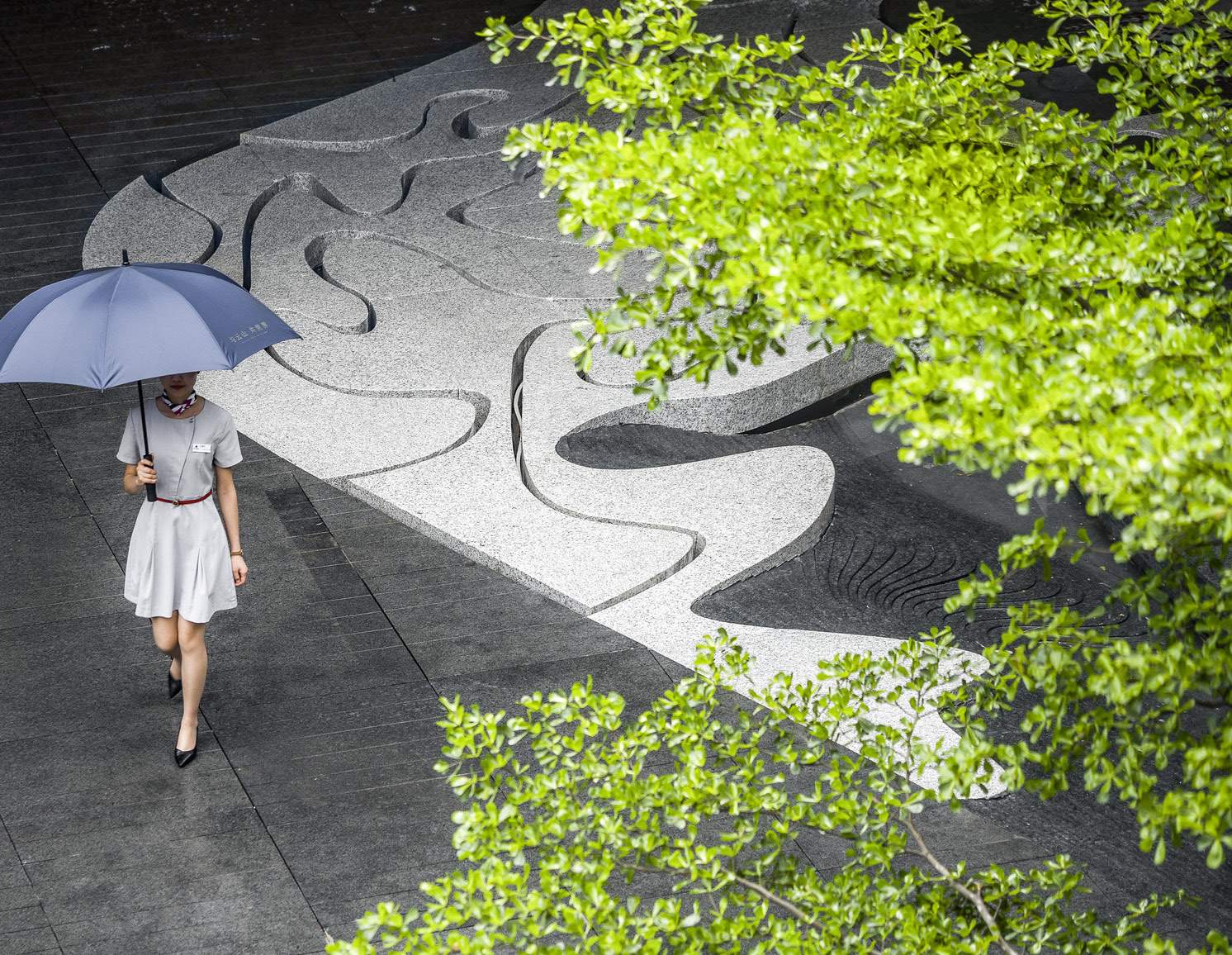
White stepping stones take inspiration from the traditional Chinese “meandering waterway” garden design element, allowing water to flow elegantly through the stone, creating an effect reminiscent of calligraphy.
©Chill Shine
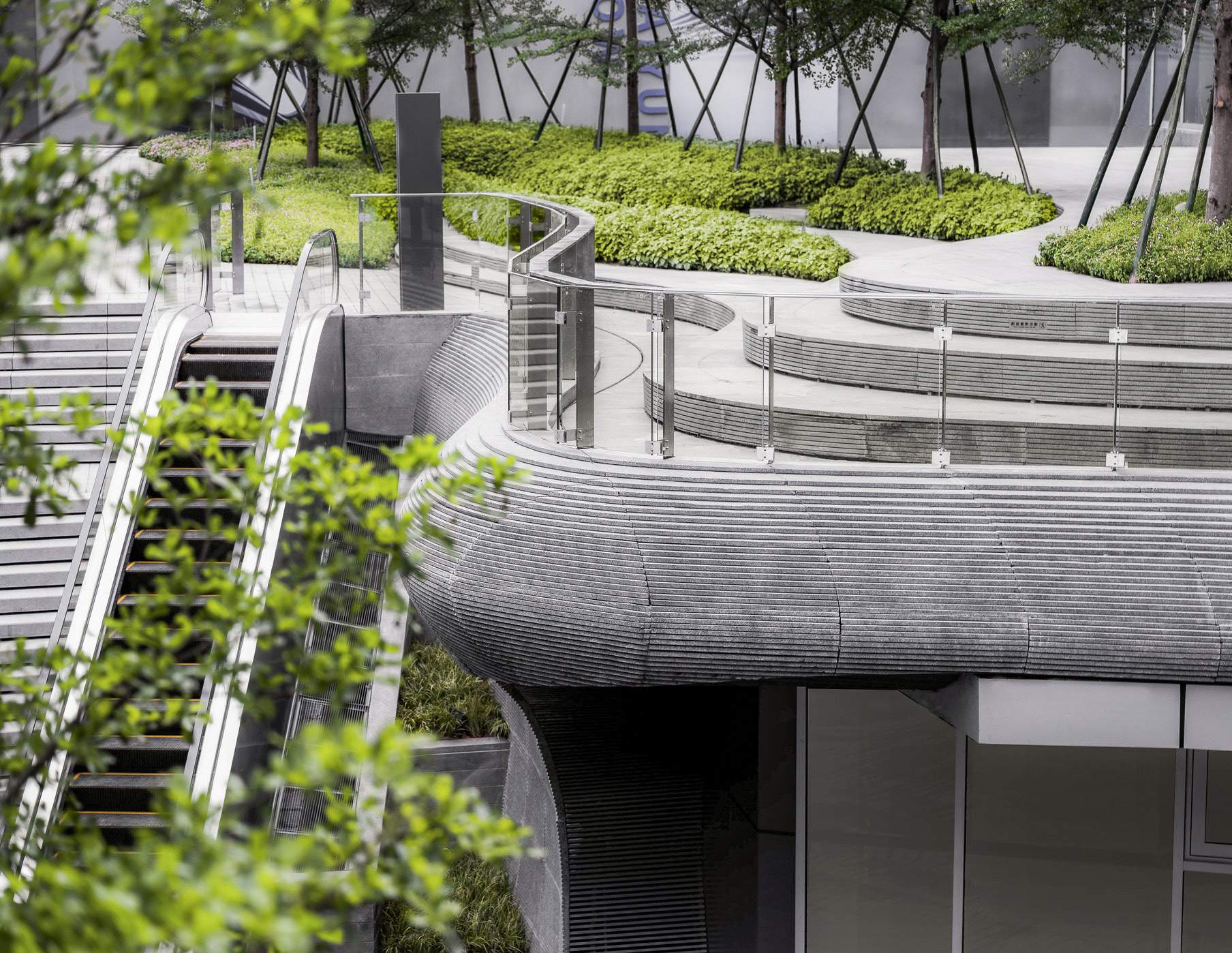
This fusion of art, nature, and playfulness transforms the urban landscape into an immersive experience, enabling visitors to reconnect with organic forms amid the modern cityscape.
©Chill Shine
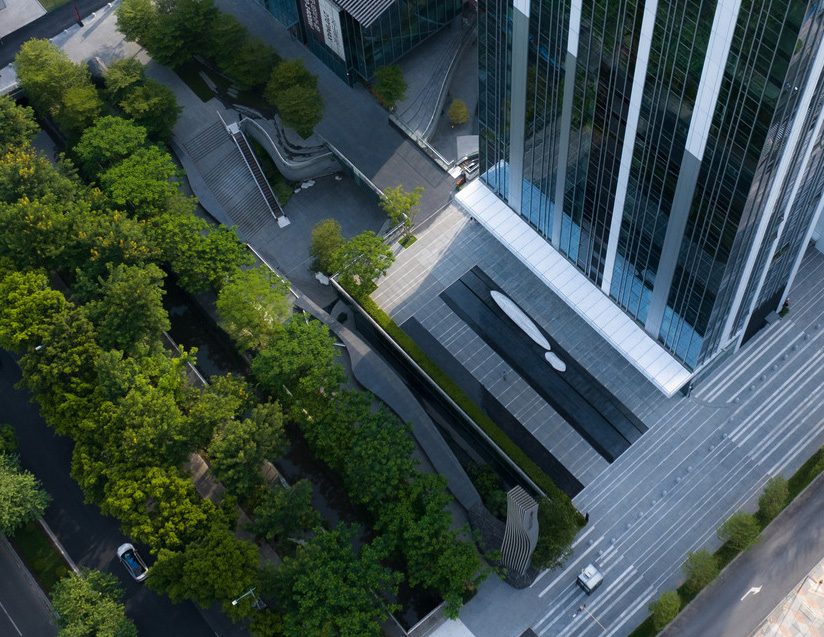
Bordering the city’s concrete stormwater channel at its eastern edge, the site presented an opportunity to reimagine the role of water in the urban environment.
©Chill Shine
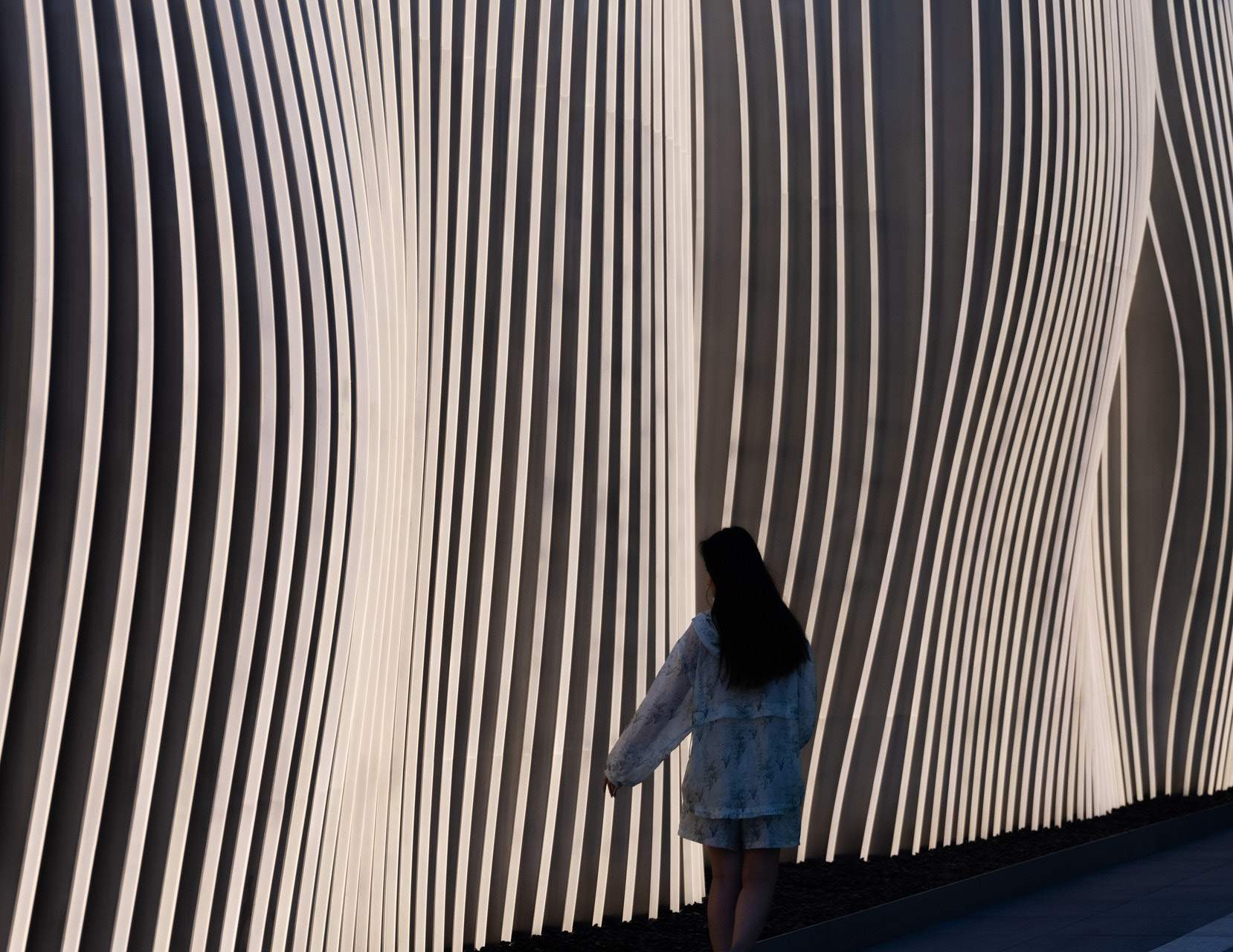
A wave-inspired lighting art wall adds a dynamic touch, casting light patterns that reflect the movement of water.
©Chill Shine
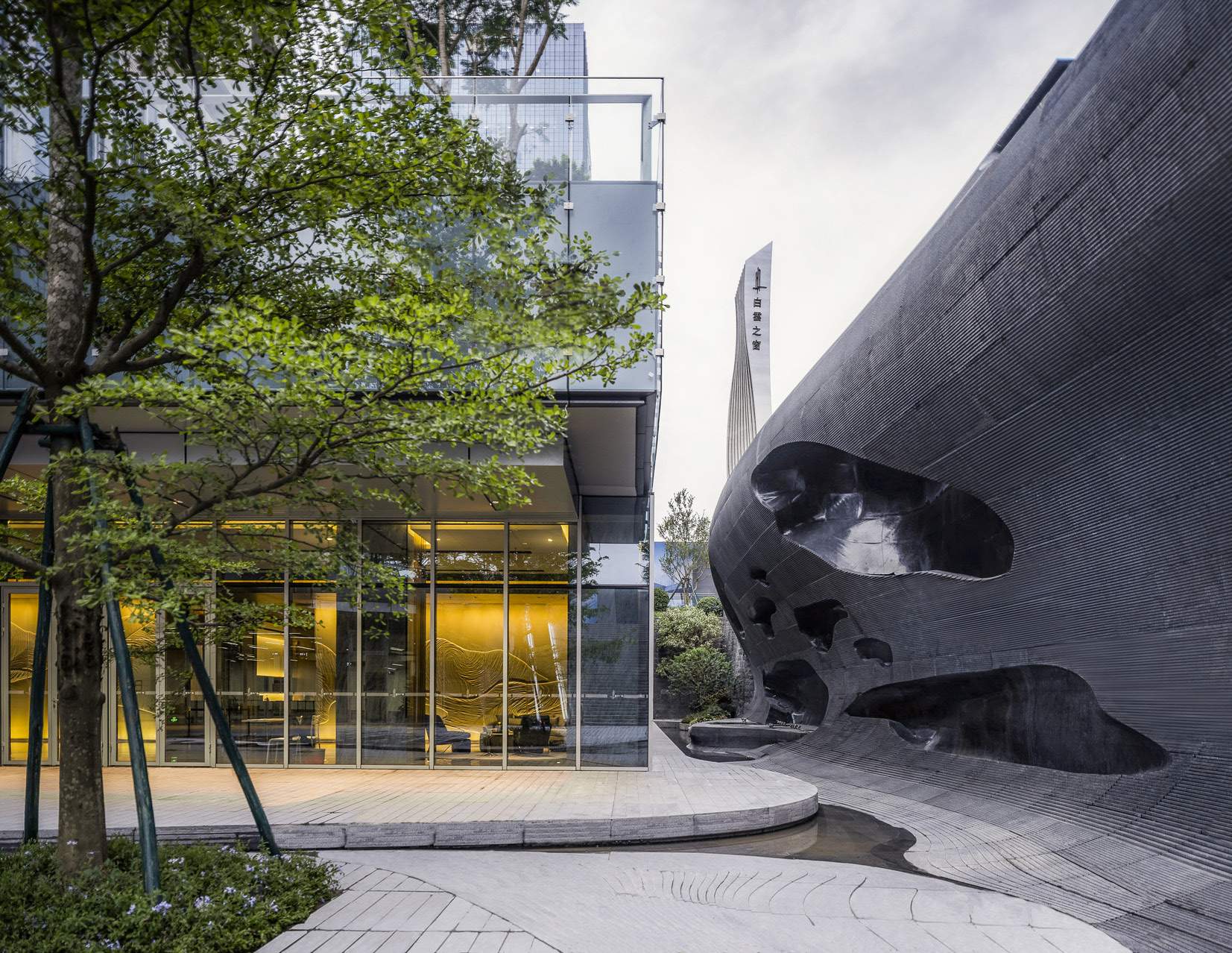
At the B1 architecture interface, the wall protrudes out closer to the building and starts to elaborately reveal its three-dimensional quality. From the interior, it almost suggests that the room is carved out from a cave.
©Chill Shine
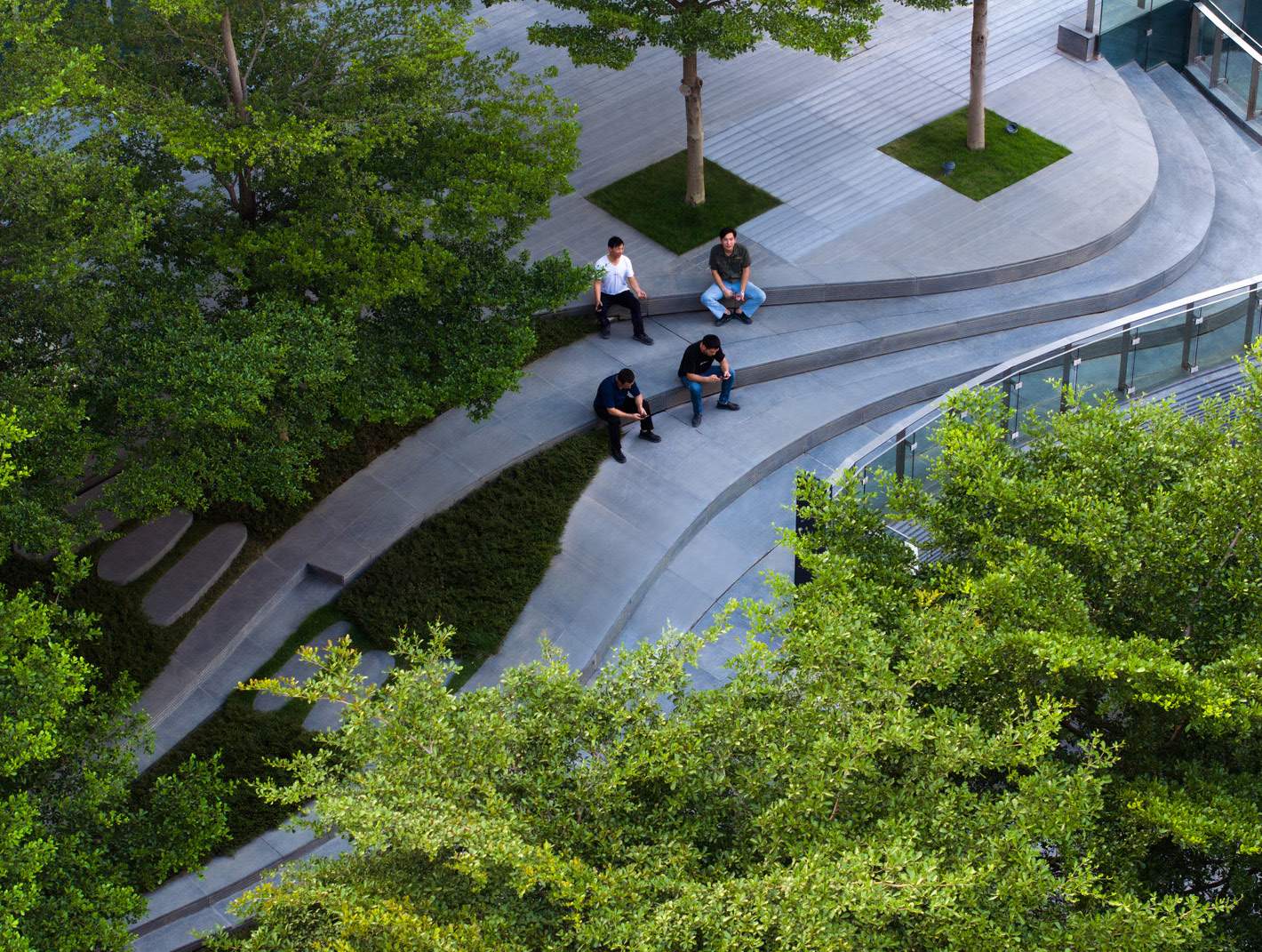
The project’s design is communicated through a series of immersive spatial experiences, guiding visitors through a sequence of sculptural landscapes that unfold as an evolving narrative.
©Chill Shine
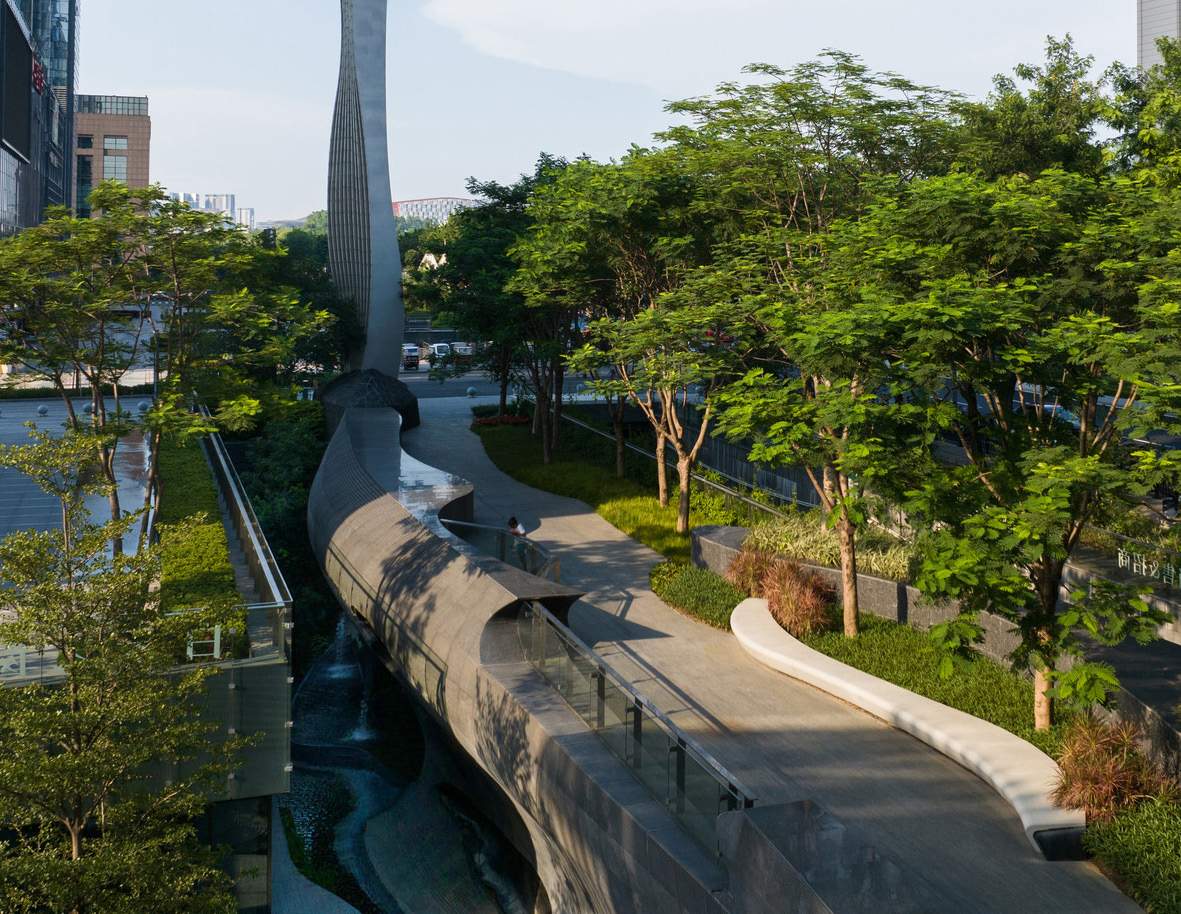
Jianhua Plaza serves as a model for integrating landscape architecture with urban mixed-use development, demonstrating how thoughtful design can enrich the public realm.
©Chill Shine
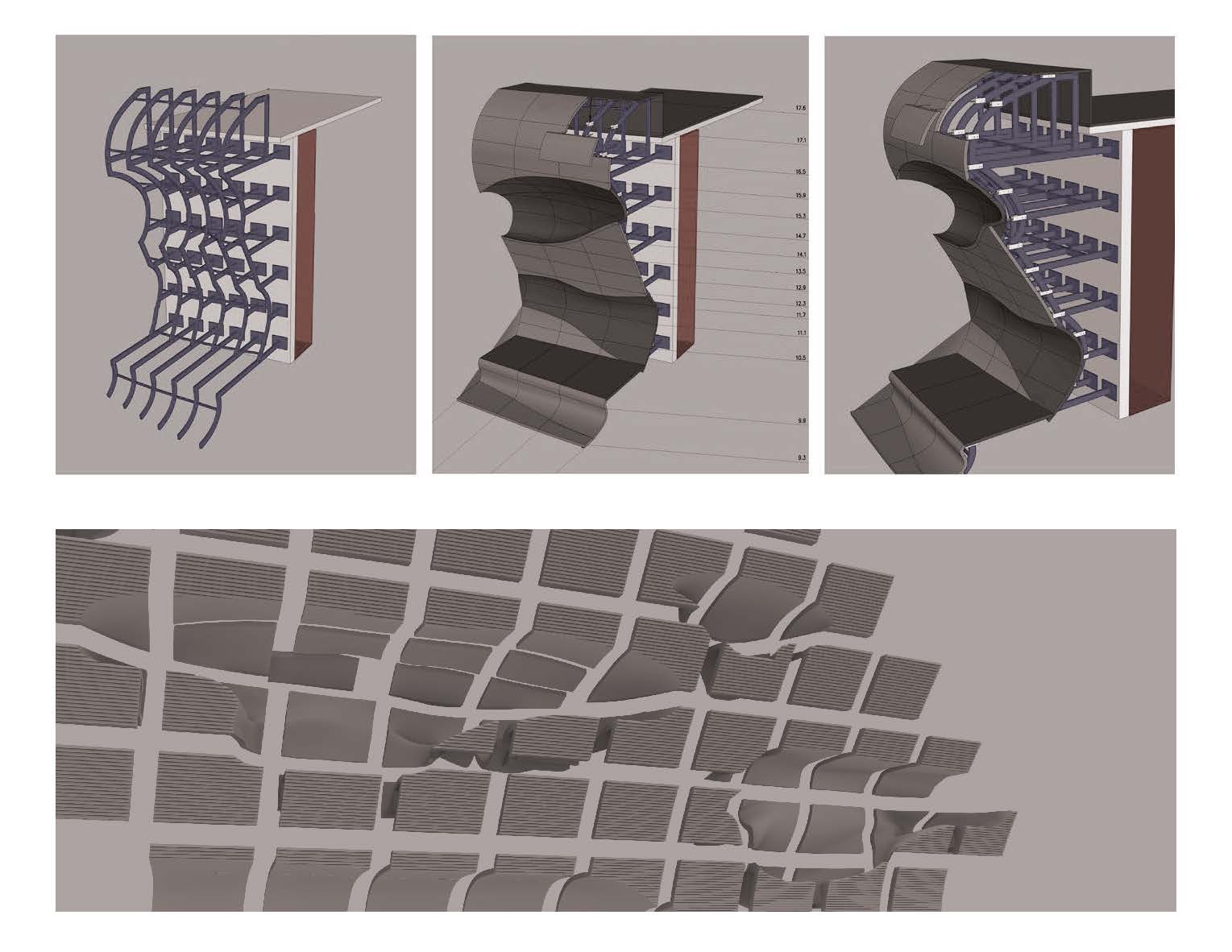
CNC technology enabled the design of a mechanically hung facade with 60 unique sections and 5,000 stone pieces. Etched contour lines and polished eroded holes enhance the water-like effect, achieving precision craftsmanship that seamlessly translates natural fluidity into the built environment.
©Chill Shine
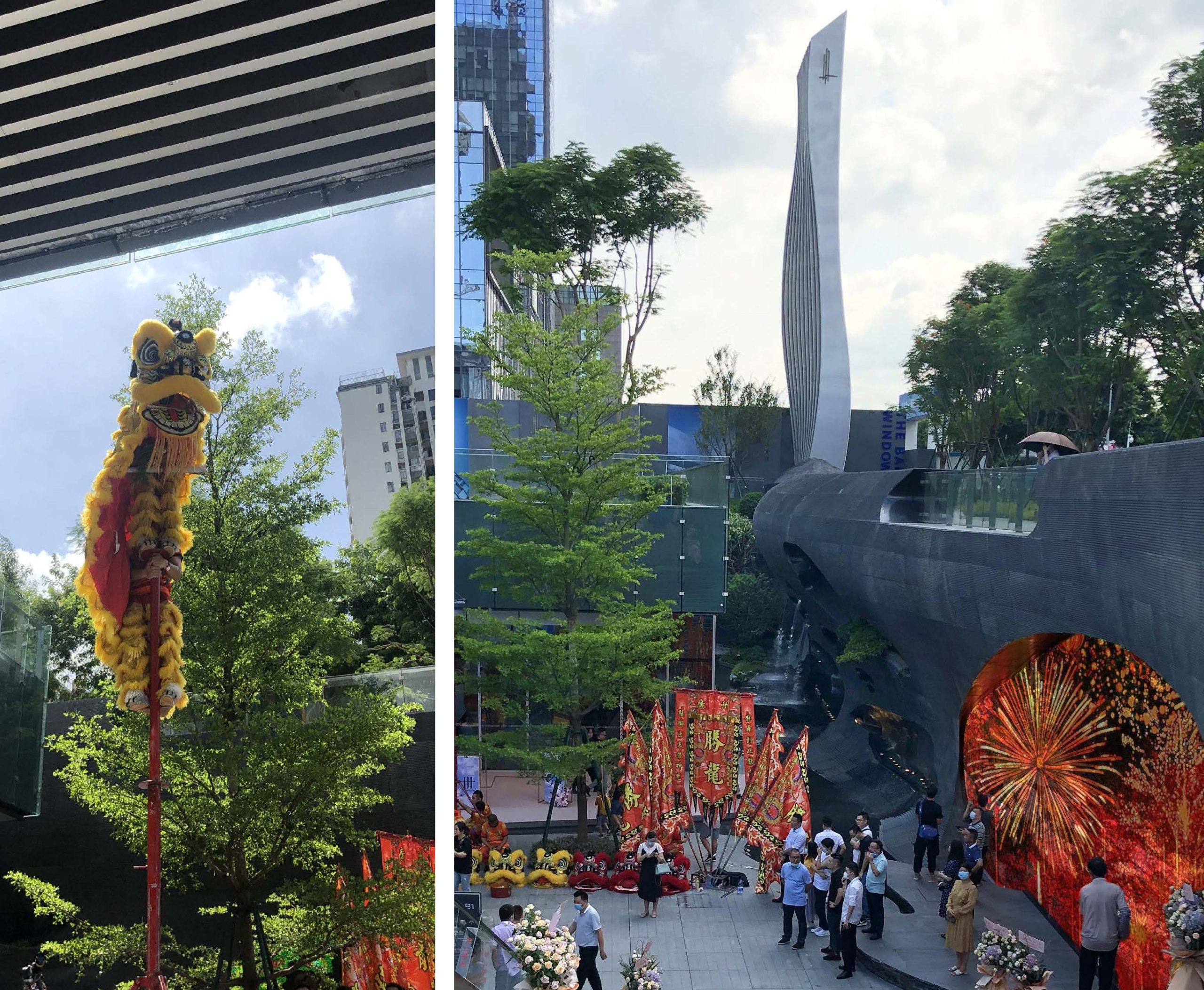
The sunken plaza serves as a vibrant gathering space, where people celebrate the New Year with festivities set against the mesmerizing backdrop of water-inspired art.
©Chill Shine
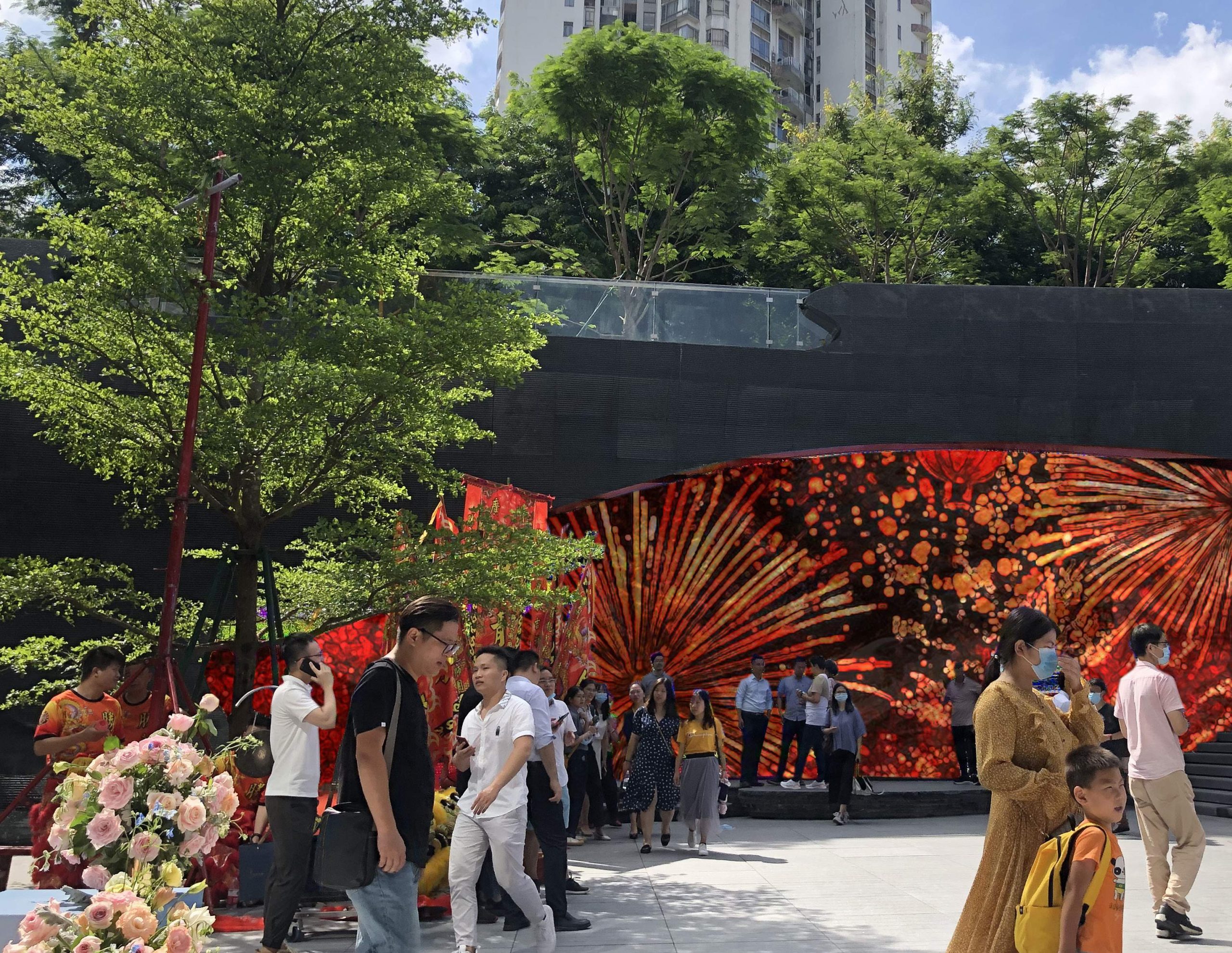
Sculpted stone walls, reminiscent of natural erosion, create an immersive environment, while embedded digital screens provide a flexible medium for dynamic visuals, enhancing performances and event programming.
©Chill Shine
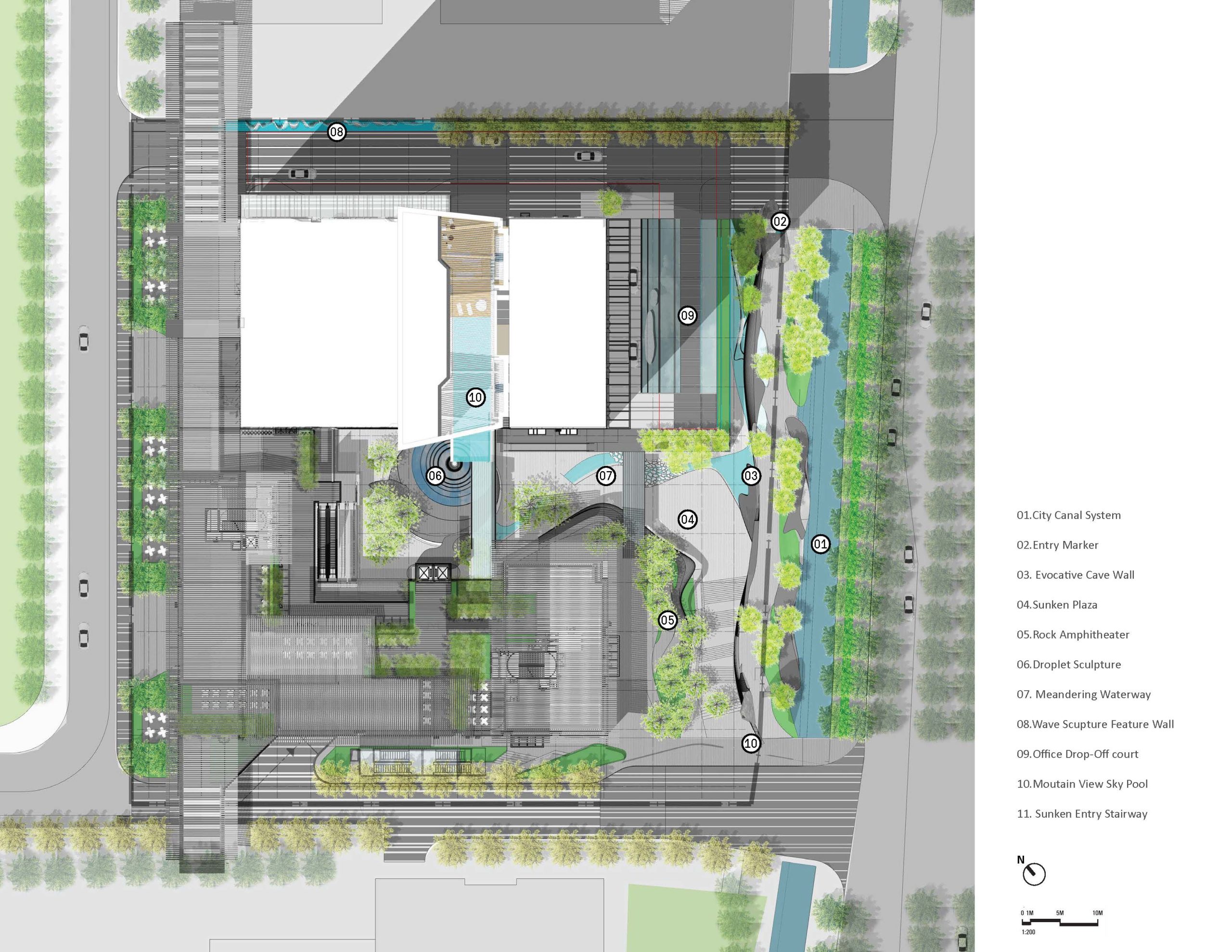
The master plan showcases how the city canal and water-inspired spaces seamlessly integrate into the urban landscape, creating a fluid connection between nature and the built environment.
©Chill Shine
Client
Guangzhou Jingze Real Estate Co., Ltd.
Project Team
Ji Hyun Yoo, Lead Landscape Architect
James Lee, Principal
Lin Tang, Yu-Ling Chen, Yu-Sheng Dent, Ray Zhao, Wan-Chih Yin, Landscape Designers
Ken Wai, Aedas, Project Architect
Project Statement
Jianhua Center redefines landscape as environmental art—an expressive medium that bridges human perception, natural beauty, and urban form. Inspired by the stark contrast between Baiyun Mountain’s pristine watershed and the rigid, engineered canal adjacent to the site, the design team envisioned a landscape that restores the fluid dynamism of water. Rather than accepting the site’s existing concrete channel, the project imagines an alternative narrative—one where water once freely shaped the land, carving spaces for human interaction and reflection. The sunken retail courtyard becomes an evocative “cave,” where sculpted stone walls echo the erosive power of flowing water. Through this immersive experience, visitors reconnect with nature’s organic forms, expanding their imagination of water’s timeless journey. By integrating artistic expression of geologic phenomena into public space, Jianhua Center challenges conventions and redefines the role of landscape architecture in the built environment.
Project Description
Introduction & Relationship to Context
Jianhua Center is a mixed-use TOD development located in Baiyun New Town, northwest of Guangzhou. Unlike the historic core of Guangzhou, which embodies a rich cultural heritage, Baiyun New Town is characterized by modern high-rise buildings and extensive engineered urban infrastructure. While the district is rapidly developing, it lacks human scale, a sense of intimacy, and a distinctive character in its public spaces.
This development project consists of two architectural towers—one designated as the future headquarters of Jianhua Building Materials Group and the other as a residential tower with a retail podium. These two towers are connected by a transparent cantilevered swimming pool, while the retail podium features a sunken courtyard that descends to the basement level. The design team sought to integrate the natural beauty of Baiyun Mountain and the movement of water into people’s daily experiences within this urban center.
Bordering the city’s concrete stormwater channel at its eastern edge, the site presented an opportunity to reimagine the role of water in the urban environment. Drawing inspiration from the natural water flow that once shaped the site, the design team proposed a landscape that mimics a cave sculpted by the erosive forces of water. This concept gives rise to curved stone formations, perforations, and cascading water elements. In these carved-out spaces, plants thrive, and imagined mirages emerge through digital screens, blending nature with technology.
The water narrative continues into the retail courtyard, linking seamlessly with the cantilevered swimming pool above, which is complemented by a 14m sculptural water droplet envisioned as falling from the towers. This transition transforms the stone materiality into a fluid, watery plane. A mist fountain introduces an interactive and imaginative play element for children, reinforcing the theme of water’s dynamic presence. Additionally, white stepping stones take inspiration from the traditional Chinese “meandering waterway” garden design element, allowing water to flow elegantly through the stone, creating an effect reminiscent of calligraphy. This fusion of art, nature, and playfulness transforms the urban landscape into an immersive and interactive experience, enabling visitors to reconnect with organic forms amid the modern cityscape.
Quality of Design and Execution
Representing the beauty formed by nature was only possible with the use of CNC technology. The etch design team developed a mechanically hung facade system composed of 60 unique sections, meticulously designed in a 3D model and cut into more than 5,000 distinct stone pieces using CNC machinery. Each stone piece was etched with 30mm contour lines to reinforce the curvaceous shape, creating an effect that mimics natural water erosion. The eroded holes were polished to contrast with the rougher stone surfaces, exaggerating the different qualities of natural formations. With the help of advanced fabrication technology, the construction achieved an extraordinary level of precision and craftsmanship, seamlessly translating the fluidity of water into a built environment.
Clear Communication of Intent and Project Outcomes
The project’s design is communicated through a series of immersive spatial experiences, guiding visitors through a sequence of sculptural landscapes that unfold as an evolving narrative. At each step, the design integrates artistic storytelling elements, enhancing the sensory and experiential qualities of the space. The use of digital modeling and precise documentation facilitated seamless communication between the design and construction teams, ensuring that every detail aligned with the original vision.
Relevance and Impact
Jianhua Center serves as a model for integrating landscape architecture with urban mixed-use development, demonstrating how thoughtful design can enrich the public realm. The project addresses contemporary urban challenges by providing much-needed green space, strengthening pedestrian connections, and fostering a strong sense of place. Through its sculptural landscape interventions and curated water features, the project transforms an otherwise transitional urban site into an engaging, art-infused destination.
Conclusion
Jianhua Center’s landscape design exemplifies the integration of architectural boldness with natural fluidity, transforming an urban edge into a vibrant, immersive public space. Through its innovative use of materials and sculptural forms, the project creates a landmark destination that enriches both the urban fabric and the public experience. This forward-thinking approach to landscape architecture establishes a new benchmark for sustainable, culturally resonant, and aesthetically compelling urban environments.